Tesla is aiming to deliver the first Cybercabs to customers by the end of 2026, but the statement does not yet amount to a public retail launch. Lars Moravy, Tesla’s vice president of vehicle engineering, said during the company’s third-quarter earnings call that Tesla was trying to get Cybercabs to customers before the end of the year. Elon Musk added that most vehicles would remain Tesla-owned and operate as part of a transport-as-a-service business.
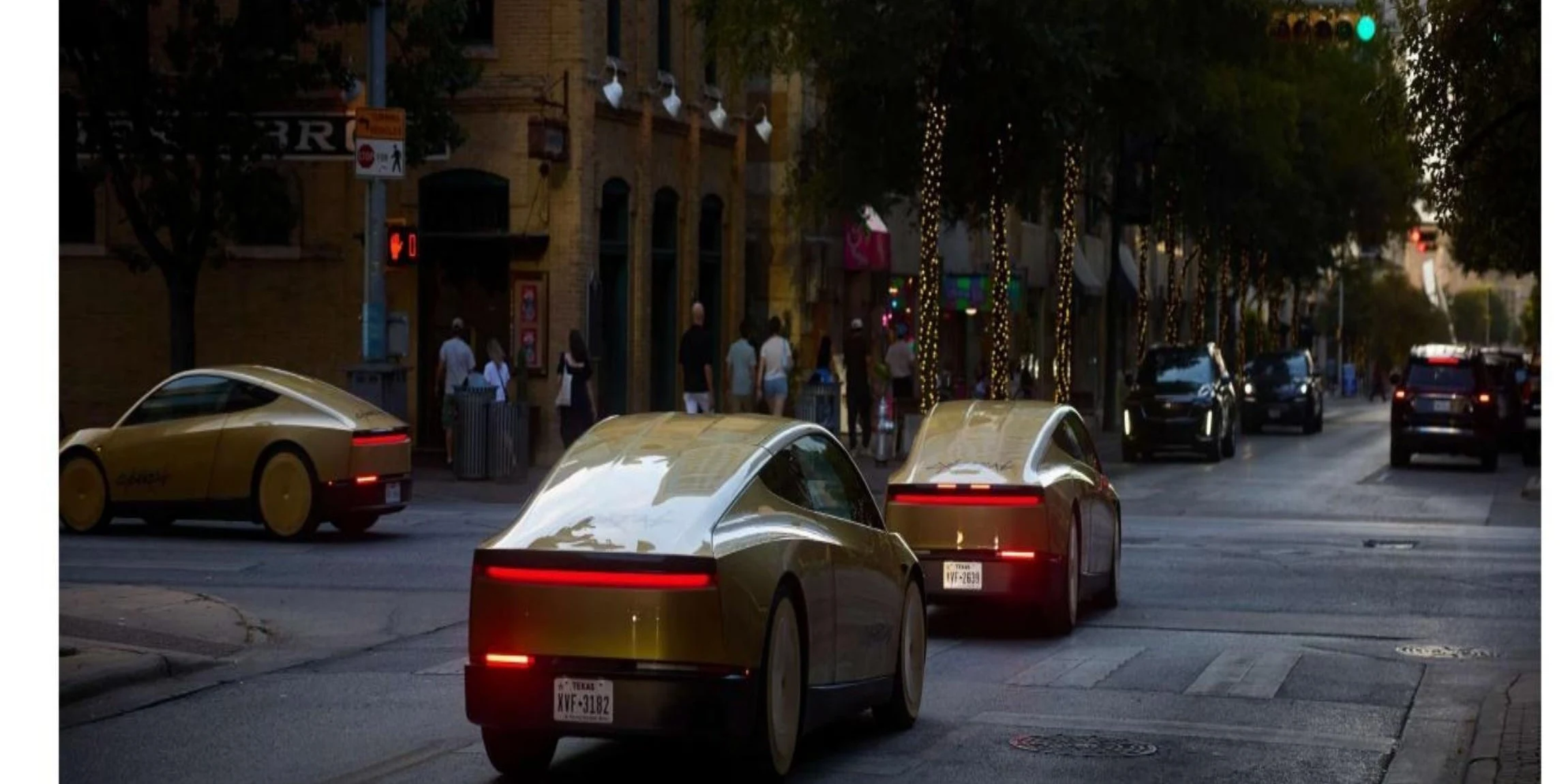
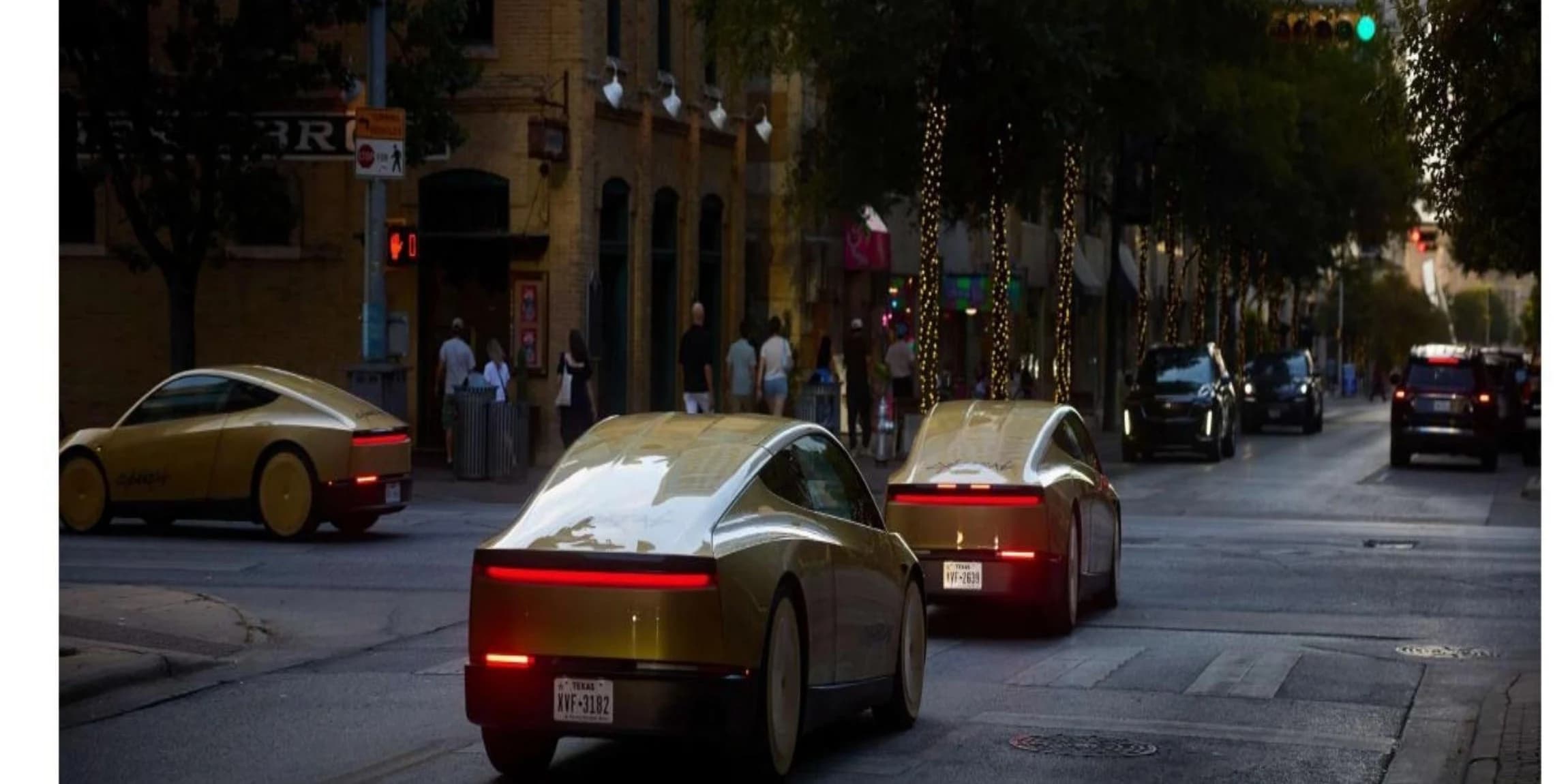
Tesla Cybercabs in Austin, shown in Tesla’s official third-quarter 2026 investor material. Image: Tesla Investor Relations.
A delivery target, not a retail launch date
Moravy’s wording matters. Tesla has not announced an order-opening date, an initial price, a delivery volume or the markets that would receive the first vehicles. The company says it is trying to reach customers by the end of 2026. That is an operational target, not a guaranteed delivery slot for every interested buyer.
The first Cybercabs currently being built in Texas are going to Tesla’s own Robotaxi fleet, according to comments made during the earnings call. The vehicle is not listed in Tesla’s normal consumer configurator. Tesla’s Cybercab FAQ says organisations interested in buying a fleet or an individual vehicle for commercial purposes can submit an enquiry. It does not describe a retail purchase process for private owners and does not publish a price.
Most Cybercabs will remain Tesla-owned
Musk has described Cybercab primarily as part of a transport-as-a-service model rather than as a vehicle intended mainly for private ownership. In that model, Tesla owns and operates most of the cars, while passengers request a ride through the Robotaxi app. A smaller number could go to customers or commercial operators, but Tesla has not publicly detailed the exact role or conditions for those vehicles.
The distinction is important because “deliveries to customers” can mean several different things. It could refer to a fleet vehicle sold to a commercial operator, a car placed with a partner, or a vehicle delivered to a private customer under operating restrictions. Tesla has not published the contract terms, ownership responsibilities, running costs or the process by which a customer-owned Cybercab could join the Robotaxi network.
During the same earnings call, Tesla AI director Ashok Elluswamy discussed a later phase in which some customer-owned vehicles could connect to the Robotaxi network. That is separate from the initial Cybercab deliveries. It should not be read as confirmation that every buyer will immediately be able to use the vehicle as an autonomous taxi.
Cybercab is already operating in Austin
Tesla began deploying Cybercab into its Robotaxi fleet in Austin on September 3, 2026, according to the company’s official third-quarter update. Tesla reported nearly 3.2 million cumulative kilometres of unsupervised operation for its Robotaxi service by the end of the quarter. This is a company-reported figure, not an independent safety test or a certification covering every road, weather condition or operating area.
Tesla’s Robotaxi page lists autonomous service in several US cities, including Austin, Dallas, Houston, Miami, Orlando and Tampa. The Cybercab FAQ is more specific: Cybercab rides are currently available in limited areas of Austin, while other cities may use Model Y vehicles in the Robotaxi fleet. Network expansion and Cybercab availability are therefore not the same thing.
A vehicle without a steering wheel or pedals
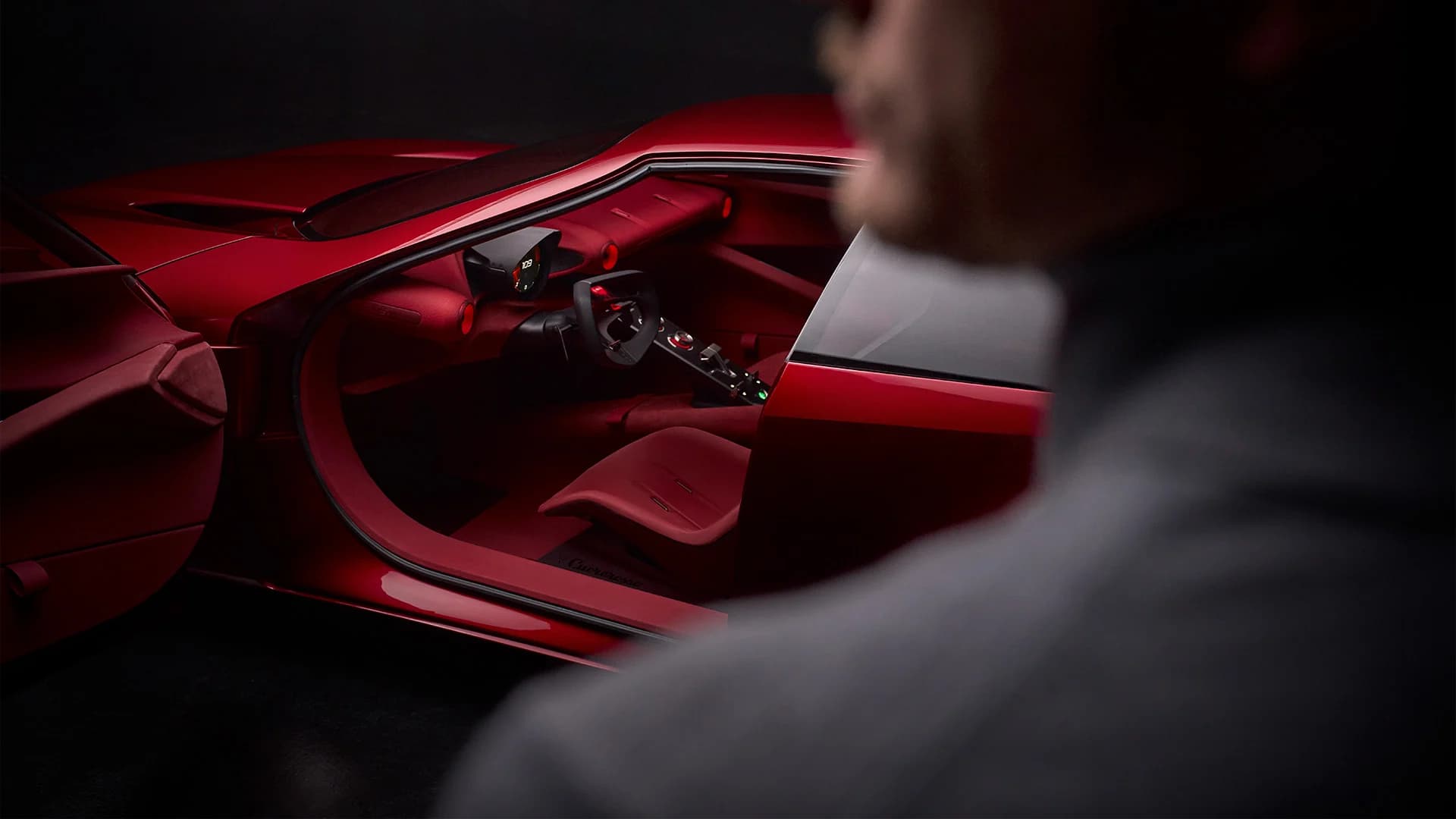
Cybercab is a two-seat electric vehicle designed for autonomous operation without a steering wheel, accelerator pedal or brake pedal. Tesla says it uses camera vision and sensors to navigate city streets, highways, complex intersections and parking areas. Inside, a central touchscreen allows passengers to start the ride, adjust the climate and seats, control the doors and use media features.
Tesla’s official rider guide also lists a Stop button, a cabin camera for occupancy monitoring, USB-C ports and physical window switches. The car can carry up to two people, and Tesla’s support information describes space for luggage and service animals. These details describe the Robotaxi experience and do not necessarily represent a final specification for every Cybercab that could be delivered to an external customer.
Regulatory and commercial questions remain
Cybercab is not simply another electric model. Because it lacks conventional driving controls, its commercial rollout depends on certification, local rules and Tesla’s ability to demonstrate compliance with safety requirements. In September 2026, the US National Highway Traffic Safety Administration opened an investigation into Tesla’s Cybercab self-certification after driverless vehicles were deployed in Austin.
The investigation is not, by itself, a finding that the vehicle fails to meet the rules. It does show that a car without a steering wheel or pedals faces additional scrutiny. Changes in federal or local requirements could affect the number of vehicles, the cities where they can operate and the conditions applied to outside owners.
Tesla has not announced a Cybercab price, official range, motor output, warranty terms or a date when private customers in Europe could order one. Romania is not listed in the company’s public Robotaxi launch information. The end-of-2026 target should therefore be read as a limited first step, likely involving commercial or fleet customers, rather than a global retail launch.
What happens next
Tesla still has to show that it can build Cybercab in larger numbers, operate the fleet under controlled conditions and define the responsibilities of external owners. The first Austin vehicles give the company a setting in which to monitor interventions, waiting times, maintenance and passenger feedback. For customers, however, there is not yet a complete purchase offer.
Moravy’s statement confirms that Tesla is considering deliveries before the end of the year, but the missing details are decisive. Without a price, contract, volume and delivery market, Cybercab is not yet a showroom product. The most defensible conclusion is that Tesla is starting with its own Robotaxi network while testing whether a small number of commercial customers can be added to the operation.