Tesla plans to invest an initial €3 billion in a new production building at Grünheide, near Berlin, where Cybercab manufacturing is scheduled to begin in 2029. The company says the line could eventually scale to as many as one million vehicles a year. That figure describes a future design target, not output committed for the first year.
What Tesla's plant manager announced
Giga Berlin plant manager André Thierig disclosed the decision after employees were briefed on 16 November. Tesla intends to begin construction in the first half of 2027, start Cybercab production in 2029 and raise output towards one million vehicles annually over time.
Brandenburg's state government independently acknowledged the €3 billion investment and the prospect of producing up to one million Cybercabs at Grünheide. Minister-President Dietmar Woidke linked the project to employment and industrial activity in the region.
Neither statement provides a year-by-year ramp plan. The capacity ceiling should therefore not be reported as a guaranteed 2029 production volume. Tesla says hiring is opening immediately in construction and manufacturing planning, but the plant announcement does not specify a final number of additional jobs.
A building application still has to become a factory
Reuters reports that Tesla intends to submit the building application before the end of 2026. Groundbreaking is planned for the first half of 2027. The expansion includes the main manufacturing hall, ancillary buildings and another wastewater treatment facility.
Those are material steps at Grünheide, where water use, woodland clearing and environmental permits have all received public scrutiny. An investment announcement does not replace the relevant approvals. The 2029 date remains Tesla's schedule until the building, equipment installation and commissioning are completed.
A delay in permits or construction could move production without invalidating the broader site choice. Separating those stages matters: the announcement confirms Tesla's intention and budget, not a finished production line.
Berlin currently builds the Model Y
The Grünheide factory began vehicle production in March 2022 and remains Tesla's only European car plant. Tesla's 2026 quarterly disclosures list Berlin as a Model Y site with installed annual capacity above 375,000 vehicles.
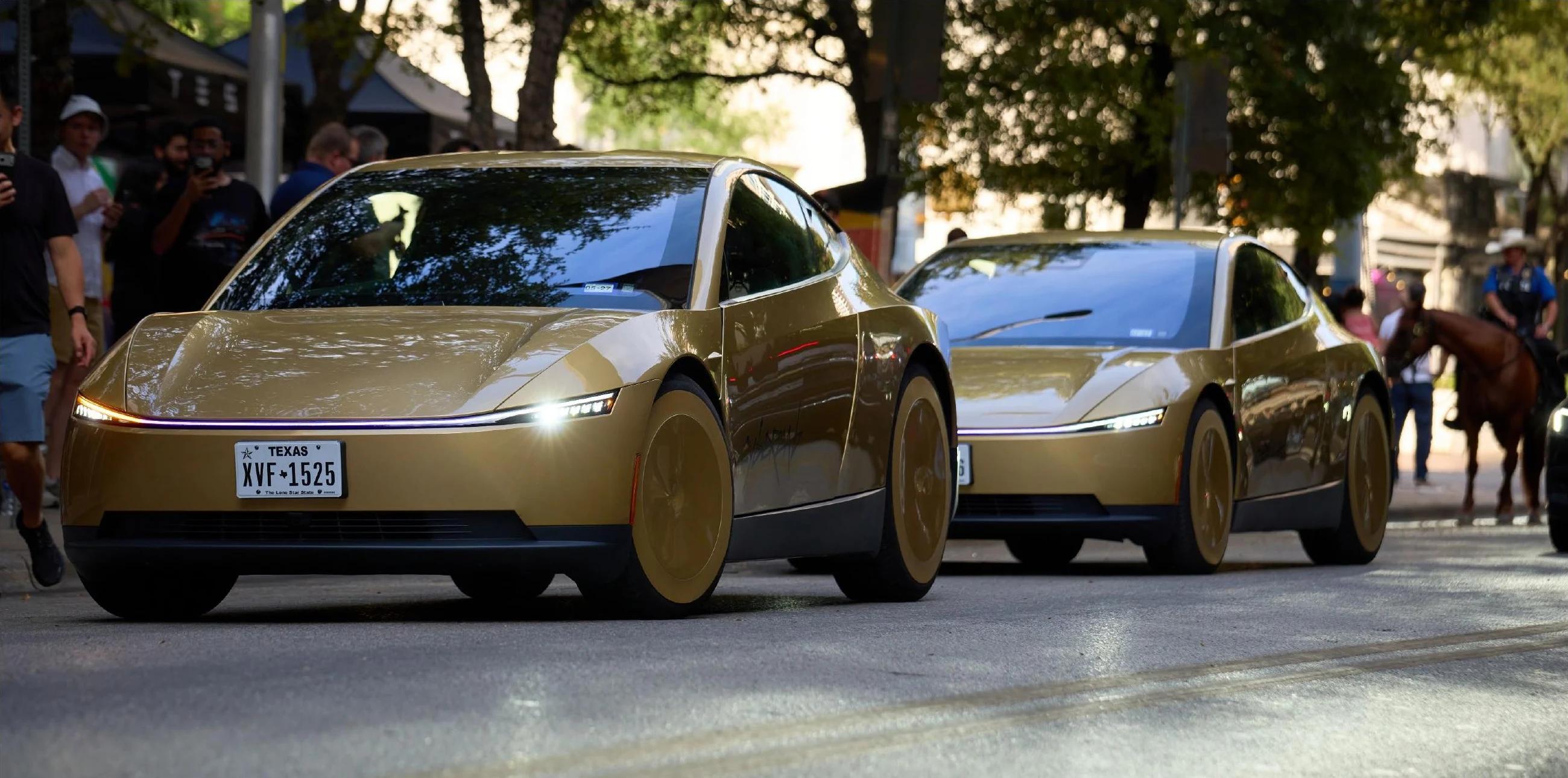
Cybercab requires a different product and manufacturing setup. It is a two-seat, two-door vehicle designed without a steering wheel or pedals. Tesla positions it as the purpose-built hardware for its autonomous Robotaxi service rather than as a conventional owner-driven model.
The new hall is an addition, not an announced replacement for Model Y production. Tesla describes the planned expansion as the basis for its most technologically advanced Gigafactory. That is the company's assessment, not an independently measured comparison.
Texas production provides the existing reference point
Tesla began Cybercab production at Gigafactory Texas during 2026. Its second-quarter update said engineering drives of production vehicles had started on public roads and employee rides were taking place at the Texas site. The third-quarter report subsequently showed Cybercabs operating at the Austin Robotaxi launch.
Tesla listed installed Cybercab capacity above 125,000 units a year in Texas in its Q2 manufacturing table. The proposed German ceiling is eight times that number, but the comparison spans different stages: Texas is an operating line, while Berlin is a planned building with a 2029 start.
Grünheide would become Tesla's second Cybercab manufacturing location and its first in Europe. Local production may shorten logistics for European deployment, but Tesla has not published a destination-market allocation for German-built vehicles.
Manufacturing does not grant autonomous approval
Building Cybercabs in the European Union does not automatically authorise driverless commercial service on public roads. Vehicle type approval, autonomous-driving rules and permission to run a passenger service are separate requirements.
Tesla is touring Cybercab displays across Europe in late 2026, including Düsseldorf, Hamburg, Berlin and Munich. Those events let visitors inspect the vehicle; they are not regulatory approvals or service launches.
The absence of a steering wheel and pedals makes the distinction especially important. Tesla did not accompany the investment announcement with an EU-wide driverless operating approval, a list of launch cities or a European service date.
The next evidence will be administrative and physical
The next verifiable milestones are the building application, construction activity in 2027, equipment installation and any published approvals for the product. A target of one million cars is meaningful for factory planning, but demand and regulation will determine how much of that capacity is actually used.
For Brandenburg, the plan adds a new manufacturing programme and recruitment alongside Model Y. For European passengers, it does not yet answer where an unstaffed Cybercab could legally carry customers in 2029.
The announcement therefore establishes three facts: an initial €3 billion commitment, Grünheide as the selected European Cybercab site and an intended 2029 production start. The ultimate annual volume and European operating footprint remain targets rather than completed outcomes.