Volkswagen has temporarily stopped development work on the future ID. Golf because it cannot yet securely accommodate the required investment. Finance chief David Powels confirmed the decision in the Brand Group Core nine-month results released on 30 October 2026. Volkswagen has given no date for restarting the work.
The wording matters for buyers waiting for an electric Golf: the company describes a temporary pause, without announcing cancellation or a revised market launch. Its financial statement contains no ID. Golf battery specification, range figure, retail price or order date. Figures for existing Volkswagen electric cars cannot fill those gaps.
Cash generation is the immediate constraint
The announcement sits inside a results report for Brand Group Core, rather than a launch presentation. This business grouping covers Volkswagen Passenger Cars, Škoda, SEAT & CUPRA and Volkswagen Commercial Vehicles. It is narrower than Volkswagen Group as a whole, so its figures should not be applied to every brand in the wider company.
Core reported operating earnings of about €4.33 billion for January to September, against €4.72 billion a year earlier. Revenue remained close to the previous year's level at approximately €106.4 billion, as did unit sales of 3.75 million vehicles. The operating margin nevertheless slipped from 4.4% to 4.1%. Maintaining sales volume did not preserve the same earnings contribution.
Net cash flow fell much further, from about €4.34 billion to €1.43 billion. Volkswagen attributes the change to working capital movements, including inventories, receivables, liabilities and provisions, together with lower gross cash flow. Lower capital expenditure partly offset those pressures. This is a cash-management explanation, rather than evidence that the electric Golf alone caused the shortfall.
Powels links the development pause to improving costs, working capital and investment discipline. No separate budget for ID. Golf is disclosed. That leaves outsiders unable to calculate how much the pause saves, how much funding is still required or how long the programme can remain inactive without changing its eventual timetable.
Volkswagen's own brand is under greater pressure
Volkswagen Passenger Cars recorded revenue of €61.95 billion and an operating result of €813 million, down from €1.476 billion in the comparable nine-month period. Its reported operating margin was 1.3%. Excluding specified special items, Volkswagen says that margin would have been 2.6%; neither percentage describes the profitability of an individual model.
The company names restructuring expenditure, the planned sale of Volkswagen Osnabrück GmbH and the already implemented end of ID.4 production in Chattanooga among the special effects. Competition, higher sales incentives and an unfavourable sales mix also weighed on performance. Treating the entire deterioration as the cost of one future electric hatchback would therefore misrepresent the accounts.
Powels also says demand for electric cars has increased, but their margins have yet to match those of combustion models. That is the manufacturer's assessment of its current earnings mix. It does not establish that electric cars are more expensive for every customer to own, or that demand for them has disappeared.
Today's Golf continues on a different track
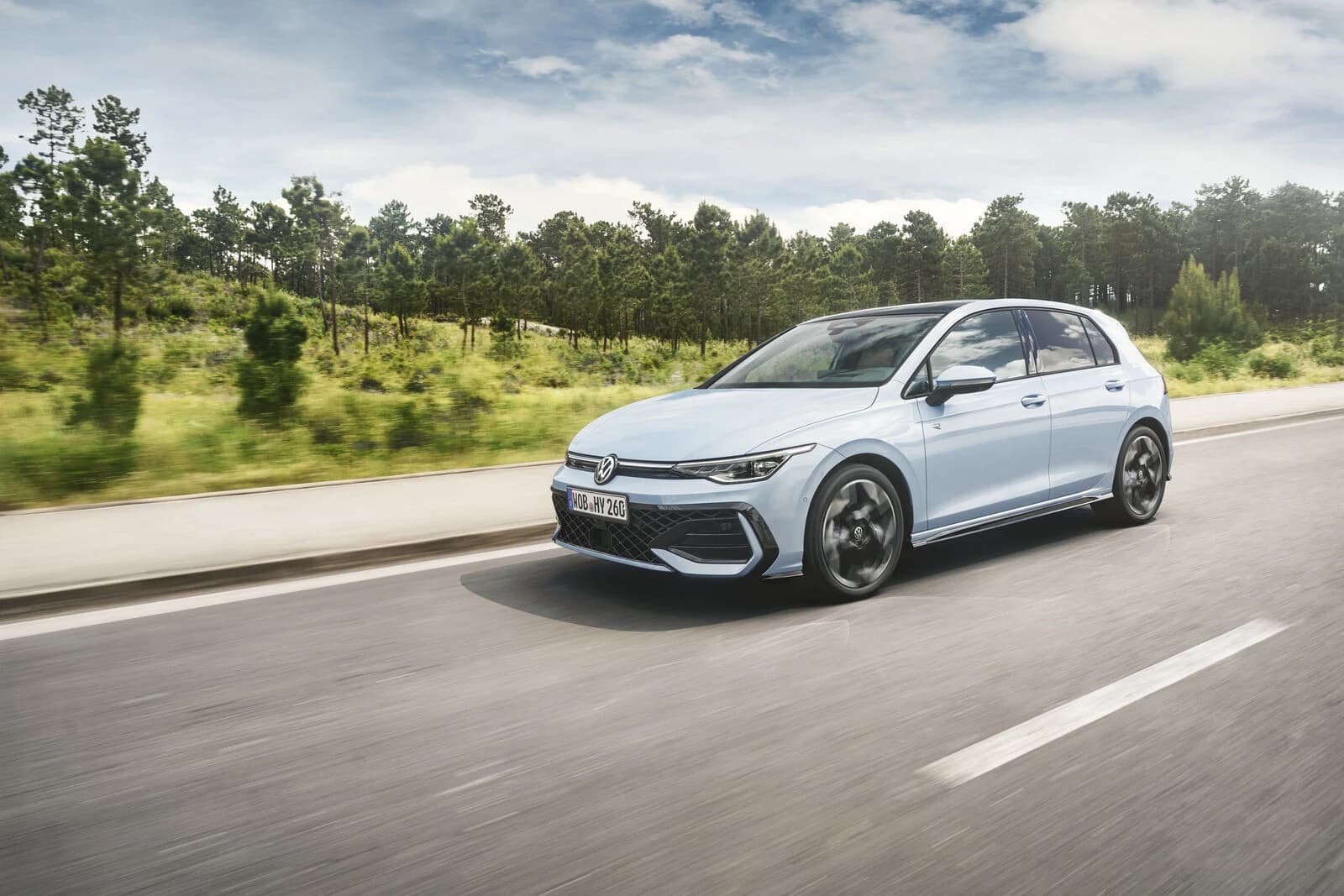
The future ID. Golf should be distinguished from the current Golf Hybrid. Volkswagen opened German pre-sales for that full hybrid on 21 July, initially with a 125 kW system. The announced starting price for the R-Line version was €41,400 in Germany. This is a dated German price, rather than a current Europe-wide offer or an electric Golf price.
Its hardware combines a 1.5 TSI evo2 petrol engine, an electric traction motor, a generator and a battery with 1.6 kWh gross capacity. Energy is recovered during driving or generated on board. There is no external charging requirement. The ability to travel electrically in some situations does not make the Golf Hybrid a battery-electric vehicle.
Volkswagen describes electric operation at low speeds, series operation with the petrol engine generating electricity, and parallel operation in which the petrol engine helps drive the car. The latter can occur from around 60 km/h depending on use. Those are operating modes of the hybrid system, with no confirmed bearing on the architecture of ID. Golf.
Other electric programmes already have published details
ID.3 Neo offers a more concrete reference for buyers looking at Volkswagen's electric compact cars. At its April unveiling, Volkswagen announced up to 630 km of WLTP range with the largest of three available batteries. That is an official configuration-dependent figure, rather than a Carboratory road-test result. It should not be presented as the future Golf's range.
The same presentation described a revised cockpit, one-pedal driving and a vehicle-to-load function supplying external devices at up to 3.6 kW. These are disclosed ID.3 Neo features. Neither the shared brand nor the compact body style establishes that ID. Golf will inherit them unchanged.
There is also a separate small electric family: CUPRA Raval, Volkswagen ID. Polo, Škoda Epiq and Volkswagen ID. Cross. At the Paris presentation on 11 October, Volkswagen reported almost 150,000 orders across those four vehicles. Orders are not deliveries, and the combined figure does not reveal each model's individual total.
The family shares MEB+ technology and production responsibilities across Spain. Raval and ID. Polo are assigned to Martorell, while Epiq and ID. Cross are assigned to Pamplona. Volkswagen estimates around €600 million of synergy potential over the full product life cycle. This remains a forecast, not savings already realised in the nine-month accounts.
What the pause leaves unresolved
The practical question for an electric Golf customer is now when Volkswagen can fund and resume development. The October statement supplies no answer, and does not establish a replacement timetable. A future launch year circulating in earlier reporting should not be treated as a new delivery commitment after this announcement.
For a purchase decision today, the relevant comparisons remain vehicles with a published specification and an actual local offer. ID. Golf still lacks those details in this update. A Volkswagen dealer's quotation for Golf Hybrid or ID.3 Neo concerns a separate car, even if all three appear in the same discussion about the brand's compact-car future.
Photo: current Golf Hybrid, not the future ID. Golf. Official press photograph, free editorial use; copyright Volkswagen AG, DB2026AU00595.