Volvo Cars and NVIDIA are expanding their partnership to develop automated driving technology for future Volvo vehicles. Announced on 15 October 2026, the agreement brings together Volvo’s safety engineering and NVIDIA’s Hyperion sensor and computing architecture, Halos OS and Alpamayo Stack driving software.
Volvo says the technology will debut in a next-generation Volvo car as part of its largest-ever product push. The companies have not named the vehicle, announced a production date or published the final sensor configuration. The announcement is therefore a development programme, not the launch of an autonomous Volvo that customers can order today.
What the new architecture is intended to do
The two companies say future Volvo cars will be designed to handle complex real-world environments, including motorways, busy urban roads and parking situations. Their description of door-to-door navigation expresses the intended scope of the technology. It does not mean that a future vehicle will drive itself on every road, in every country and under every weather condition.
NVIDIA Hyperion links the computing platform with the sensors needed for advanced driver assistance and automated driving. In a production vehicle, data from cameras, radar, lidar or other sensors must be processed in real time. The system then has to turn that information into warnings or commands for steering, braking and acceleration. Volvo has not published the final sensor list, redundancy design or operating limits for the vehicle that will introduce the partnership’s technology.
Halos OS is the software foundation intended to support system safety and integration. NVIDIA describes it as a platform for AI-enabled vehicles with system services, sensor interfaces and safeguards that can check actions generated by AI models. Alpamayo Stack adds driving software and reasoning models for difficult road situations.
Those product names are not a certification for a particular Volvo model. A software stack can be part of an engineering programme, but the finished vehicle still needs validation, safety documentation, cybersecurity work and regulatory approval in each market where its functions are offered.
A next-generation Volvo will get the debut
Volvo has said that the technology will appear first in a next-generation car. The announcement does not identify the name or body style. It is not confirmed whether the first application will be an SUV, a saloon or another type of vehicle, and no start of production has been disclosed.
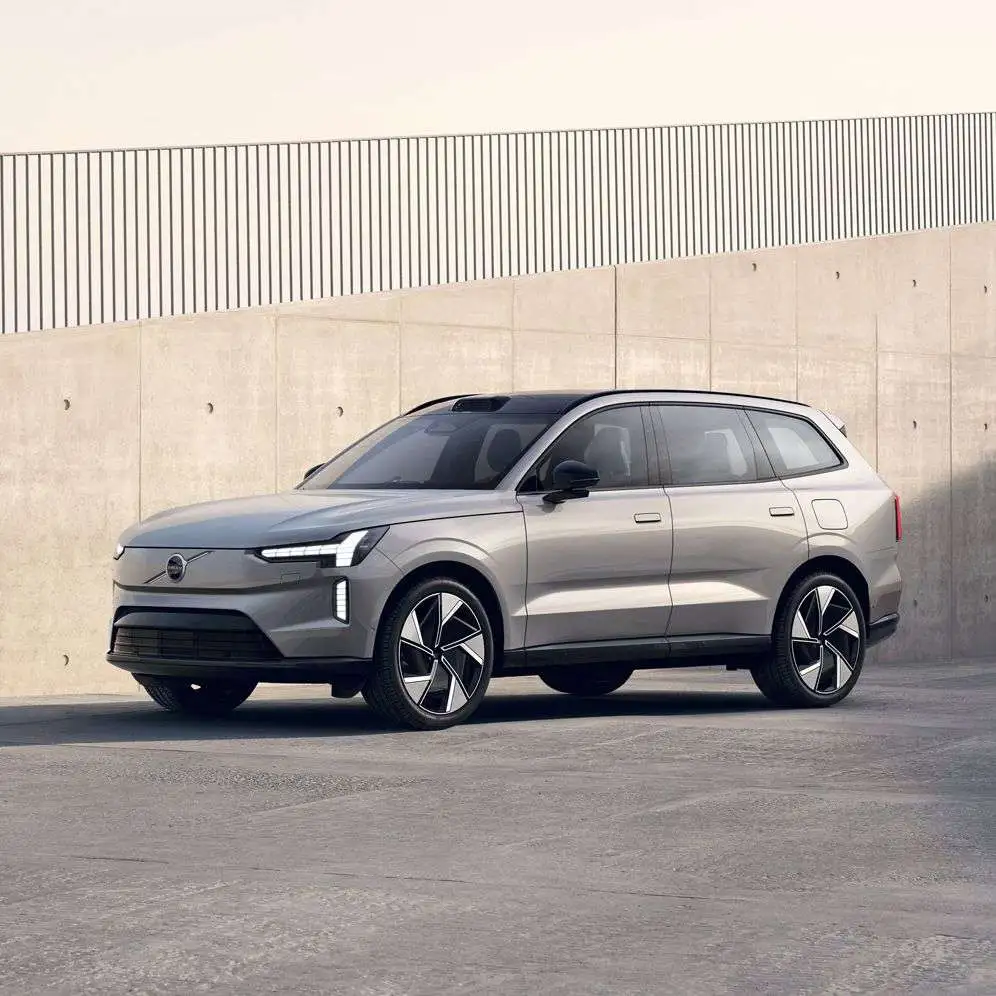
The announcement fits Volvo’s wider move towards electric and software-defined cars. The company has previously described its Superset technology stack, in which future vehicles can use common building blocks of hardware, software and electronic systems. Volvo has also presented SPA3 as a scalable electric technology base and named the EX60 as its first model on that architecture. The NVIDIA announcement does not say that the EX60 will be the first Volvo with the complete Hyperion, Halos and Alpamayo combination.
That distinction matters for buyers. A car can have centralised computing and software updates without offering unrestricted automated driving. Equipment, software availability and legal approval can vary by vehicle and market. The eventual specification will matter more than the name of the platform.
A relationship that began in 2017
The expanded agreement builds on a collaboration that began in 2017. Volvo Cars, Autoliv, Zenuity and NVIDIA then announced work based on NVIDIA DRIVE PX for next-generation self-driving technologies. Zenuity was a software company created by Volvo Cars and Autoliv, and the project focused on artificial intelligence for object recognition, threat prediction and route planning.
Volvo has continued to use NVIDIA computing in its vehicles. The EX90 uses a central computing system based on NVIDIA DRIVE Orin. Volvo says that system can deliver more than 250 trillion operations per second. That number describes computing capacity; it is not a direct measurement of safety, autonomous capability or driving performance.
In an earlier technology update, Volvo said it planned to introduce future vehicles using NVIDIA DRIVE Thor. NVIDIA lists up to 1,000 trillion operations per second for Thor and says it can offer up to seven times the energy efficiency of a single Orin system. These are platform figures. They do not, by themselves, reveal what features a particular Volvo model will support.
Cloud development is part of the plan
The collaboration is not limited to the computer installed in the vehicle. Volvo Cars’ wholly owned software company Zenseact uses NVIDIA DGX systems for AI model training. Real-world driving data can help engineers improve perception and planning, while simulation can expose the software to unusual scenarios before updates reach customers.
That process is not a licence to update safety-critical functions without verification. Data must be selected and handled under privacy and cybersecurity requirements. New software has to be tested against rare situations, different lighting and weather conditions, sensor failures and cases where road users behave unpredictably. For functions that can influence steering or braking, the manufacturer remains responsible for the complete vehicle system.
NVIDIA describes Alpamayo as a family of models and tools for autonomous vehicles. The stack can interpret a road scene, produce a planned trajectory and use separate safety checks to evaluate the proposed action. Volvo still has to integrate those elements with its own vehicle controls, sensors, safety architecture and human-machine interface.
What “eyes-off” and “mind-off” do not confirm
The joint announcement refers to a gradual introduction of eyes-off and mind-off driving. These terms describe an ambition for drivers to be able to stop monitoring the road continuously, or to hand over more of the driving task, under defined conditions. They do not identify an SAE automation level in the announcement and do not specify how much responsibility the driver will retain.
Any automated driving function needs an operational design domain: the road type, speed, weather, visibility, mapping, traffic and other conditions in which it is designed to work. When the system reaches the edge of that domain, it must request a takeover or perform a safe fallback. Volvo has not published those limits for the next-generation vehicle.
The distinction is also important because driver assistance and automated driving are not the same. A system may control steering and speed while still requiring the driver to watch the road. A more advanced function may allow the driver to look away in limited situations, but that permission depends on the approved system, the market and the exact road conditions. The future Volvo’s legal and technical classification remains unknown.
What has not been announced
Volvo and NVIDIA have not disclosed the model name, launch date, price, final sensors, market availability, official automation level or complete hardware configuration. It is also not confirmed that every future Volvo electric car will use exactly the same set of components.
The confirmed news is more specific: a partnership that began in 2017 is being expanded, and a next-generation Volvo will combine Volvo’s safety expertise with NVIDIA Hyperion, Halos OS and Alpamayo Stack. The result can only be judged after Volvo reveals a production vehicle and publishes its operating conditions. Until then, the announcement should be read as a technology roadmap rather than a promise of unrestricted self-driving.