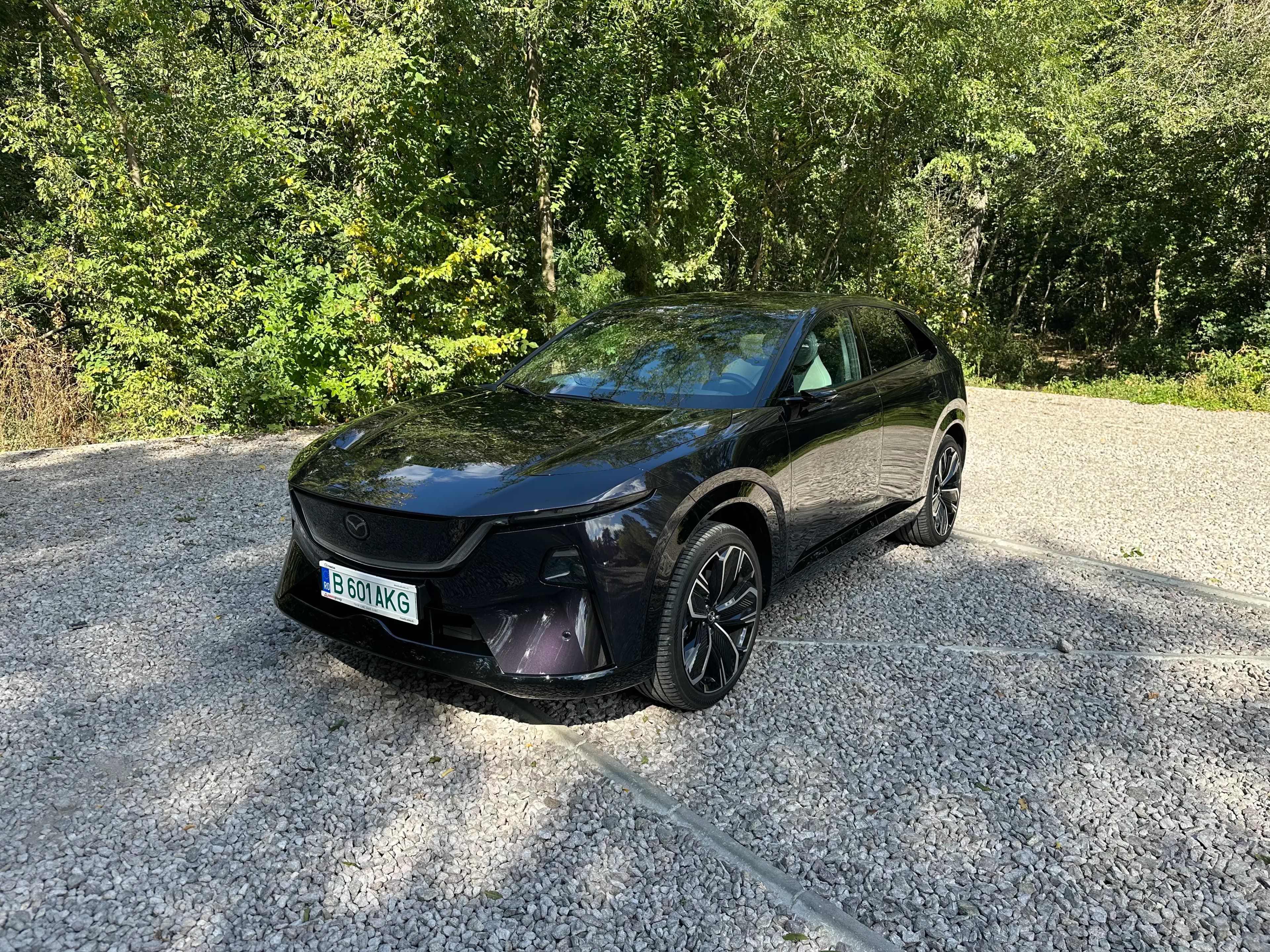
The 2026 Mazda CX-6e is one of those electric cars that makes a very convincing first impression. It looks expensive, the interior feels far more premium than many mainstream electric SUVs, there is plenty of space for passengers and the whole car carries a sense of occasion that is becoming surprisingly difficult to find in an EV segment increasingly dominated by large screens and very similar design philosophies.
After spending time behind the wheel, however, the CX-6e becomes a more complicated proposition. There is plenty to like, from the quality of the cabin to the balanced rear-wheel-drive chassis, but there are also several areas where Mazda falls short of the best cars in the segment. The ride is firmer than expected, the touchscreen is not always as responsive as it should be, the digital mirrors require a significant adjustment period, the seats are not as comfortable as they initially look and the real-world range is adequate rather than class-leading.
None of those things make the CX-6e a bad electric car. Quite the opposite. It is a genuinely appealing SUV with a distinctive personality. The bigger problem is that it competes in one of the most aggressive parts of the EV market, where buyers can also choose between the Tesla Model Y, Skoda Enyaq, Kia EV6 and BYD Sealion 7.
And at around €50,000, being good is no longer enough.
If this car were roughly €10,000 cheaper, the conversation would be very different.
Mazda CX-6e specifications at a glance
The Mazda CX-6e uses a single electric motor mounted on the rear axle, producing 258 hp and 290 Nm of torque. Energy comes from an approximately 78 kWh LFP battery, while official WLTP range can reach around 484 km, depending on wheel size and configuration.
The maximum DC charging speed is 195 kW, with Mazda quoting a roughly 10 to 80 percent charging time of around 24 minutes under suitable conditions. AC charging is supported at up to 11 kW.
Performance is intentionally sensible rather than spectacular. The CX-6e accelerates from 0 to 100 km/h in around 7.9 seconds, which may look fairly ordinary in a market filled with unnecessarily powerful electric SUVs, but it never feels slow on the road.
At approximately 4.85 metres long and with a wheelbase of more than 2.9 metres, the CX-6e is also a substantial family SUV. The long wheelbase pays off particularly well in the rear, where passenger space is one of the car's stronger qualities.
It looks more expensive than it is
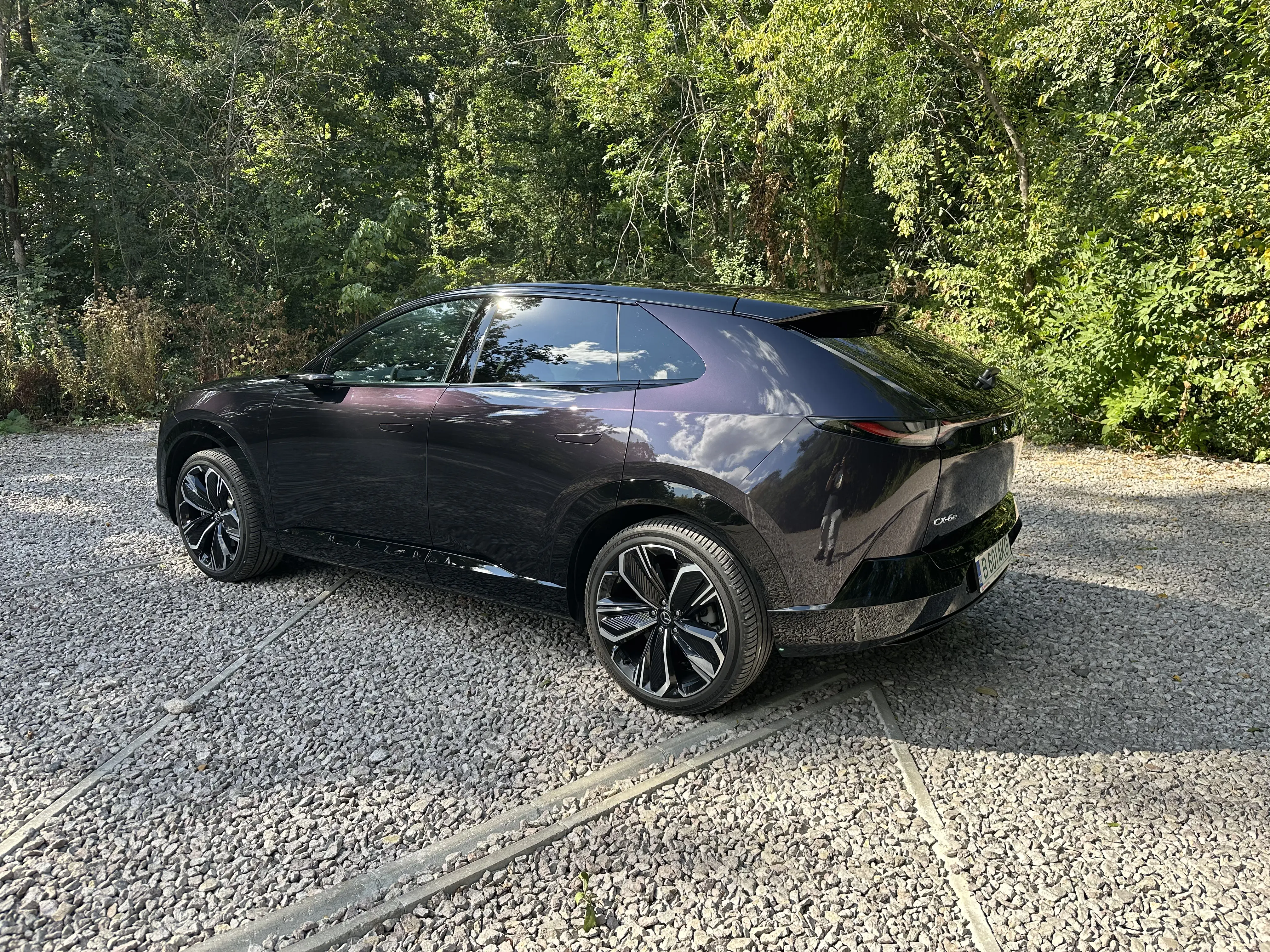
Mazda has done an excellent job with the exterior design. The CX-6e looks modern without trying too hard to appear futuristic, and its proportions give it a more athletic stance than many conventional electric SUVs.
The nose is relatively low, the lighting signature is distinctive, and the roofline flows gently towards the rear without turning the car into an impractical SUV-coupe. Flush door handles and carefully integrated aerodynamic elements add to the clean appearance, but the overall design avoids many of the exaggerated details seen on newer EVs.
That is important because the CX-6e looks like a car that should age well.
There are no unnecessary visual tricks, no oversized fake grille and no attempt to make the vehicle look like a concept car that accidentally reached production. Instead, it manages to combine Mazda's traditional design language with a cleaner and more modern EV identity.
More importantly, the CX-6e looks expensive.
That impression becomes even stronger once you step inside.
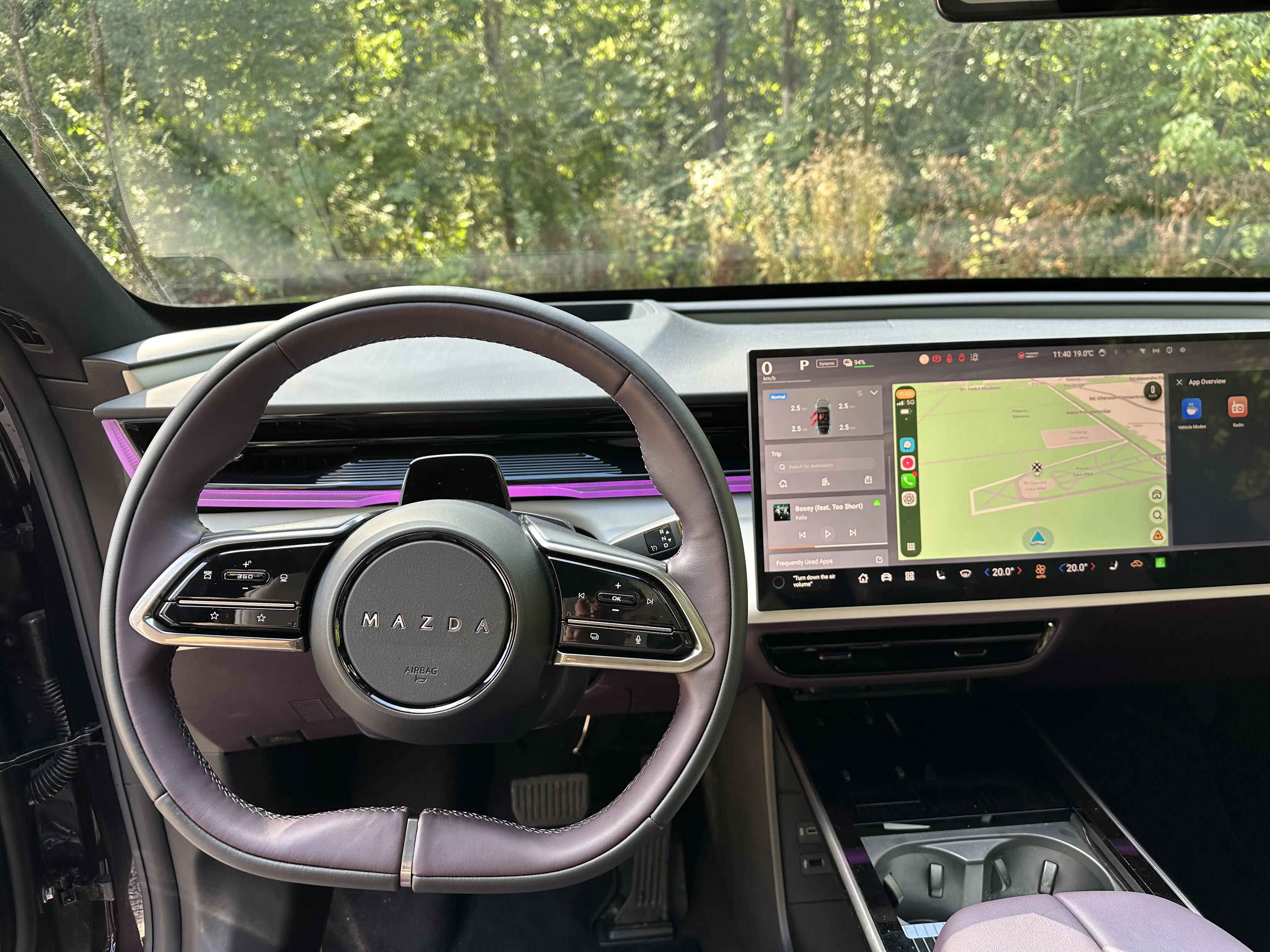
The interior is probably the CX-6e's biggest strength
If there is one area where the Mazda CX-6e genuinely stands out, it is the cabin. The materials feel good, the design is elegant and the overall atmosphere is noticeably more upmarket than what you might expect from a mainstream electric SUV.
There is a sense of depth to the dashboard and door panels that is missing from more minimalist competitors. Instead of simply installing a tablet in the middle of the cabin and surrounding it with black plastic, Mazda has made a visible effort to create something that feels carefully designed.
Compared with something like the Tesla Model Y, the difference is immediate. Tesla's interior is cleaner and more functional, but the Mazda feels more luxurious, more traditional and arguably more special.
The centrepiece is a massive 26.45-inch panoramic display stretching across much of the dashboard. It looks impressive and gives the interior a high-tech feel, while the overall layout remains relatively clean.
There is also a large head-up display, wireless smartphone integration and, depending on specification, a powerful audio system with speakers integrated into the headrests.
On presentation alone, the CX-6e feels closer to a premium SUV than its badge might suggest.
Unfortunately, the software does not always match the quality of the hardware.
The touchscreen needs to be faster
The large central display looks excellent, but during our time with the car it was not consistently responsive.
There were several occasions where a function required two or even three presses before the system reacted, and that quickly becomes frustrating because so many vehicle controls now depend on the screen.
This is particularly noticeable because Mazda traditionally resisted the industry trend of moving every function onto a touchscreen. Previous Mazda interiors often used physical controls and rotary interfaces that could be operated with minimal distraction.
The CX-6e takes almost the opposite approach.
Most functions are now handled through the display, which means the interface needs to work perfectly every time. When the screen misses an input, even occasionally, the problem feels more significant than it would in a car with dedicated physical controls.
The menus themselves are reasonably logical and the graphics look modern, so the issue is not really one of design. It is about responsiveness.
A future software update could potentially improve this considerably, but in the vehicle we tested the system was simply not as smooth as the best interfaces currently available.
The head-up display is useful, but it should show more information
Mazda has decided not to fit a traditional digital instrument cluster behind the steering wheel. Instead, the CX-6e relies heavily on its large head-up display to show the driver the most important information.
In principle, this works well. The projection is large, easy to read and positioned naturally in the driver's field of view.
The problem is that the system feels slightly underused.
Once the traditional instrument display is removed, the head-up display becomes much more important. It should ideally provide extensive information about navigation, battery status, efficiency, energy consumption and driver assistance systems.
The hardware appears capable of doing far more than the current software allows.
It is not a major weakness, but it does create the impression that Mazda has left some potential on the table.
Digital mirrors: clever idea, questionable benefit
Higher-specification versions can be equipped with digital side mirrors, replacing conventional mirror glass with cameras and small interior displays.
There are obvious technical advantages. Smaller camera modules can improve aerodynamics, reduce wind noise and potentially offer better visibility in difficult conditions.
But they require a surprisingly significant adjustment period.
After years of driving cars with conventional mirrors, your eyes instinctively move towards a specific position every time you want to check what is happening beside or behind you. Digital mirrors change that behaviour, and for the first few hours it feels slightly unnatural.
It is entirely possible that after several weeks of ownership the system becomes second nature.
Maybe I would get used to it.
Or maybe I am simply getting too old for digital mirrors.
Either way, if I were configuring a CX-6e for myself, I would choose traditional mirrors. They are simpler, more intuitive and they solve a problem that, in my opinion, never really needed solving.
Rear-seat space is excellent
The long wheelbase gives the CX-6e plenty of room inside, especially for rear passengers.
Legroom is generous even with taller occupants sitting in the front, while the mostly flat floor improves comfort for anyone using the centre seat. Headroom is also good considering the slightly coupe-like roof profile.
For families, this is an important advantage.
The CX-6e is large enough to work properly as the main household car, and two adults or older children can sit comfortably in the rear without feeling like they are occupying the compromise seats.
Cargo capacity is respectable rather than outstanding, but Mazda also includes an 80-litre front storage compartment, which is particularly useful for charging cables and smaller items.
The overall packaging is therefore good, even if it does not necessarily beat the most practical alternatives in the segment.
How does the Mazda CX-6e drive?
This is where the CX-6e still feels recognisably Mazda.
It is not a sports SUV, but the steering has decent weight, the chassis feels well controlled and the rear-wheel-drive layout gives the car a slightly more natural balance than many front-biased electric crossovers.
The 258 hp output feels completely sufficient.
There is no dramatic launch-control-style acceleration and no attempt to turn every traffic-light start into a performance demonstration. Instead, the power arrives smoothly and predictably.
For everyday driving, that is arguably a better approach.
The CX-6e feels quick enough when joining a motorway, overtaking or accelerating out of a junction, but it does not constantly remind you that electric motors can produce ridiculous amounts of torque.
There is also a slightly sporty character to the chassis.
Not excessively sporty, and certainly not uncomfortable because Mazda is trying to build an electric sports car, but enough to make the car more interesting than many similarly sized EVs.
The body remains composed through corners and the car feels smaller from behind the wheel than its exterior dimensions might suggest.
Unfortunately, this setup also contributes to one of the CX-6e's biggest weaknesses.
The ride is too firm
The suspension is firmer than we would expect from a large electric family SUV.
On smooth roads, the setup works well. Body movements are controlled, the car feels stable and the steering response gives the CX-6e a pleasantly composed character.
On rougher surfaces, the compromise becomes much more obvious.
Short bumps, expansion joints, broken tarmac and potholes can send more vibration through the cabin than expected, particularly on cars fitted with the larger wheels.
The issue is not severe enough to make the car uncomfortable all the time, but it is noticeable.
For European buyers, particularly those driving regularly in cities or on secondary roads, this matters more than a small improvement in cornering ability.
The CX-6e does not need to become significantly softer. It simply needs slightly better isolation over sharp imperfections.
If choosing between larger and smaller wheel options, we would strongly recommend testing both before placing an order. The larger wheels look better, but the smaller setup may suit the character of the car more effectively.
The seats are not as comfortable as they look
The seats create a strong first impression. They look premium, the materials feel pleasant and there is enough adjustment to find a good driving position.
Over longer periods, however, they are not quite as comfortable as expected.
There is nothing fundamentally wrong with them, but support and cushioning could be better, especially considering the CX-6e is clearly designed to work as a long-distance family vehicle.
Combined with the relatively firm suspension, this means the Mazda can feel slightly less relaxing over long journeys than some of its rivals.
This is exactly the kind of issue that does not become obvious during a short dealership test drive.
If you are seriously considering a CX-6e, spending more than 15 or 20 minutes behind the wheel would be a very good idea.
Real-world range is average rather than impressive
Officially, the Mazda CX-6e can deliver up to around 484 km of WLTP range, depending on specification.
That figure is perfectly respectable, but it no longer looks particularly impressive in 2026, especially for an electric SUV costing around €50,000.
During our test, we calculated that a realistic driving range of roughly 320 km was achievable under the conditions we experienced.
As always, that figure should not be treated as a universal number. Electric vehicle range changes significantly depending on temperature, speed, motorway use, climate control, driving style and wheel size.
However, real-world figures matter far more than WLTP ratings when deciding whether an EV will fit into your lifestyle.
Around 320 km is more than enough for normal commuting, daily driving and regional journeys, particularly if the car can be charged at home.
For longer motorway journeys, the situation is less convincing.
If your routine regularly involves covering 500 or 600 km in one day, alternatives with better efficiency or larger usable batteries may be more attractive.
The CX-6e's range is not poor.
It is simply average.
And in this segment, average range can become a disadvantage.
195 kW charging helps on longer trips
The 195 kW maximum DC charging speed is a positive part of the CX-6e package.
Mazda says the battery can charge from roughly 10 to 80 percent in around 24 minutes under suitable conditions, which is fast enough to make long-distance travel practical.
A 20 to 25 minute stop is completely acceptable during a longer journey, especially if it coincides with a coffee break or meal.
As always, maximum charging power only tells part of the story. What matters in real life is how long the battery can sustain a high charging rate, whether battery preconditioning works effectively and how the charging curve behaves once the state of charge begins to increase.
Still, a peak figure approaching 200 kW is competitive enough that charging is not one of our main concerns with this car.
Mazda CX-6e vs Tesla Model Y
The Tesla Model Y is probably the most obvious rival.
Tesla still has major advantages in efficiency, software, route planning and charging infrastructure. Its Supercharger ecosystem remains one of the easiest ways to complete long electric journeys, while the car itself generally extracts more distance from every kilowatt-hour.
If your priority is maximum efficiency and the most mature EV ecosystem, the Tesla is difficult to beat.
The Mazda counters with a much more premium-feeling cabin.
Its materials are richer, the interior feels more carefully designed and the exterior has more personality. The CX-6e also feels closer to a conventional premium car, which may appeal to buyers who find the Model Y's minimalist approach too sterile.
The comparison is therefore relatively straightforward.
The Model Y is the more rational purchase.
The CX-6e is the more emotional one.
Mazda CX-6e vs Skoda Enyaq
The Skoda Enyaq takes a more traditional approach to the electric family SUV.
Its biggest strengths are practicality, comfort and easy everyday usability. The cabin is less dramatic than the Mazda's, but many drivers may prefer its more conventional ergonomics.
Depending on specification, the Enyaq can also offer stronger range figures, making it a particularly sensible option for buyers who regularly cover long distances.
Mazda wins on presentation.
The CX-6e feels more special inside, looks more distinctive outside and has a slightly more engaging driving character.
The Skoda is probably the more sensible family tool.
The Mazda is the one you are more likely to turn around and look at after parking.
Mazda CX-6e vs BYD Sealion 7
The BYD Sealion 7 is potentially the most interesting comparison because the two SUVs are very similar in size and target almost exactly the same buyer.
BYD offers more powerful versions, available all-wheel drive and, depending on specification, stronger battery and charging figures.
On paper, it can therefore appear to offer more EV technology for the money.
The Mazda has a different kind of appeal.
Its interior design feels more mature, the cabin has a stronger sense of cohesion and the driving experience is slightly less focused on showcasing electric performance figures.
If your decision is based entirely on specifications, the BYD may offer better value.
If design, interior quality and overall refinement matter more, the Mazda could still be the more desirable car.
Mazda CX-6e vs Kia EV6
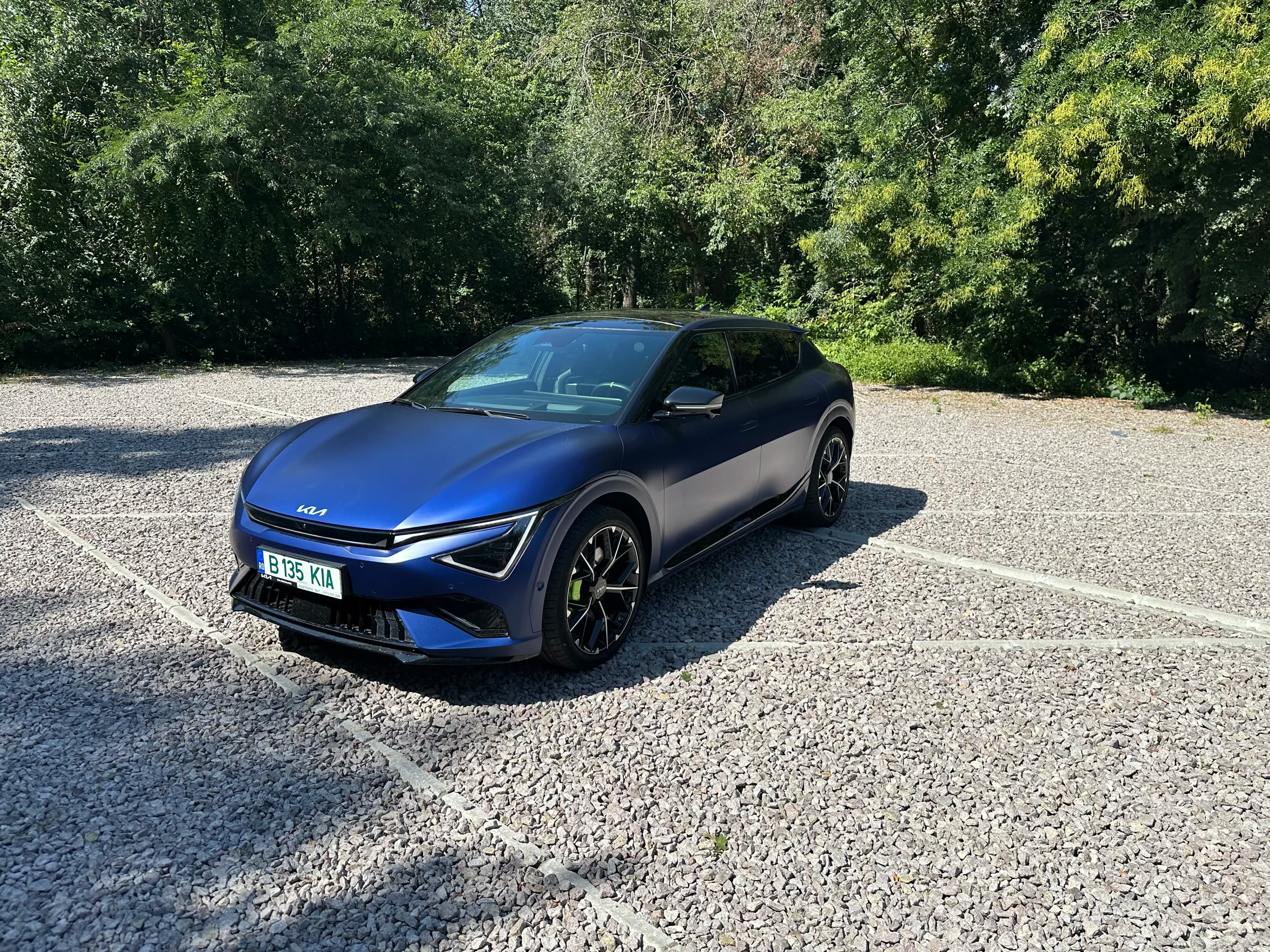
The Kia EV6 remains one of the segment's strongest long-distance EVs, largely because of its 800V electrical architecture and very fast charging capability.
For drivers who regularly use public charging networks and travel hundreds of kilometres in one journey, this can make a meaningful difference.
The EV6 also benefits from being a mature electric platform that has already proven itself across several years of real-world use.
Mazda's advantages are mainly in design, cabin ambience and novelty.
The CX-6e feels newer and arguably more premium inside, but the Kia remains a more compelling tool for frequent long-distance electric driving.
What we liked about the Mazda CX-6e
The interior is easily the strongest part of the car. It feels premium, looks distinctive and provides significantly more character than many similarly priced electric SUVs.
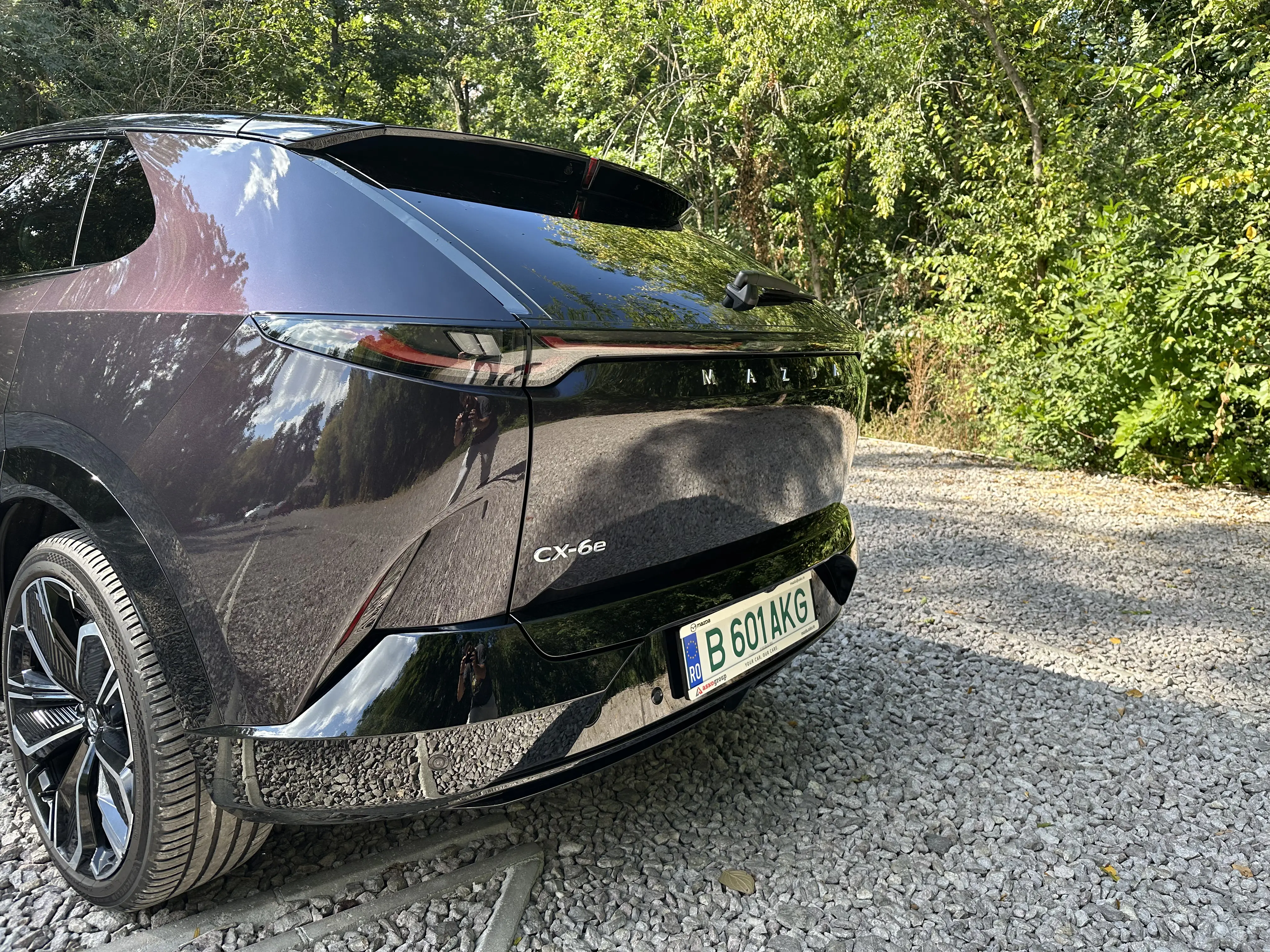
Exterior design is also a major strength. The CX-6e looks modern and expensive without relying on exaggerated styling.
The driving experience is another positive surprise. It is mildly sporty without becoming unnecessarily aggressive, while the rear-wheel-drive chassis and well-weighted steering give it more personality than expected.
Rear-seat space is excellent, performance is more than adequate and the overall build quality creates a strong sense of solidity.
What could be better
The suspension should be more comfortable, particularly with larger wheels.
The touchscreen needs faster and more consistent responses.
The head-up display should offer greater customisation and more information, especially because there is no conventional instrument cluster.
The seats could provide better long-distance comfort.
The digital mirrors remain difficult to recommend unless you genuinely prefer this kind of technology.
And finally, the real-world range is merely average in a market where range and efficiency continue to improve quickly.
Is the Mazda CX-6e worth €50,000?
That is the question that ultimately defines the CX-6e.
If we ignore the price, the Mazda is easy to like.
It looks great, the interior is impressive, it offers plenty of space, performance is perfectly adequate and the driving experience is more engaging than expected.
But you cannot ignore the price.
At roughly €50,000, buyers have access to some of the strongest electric SUVs currently available. Some offer greater range, some are more efficient, others charge faster and several provide either more performance or more practical space.
Mazda does not dominate any single specification.
Instead, it offers a very well-rounded package with a particularly strong interior and a distinctive personality.
At around €40,000, that combination would be extremely difficult to resist.
The CX-6e would offer premium ambience, good performance, fast charging and useful family space at a price where many compromises would be much easier to accept.
At around €50,000, the verdict becomes more cautious.
Carboratory verdict
The 2026 Mazda CX-6e is a genuinely good electric SUV with a lot of personality.
Its cabin is arguably its biggest achievement, combining quality materials, attractive design and a sense of luxury that many mainstream rivals struggle to match. The car also drives well, with enough sporting character to make it interesting without turning everyday journeys into a performance exercise.
But several details prevent it from becoming one of the obvious class leaders.
The suspension could be more compliant, the seats should be more comfortable, the infotainment system needs quicker responses and the large head-up display could be used more effectively. The digital mirrors are interesting technology, but we would still choose conventional glass, while real-world range is adequate rather than exceptional.
The biggest issue, though, remains the price.
At around €50,000, the Mazda CX-6e is a compelling alternative rather than an obvious winner.
Buyers should absolutely test one before ordering a Tesla Model Y, Skoda Enyaq, Kia EV6 or BYD Sealion 7 because the Mazda's interior quality and driving character may be enough to win them over.
But they should also compare the numbers carefully.
Because if the CX-6e were roughly €10,000 cheaper, it would move from "worth considering" to "very difficult to ignore."
Mazda CX-6e FAQ
What is the real-world range of the Mazda CX-6e?
Official range can reach around 484 km WLTP, depending on the version, but during our test we considered roughly 320 km a realistic figure under the conditions we experienced. Actual range can vary significantly depending on temperature, speed, driving style, climate control and wheel size.
What battery does the Mazda CX-6e use?
The CX-6e uses an approximately 78 kWh LFP battery, paired with a rear-mounted electric motor.
How powerful is the Mazda CX-6e?
The electric motor produces 258 hp and 290 Nm of torque, sending power to the rear wheels. The 0 to 100 km/h sprint takes approximately 7.9 seconds.
How fast can the Mazda CX-6e charge?
Maximum DC charging power is around 195 kW, with a quoted 10 to 80 percent charge taking approximately 24 minutes under suitable conditions.
Is the Mazda CX-6e comfortable?
Cabin space and material quality are excellent, but the ride is firmer than expected and the seats are not quite as comfortable as their appearance suggests. Buyers prioritising comfort should test the car on rough roads and compare different wheel sizes.
Is the Mazda CX-6e better than the Tesla Model Y?
The Tesla Model Y is generally more efficient and offers a stronger software and charging ecosystem, while the Mazda CX-6e has a more premium-feeling interior and a more distinctive design. The better choice depends on whether efficiency and technology or cabin quality and character matter more.
What are the main Mazda CX-6e alternatives?
The strongest alternatives include the Tesla Model Y, Skoda Enyaq, Kia EV6 and BYD Sealion 7. Each offers a slightly different balance between range, charging speed, comfort, performance, software and interior quality.
Should you buy a Mazda CX-6e?
The CX-6e is worth considering if design, interior quality, space and a mildly sporty driving character are high priorities. At roughly €50,000, however, it faces extremely strong competition and should be compared directly with its main rivals before making a final decision.