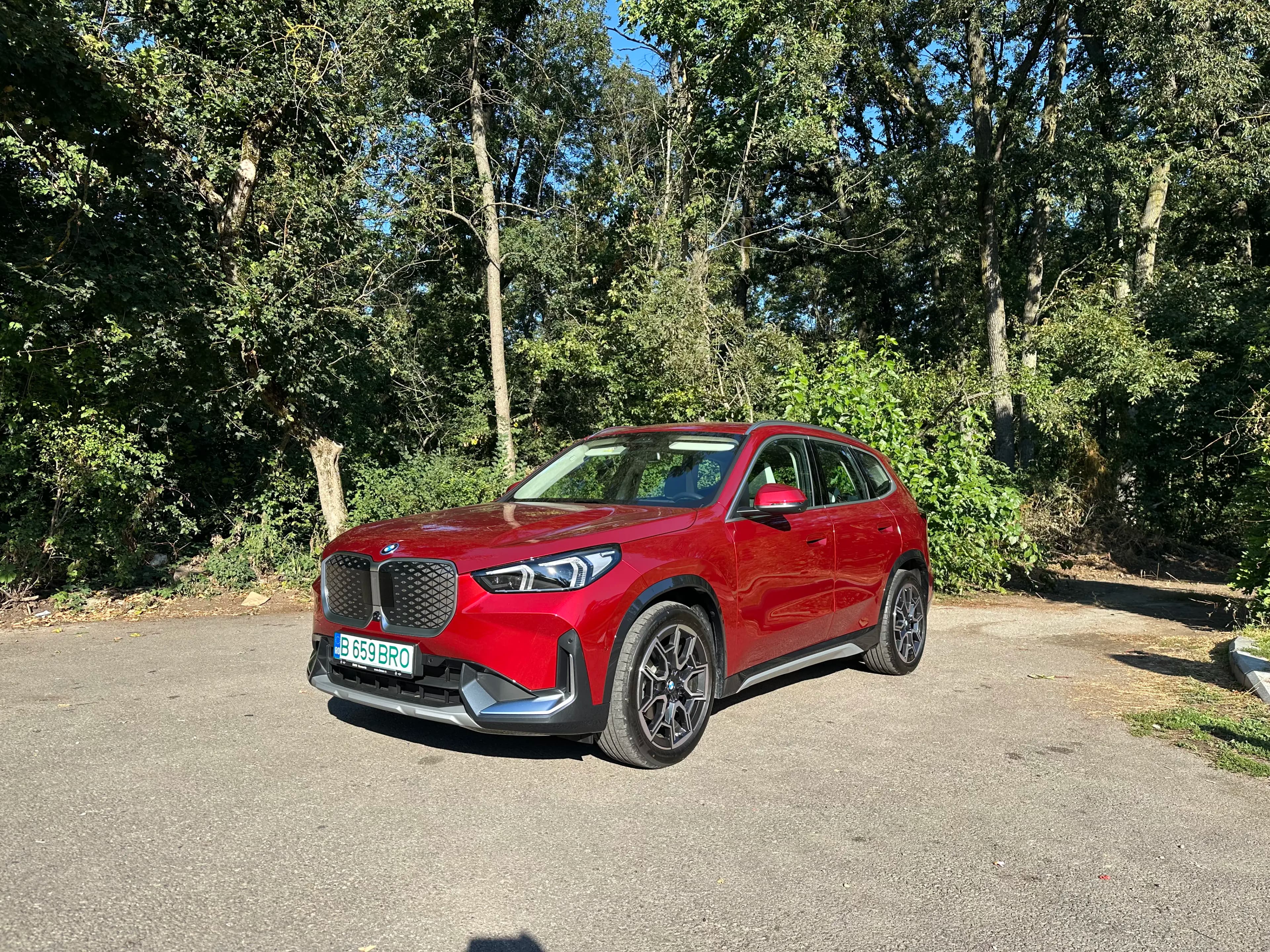
The BMW iX1 eDrive20 makes a convincing case for the less powerful version of BMW’s compact electric SUV. With 204 hp, front-wheel drive and an official WLTP range of up to 503 km in the tested configuration, it is not trying to be an electric hot hatch. Its strengths are quieter: comfort, easy urban driving, a useful cabin and a range that removes some of the anxiety attached to smaller EVs.
This was a well-equipped xLine car with 19-inch wheels, a head-up display, adaptive LED headlights, Driving Assistant Plus, Parking Assistant Plus, electric seats and a Harman Kardon audio system. Those details matter because the iX1’s character changes with its equipment. The basic car may be easier to justify, while a heavily optioned example can move into a price bracket where larger or faster electric SUVs become relevant.
BMW iX1 eDrive20: the key figures
| Specification | Tested BMW iX1 eDrive20 |
|---|---|
| Power | 204 hp / 150 kW |
| Torque | 250 Nm |
| Drive | Front-wheel drive |
| 0–100 km/h | 8.6 seconds |
| Top speed | 170 km/h |
| Official consumption | 14.6 kWh/100 km |
| Official WLTP range | Up to 503 km |
| Official urban WLTP range | Up to 669 km |
| Length | 4,500 mm |
| Kerb weight | 1,940 kg |
| Boot volume | 490 litres |
These are manufacturer or configuration figures, not measurements made by Carboratory. BMW’s current Romanian model information lists the iX1 eDrive20 with a range between 458 and 514 km WLTP depending on specification, while the model’s maximum DC charging power is 130 kW. The tested car’s 503 km figure therefore sits within the official range rather than representing an independent real-world result.
A calm, predictable powertrain
The single electric motor drives the front wheels and produces 204 hp and 250 Nm. That is enough for normal traffic, joining a motorway and overtaking on a national road. The 8.6-second 0–100 km/h time is respectable rather than exciting, and the response is deliberately easy to meter.
There is no violent initial shove and no need to manage a large reserve of performance. The iX1 eDrive20 builds speed in a linear way, which suits a family SUV. Sport mode makes the accelerator more alert, but it does not transform the car into a different personality. Drivers who want a fast electric BMW will still look at the dual-motor xDrive30. Drivers who want a quieter daily car may find the eDrive20’s restraint more useful.
Front-wheel drive is not a problem in ordinary conditions. Power delivery is progressive and the car does not constantly feel as if it is asking the front axle to do too much. The decision deserves more thought for buyers who regularly drive on steep snowy roads or need the extra traction of all-wheel drive. For city use, commuting and weekend trips, the simpler layout is easy to live with.
Ride comfort matters more than sportiness
The iX1 is at its best when driven without urgency. The suspension controls most urban bumps well, the body remains stable and the cabin is suitably quiet. The test car’s 19-inch wheels preserve a good balance between appearance and ride comfort, although sharp edges and damaged asphalt still make their presence known.
The battery lowers the centre of gravity, and the mass is better hidden than the 1,940 kg figure might suggest. Steering is accurate, the SUV changes direction cleanly and it feels secure at motorway speeds. It does not invite the driver to hunt for corners in the way a smaller rear-drive BMW might, but that is not the purpose of this version. Its job is to make everyday travel easy and it does that well.
A natural city car
At 4.5 metres long, the iX1 remains manageable in crowded streets and parking garages. The raised driving position helps visibility, while the light steering makes low-speed manoeuvres uncomplicated. The cameras and Parking Assistant Plus are especially useful in a car that is premium in price but still compact enough to be used in town every day.
Adaptive regenerative braking is well integrated. The car can adjust deceleration according to traffic and the road situation, while the stronger B mode allows the driver to complete much of urban driving with the accelerator. It is not a perfect one-pedal system in every situation, but it reduces the number of separate brake inputs in stop-start traffic.
Range and charging
The headline figure is the official 503 km WLTP range. That number is useful for comparing configurations, but weather, speed, heating, air conditioning, wheel size and driving style will decide the distance available in practice. The test car was able to present the iX1 as a more usable long-distance vehicle than early compact EVs, but a buyer should still plan motorway charging rather than treating WLTP as a promise.
DC charging at up to 130 kW is adequate, not class-leading. BMW quotes roughly 29 minutes for a 10–80% charge under ideal conditions. The battery is not especially large, so a moderate peak power does not automatically mean long stops. On AC, the car can accept up to 22 kW with suitable equipment; at 11 kW, a full charge takes approximately six and a half hours.
The navigation system can include charging stops in a route and estimate the battery level on arrival. Battery preconditioning before a rapid-charge stop is another useful feature. Still, newer electric SUVs are moving towards higher DC power and shorter motorway breaks, so the iX1’s charging hardware is one of the areas where the model feels less current.
A familiar premium interior
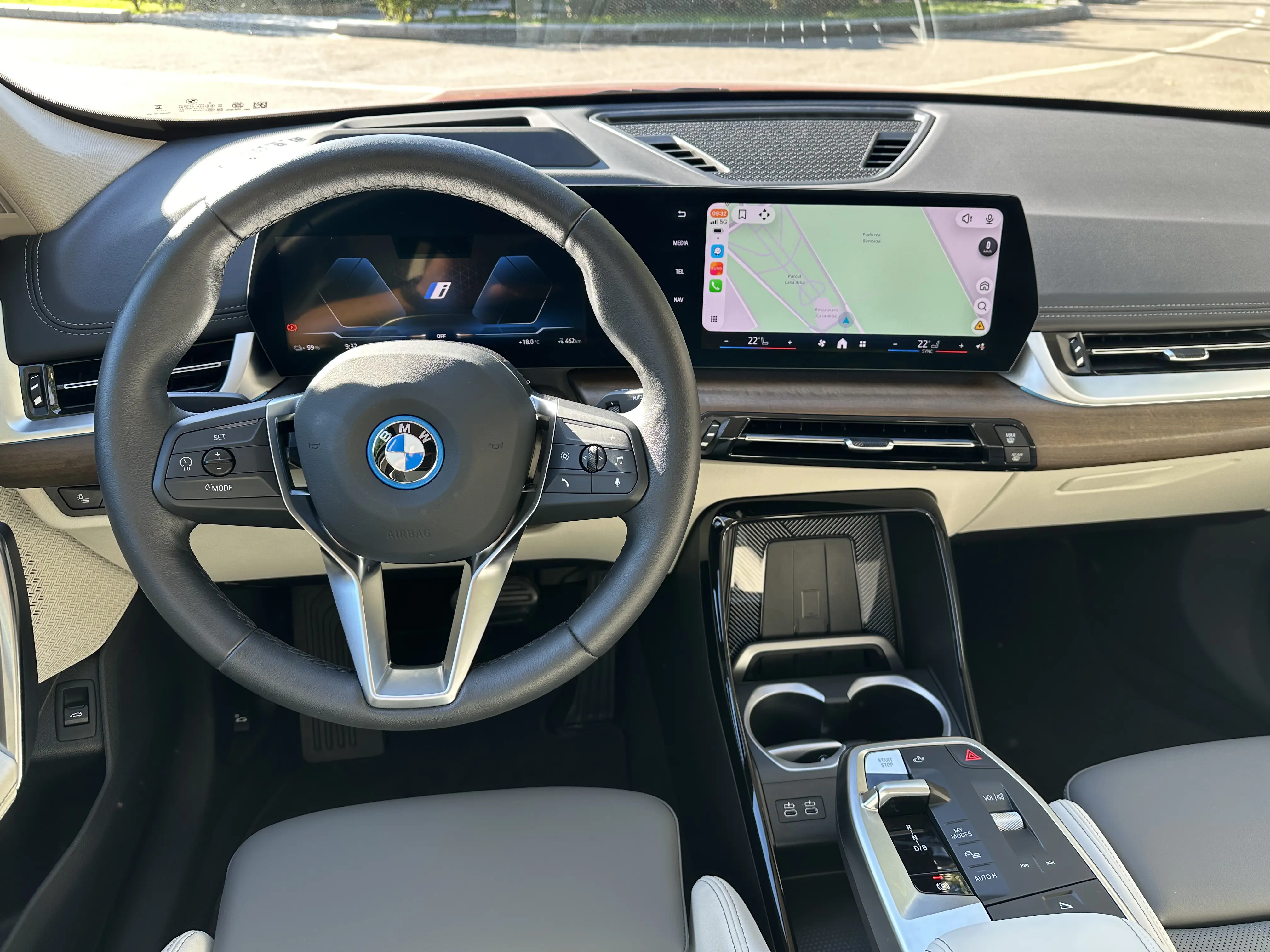
The cabin combines BMW’s curved display with a fairly conventional driving position. The test car used perforated Veganza upholstery in Atlas Grey and Smoke White, open-pore eucalyptus trim and the xLine package. Materials in the areas touched most often feel appropriate for a premium compact SUV, and the assembly is solid.
The front seats were electric, memory-equipped and fitted with the Active Seat function. The driving position is easy to adjust, and the seats provide enough support for longer journeys without becoming hard. The head-up display, part of the Innovation Package, is worth considering: speed, navigation directions and assistance information stay in the driver’s field of vision.
The screen graphics are clear and the system responds quickly. Wireless phone integration is useful, as are the navigation and charging functions. The main ergonomic criticism is the migration of common controls into the central display. Climate settings and seat heating are attractive as part of a clean dashboard, but physical controls are easier to use without looking away from the road. The system becomes familiar after a few days; it is not always the simplest solution.
Family space without excess
The iX1’s cabin uses its compact exterior dimensions efficiently. Two adults can sit in the rear without the impression that the SUV is a small car, and the 40:20:40 split-folding rear seat adds flexibility. The backrest angle can be adjusted, which helps balance passenger comfort and luggage space.
The 490-litre boot is useful for a child’s pushchair, shopping or a weekend away. It is not a segment record, but it is a good match for a 4.5-metre vehicle. The tested car also had i-Size mounting for a child seat in the front passenger position, a detail that matters to families but rarely appears in a simple equipment list.
Equipment and price
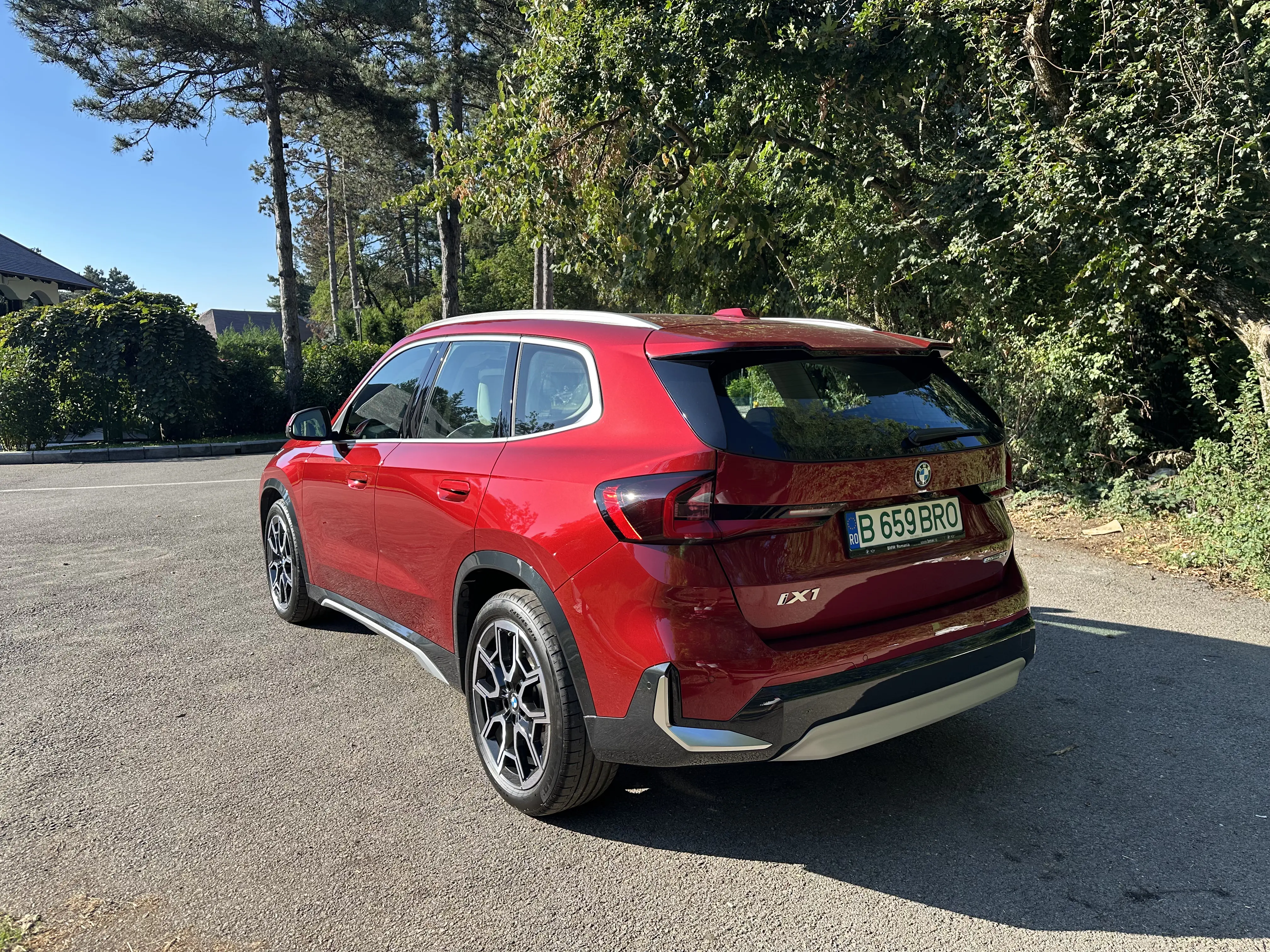
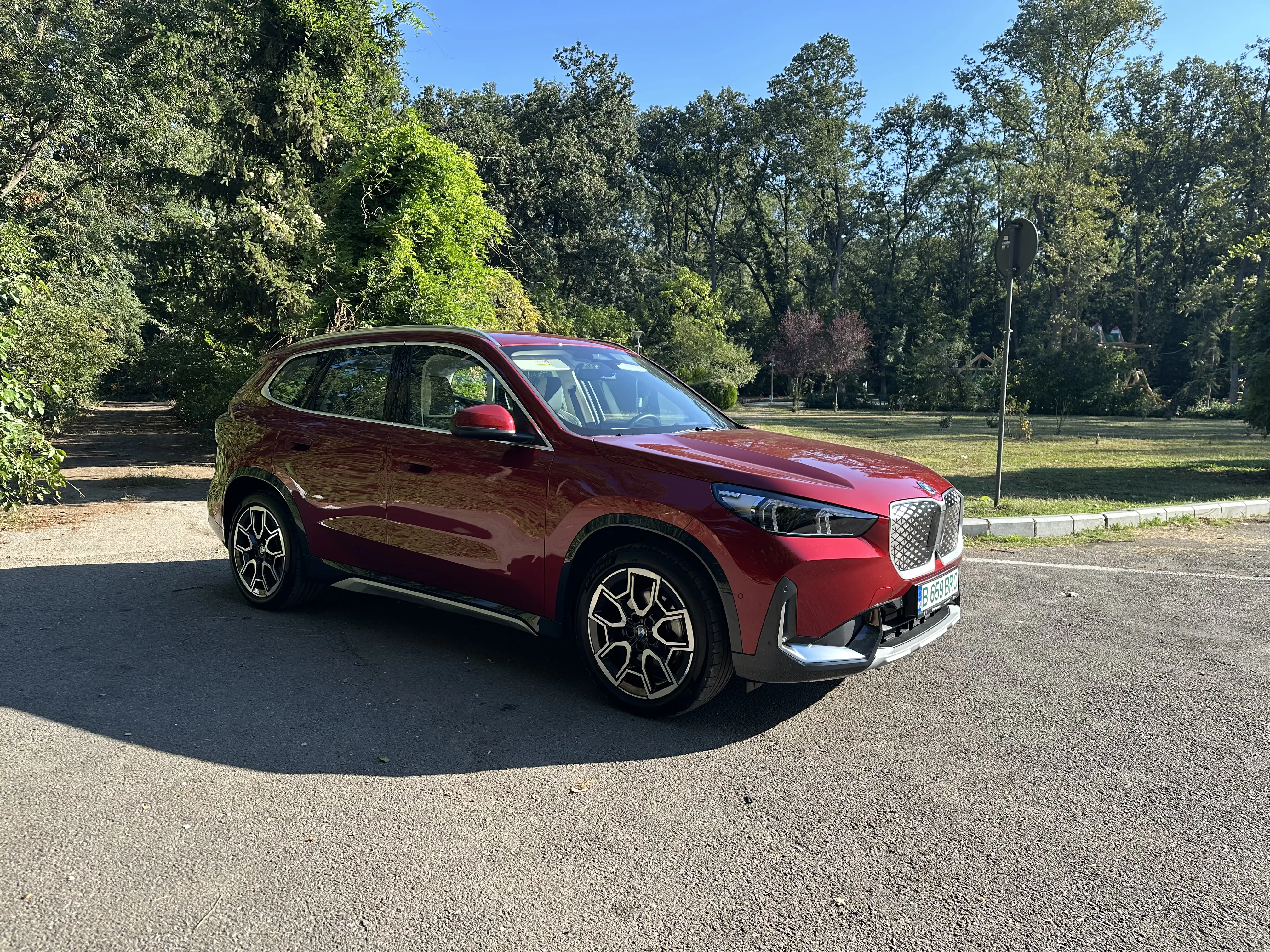
The test car had Fire Red metallic paint, 19-inch two-tone wheels, xLine trim, the Innovation and Comfort packages, adaptive LED lights, Driving Assistant Plus, Parking Assistant Plus, Comfort Access, electric seats with memory, Active Seat, Harman Kardon audio, BMW IconicSounds Electric and wireless charging.
Its net base price was €39,300, while optional packages and equipment added almost €9,600 before taxes. Including VAT and service and repair packages, the final price reached €60,148.99. That exact figure applies to the tested car, not every iX1 eDrive20.
This is the central objection. At roughly €60,000, the iX1 competes with larger cars, stronger electric powertrains and models with quicker charging. A more disciplined specification would improve the value equation. I would prioritise the head-up display, the parking and driving assistance systems, adaptive LED headlights, electric seats, Comfort Access and the Harman Kardon system. Decorative upgrades and large wheels are easier to leave off.
Verdict
The BMW iX1 eDrive20 is a well-rounded premium electric SUV. It is quiet, comfortable, easy to place in town and spacious enough for a small family. Its range is useful on paper, its performance is sufficient and the interior retains enough BMW character to make the car feel more than an appliance.
The weaknesses are equally clear. The price of a well-equipped example is high, 130 kW DC charging is merely adequate for 2026, and too many everyday functions depend on the screen. The eDrive20 makes the most sense when the buyer values comfort and predictable usability over acceleration or all-weather traction. It is a sensible iX1, but the options list needs to be managed carefully.