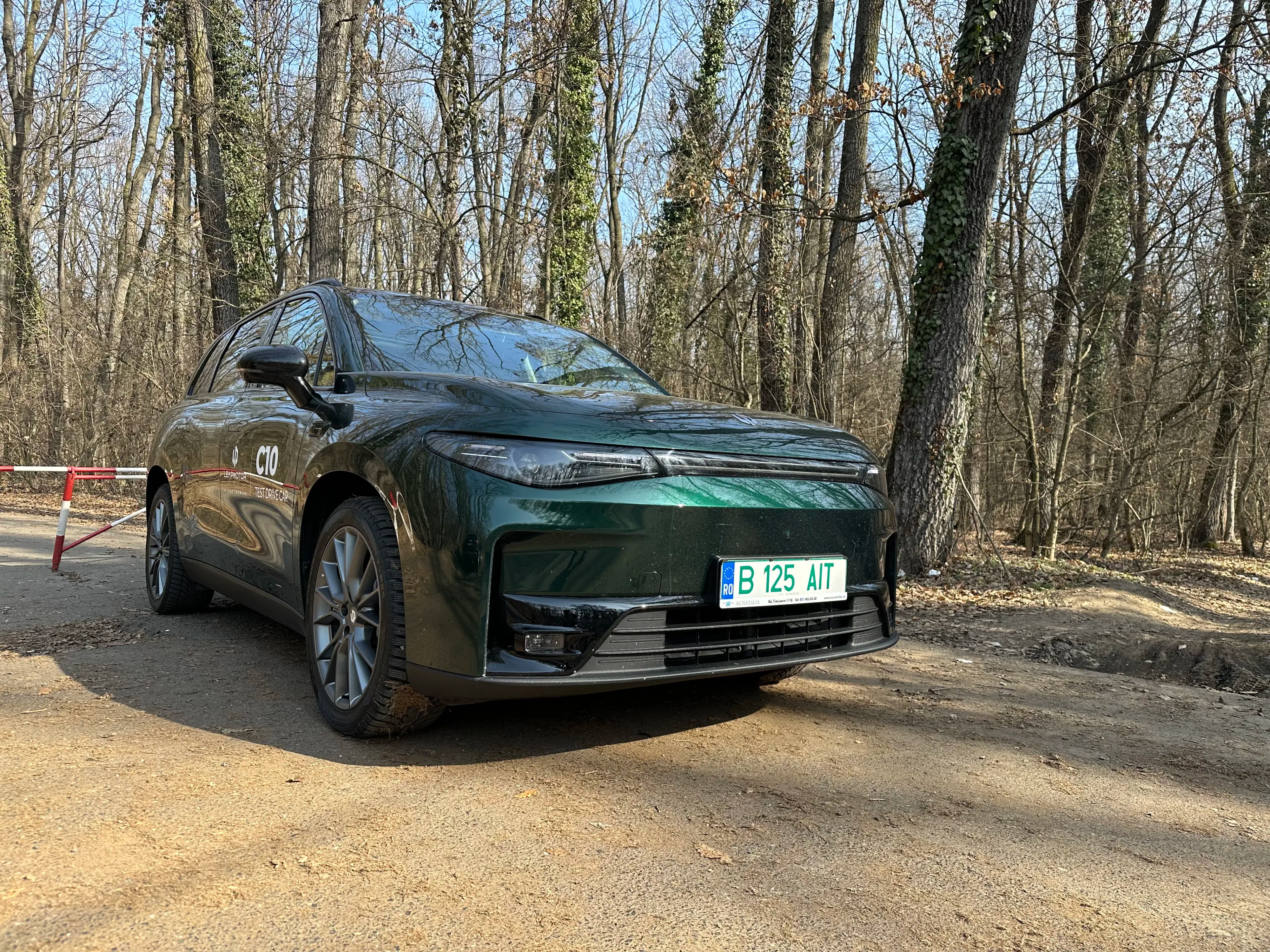
In a fast-changing automotive landscape, Leapmotor — a Chinese electric vehicle maker — has launched the C10, a mid-size electric SUV that aims to bring a fresh perspective to its segment. With modern design, advanced technology and competitive pricing, the C10 positions itself as an interesting alternative for buyers seeking an accessible electric experience.
This article explores performance, equipment and overall impressions after an extended test drive of the Leapmotor C10. We look at how this newcomer behaves against better-known rivals and whether it is a viable option for electric SUV buyers in Romania.
The Leapmotor C10 stands out for its generous dimensions: 4.7 metres long, placing it alongside models such as the BMW iX3 and Tesla Model Y. This mid-size electric SUV enters an already crowded market dominated by names including the Nissan Ariya, Hyundai Ioniq 5, Kia EV6, Volkswagen ID.4, Škoda Enyaq and Toyota bZ4X.
With a starting price of €36,500 on the Romanian market, the C10 is strategically positioned below most direct rivals. That aggressive pricing mirrors the approach MG has used in recent years to gain ground in Europe.
Although Leapmotor is new to many European buyers, it is not new to the car industry. Founded in 2015, the company quickly became China’s third-largest maker of battery-electric and plug-in hybrid vehicles, with ambitions for global expansion.
The strategic partnership with Stellantis, which holds 49% of Leapmotor International, gives the Chinese brand a solid platform for entering the European market.
The C10 is the spearhead of Leapmotor’s European push, alongside the urban T03. This electric SUV is meant to attract both technology-focused customers and those who want strong value in the EV segment.
The Leapmotor C10 takes a balanced aesthetic approach, blending modern design cues with a classic SUV silhouette. The exterior is defined by clean lines and harmonious proportions, avoiding the stylistic extremes seen on some rivals.
The front is dominated by an LED light bar integrating the headlamps, giving a distinctive, contemporary face. A similar LED strip at the rear links the tail-lights and completes a coherent visual identity.
The sides are simple and elegant, with flush door handles that improve aerodynamics. Alloy wheels up to 20 inches on the top version reinforce the premium look.
Overall design may read as conservative next to bolder rivals, but that can suit buyers who prefer a subtler, more timeless appearance. The tested exterior colour, Glazed Green, adds refinement and recalls shades used by luxury brands.
Taken as a whole, the C10’s exterior conveys quality and modernity without being loud — an approach that may appeal from conservative buyers to those who want discreet but elegant road presence.
The Leapmotor C10 interior follows current trends: minimalist and technology-led. The spacious, well-proportioned cabin feels premium and rivals more expensive segment models.
The dashboard is built around two digital screens: a 10.25-inch instrument display and a 14.6-inch central infotainment screen. Resolution and interface usability are strong, though the lack of Apple CarPlay and Android Auto will bother some users.
Materials are good in visible, high-touch areas; lower sections use harder plastics, yet the cabin still feels upmarket.
Passenger space is a C10 strength. Front seats are very comfortable, with wide cushions and multiple electric adjustments. The rear bench fits three adults, helped by a flat centre tunnel that improves middle-seat comfort.
Two-zone climate control with a heat pump is standard on all versions. The top Design grade adds heated and ventilated front seats plus a heated steering wheel for varied weather.
Front seats can recline fully when parked, turning the cabin into a relaxation space. Combined with the panoramic roof, that creates a distinctive experience for long breaks or stargazing.
Storage is well thought out, with practical compartments throughout. Boot volume is 435 litres, expandable to 1,410 litres with the rear seat folded — not class-leading, but enough for typical family use.
Overall, the C10 interior impresses with space, finish quality and equipment, placing it favourably against better-known, pricier rivals.
The Leapmotor C10 offers advanced technology and connectivity aligned with current industry trends. Infotainment centres on the 14.6-inch touchscreen, which controls most vehicle functions.
The user interface is intuitive and responsive, with quick access to navigation, vehicle settings and climate. Native Apple CarPlay and Android Auto are absent, but Leapmotor’s own system covers similar ground.
An innovative touch is ambient lighting that can sync with music through the 12-speaker audio system, adding atmosphere inside the car.
The Leapmotor C10 is fitted with an advanced driver assistance system (ADAS), which includes functions such as:
These systems improve safety and comfort on the road, though some functions can feel overly sensitive or intrusive to certain drivers.
Keyless access uses an NFC card or a smartphone app to unlock and start the car — modern, but it may take adaptation.
Over-the-air (OTA) updates allow continuous software improvements so the C10 stays current with features and optimisations.
Despite minor limitations, the C10’s technology package is impressive for its price class, delivering a modern, connected user experience.
The Leapmotor C10 is driven by a rear-mounted electric motor producing 218 hp and 320 Nm. Official 0–100 km/h is 7.5 seconds — respectable for a mid-size electric SUV.
The 69.9 kWh battery delivers up to 420 km WLTP. In real mixed use, depending on driving style and weather, range landed around 350 km in testing — competitive in class.
Dynamics prioritise comfort. Suspension absorbs bumps effectively, making the C10 particularly pleasant in town and on uneven roads. At higher speeds or in tight corners, body roll increases — typical SUV behaviour.
Steering offers Comfort and Sport modes. Comfort is light and precise for urban manoeuvres; Sport gives more direct feedback at speed.
Four drive modes — Eco, Comfort, Sport and Personal — adjust throttle response, steering and regenerative braking intensity. Personal lets you tailor settings.
Regenerative braking has three levels. The strongest allows one-pedal driving in most situations and maximises efficiency.
Mixed-use consumption averaged about 18.8 kWh/100 km — competitive for the class.
It is not the most dynamic car in the segment, but the C10 balances comfort, efficiency and performance for both urban use and longer trips.
Charging capability and range are critical for any EV. The C10 has strengths and limitations here.
The 69.9 kWh pack is rated up to 420 km WLTP. Real-world range, depending on driving, weather and auxiliary loads, sat around 350 km — enough for daily use and medium-distance travel.
For charging, the C10 accepts AC up to 6.6 kW and DC fast charging up to 83 kW. Those figures sit below segment averages, especially DC, where many rivals exceed 150 kW.
Charging times are as follows:
Those times work for daily use and overnight charging but can hurt long journeys that rely on rapid DC stops.
A standard heat pump helps battery efficiency in cold weather. Battery management also allows pre-conditioning before charging, optimising especially for fast charging.
Adjustable regenerative braking recovers energy under deceleration; combined with Eco mode it can extend urban range.
Overall, C10 range is competitive, but limited charging power is a weakness versus some rivals for drivers who often drive long distances.
Leapmotor emphasises safety with a broad ADAS suite and passive protection. Euro NCAP results underline the manufacturer’s commitment to occupants and other road users.
The C10 earned a five-star Euro NCAP rating, with the following detailed scores:
Those results place the C10 among the safest vehicles in its class.
Safety and assistance systems include:
An innovative door-open warning uses light signals to alert cyclists and pedestrians when a door is about to open.
Body structure is designed to absorb and distribute impact energy. Seven airbags are fitted, including a front centre bag to limit passenger-to-passenger contact in side impacts.
Most systems work well, though some — such as driver attention monitoring — can feel oversensitive and warn when intervention is not clearly needed.
Overall, the safety package is strong for the price, comparable to more expensive segment models.
The C10 enters a competitive segment of established brands. Direct comparison highlights strengths and areas for improvement.
On price, the C10 is well placed, offering equipment comparable to costlier models. Range is competitive though not class-leading. The main drawback versus rivals is slower charging, especially at DC hubs.
The interior matches competitors on quality and technology, but missing Apple CarPlay and Android Auto remains a minus for some.
On safety, Euro NCAP performance puts the C10 among the safest in class, comparable to premium brands.
One attractive aspect is lower running and maintenance costs typical of EVs.
Electricity costs for charging the C10 are far below fuel for a similar conventional SUV. At about 18.8 kWh/100 km and current Romanian electricity tariffs, cost per kilometre is roughly €0.05–0.07 depending on home versus public charging.
Maintenance is generally simpler and cheaper than for combustion cars — no oil filter, spark plugs or timing belt cycles. As a new European brand, Leapmotor’s service network is still developing.
Leapmotor offers a four-year vehicle warranty and eight years or 160,000 km on the battery, in line with industry norms. The extended battery warranty reassures buyers worried about the most expensive component.
Resale value is hard to predict for a new brand, though partnerships such as Stellantis may support long-term support perception.
Insurance costs are comparable to other electric SUVs in class, varying with driver history and other factors.
Post-warranty battery replacement cost remains a concern for many EV buyers even as technology and prices evolve.
Overall, the C10 promises low running costs and a competitive purchase price — attractive for budget-conscious buyers moving to electric mobility.
The Leapmotor C10 is sold in Romania in Style and Design grades. Both offer generous standard equipment, reflecting Leapmotor’s value strategy.
The Style version includes:
The Design version adds the following equipment:
Both use the same powertrain: 218 hp electric motor and 69.9 kWh battery.
Personalisation options are limited — generous standard spec with few paid extras. That simplifies buying and avoids hidden add-on costs.
Exterior colours include Glazed Green (as tested), white, black and several greys.
Prices for the Romanian market are:
Those prices make the C10 competitive in segment, especially given standard equipment levels.
The Leapmotor C10 is an interesting, competitive mid-size electric SUV. Its strengths include:
The balanced design mixes modern cues with accessible aesthetics. The spacious, well-finished interior rivals pricier models and delivers unexpected comfort at this price.
Driving performance suits a family electric SUV, with competitive range and comfort-biased road manners. Limited charging speed may disappoint users who rely on frequent long motorway trips.
The C10 is especially recommended for:
Potential buyers should consider:
In conclusion, the Leapmotor C10 is a worthwhile addition to Romania’s electric SUV market, combining modern features, generous space and competitive pricing. It may not lead every metric against established rivals, but the overall package deserves consideration from buyers exploring electric mobility.