The Mazda 6e is arguably the brand’s most important launch in a decade—not because it is Mazda’s first electric car, but because it is the first that seriously tries to replace a conventional Mazda 6 in a crowded EV saloon market. Driven in Romania on motorways, national roads and in town, it feels deliberate: comfort, refinement and daily usability rather than headline lap times.
For anyone who knew the petrol or diesel Mazda 6, the 6e is less shock than continuation—same brand values in a battery package.
Positioning and prices
In Romania the 6e comes in two battery sizes. The standard version uses a 68.8 kWh pack and claims up to 479 km WLTP. Long Range gets 80 kWh and up to 552 km WLTP. List prices start around €44,290 for the base car and rise to about €47,840 for upper trims.
It is not the cheapest EV in the class; Mazda sells perceived quality, range and a premium cabin at a price that still has to compete with European and Asian rivals.
Design: an EV that does not shout
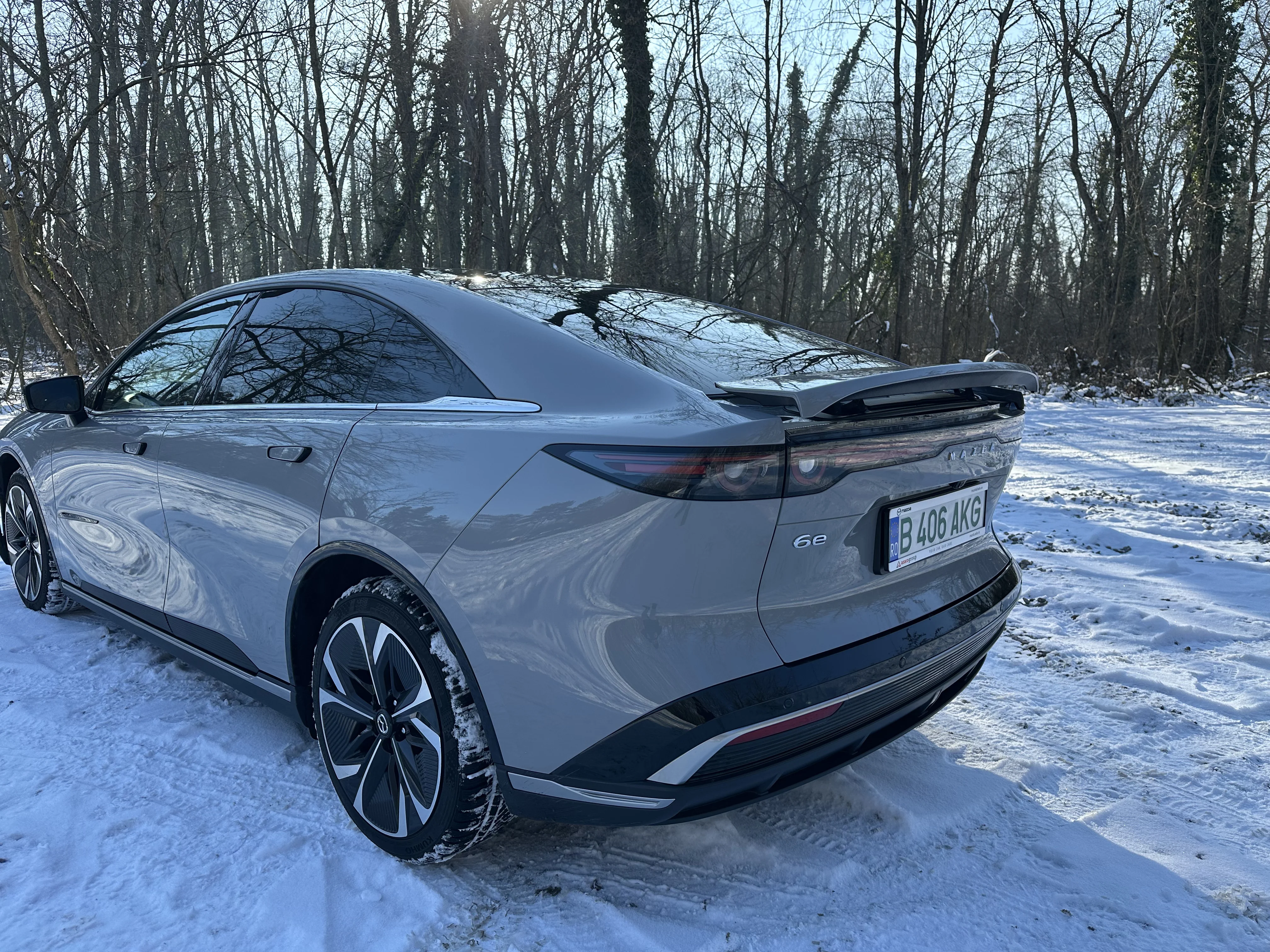
Exterior lines are clean and fluid, closer to a classic D-segment saloon than to an aerodynamic concept car. The closed front grille and slim headlights are subtle; the rear is simple. Drag is optimised, but the overall look is sober chrome and alloy wheels—not a loud statement.
On Romanian roads it draws attention through discretion rather than aggression, which should age well.
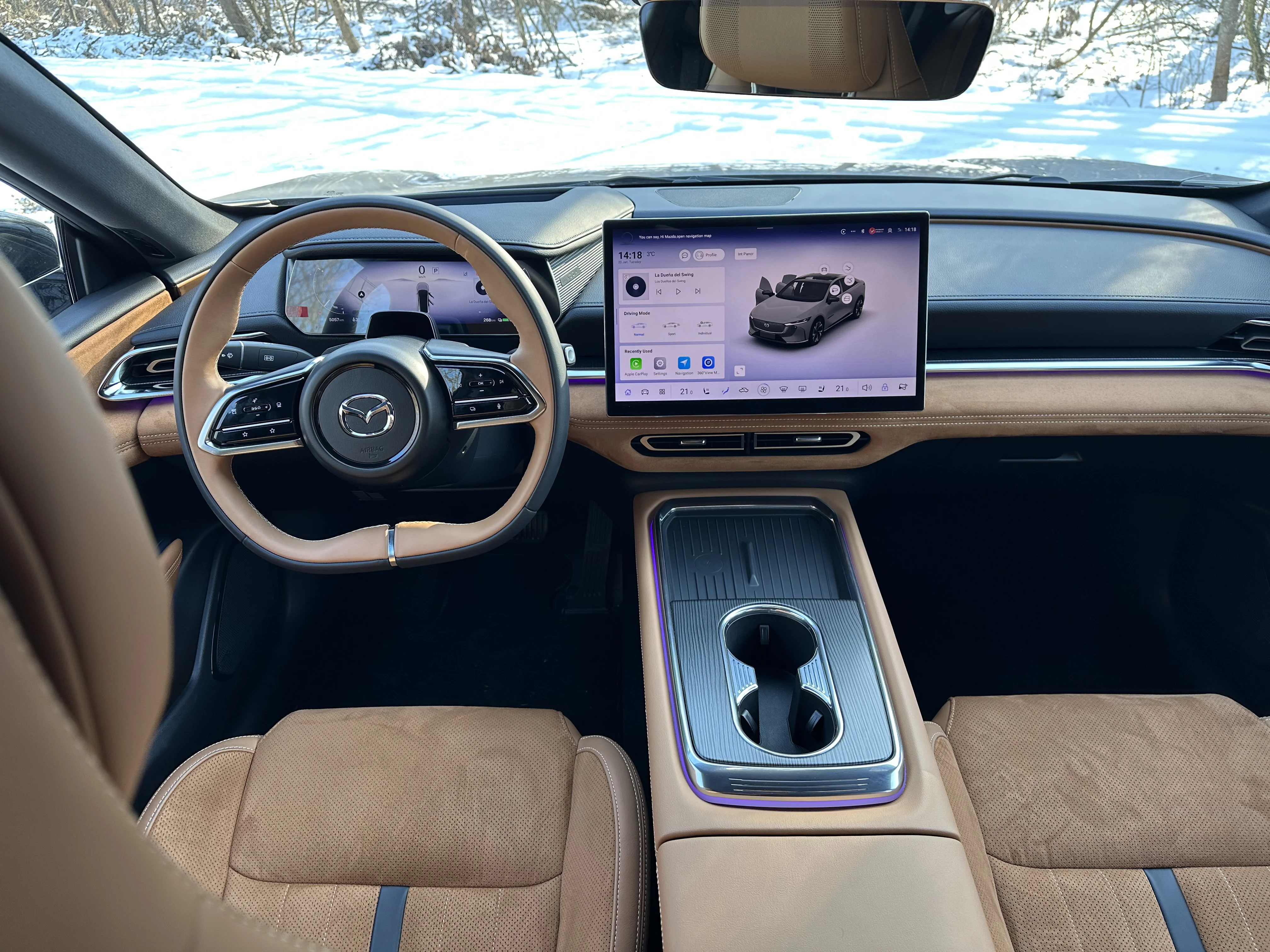
Interior: the main argument
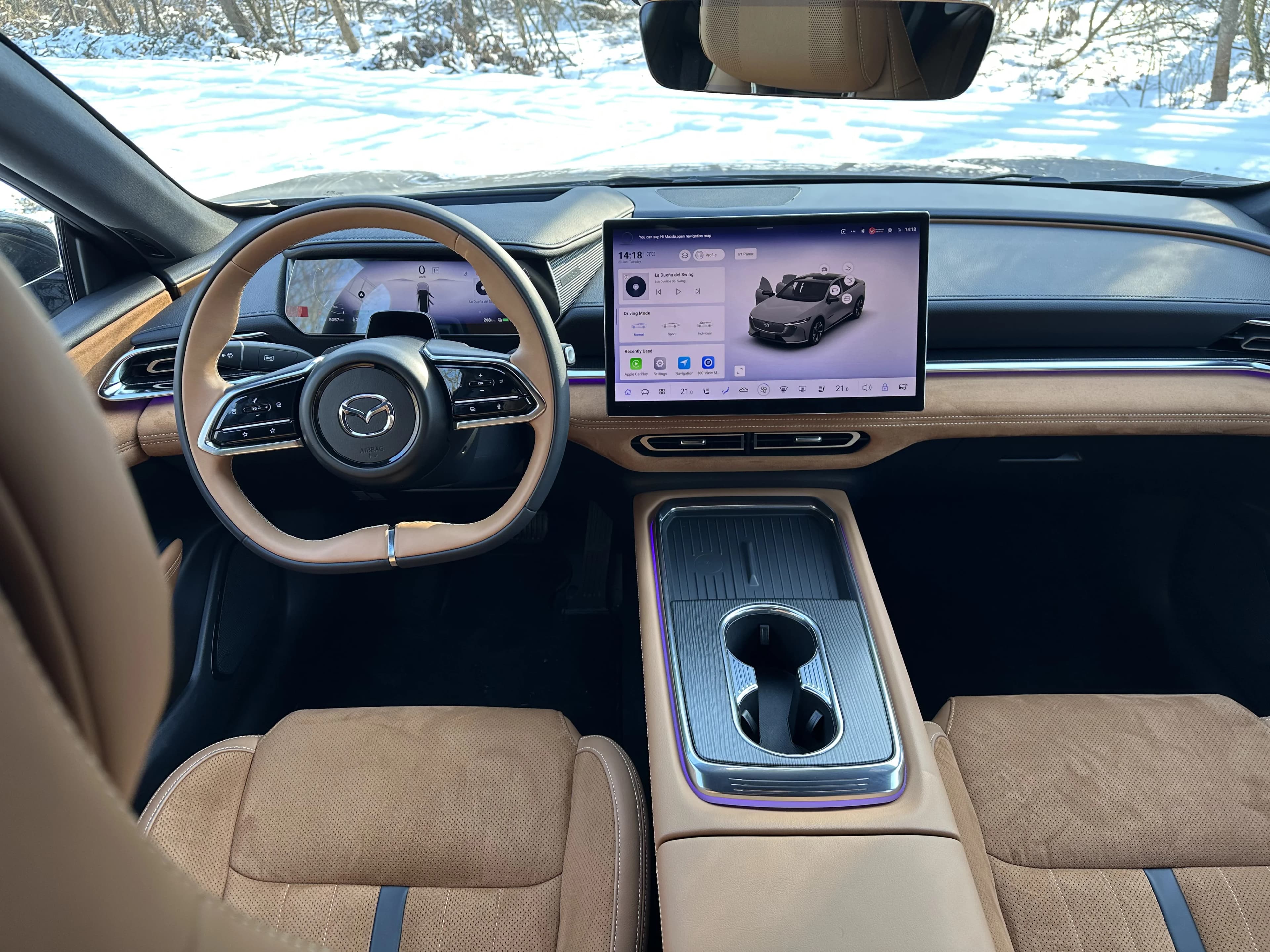
The cabin is where the 6e wins ground. Familiar Mazda ergonomics, soft-touch surfaces, optional fine leather on top trims and careful detail work. The dashboard is elegant and uncluttered; the digital cluster is integrated without dominating.
Seats suit long distances with sensible lateral support. A 12.3-inch screen offers Apple CarPlay and Android Auto, plus a head-up display for key data. Physical controls remain intuitive, which limits time staring at menus.
Performance and range
The standard motor delivers up to 258 hp; Long Range drops to 245 hp but adds range. Official 0–100 km/h is around 7.6 seconds; top speed is capped at 175 km/h. On our Romanian routes consumption sat between 16 and 17 kWh/100 km, in line with official figures.
Battery thermal management is solid. DC fast charging up to 200 kW allows roughly 10–80 % in about 24 minutes at suitable stations. Regenerative braking is progressive, not abrupt.
On the road: comfort over sport
The 6e is tuned for comfort. Suspension absorbs typical Romanian road imperfections; noise isolation is strong at motorway speeds. Steering is precise but filtered; quick reactions take second place to stability.
This is not a car that invites track days; it is one that feels trustworthy on every trip. That balance suits families and commuters who want a calm electric saloon.
Rivals: Model 3, BYD Seal, Ioniq 6
Against the Tesla Model 3, the 6e offers a more refined interior and a lower driving position, but cannot match Supercharger convenience or Tesla performance. The Model 3 is quicker and better served for long-distance charging; Mazda counters with comfort and a more classical design for buyers moving from combustion saloons.
Versus the BYD Seal, the 6e is conservative in styling and comfort-led. The Seal pushes technology and a sharper look; Mazda’s finish feels more consistent inside.
The Hyundai Ioniq 6 has superior aerodynamics and often lower consumption, with its coupé-saloon shape. The 6e wins on ergonomics and perceived premium feel. Personal taste and budget will decide more than a single spec sheet row.
Verdict
The Mazda 6e is a mature EV for drivers who want electric power without giving up the atmosphere of a classic saloon. It does not chase the fastest acceleration or the flashiest screens; it aims to be balanced for families and commuters. Pricing aligns with key rivals and is backed by cabin quality and usable range.
For Romania it is one of the more coherent options in the upper-mid electric saloon class—and it still feels like a Mazda adapted to an electric era, not a rebadged afterthought.