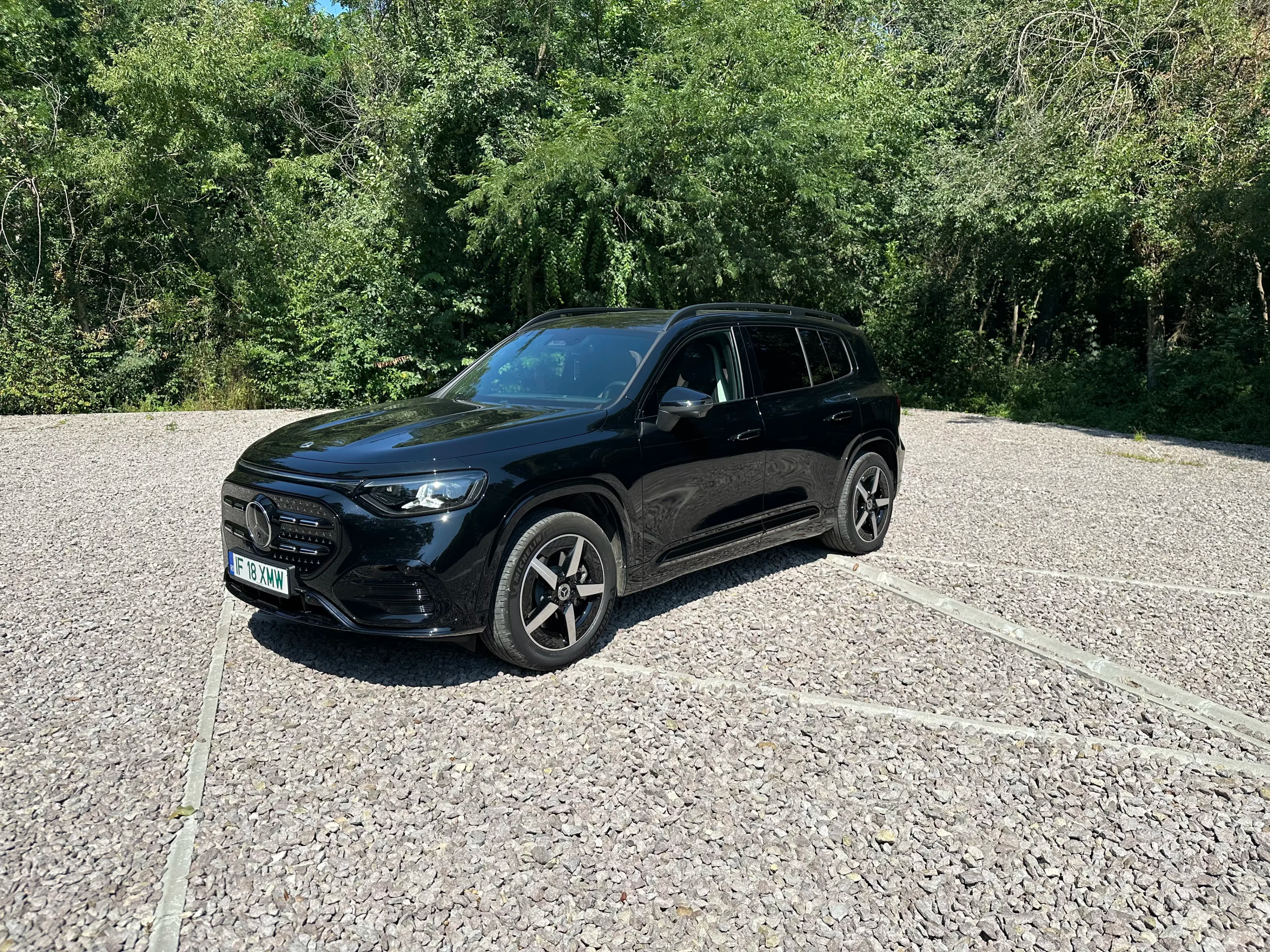
The Mercedes EQB occupies a particular place among electric SUVs as one of the few seven-seat models on the market. Official WLTP range reaches 534 km, figures that put this compact premium SUV in a competitive part of the electric line-up.
The electric motor in the EQB 250 version develops 190 hp and drives the front wheels, fed by a 70 kWh battery pack. Practical range sits around 323 km on a single charge, a figure that depends strongly on use. Fast charging allows an 80% top-up in 30 minutes, while a 7.4 kW wallbox needs roughly 11 hours for a full charge.
Load space varies up to 1,710 litres, and maximum power reaches 188 hp in the standard configuration. These specifications position the EQB as a reasonable compromise between the space a family needs and the performance of a modern electric vehicle.
The sections below examine real-world Mercedes EQB 2025 behaviour in different scenarios, from urban traffic to sustained motorway runs, to give a precise view of energy use in practical conditions.
What is the Mercedes EQB 2025 and who is it for?
The Mercedes EQB remains a rarity among electric SUVs — one of the few seven-seat models available. As Mercedes’ entry point to its electric range in Romania, it derives from the compact GLB SUV but benefits from an improved drag coefficient of 0.28.
Available versions: EQB 250+ vs EQB 300 4Matic
The range comprises two distinct configurations, each with its own trade-offs between performance and efficiency.
The EQB 250+ uses a front asynchronous motor with 188 hp (140 kW) and 284 Nm of torque, prioritising range with up to 250 miles (about 400 km) on the EPA cycle. Starting price reaches 251,892 RON, positioning it as the more accessible front-wheel-drive option.
The EQB 300 4Matic adds a second motor for all-wheel drive, yielding 225 hp and 288 Nm. Improved acceleration from 0 to 100 km/h in 6 seconds contrasts with 8.5 seconds for the base version. Range falls to about 205 miles (330 km), and price rises to 271,597 RON.
Both configurations share the same 70.5 kWh battery pack. The charging system supports 9.6 kW AC (8 h 15 min for a full charge) and 100 kW DC fast charging, allowing 10% to 80% in 35 minutes.
Which user profile suits the EQB?
The typical EQB buyer includes families who need seven-seat versatility and generous cargo volume of 25.9–61.8 cubic feet (733–1,750 litres). The digital voice assistant and MB Electric Intelligence help plan electric journeys.
The EQB 250+ appeals to drivers focused on maximum efficiency and lower costs for long urban distances. The 300 4Matic answers those who prioritise dynamic performance and all-wheel-drive security in difficult weather or for activities outside town.
Compared with alternatives such as the Kia EV9 or Volvo EX90, the EQB offers a more accessible entry into the premium seven-seat electric SUV segment while keeping Mercedes-Benz quality and technology standards.
Official range vs real-world range in town
Official WLTP figures provide a useful reference, but real performance differs considerably in everyday use. The Mercedes EQB shows the typical gap seen in modern electric vehicles.
WLTP figures for EQB 250+ and 300 4Matic
The EQB 250+ records an official WLTP range of 452 km, favourably placed for efficiency-focused users. The EQB 300 4Matic shows 412 km WLTP, the reduction caused by the dual-motor all-wheel-drive system.
The 2025 model’s 70.5 kWh battery offers increased capacity over the previous generation. Practical tests indicate real range of about 250 miles (402 km) for the EQB 250+, an 18% gap versus maximum WLTP — typical for the premium electric segment.
Urban performance: testing in real traffic
Urban environments favour electric vehicles, and the EQB confirms the trend. The EQB 300 4Matic reaches 449 km in favourable urban conditions, even exceeding the official WLTP figure. Regenerative braking works optimally in stop-start traffic.
Tests over 81 urban km recorded consumption of 14.8 kWh/100 km at temperatures between 22.5 and 27.5°C. The EQB 250+ shows efficiency of 3.6 miles/kWh (17.7 kWh/100 km) in moderate conditions, confirming efficient urban behaviour.
Variables that affect urban range
Outside temperature influences performance significantly; range varies between 300 km in cold conditions and 610 km at optimal temperatures. Aggressive driving can increase consumption by 20%, while progressive acceleration maximises energy recovery.
Climate control reduces range by 10–15% in cold seasons. Mercedes recommends pre-conditioning the cabin while charging to preserve battery energy. Paradoxically, congested traffic can benefit electrics — one test recorded only 14.2 kWh/100 km in stop-and-go, rising to 14.8 kWh/100 km as traffic flowed more freely.
WLTP figures above 400 km for both versions can even be exceeded in optimal urban conditions. For practical planning, 350–400 km represents a realistic estimate for daily urban use.
Real motorway range: constant-speed test
Motorway travel exposes the real limits of any electric vehicle. The Mercedes EQB shows notable differences between official specifications and results at sustained high speed.
Range drop at high speed
Independent tests with the Mercedes EQB 300 4Matic reveal practical range of 339 km at speeds around 120 km/h. A 111 km run consumed the battery from 100% to 66%, for average consumption of 19.9 kWh/100 km.
These values sit well below official WLTP figures. High speeds can cut range by up to 40%, from about 400 km to only 240 km. Aerodynamic drag rises exponentially with speed, explaining the dramatic performance loss.
Maximum efficiency is reached between 50 and 80 km/h. Crossing 100 km/h causes substantial increases in energy use. Keeping speed below 110 km/h optimises range, though it lengthens journey time.
Another test recorded 19.6 kWh/100 km at motorway speeds under favourable conditions, with temperatures between 22.5 and 26.5°C.
Impact of wind and temperature
Weather strongly influences motorway performance. Strong headwinds can cut range by tens of kilometres by increasing aerodynamic resistance. The EQB’s tall, boxy shape accentuates the effect.
Ambient temperature plays a decisive role. The tests mentioned ran at optimal temperatures of 22.5–26.5°C. Winter conditions below 5°C can reduce range by 30%. One EQB 350 owner reported only 150 miles (240 km) on the motorway versus 227 miles (365 km) officially.
Climate control uses proportionally less energy at high speed but remains relevant on long trips. Extreme temperatures above 35°C or below 0°C can cut motorway range by 10–20%. Modern thermal management in the EQB partly limits these effects.
Comparison: EQB 250+ vs 300 4Matic on the motorway
The front-wheel-drive EQB 250+ offers 251 miles (404 km) on the EPA cycle, while the EQB 300 4Matic AWD reaches 205 miles (330 km). The difference stays proportional in real use.
The EQB 250+ delivers roughly 15–20% more motorway range than the 300 4Matic. A single motor and lower weight explain the advantage. Average motorway consumption for the EQB 250+ is 5–10% more efficient than the all-wheel-drive version.
Wheels influence motorway performance significantly. Models with 18-inch wheels offer about 5% more range than those with 20-inch wheels, thanks to lower rolling resistance.
For users who frequently cover long distances, the EQB 250+ is the efficient choice, while the EQB 300 4Matic offers all-wheel-drive benefits at the cost of reduced range.
The Mercedes EQB delivers reasonable motorway performance but well below official WLTP values. Realistic long-trip planning should assume practical range of 300–350 km for the EQB 250+ and 250–300 km for the EQB 300 4Matic, depending on weather and driving style.
Average consumption in town: how efficient is the EQB?
Urban environments are ideal territory for the Mercedes EQB, where electric systems show their advantage over conventional powertrains. Consumption figures confirm remarkable efficiency in city traffic.
Urban consumption: EQB 250+ vs 4Matic versions
The EPA gives the EQB 250+ an urban rating of 114 MPGe, clearly ahead of all-wheel-drive variants. EQB 300 4MATIC and EQB 350 4MATIC reach only 89 MPGe in the same urban regime, the difference driven by the additional rear motor.
Converted to European units, the EQB 250+ records urban consumption of about 14.5 kWh/100 km. With the 2025 generation’s 70.5 kWh pack, that efficiency translates into substantial urban range. Independent tests confirm these values; owners report consumption between 14.2 and 14.8 kWh/100 km in real congested traffic.
Urban manoeuvrability benefits from a turning circle of only 11.7 metres, close to some compact hatchbacks. That helps navigate tight spaces despite the SUV’s generous dimensions.
Regenerative braking: how energy recovery works
Regenerative braking is the key to urban efficiency. The system reverses the electric motor’s role — instead of consuming energy to drive the wheels, the motor becomes a generator when you lift off the accelerator.
The process recovers kinetic energy that would otherwise dissipate as heat through conventional braking. Unlike a traditional hydraulic system applying force to discs via pads, regeneration turns motion energy into storable electricity.
Benefits are twofold: extended range without extra energy cost and reduced wear on mechanical brake components, since most deceleration is handled electrically.
Configuring recovery systems
The Mercedes EQB offers granular control of regeneration intensity via paddles on the steering wheel. Levels allow adaptation to driving style:
- Maximum setting enables one-pedal driving
- Minimum setting keeps free coasting, similar to conventional cars
- Automatic mode uses cameras, radar and GPS data for optimisation
- ECO Assist analyses the route and provides real-time guidance for maximum efficiency. The system anticipates conditions — traffic ahead, speed limits, bends or gradients — and signals optimal moments to lift off the accelerator.
Activating ECO Assist requires the recovery level set to D Auto. Detection of events such as tight bends or speed-limit changes triggers corresponding symbols on the instrument display.
System limits in dense traffic
Regeneration has restrictions at very low speeds. Below 15 km/h the system disengages on most electric vehicles, limiting impact on range in very slow traffic. That technical trait explains why regeneration benefits are more pronounced in flowing traffic than in stationary queues.
Motorway consumption: real test at 130 km/h
Constant-speed motorway tests expose an electric vehicle’s real limits. The Mercedes EQB at 130 km/h records figures that contrast sharply with urban performance.
Consumption in steady motorway running
At the maximum legal speed on Romanian motorways, the EQB records consumption between 25.6 and 28.2 kWh/100 km. Real range falls to only 250–275 km (155–170 miles) at constant motorway speed — less than half the official WLTP values.
Independent tests confirm these limits. A 130 km motorway run recorded average consumption of 16.1 kWh/100 km, though that test included mixed sections, not exclusively steady 130 km/h.
The EQB 450+ ranks 20th in an efficiency ranking of 36 electric vehicles tested at a constant 130 km/h. The model loses about 38.6% of WLTP range at that speed — mediocre for the premium segment.
Differences between 18-inch and 20-inch wheels
20-inch wheels penalise consumption at high speed through added weight. Low-profile tyres associated with them increase rolling resistance, translating into a 5–7% range drop on the motorway versus 18-inch equipment at a constant 130 km/h.
More pronounced road noise with large wheels affects comfort on long trips. Owners who frequently use motorways should weigh this compromise between aesthetics and energy efficiency.
Efficiency vs load and passengers
Extra weight directly affects consumption at high speed. Each 100 kg added (passengers or luggage) increases consumption by 5–8% at a constant 130 km/h. An EQB fully loaded with seven passengers can exceed 30 kWh/100 km on the motorway.
EQB 350 owners report real motorway range of about 240 km under normal loading, well below the official 365 km.
For long-trip planning, assume about 250 km range at 130 km/h for the EQB 250+ and 220 km for all-wheel-drive versions. Reducing speed to 110 km/h can increase range by 15–20% — the difference between a charging stop and reaching the destination.
Charging and real-world times: home vs fast stations
For Mercedes EQB owners, charging strategy largely shapes the daily experience. Real charging times and costs differ substantially between home systems and public fast chargers.
11 kW AC vs 100 kW DC charging
The 11 kW AC charging system is standard on the Mercedes EQB 2025, intended for routine home or workplace charging. For long journeys, 100 kW DC fast-charging capability allows top-ups at public stations.
The two systems work fundamentally differently. AC charging converts alternating current to direct current via the vehicle’s onboard charger, limiting speed to its capacity. DC delivers direct current straight to the battery pack, skipping that conversion step and allowing much higher rates.
10–80% time in real conditions
At a 100 kW DC fast station, the EQB reaches 10% to 80% in about 32 minutes — identical for 250+ and 300 4Matic versions. That remains competitive in the segment, though it does not match the Tesla Model Y, which completes the same cycle in 27 minutes at 250 kW.
AC charging needs considerably longer:
- 11 kW wallbox: about 7 h 15 min from 10% to 100%
- 7.4 kW wallbox: about 10 h 45 min from 10% to 100%
Ambient temperature, battery state and vehicle load influence charging speed.
Estimated cost of a full charge
Cost differences between home and public charging are dramatic. At an average Romanian household tariff of €0.77/kWh, a full charge of the 70.5 kWh battery costs about €54.22.
Public fast stations charge between €1.42 and €2.37/kWh. A full charge at a public DC station can reach €117.19 — more than twice home charging.
Most EQB owners adopt a mixed strategy: home wallbox for daily charging and fast stations only for long trips. Pre-conditioning in Electric Intelligence prepares the battery for optimal charging, reducing time at the station.
How much does the Mercedes EQB cost in Romania and what do you get?
Mercedes EQB 2025 pricing reflects its position in the premium seven-seat electric SUV segment. The price band varies considerably between configurations, each addressing specific electric mobility needs.
Prices in euros for 250+ and 300 versions
In Romania the Mercedes EQB 2025 range starts at €58,550 (VAT included) for the base EQB 300 4Matic. That version offers 228 hp and 444 km WLTP range via the dual-motor all-wheel-drive system.
The EQB 350 4Matic is priced at €61,360 (VAT included), with 292 hp while keeping the same 444 km range. The roughly €2,810 price difference buys an extra 64 hp.
The efficiency-focused EQB 250+ lists at €66,124 (VAT included). Although the most expensive, it qualifies for the 2025 RABLA+ programme for private buyers, reducing initial investment.
Standard and optional equipment
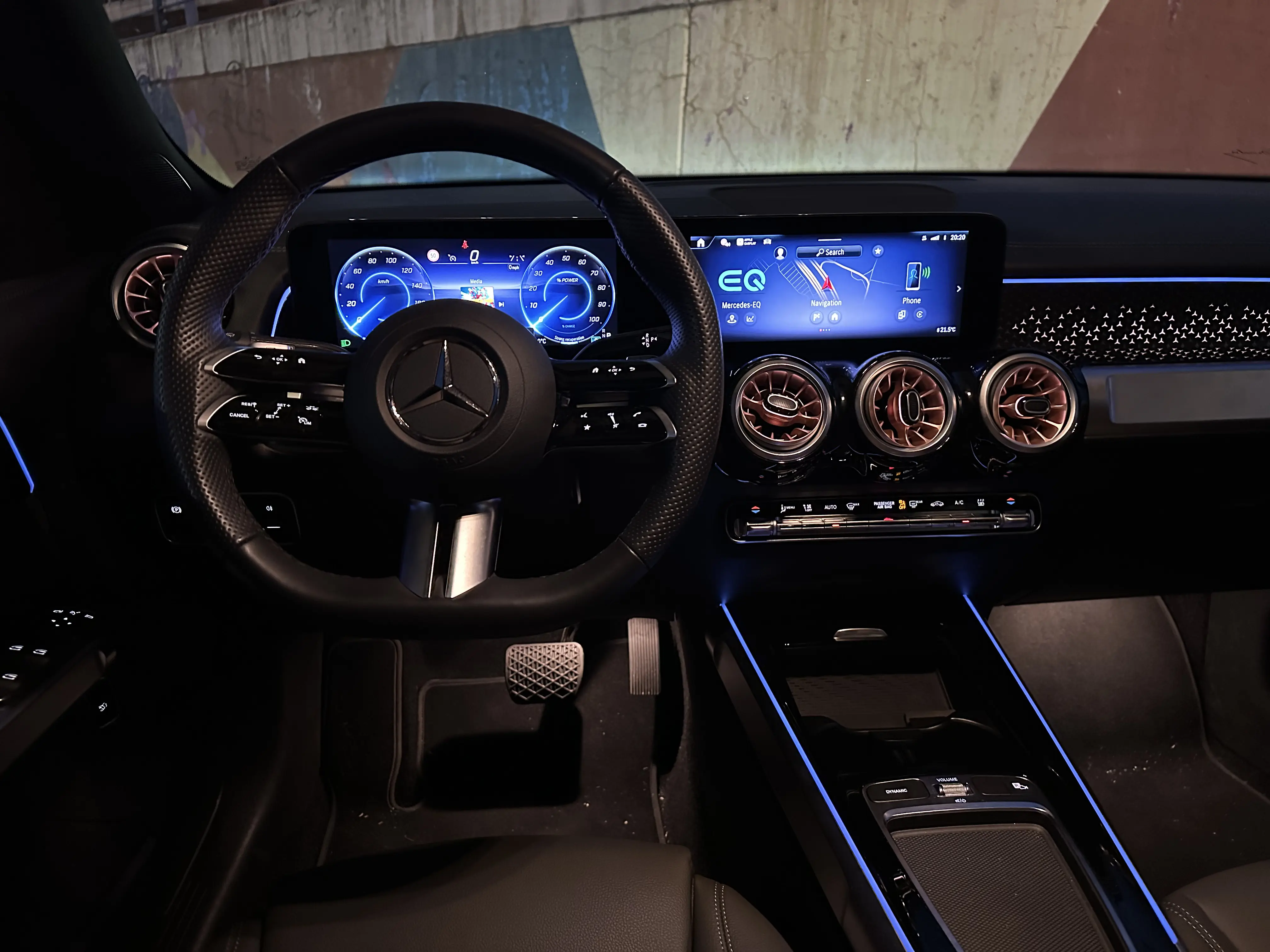
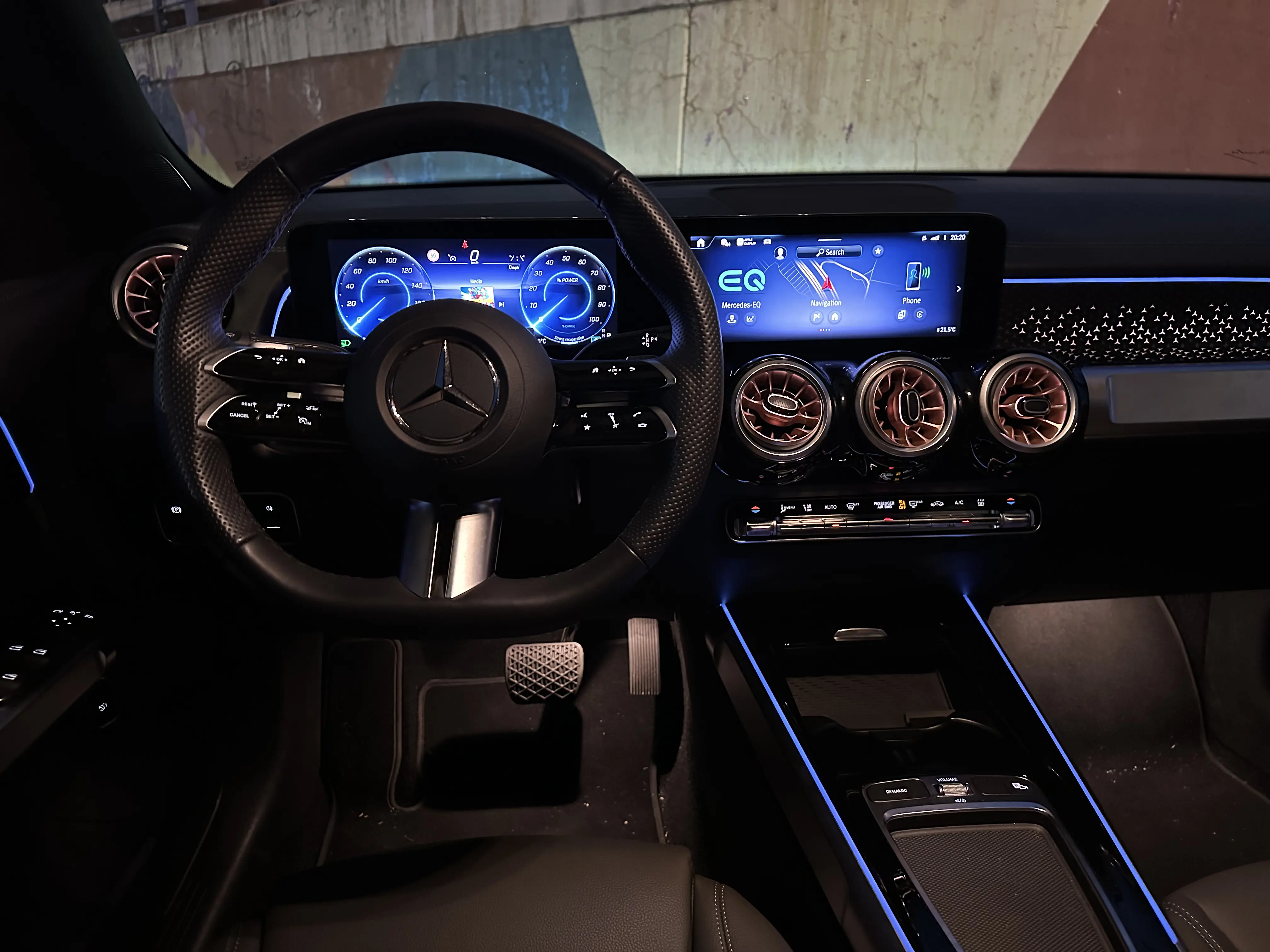
Standard equipment includes LED headlights, 18-inch wheels, mixed eco-leather and fabric upholstery, MBUX multimedia, heated front seats, automatic climate control and a leather-wrapped sport steering wheel. That standard level exceeds many segment rivals.
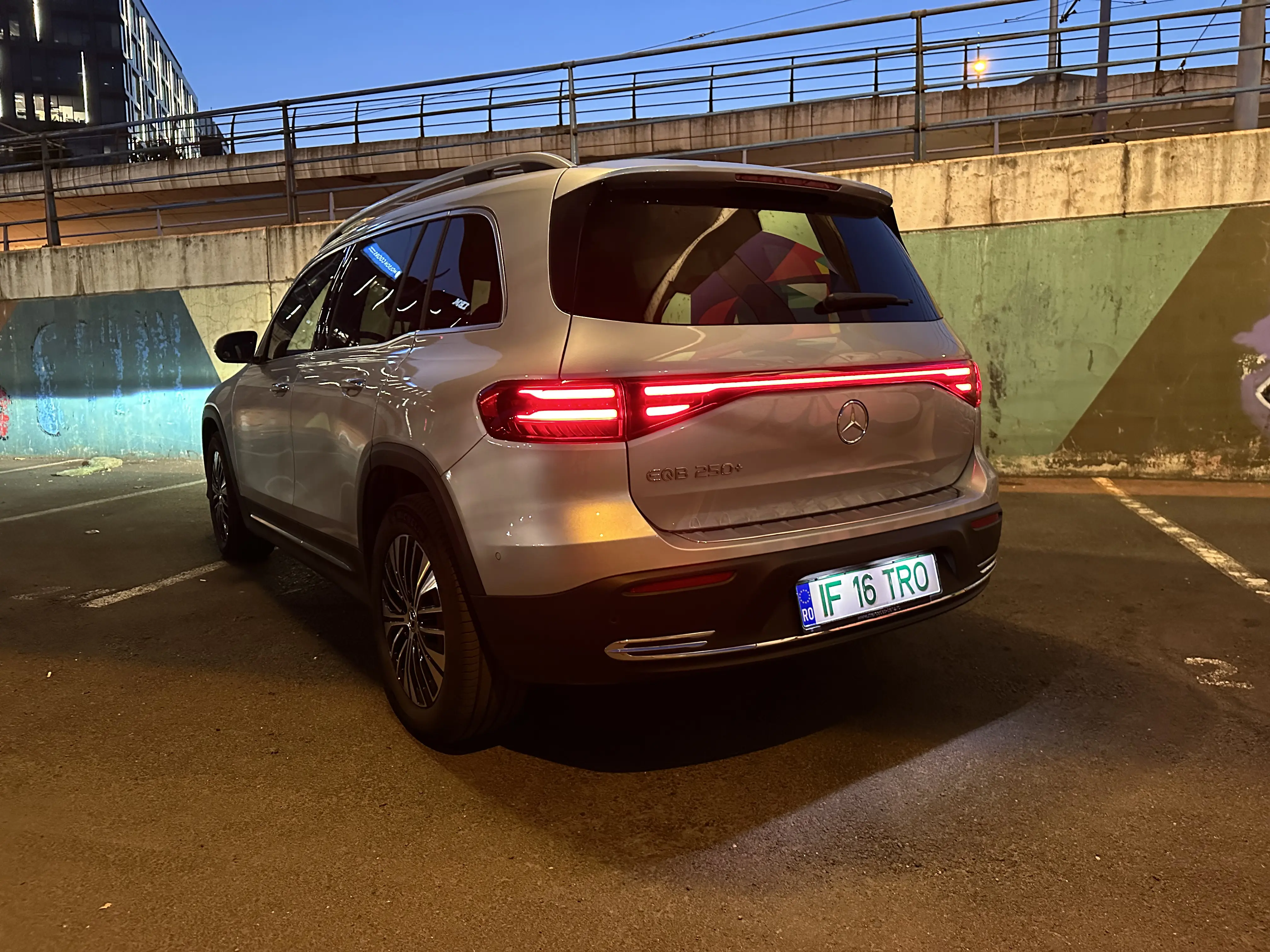
The EQB 300 4Matic comes with 18-inch five-spoke wheels, while the EQB 350 gets 19-inch wheels with the same design. Seven-seat configuration remains optional on all versions — a distinctive feature in the premium electric SUV segment.
The Electric Art Edition package adds refinement elements, complemented by AMG Line for those who prefer a sportier look and additional premium equipment.
Value versus range and consumption
The EQB 250+ offers maximum range — 245 miles EPA (394 km) and 533 km on European standards — justifying its price through superior efficiency. Consumption of 15.3 kWh/100 km places it favourably in the segment.
The EQB 300 4Matic delivers 232 miles (373 km), the EQB 350 reaches 221 miles (355 km). All-wheel drive and higher power explain the range differences but bring clear advantages in difficult weather and stronger acceleration.
For predominantly urban use and frequent long trips, the EQB 250+ is the optimal choice on cost per kilometre. 4Matic versions suit drivers who prioritise security in varied conditions and stronger dynamic performance.
EQB vs rivals: Kia EV9, Tesla Model Y, Skoda Enyaq
The electric SUV segment is intensely competitive; the Mercedes EQB faces models that excel in different areas. Comparative analysis shows each competitor’s specific positioning.
Range and consumption compared
The Tesla Model Y leads on range with 499 km (EPA) and 542 km (WLTP), significantly ahead of the Mercedes EQB’s 333 km (EPA). Tesla efficiency is superior: 15.9 kWh/100 km versus 18.9 kWh/100 km for the EQB. The Skoda Enyaq offers 534 km WLTP range, while the Kia EV9 reaches 349 miles (560 km).
Prices and interior space
The Mercedes EQB starts at 257,352 RON, below the Kia EV9 at 267,774 RON. EQB cargo volume — 25.9 ft³ (733 litres) with seats up — exceeds the EV9’s 20.2 ft³ (572 litres). The Skoda Enyaq offers 585 litres; the Tesla Model Y impresses with 854 litres.
Best range-to-price ratio
The Tesla Model Y shows the best cost-to-range efficiency: 542 km WLTP and 250 kW charging, ahead of the EQB’s 100 kW system. The Skoda Enyaq represents the ideal family balance, combining competitive range with accessible prices. The Kia EV9, though costlier, offers superior legroom — 41.4 inches front and 42.8 inches rear versus 41.1 and 38.1 inches on the EQB.
Conclusion
Detailed tests and analysis confirm that the Mercedes EQB 2025 occupies a distinct place among seven-seat electric SUVs. Real-world range oscillates between 350–400 km in town and 250–275 km on the motorway at a constant 130 km/h — gaps that require careful planning for long journeys.
Urban consumption of 14.5 kWh/100 km places the EQB among efficient electric SUVs in its class, but values rise dramatically to 25.6–28.2 kWh/100 km on the motorway. That disparity reflects the aerodynamic limits of the tall, boxy body.
Pricing starts at €58,550 for the EQB 300 4Matic, while the EQB 250+ reaches €66,124. The difference reflects the fundamental trade-off: superior range versus all-wheel drive and improved performance.
Against the Tesla Model Y, the EQB cannot match 15.9 kWh/100 km efficiency or 542 km WLTP range, but offers the unique flexibility of seven seats and Mercedes interior quality. The Skoda Enyaq remains the more balanced alternative on performance-to-price ratio.
The 100 kW DC charging system completes the 10–80% cycle in 32 minutes — decent but surpassed by premium rivals. An 11 kW wallbox becomes essential for daily use, significantly reducing costs versus public stations.
The Mercedes EQB 2025 is not the most efficient or affordable electric option, but the combination of space, quality and refinement recommends it to families who prioritise versatility and brand prestige over pure efficiency.
Key takeaways
The Mercedes EQB 2025 offers a unique combination of space for seven people and premium electric mobility, but with significant differences between official and real-world range in various conditions.
• Real range varies dramatically: 350–400 km in town versus only 250–275 km on the motorway at 130 km/h — up to 40% below official WLTP figures
• Excellent urban efficiency: consumption of only 14.5 kWh/100 km in town thanks to regenerative braking, ideal for congested traffic
• Charging costs differ sharply: €54 for a full charge at home versus €117 at public fast stations — an 11 kW wallbox is essential
• Prices start at €58,550 for the EQB 300 4Matic, with all-wheel drive and 228 hp, plus the unique seven-seat option in the premium segment
• 18-inch vs 20-inch wheels matter: motorway range drops 5–7% on large wheels — an important compromise between aesthetics and efficiency
The Mercedes EQB is not the most efficient electric SUV, but remains a solid choice for families who prioritise space, premium quality and the versatility of a seven-seat vehicle in the electric ecosystem.