
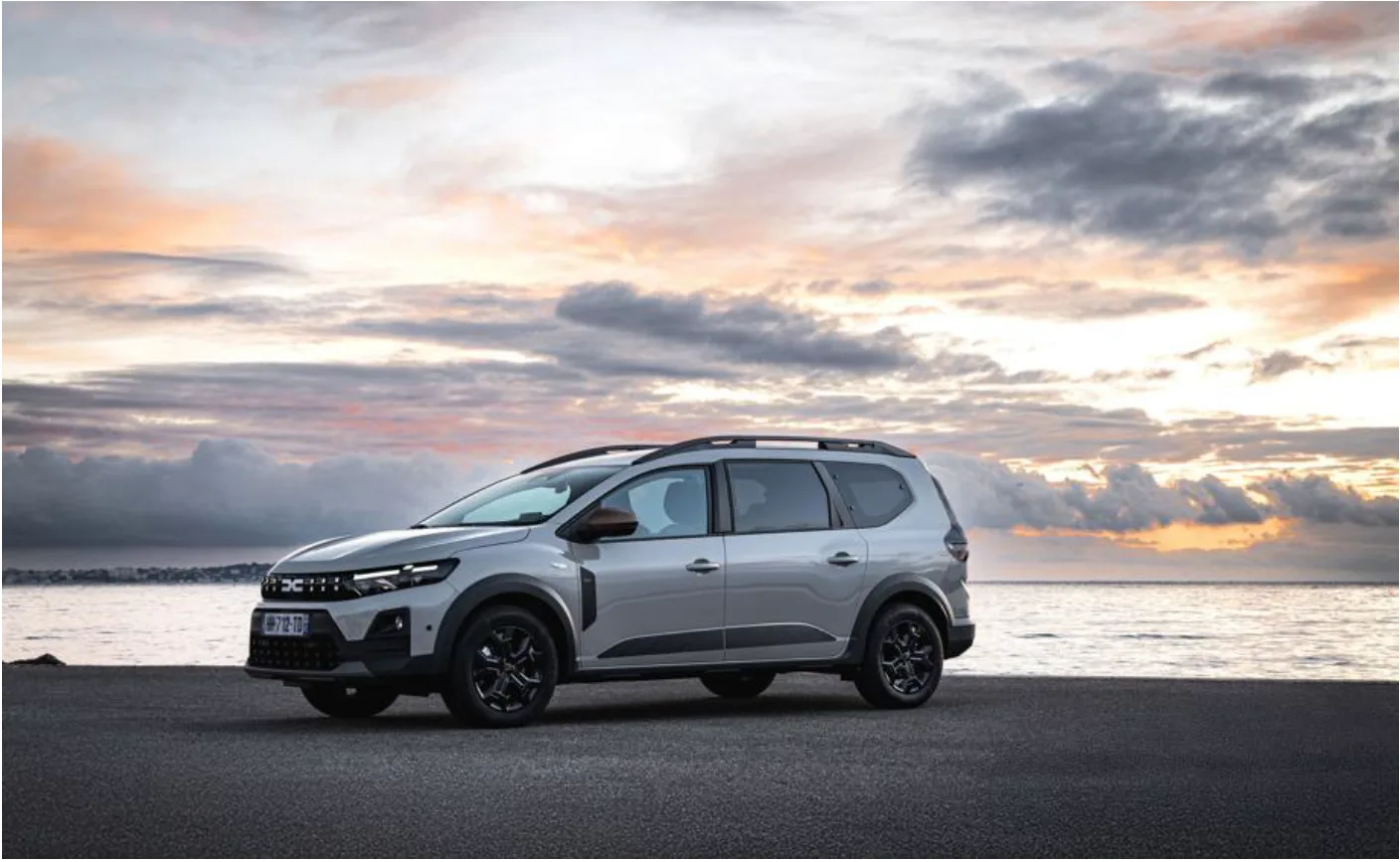
Dacia is preparing the next stage of the Jogger family car, and the first reports point to a larger successor with more interior space. Auto Express says the next-generation model is being developed around the same basic question as the current car: how to carry a large family without moving to an expensive, heavy SUV. Dacia has not yet published the successor’s dimensions, powertrains, price or launch date, so those details remain unconfirmed.
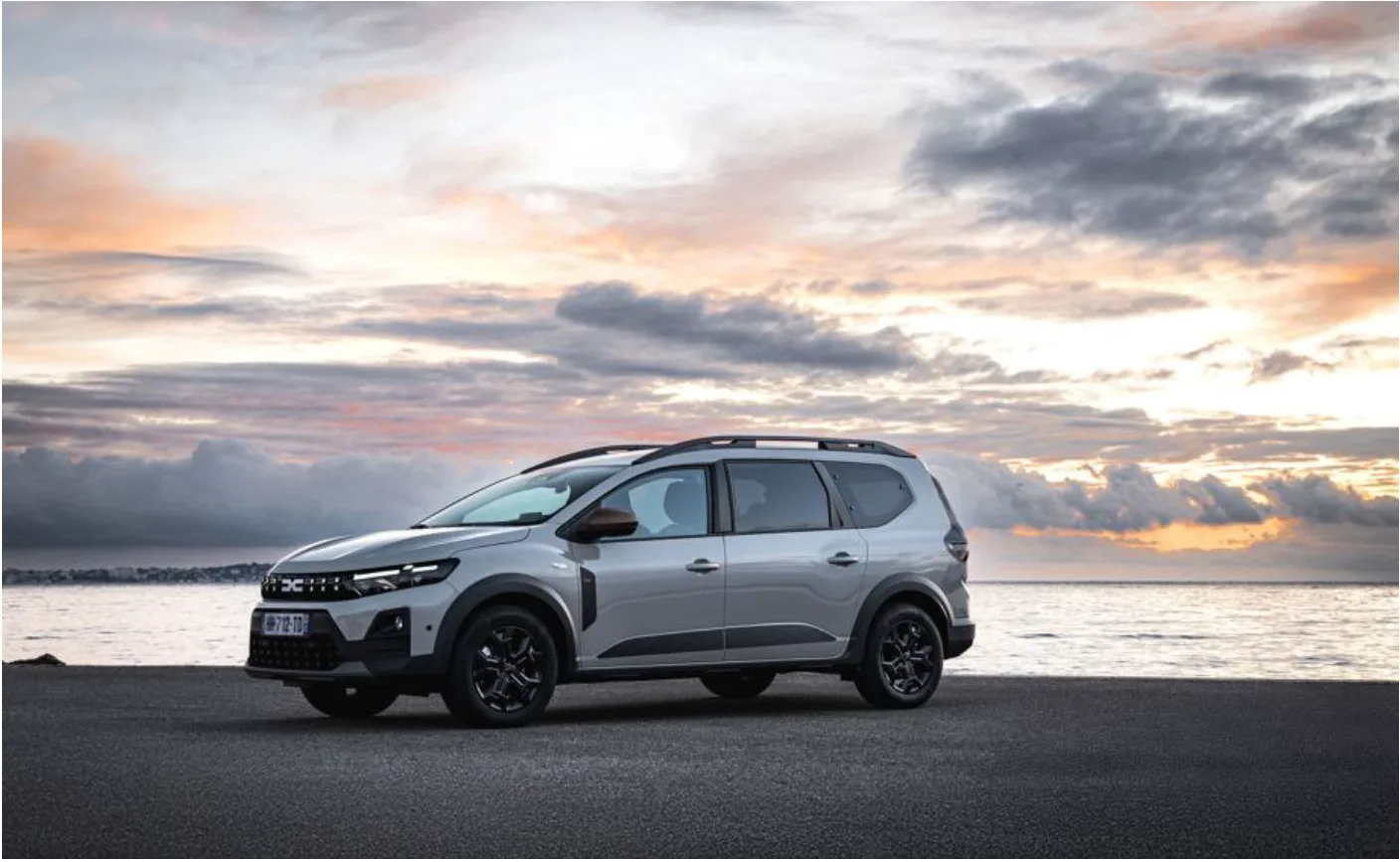
Official Dacia press image of the updated current Jogger. Photo: Dacia Media.
The distinction between a reported direction and a confirmed product matters here. Dacia has officially described the current Jogger’s 2026 update, including new engines, safety equipment and a revised cabin. It has not released a technical sheet for the next generation. Any claim about its exact length, boot capacity, battery, price or Romanian launch should therefore be treated as a forecast until the manufacturer makes a formal announcement.
The Jogger’s job in the Dacia range
The current Jogger sits between several familiar categories. It has the long roof and rear packaging of an estate or MPV, a raised driving position and body protection that give it a crossover appearance, and up to seven seats. The layout is more important than the label. A vertical tailgate and a long wheelbase allow Dacia to use the available platform length for passengers and luggage instead of pursuing a coupé-like roofline.
That packaging is why a larger successor would not simply be a cosmetic change. A few extra centimetres could make access to the third row easier, leave more knee room for rear passengers or create a more useful load floor when the rearmost seats are folded. The current Jogger already offers a usable boot with all seats installed, unlike many seven-seat SUVs where the last row leaves little room for luggage.
Auto Express lists 160 litres with all seven seats in use, 565 litres with the third row folded and up to 2,085 litres with the rear rows lowered for one market configuration. These figures should not be treated as universal measurements because luggage-volume methods and equipment can differ between markets. They do show the practical benchmark the next car would have to match or improve.
What Dacia has actually confirmed for 2026
Until the successor arrives, the updated Jogger is the production model customers can order. Dacia has introduced its Hybrid 155 system, combining a 1.8-litre four-cylinder petrol engine, two electric motors, a 1.4 kWh battery and an electrified automatic gearbox. The official combined output is 155 hp, with 170 Nm of torque.
Dacia says the system can spend up to 80 per cent of urban driving time in electric mode and cuts fuel use and emissions by 10 per cent compared with the previous Hybrid 140. Those are manufacturer figures rather than an independent result for every route, driver or weather condition. The seven-seat layout is not replaced by a smaller cabin for the hybrid version, which is one of the model’s practical advantages.
The other major powertrain change is the Eco-G 120. It uses a 1.2-litre three-cylinder turbocharged flex-fuel engine and combines petrol with LPG. For the first time on the Jogger, the LPG version can be paired with a six-speed dual-clutch automatic gearbox. Dacia has increased the LPG tank to 48.8 litres and quotes a total petrol-and-LPG range of up to 1,480 km, depending on specification and homologation conditions.
The TCe 110 remains in the 2026 range. Dacia has not confirmed whether these engines will all continue into the next generation. A future Jogger could retain a mixture of petrol, LPG and hybrid systems, but the final choice will depend on emissions rules, cost and the markets in which the car is sold.
More equipment, but not a premium repositioning
The 2026 update brings a 10-inch central display, connected navigation through the Media Nav Live system, wireless phone charging and a redesigned seven-inch digital instrument display. Safety equipment now includes automatic emergency braking with detection of vehicles, pedestrians, cyclists and motorcycles, as well as a driver-attention alert.
On higher trims, the car can be specified with a multi-view camera, automatic high-beam switching, electrically folding mirrors, heated front seats and a heated steering wheel. These are features of the updated current model, not a confirmed equipment list for the successor. They show, however, how Dacia is adding technology while retaining a relatively simple cabin and a clear hierarchy between standard and optional equipment.
The next Jogger will have to balance that equipment with the model’s price role. A longer body, stronger safety structure and additional electronics all add cost. Dacia cannot simply turn the Jogger into a more expensive Bigster with a third row, because buyers choose it precisely for the amount of family space available for the money.
Avoiding overlap with Bigster
Bigster has moved Dacia into the C-SUV segment, but it does not perform exactly the same job as Jogger. Bigster offers a more conventional SUV driving position and can use the hybrid-G 150 4x4 system, which combines a petrol-LPG engine with an electric rear axle. Jogger is more focused on passenger access, seven-seat flexibility and carrying tall or awkward loads.
A larger Jogger would need to preserve that distinction. If it becomes too large and expensive, it risks losing its value advantage. If it changes too little, the extra space reported by Auto Express may not be enough to justify a new generation. Platform sharing with Renault Group can help control development and manufacturing costs, but it does not guarantee a specific price or engine range.
What remains unknown
Dacia has not shown official images of the next generation and has not announced its codename, wheelbase, body length, boot capacity, seat arrangement, powertrain range, price or production schedule. There is also no confirmation of a fully electric version, all-wheel drive or a particular battery system.
For Romania, the likely arrival date, local equipment and price are unknown. The confirmed story is narrower: Dacia continues to improve the current Jogger, while a larger successor is being reported as part of the brand’s future family-car plan. Until Dacia publishes technical information, buyers should treat the larger body and affordability target as development goals rather than final specifications.


