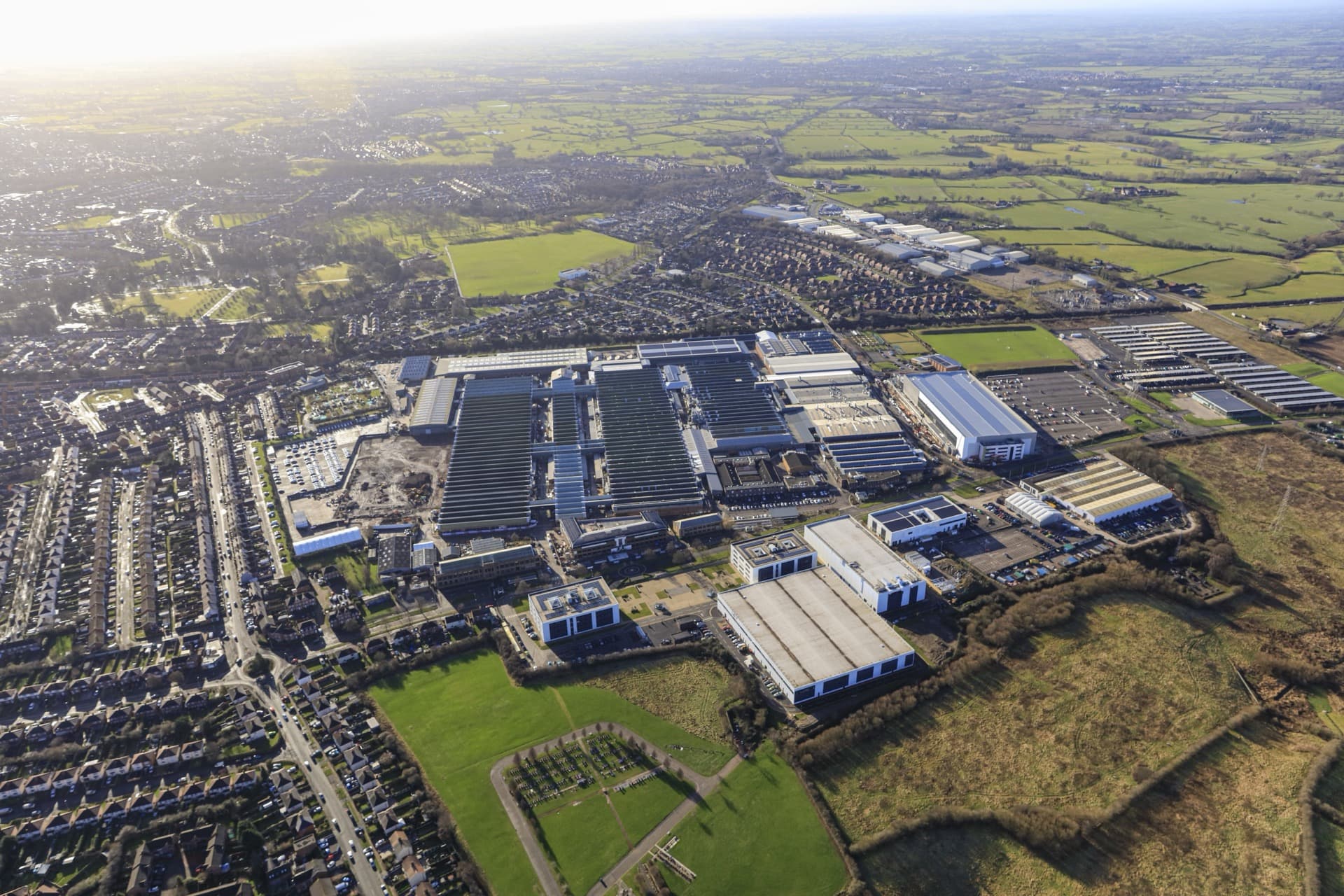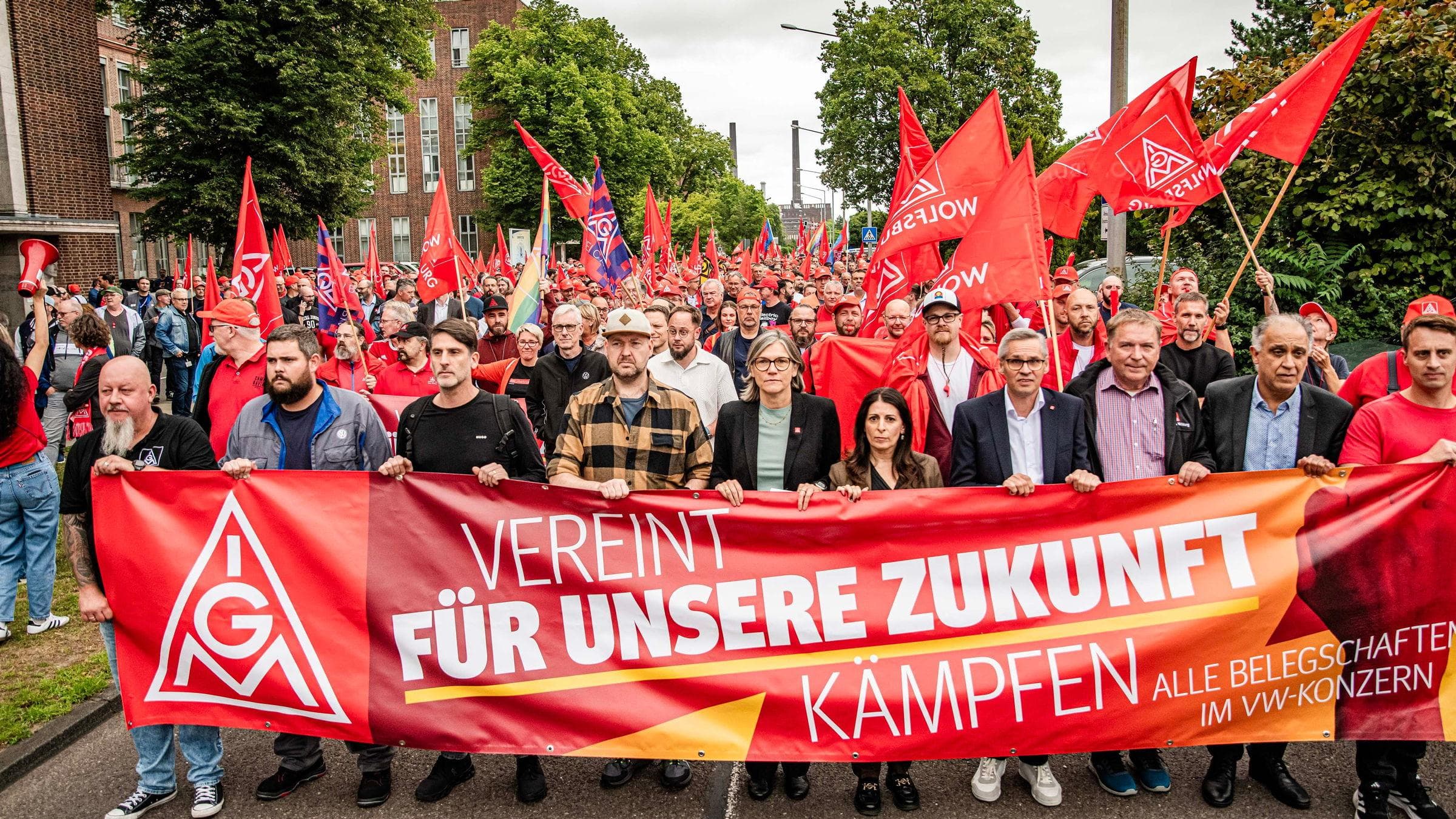
Volkswagen employee protest in Wolfsburg, July 2026. Photo source: Heiko Stumpe / IG Metall
More than 10,000 Volkswagen employees protested in Wolfsburg against new job cuts
More than 10,000 Volkswagen employees greeted chief executive Oliver Blume with whistles and placards at an extraordinary meeting held on 25 August 2026 at the main plant in Wolfsburg.
Messages displayed by IG Metall representatives included “Our jobs are not corrections in your balance sheet” and demands that collective agreements be respected. The discontent follows reports of a new wave of job cuts and the possible closure of some factories in Germany.
Blume told employees that Volkswagen is preparing the most extensive transformation programme in the group's history and that all sides must contribute. He did not, however, present a final list of plants and jobs affected.
Another 50,000 jobs are, for now, a calculation
Volkswagen already has agreed cuts of about 50,000 jobs across several group brands, including Volkswagen, Audi and Porsche. An important share is to be removed through voluntary departures, partial retirements and leaving vacant posts unfilled.
Management is now analysing whether the elimination of another 50,000 positions worldwide would still be necessary. Blume specified in Wolfsburg that this figure is a “theoretical calculation size”, resulting from comparing Volkswagen's costs with those of competitors, not an approved target.
According to accounts from participants, about half of any additional cuts could fall on Germany, with the rest distributed among the group's roughly 170 companies. Volkswagen has not published an official allocation by country, brand or factory.
The group chief said he would prefer voluntary measures over dismissals: staged retirements, individual agreements, natural staff turnover and hiring restrictions. Closing a factory would be, in his wording, the last and most expensive option.
The union says trust in management has been damaged
Daniela Cavallo, chair of the Volkswagen works council, accused management of communicating the 50,000 figure publicly without a detailed plan first presented to staff. She said trust in the board of management and in Oliver Blume has been damaged, but not irreparably.
IG Metall is demanding new projects to keep activity in German factories, respect for promised investments and a reduction of overlapping administrative structures. The union rejects the idea that plant closures should be the main instrument for cutting costs.
The protests did not start in August. On 9 July 2026, employees and union representatives organised actions at group factories in Germany. The Wolfsburg meeting now opens a series of nine extraordinary gatherings between management and staff, continuing in Emden, Zwickau, Braunschweig and other sites until 31 August.
The plan has not been approved by the supervisory board
Restructuring proposals must be approved by the Volkswagen supervisory board, on which shareholders, employees and the state of Lower Saxony are represented. Employee representatives and those of the state blocked the version previously presented by management. A new discussion is scheduled for 4 September 2026.
Blume promised that, over the next six to 12 months, the company will develop viable prospects for each factory. Among the options discussed are bringing additional models into German plants, local production of some electric cars initially destined for China, and using part of capacity for the defence industry.
These solutions are under analysis. Volkswagen has not confirmed contracts, volumes or production timetables for them.
Why Volkswagen is seeking new savings
The group cites falling profitability, the high costs of German factories, competition from Chinese manufacturers, US customs tariffs and the investments required for software and electric cars.
In the first half of 2026, Volkswagen's operating result fell by 11.6%, to €5.9 billion, and the operating margin dropped from 4.2% to 3.8%. Blume told employees that the group's cost structure is about 30% above the average of comparable companies.
The programme called Target Vision 2030 aims to cut indirect spending and simplify the model range. Deutsche Welle reports that the plan under analysis would halve the number of models and lower the global production target to about 9 million cars a year, compared with a peak of around 11 million reached in 2018. Neither of these objectives yet represents a definitive approved plan.
What the situation means for Romania
Volkswagen does not produce passenger cars in a plant of its own in Romania, and the company has not announced job cuts on the local market in connection with the plan discussed in Germany.
For Romanian buyers, effects could appear later through a narrower European range, a change in production locations or the postponement of some projects. At this moment there is no confirmed list of models that will be dropped, nor announced changes for Volkswagen's commercial network in Romania.
Frequently asked questions
Has Volkswagen decided to dismiss another 50,000 people?
No. Oliver Blume described the figure as a theoretical calculation. The restructuring plan has not been approved in final form by the supervisory board.
How many employees protested in Wolfsburg?
More than 10,000 people took part inside and outside the hall where the 25 August meeting was held.
Will Volkswagen close factories in Germany?
The closure of some plants is being analysed, but there is no final decision. Management says it wants to find a solution for each site within six to 12 months.
Are jobs in Romania affected?
Volkswagen has not announced job cuts in Romania as part of this programme.