Audi’s Georgia factory plan is now tied to a dispute over political neutrality
Audi’s plan for its first company-owned production site in the United States has become entangled in a political controversy. CEO Gernot Döllner appeared on stage with Donald Trump at a campaign rally in Perry, Georgia, on 24 October. The event was used to present Audi’s planned investment of about $4 billion in a new US factory. German employee representatives and IG Metall criticised the setting and questioned whether the appearance was consistent with Audi’s own neutrality rules.
The business plan and the political criticism should be kept separate. Audi and Volkswagen Group describe local US production as a long-term industrial strategy. The unions objected to the executive presentation at a campaign event shortly before the US midterm elections. The plant itself still requires approval by Volkswagen’s responsible bodies.
What Audi plans to build
Volkswagen Group says Audi intends to invest around $4 billion and create approximately 4,500 jobs. The planned factory would have annual capacity of up to 200,000 vehicles. Construction is scheduled to begin in 2027, with production planned for the early 2030s.
The proposed location is the Middle Georgia Mega Site. Audi points to logistics infrastructure, skilled labour and an established supplier base in the region. The company says the site would build premium SUVs tailored to North American customers. The announcement does not identify a final production mix for every line, and it does not mean that the plant has already been built or that the proposed output is guaranteed.
Audi presents the project as a way to strengthen its North American business, reduce exposure to trade and currency risks and create a third major production pillar alongside Europe and China. Local manufacturing could reduce the distance between the company and its US customers. Those are strategic objectives, however, rather than results that can already be measured from an operating plant.
The Volkswagen Group announcement refers to the new Q9 as a model specifically tailored to American customers. It does not say that the Q9 will be the only vehicle made in Georgia. The language about premium SUVs leaves room for future changes in the product plan. A capacity of 200,000 units is a design target, not a promise that Audi will sell that number every year.
Why Döllner’s appearance caused criticism
Trump invited Döllner on stage after announcing the investment. The Audi chief thanked the president for his support and spoke about the company’s long-term interest in the United States. The rally took place roughly ten days before the 3 November midterm elections, which made the corporate announcement part of a visibly political event.
Daniela Cavallo, chair of Volkswagen’s works council, accused the group’s leadership of becoming part of a political show. Christiane Benner, head of IG Metall and a member of Volkswagen’s supervisory structures, described Döllner’s appearance as embarrassing and politically unacceptable. Their criticism focused on the campaign setting and the company’s values, not simply on Audi’s decision to study US manufacturing.
Audi’s Code of Conduct is central to the dispute. Reuters and Deutschlandfunk reported a rule under which the company does not hold public appointments with parties or politicians standing for election, or sponsor related events, during the final three months before elections. Reuters also reported that people familiar with the matter said Audi’s management had approved an exception. That reported detail does not remove the conflict between the internal procedure and the unions’ interpretation of the appearance.
The Code of Conduct is an internal corporate document, not an election law. Whether Döllner breached it depends on the applicable internal approval process and the exact status of the event. The public facts are that he appeared on the stage, the event was a campaign rally and Audi’s investment was presented there. The judgment about whether that amounted to political campaigning belongs to the critics, the company and the relevant governance bodies.
Döllner’s explanation
In a message to employees cited by Deutschlandfunk, Döllner said he and production chief Gerd Walker had been asked to present the investment plans. He argued that accepting an invitation from the US president could be understood as respect for the office and for the country where Audi intends to invest.
Döllner also acknowledged that the setting could be perceived as a political signal and said he took that reaction seriously. Audi did not describe the appearance as a formal endorsement of a candidate. Yet the visual message was difficult to separate from the rally: a chief executive, a political leader, an announced factory and an audience gathered for an election campaign appeared in the same presentation.
This is why the episode has produced two competing descriptions. Audi can call it an industrial announcement made at the invitation of the president. The works council and IG Metall can call it participation in a campaign event. Both descriptions refer to real parts of the same event; they differ over the meaning and the corporate responsibility attached to it.
The project is not finally approved
The announcement is not a construction permit. Audi’s plan needs approval from the relevant Volkswagen bodies, including the group’s supervisory board. German employee representatives have influence within that governance structure and have requested clarity about the consequences for existing European sites.
Olaf Lies, minister-president of Lower Saxony and a representative of an important Volkswagen shareholder, said a campaign event was not the right place to announce an investment of this kind. He also argued that the project’s conditions should be fully presented before approval. That position reflects a governance question, not a technical conclusion that the Georgia site cannot work.
The employee representatives are looking at the proposal alongside Audi’s cost-cutting and restructuring pressure in Germany. A new US factory can create jobs in Georgia while still raising questions about future volumes and employment at European plants. Audi says Germany and Europe will remain the industrial backbone of the company, but that statement does not specify the future of every site or guarantee a particular production level.
Why local production matters to Audi
Audi currently serves US customers with vehicles produced in Europe and Mexico. Local production could reduce the impact of import tariffs and currency movements and place the company closer to the North American market. Reuters reported that tariffs cost Audi about €1.2 billion in the previous year. That figure is a reported estimate, not a guaranteed saving that would automatically follow from building a factory.
A new plant also requires approval, construction, recruitment, suppliers, certification and sustained demand for the vehicles it is designed to build. Until those stages are completed, the 2027 construction date and early-2030s production start remain planned milestones.
Audi now has to communicate two messages at once. In the United States it wants to demonstrate investment and job creation. In Germany it has to reassure employees that the North American strategy will not simply shift attention away from sites under pressure, while also explaining how the appearance complied with internal rules. The economic case may be understandable, but the political setting has changed the public discussion around it.
Sources
- Volkswagen Group announcement: https://www.volkswagen-group.com/en/articles/audi-to-establish-first-us-production-site-in-georgia-investing-4-billion-and-creating-4500-jobs-20760
- Audi newsroom release: https://www.audi.com/de/pressemitteilungen/audi-plant-ersten-us-produktionsstandort-in-georgia-investition-von-4-milliarden-us-dollar-und-4500-neue-arbeitsplaetze-18420
- Reuters report: https://finance.yahoo.com/news/audi-ceos-appearance-trump-rally-073150220.html
- Deutschlandfunk report: https://www.deutschlandfunk.de/auftritt-von-audi-chef-doellner-bei-trump-wahlkampf-verstoesst-gegen-selbst-auferlegte-richtlinien-106.html
- Audi Code of Conduct: https://s7test3.scene7.com/is/content/audi/country/pe/assets/Lanzamientos-2025/Codigo_Conducta/2025/Mayo/ARO_CoC_3.1_EN.pdf
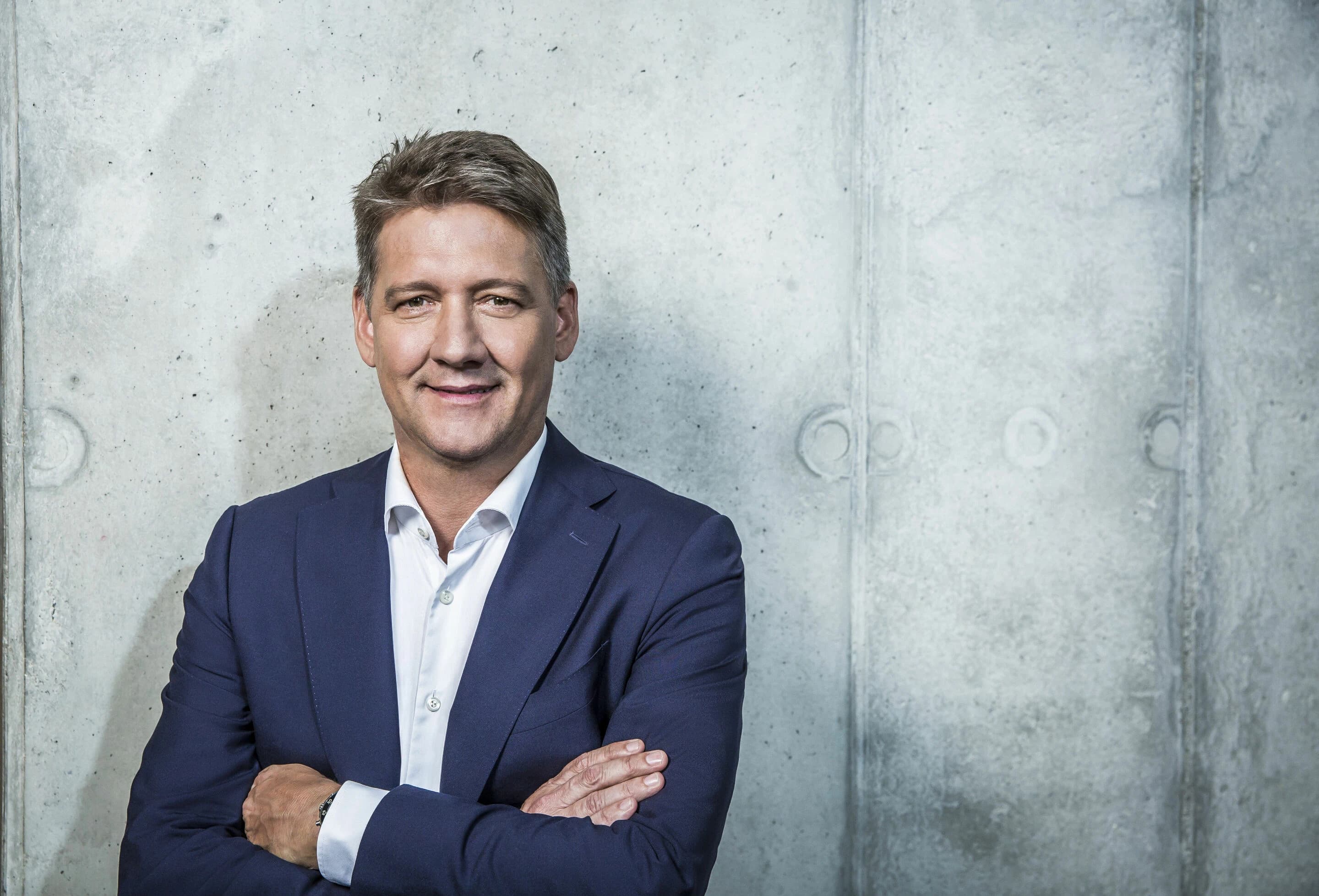
Image: Audi / Audi MediaCenter. Official Gernot Döllner press photograph downloaded from Audi’s newsroom and converted locally to WebP. It is not the rally photograph.