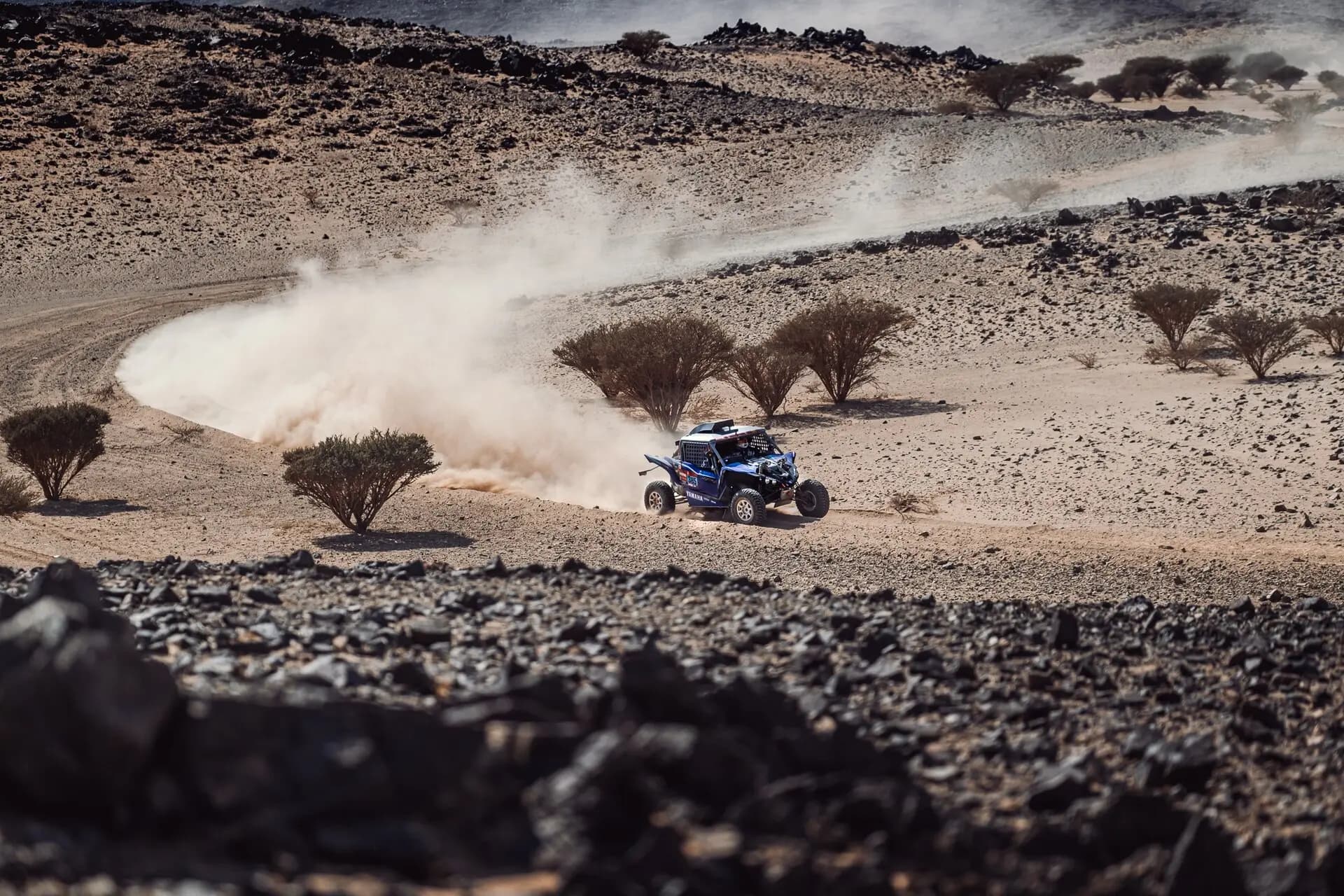
Dakar 2021, Stage 4, in Saudi Arabia. Photo: EKSRX/Wikimedia Commons, CC BY 2.0; resized and converted to WebP.
Dakar 2027 will leave Saudi Arabia after a one-edition move
The 2027 Dakar Rally will not take place in Saudi Arabia, despite having been planned there from 1 to 15 January 2027. Amaury Sport Organisation and Saudi Motorsport Company announced on 25 October that they had jointly decided to move the event following “recent events in the region”. Their statement did not name the replacement country or publish an alternative route.
The race itself is still expected to go ahead. ASO said Dakar 2027 will be organised in another territory and that it is working directly with competitors, teams and partners to manage the change. The next announcement will identify the host location. Until then, reports about Morocco or a European start remain possible scenarios rather than confirmed sporting information.
Saudi Arabia is scheduled to return in 2028
The move is described by the organisers as exceptional and limited to one edition. Saudi Arabia hosted seven consecutive Dakars from 2020 onwards and is scheduled to return in 2028, when the event will celebrate its 50th edition. ASO, Saudi Motorsport Company and the Saudi Automobile and Motorcycle Federation said they would continue their cooperation and their work to develop motorsport in the Kingdom.
That distinction matters. The announcement is not a permanent removal of Saudi Arabia from the Dakar calendar and does not end the partnership around the event. It changes the host territory for 2027 because of the safety situation referred to by the organisers.
The decision also replaces a route that had already been presented in May. The original 2027 plan was a loop starting and finishing at King Abdullah Economic City, with 5,320 kilometres of timed special stages. The route included Yanbu, AlUla, Hail, Al Duwadimi, Bisha and Al Bahah, with three new stages and a greater emphasis on the Red Sea region. Those details describe the cancelled Saudi plan, not the final 2027 route.
Why changing the host is more than moving a start line
A Dakar route is an operating system as much as it is a map. Organisers must arrange liaison roads, bivouacs, fuel, medical support, recovery vehicles, communications, customs procedures and technical checks. A new country means that many of those pieces have to be surveyed and approved again.
The sporting preparation changes as well. Sand, rocks and fast hardpack place different demands on tyres, suspension, cooling, navigation and driving style. A team that prepared for Saudi Arabia cannot simply carry the old setup into a different landscape. Private entrants face an additional challenge because their transport, accommodation, support crews and freight bookings are less flexible than those of factory teams.
ASO said it is in direct contact with competitors, teams and partners. That confirms an active transition process, but it does not confirm the route. The start city, finish city, number of stages, total distance and bivouac locations remain open until the organiser publishes them.
Morocco is being discussed, but is not official
Several sports reports have pointed to Morocco as one possible destination. Those reports have described scenarios involving a prologue in Europe followed by special stages in Africa. Such a plan would connect the event with the rally’s earlier African identity, and Morocco already hosts Rallye du Maroc, but ASO’s relocation statement does not confirm it.
The difference between a working option and an official route matters to teams and fans. A plan may change while organisers negotiate permissions, transport and security. It is therefore too early to state that Dakar 2027 will start in Paris, run entirely in Morocco or reproduce the historical Africa route.
The FIA’s 2027 World Rally-Raid Championship calendar had listed Dakar as the opening round and had placed it from 1 to 15 January. ASO’s statement confirms the 2027 event will continue, but operational details may be updated when the replacement territory is announced.
The safety precedent
Dakar has been cancelled once in its history, in 2008, because of security concerns. The Lisbon-to-Dakar event was called off before the start. The current situation is different in one important respect: ASO says the 2027 rally will be held somewhere else rather than cancelled.
Relocation is still a substantial undertaking. Hundreds of race vehicles, assistance trucks, tools, spare parts and people must reach the right places at the right time. Teams also need clear information about border crossings, visas, insurance, technical scrutineering and media operations. A new route that is announced late can preserve the event while increasing the preparation burden for everyone involved.
For spectators, the change may alter the landscapes and the style of the stages. For competitors, it can affect vehicle setup and the balance between navigation, dunes, rocky tracks and high-speed sections. None of those characteristics can be assigned to Dakar 2027 until the new route is published.
What happens next
The next confirmed information should cover the host territory, the route, the stage count, the start and finish locations, transport arrangements and any revised dates for technical checks. The competitor calendar already included deadlines for entries, European checks and vehicle shipment, but those instructions may need to be adjusted to the new destination.
The verified conclusion is narrow but clear: Dakar 2027 will not be held in Saudi Arabia, the event has not been cancelled, and Saudi Arabia is planned to return in 2028 for the 50th edition. Morocco and a European prologue are reported possibilities, not facts confirmed by the organiser.