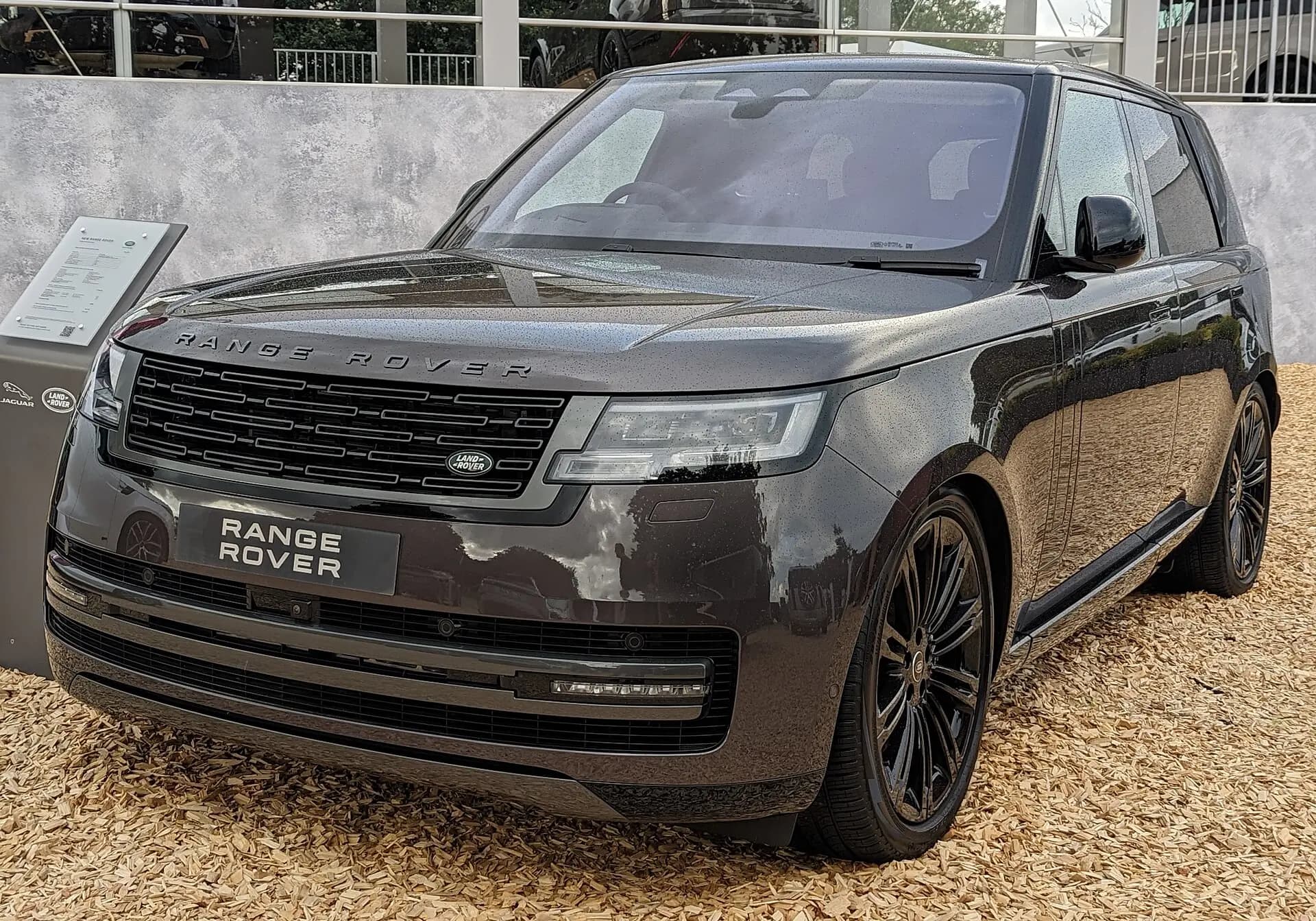
Illustrative photograph of a current-generation Range Rover. The recall must be confirmed by VIN. Photo: Calreyn88/Wikimedia Commons, CC BY-SA 4.0; resized and converted to WebP.
93,997 Range Rovers recalled over rearview-camera drainage problem
Jaguar Land Rover North America has filed a US safety recall covering 93,997 Land Rover Range Rover vehicles from the 2022 through 2026 model years. The National Highway Traffic Safety Administration lists the campaign as 26V678000, while Jaguar Land Rover identifies it internally as D171.
The defect is in the way water drains from the tailgate trim around the rearview camera. According to the recall information, the trim does not have enough drainage holes. Water may remain around the camera and damage it. If the camera image fails to display, the driver has less information about the area behind the vehicle while reversing, increasing the risk of a crash.
What the recall covers
The filing names the full-size Land Rover Range Rover. It does not list the Range Rover Sport or Range Rover Velar in this campaign. The model years are 2022, 2023, 2024, 2025 and 2026, but a model year alone cannot determine whether a particular vehicle is affected.
The production range reported for the campaign runs from 8 July 2021 to 4 June 2026. That is a manufacturing window, not a guarantee that every vehicle built during it is included. Recall coverage is decided by the vehicle identification number and by the manufacturer’s records. Owners should therefore use the VIN lookup rather than rely on a registration year, a listing description or a visual inspection.
The reported population is the number of potentially affected vehicles. It is not a count of failed cameras. The filing does not mean that 93,997 owners have already experienced a blank screen, nor does it establish that every camera in the group will fail. It identifies a design or manufacturing condition that can create the risk.
Why a camera fault becomes a safety recall
Rearview cameras are often treated by drivers as convenience equipment, especially when the car also has parking sensors and large mirrors. During a reversing manoeuvre, however, the image is part of the information available to the driver. A blank, intermittent or damaged image can hide a low obstacle, a person or another vehicle.
The camera does not remove the need to check mirrors and surroundings. It also does not make every part of the area behind a large SUV visible. Its role is to add a view that can be particularly useful close to the tailgate. When that view disappears, the driver must compensate immediately rather than assume the screen is suffering from an ordinary infotainment glitch.
The recall description is deliberately narrower than a general statement about water resistance. Water can reach a tailgate during rain, washing or driving on wet roads without a vehicle being defective. The concern here is that water may not drain away from the camera because of insufficient holes in the trim. The resulting exposure can damage the camera and remove the rearward image.
The proposed repair
Dealers will drill additional drainage holes in the underside of the tailgate trim. They will then inspect the rearview camera and replace it if necessary. The repair is to be completed without charge for owners of vehicles covered by the campaign.
Interim owner letters are expected to be mailed from 11 December 2026, with further communication once the final remedy process is ready. Owners do not need to wait for a letter before checking the VIN. A vehicle may have changed owner, moved between states or been imported, so manufacturer and NHTSA records are more reliable than the address on an old sales document.
Land Rover’s recall number is D171. In the US, owners can also contact the manufacturer at 800-637-6837. A dealer can confirm whether the campaign is open for a specific VIN, whether the camera has already been replaced and whether other campaigns apply to the same vehicle.
There is no instruction in the published summary to park the vehicle immediately or to stop driving. That does not make a failed camera harmless. If the image is absent, the driver should use the mirrors, look around the vehicle and avoid reversing until the surroundings have been checked. The vehicle should be booked with an authorised repairer, particularly if the fault appears after rain or washing.
What imported cars and European owners should do
Campaign 26V678000 is a US filing. It does not by itself prove that the same number of vehicles in Europe or Romania are included. A Range Rover imported from the United States should be checked in the NHTSA system and with Land Rover. A vehicle supplied through a European market should be checked with the local importer or authorised retailer using its VIN.
The same principle applies to used-car buyers. A seller’s statement that the camera works is not evidence that a safety campaign is closed. Ask for a VIN check, a service invoice or written confirmation from a Land Rover retailer. Test the camera in daylight and after the car has been exposed to water, but treat that test as an observation, not as a substitute for the official campaign record.
Owners should not drill the trim themselves. The remedy changes a water-management component and may affect sealing, wiring or the camera housing. An improvised hole may not be positioned correctly and could introduce a new leak. The free recall repair is the appropriate route when the VIN is included.
The campaign also illustrates why a technology feature can move from the comfort category into the safety category. The failure is not a loss of engine power, braking or steering, yet the missing image reduces the driver’s view. A small drainage detail in a tailgate can therefore require a formal recall when it affects the information used during a low-speed manoeuvre.
The scope should not be overstated
The recall does not say that every current Range Rover has a camera defect. It does not include every Land Rover model, and it does not establish accidents or injuries caused by this issue. The 93,997 figure applies to the US campaign population reported to NHTSA. A specific vehicle is included only if its VIN matches the manufacturer’s recall records.
For owners, the practical sequence is straightforward: check the VIN, ask an authorised repairer about D171, keep the camera and mirrors under observation, and obtain confirmation when the repair is complete. The camera should be treated as unavailable whenever its image is missing, blurred or unreliable.