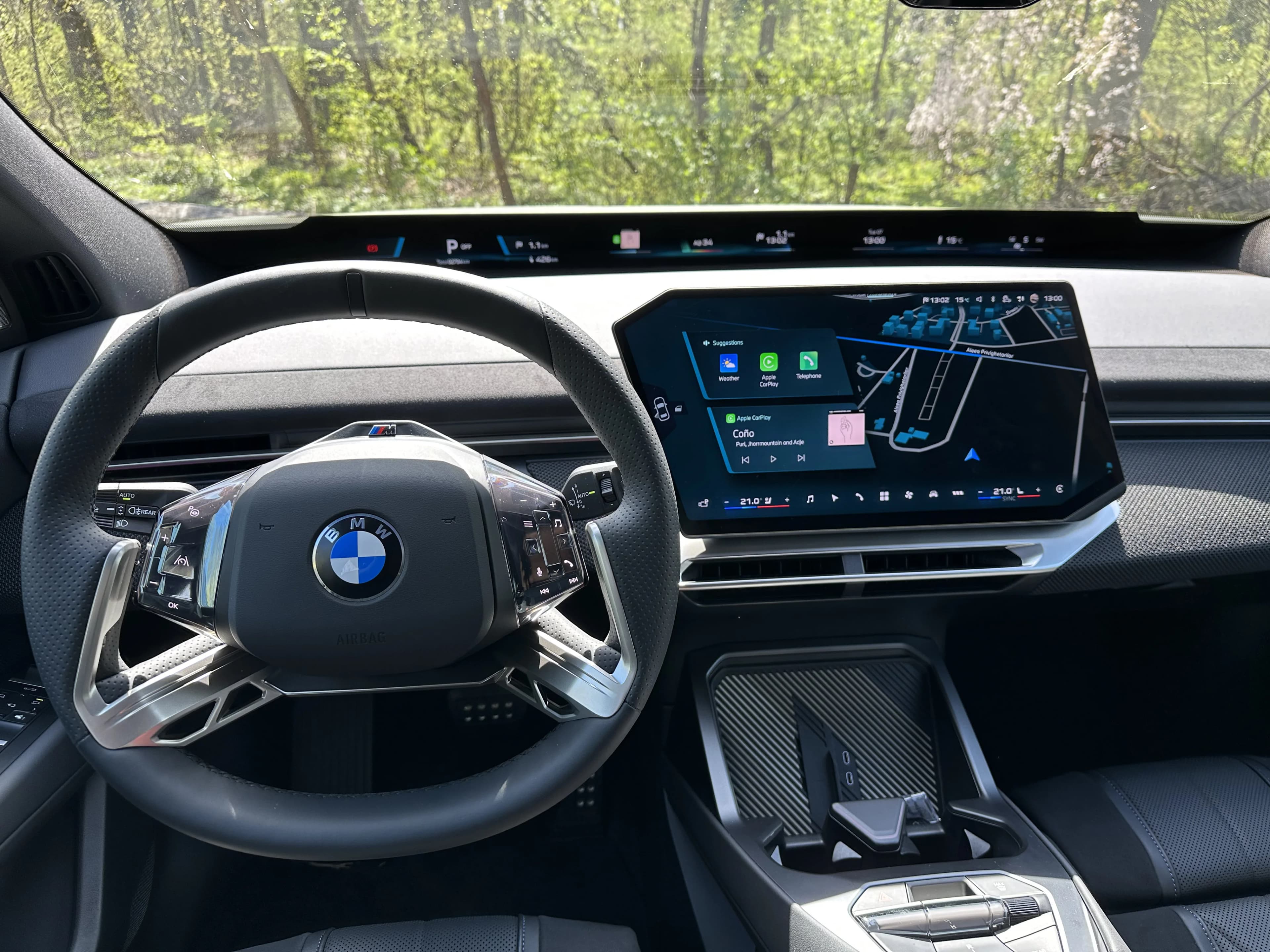
BMW’s sixth-generation high-voltage battery has received the “Global New Energy Vehicle Innovative Technology” award at the 2026 World New Energy Vehicle Congress in China. BMW says it was the only automotive manufacturer from outside China to receive one of the event’s technology awards. The announcement is also relevant to Rimac Technology, which is manufacturing the battery system for the new electric BMW i7 and is now linked to two further, unnamed BMW projects.
What the WNEVC award does and does not mean
The award should not be presented as a universal battery shootout. BMW’s announcement describes a technology distinction based on the company’s overall approach to safety, efficiency, sustainability and customer benefits. It does not publish a ranking showing that the Gen6 pack defeated every Chinese competitor in range, cost, charging speed or long-term durability.
That qualification is important because China is one of the world’s most competitive electric-vehicle markets. The WNEVC brings together representatives from industry, academia and government to discuss new-energy vehicles. BMW says the 2026 result is its fifth consecutive recognition and sixth recognition overall at the congress.
The recognised technology uses new BMW cylindrical cells with a high-nickel cathode. Gen6 is a central part of the Neue Klasse electric-vehicle programme and is intended to be introduced gradually across BMW’s fully electric range. The award therefore concerns a platform strategy rather than a single production car.
The engineering behind Gen6
BMW describes the battery as a system that combines cells, power electronics, software and vehicle integration. The Gen6 portfolio is designed around an 800-volt architecture and supports bidirectional charging. Its cells are integrated directly into the battery pack without a separate module structure, a layout known as cell-to-pack.
Cell-to-pack construction can reduce unused space inside the pack and increase energy density at battery level. BMW also says Gen6 is compatible with both 400-volt and 800-volt charging infrastructure. That does not mean every BMW model will charge at the same speed on every charger. Vehicle configuration, battery temperature, state of charge and the station’s output remain decisive.
The Energy Master is another major part of BMW’s design. The company develops both its hardware and software in-house. The unit manages the flow of energy, supplies the electric motors and the vehicle’s electrical system, and provides the interface for battery data. BMW presents this integration as a way to coordinate charging, thermal management, efficiency and safety.
Safety measures listed by BMW include steel housings for the cylindrical cells, integrated protection mechanisms, multi-stage insulation and thermal and energy management. BMW says it filed more than 500 patent applications for innovations connected with the move from Gen5 to Gen6. Those figures and descriptions come from the manufacturer; Carboratory has not independently tested the battery.
Why Rimac is involved
BMW announced its cooperation with Rimac Technology in April 2026 for the new all-electric BMW i7. The i7 application combines Gen6 cell technology with an adapted Gen5 module design. BMW identifies the cells as 4695 lithium-ion cylindrical units and says their volumetric energy density is 20 per cent higher than that of the previous Gen5 prismatic cells.
Rimac Technology manufactures the high-voltage battery in Croatia. The completed unit is shipped to BMW Group Plant Dingolfing, the factory responsible for production of the BMW 7 Series. BMW calls Rimac Technology a Tier 1 supplier and describes its work as covering high-voltage batteries, e-axles, electronics and software.
The arrangement moves Rimac beyond its earlier public image as a supplier associated mainly with low-volume electric hypercars. It also shows why the WNEVC award and the i7 cooperation should be kept separate. BMW owns and describes the Gen6 platform in the award announcement; Rimac is the development and production partner for a specific BMW battery application.
Mate Rimac has confirmed that two more BMW cars are in the pipeline. The companies have not named those vehicles, and there are no verified details about their body styles, battery sizes, manufacturing volumes or launch dates. It would be speculation to identify them as future SUVs, M models or additional 7 Series variants.
What the award means for customers
BMW’s stated customer objectives are longer range, quicker charging and better efficiency. The result experienced by a driver will depend on the complete vehicle. Aerodynamic drag, curb weight, battery capacity, motor output, software and charging conditions all influence range and charging time.
European buyers will still need model-specific information, including final WLTP figures, price, warranty terms, repair options and local availability. None of those details is established by the WNEVC award alone. A technology recognition can explain BMW’s direction, but it cannot replace an official vehicle specification sheet.
The verified story is therefore precise: BMW’s Gen6 battery received a technology award at the 2026 WNEVC and was the only non-Chinese automaker entry mentioned by BMW among the event’s technology award recipients. Rimac Technology is producing the battery system for the new electric i7 in Croatia. Two additional BMW projects with Rimac exist, but their identities remain undisclosed.