
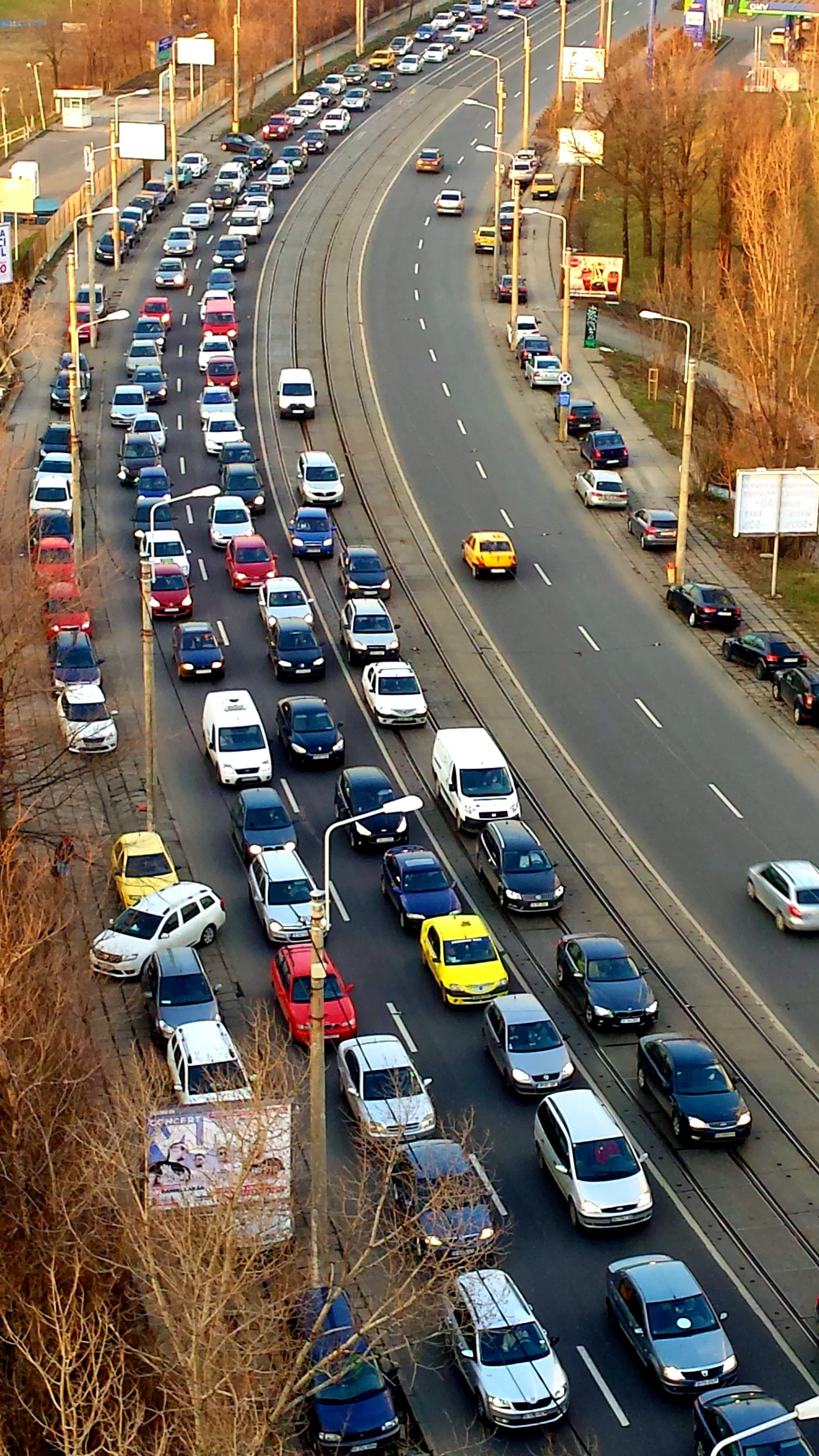
Bucharest mayor Ciprian Ciucu has presented a proposal to restrict non-Euro cars from the city centre from 1 November 2027. The plan would then move through older Euro emissions classes over several years. By 2032, Euro 5 cars could be excluded from the central area while Euro 3 cars could lose access to Bucharest as a whole. None of these restrictions is in force yet: the timetable still has to go through public consultation and a vote in the General Council of Bucharest.
What the proposal says
The timetable was presented during a Bucharest air-quality debate on 2 October 2026. The municipality identified road traffic and residential heating with wood or coal as two sources it wants to address. For road traffic, the proposed policy is a low-emission zone introduced in stages, starting in the centre and later covering the wider city.
The first group would be non-Euro passenger cars inside the central zone. The municipality says this would affect about 80,500 cars built before 1991. That estimate describes vehicles in the relevant registration data; it does not show how many of those cars enter the centre on a typical weekday. The final effect will depend on the boundary of the zone, the number of daily trips and any exemptions written into the regulation.
The announcement describes later restrictions for Euro 1, Euro 2, Euro 3, Euro 4 and Euro 5. A timetable alone does not create an enforceable traffic rule. Bucharest would still need a General Council decision, a legally defined perimeter, road signs, a method for identifying the emissions class and a process for drivers who challenge a penalty.
The size of the local fleet
Registration data from the Romanian Auto Registry for 2025, cited by the municipality, show 2,867,404 vehicles registered in Bucharest and Ilfov. Ciucu said that almost 1.3 million are old and polluting. The figure includes 461,251 vehicles aged between 22 and 35 years in the non-Euro, Euro 1, Euro 2 and Euro 3 groups. Another 835,856 cars are Euro 4 vehicles aged between 17 and 21 years.
Those numbers should not be read as a daily traffic count. A car registered in Ilfov may never enter the city centre, while a Bucharest-registered car may be used mainly outside the municipality. A useful impact assessment would need origin-and-destination data, peak-hour traffic counts and a clear map of the proposed zone. It would also need to distinguish between cars that are technically old and cars that actually contribute to traffic in the restricted area.
The low-emission zone in existing plans
Bucharest’s Green City Action Plan already includes a low-emission zone. The document describes a gradual access policy based on fuel type and vehicle age, with stricter and faster restrictions for older vehicles and diesels. It also links the policy to more air-quality monitoring stations, enforcement cameras, road signs and public information.
The plan discusses fines for non-compliant vehicles and the possibility of directing those revenues to a clean-mobility fund. These are planning measures, not a final enforcement system. The current public information does not establish where the cameras would stand, how the database would match a registration plate to an emissions class or how residents, emergency services and disabled drivers would be treated.
The municipality also points to Law 155/2023 on sustainable urban mobility, which requires cities such as Bucharest to establish low-emission zones. A separate public consultation page describes a proposed low-emission area in the centre and refers to the earlier ZACA project. It notes that the perimeter, exemptions and enforcement rules have to be resolved before penalties can work in practice.
The Oxigen precedent
Bucharest has tried to regulate older cars before. In 2019, the General Council approved the Oxigen road charge and restrictions in the Air Quality Action Zone. The scheme treated vehicle classes differently: electric and hybrid cars, Euro 5 and Euro 6 vehicles would have had unrestricted access; Euro 3 and Euro 4 cars would have needed a permit; and non-Euro, Euro 1 and Euro 2 cars would have been barred from the central zone.
In February 2020, mayor Gabriela Firea announced that the city would abandon the Oxigen fee and the central access restrictions. The episode matters because a formally approved policy can still fail if its enforcement system, public communication and transport alternatives are not ready. The new proposal does not currently announce an access fee, but it faces the same practical questions about residents and replacement journeys.
What drivers should expect next
There is no new permit to buy and no immediate ban for owners of older cars. Drivers can check the emissions class in the registration documents and in the RAR records, but that information alone does not determine access until the future regulation defines the zone and its exceptions. A car barred from the centre could remain legal to use on other Bucharest roads or outside the municipality.
The proposed timetable leaves several points open: the exact perimeter, hours of operation, penalties, exemptions, appeals and the number of vehicles affected in each stage. The municipality has not yet published a quantified reduction in nitrogen dioxide, particulate matter or other pollutants for every deadline. Those details should appear in the draft rules and in the consultation documents.
The confirmed development is therefore narrower than a completed ban. Bucharest has announced a phased policy proposal, beginning with non-Euro cars in the centre on 1 November 2027. The measure will only become binding after the General Council adopts the necessary decisions and the final enforcement rules are published.
Sources
- Bucharest City Hall – air-quality debate, 2 October 2026
- Bucharest City Hall – Green City Action Plan directions
- Bucharest Green City Action Plan
- Bucharest City Hall – low-emission-zone proposal in public consultation
Image: Babu, “Bucuresti strada Vasile Milea trafic”, Wikimedia Commons, CC BY-SA 4.0. The image was converted locally to WebP.


