
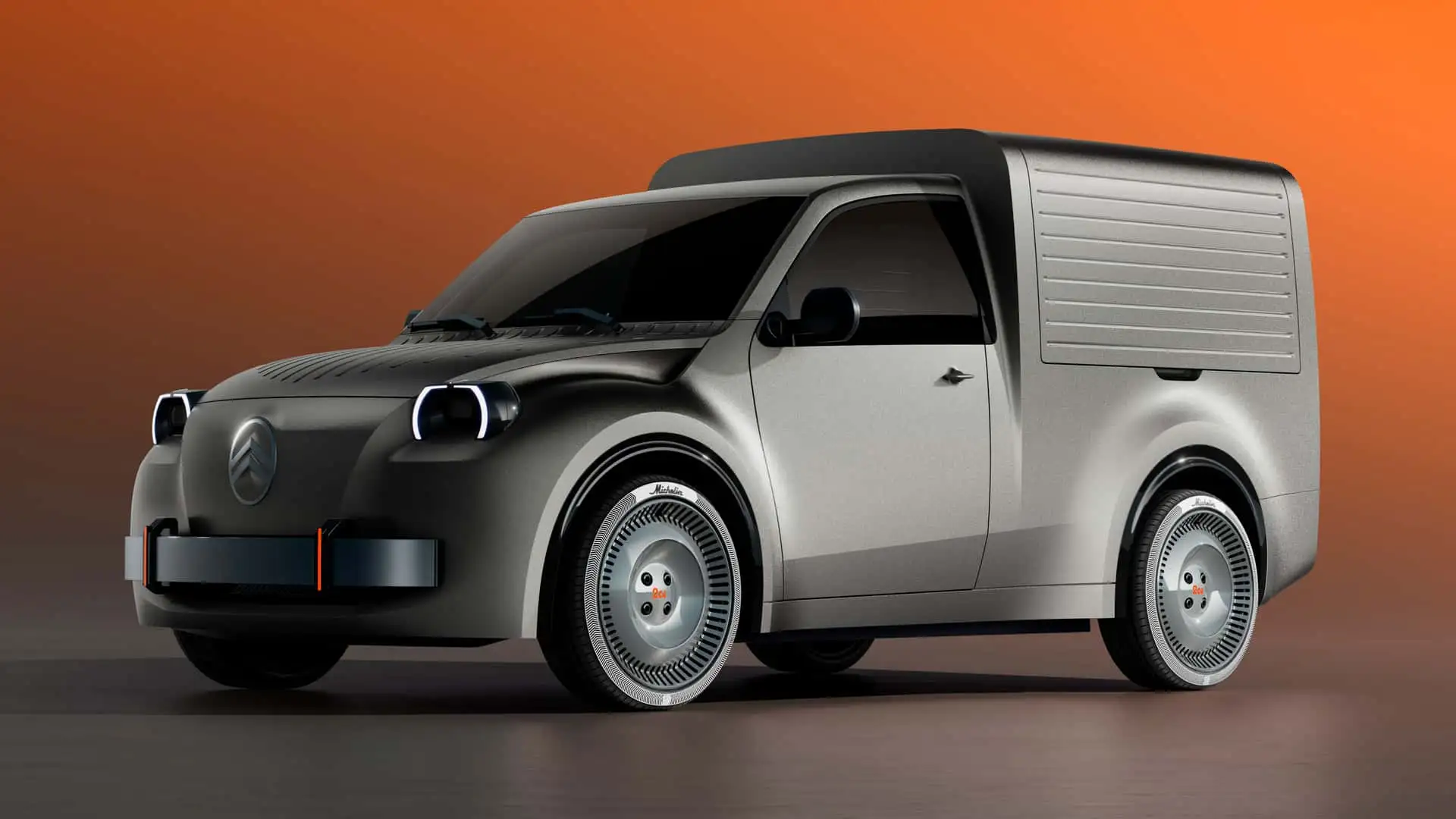
Citroën has presented a second 2CV-inspired concept at the 2026 Paris Motor Show. The 2CV Fourgonnette Concept turns the nameplate toward tradespeople, shopkeepers and small fleets, using a short nose and a tall rear body instead of the passenger-car proportions of the electric 2CV concept shown the day before. Citroën calls it a design study. It has not confirmed a production van, a launch date, a price or technical specifications for a road-going version.
The historical reference
The original 2CV entered production in 1948. Citroën introduced the Fourgonnette derivative in 1951, using the small front-wheel-drive car as the basis for a van with a regular cargo box behind the central pillar. That layout gave tradespeople and delivery drivers a compact vehicle with a more usable load area than the saloon body could provide.
Citroën’s professional-vehicle history lists production from 1951 to 1978 and more than 1.2 million examples, with the exact total depending on the historical source and counting method. The Fourgonnette became associated with small businesses, public services and daily deliveries because it combined a small footprint with simple mechanical solutions. Those historical figures do not constitute specifications for the new concept: Citroën has not given its payload, cargo volume, battery or range.
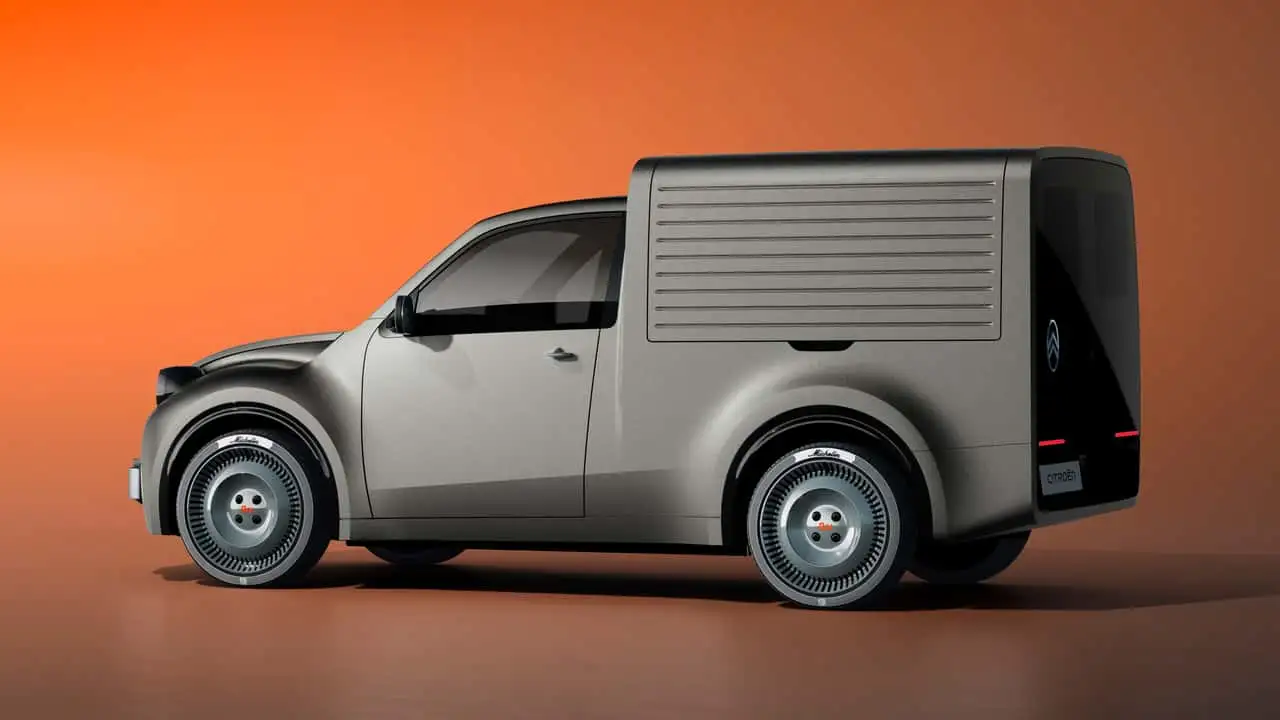
The side profile highlights the tall cargo body and compact proportions. Citroën image published by Motor1.com and used at the user’s request.
A boxy body with modern lighting
The concept keeps a short bonnet, a forward cabin and a tall load compartment. Its side panels use horizontal ribs that reference the flat, easy-to-produce sheet metal of the historic van. The front end reworks the original’s round lamps into separate graphic elements, while the large Citroën badge sits in the centre of the nose.
The Motor1 gallery shows a side door for the cabin and a high rear body, but it does not show a complete cargo-area layout. There are no published figures for internal length, standing height, payload, tie-down points or the size of the rear opening. Those details would matter more to a tradesperson than the concept’s styling, and they remain unknown.
Citroën has therefore shown a design direction rather than a commercial vehicle ready for comparison with the Berlingo Van, Ami Cargo, Jumpy or other Stellantis products. The concept communicates the idea of a small electric work vehicle with a strong identity, but it does not establish where it would sit in Citroën’s range.
Related to the future 2CV, but not the same vehicle
Citroën’s official 2 CV Concept release describes a compact electric model intended for private buyers. The brand says it plans to present that future model within the next two years, build it in Europe and aim for a starting price close to €15,000. Citroën also says the project is intended to meet future E-Car regulations and that the concept is 3.76 metres long.
Those statements apply to the passenger-car concept. They do not confirm a Fourgonnette derivative with the same dimensions, price, battery or motor. The van shown in Paris demonstrates how the 2CV theme might be adapted to small-business use, but Citroën and Stellantis have not announced payload, cargo capacity, range, charging performance or a commercial launch window for it.
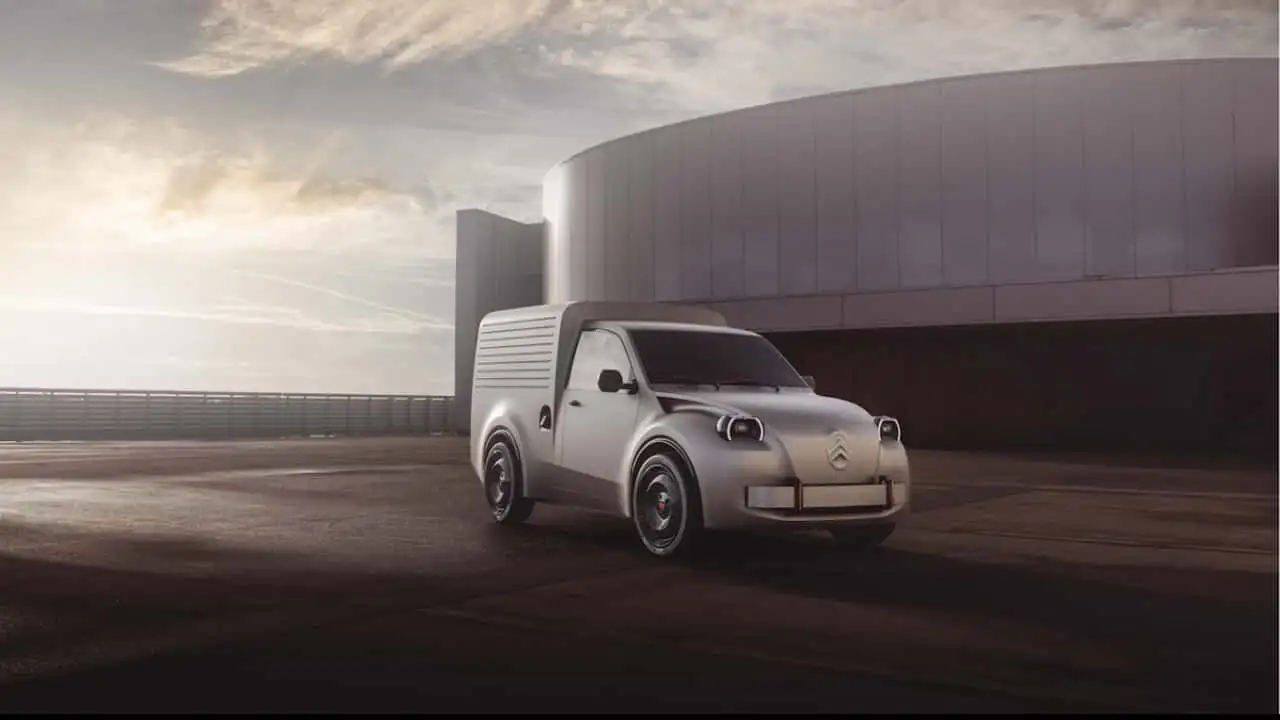
A third exterior frame from the Motor1 article shows the concept outside the studio. Citroën image published by Motor1.com and used at the user’s request.
Why the utility details matter
For a small commercial EV, affordability is only one part of the product brief. Operators need to know how much equipment can be carried, how the load is secured, how easily the rear and side doors can be accessed, and how much range remains under payload. Charging time, service coverage and vehicle downtime also affect the operating cost of a small business.
The Fourgonnette concept does not answer those questions. It shows a high body and a separate load compartment, but a show car can use simplified packaging and surfaces that would need to change for crash structure, insulation, lighting, visibility and production tooling. Until Citroën releases a technical sheet, it is more accurate to call this a styling exercise than a preview with confirmed commercial capability.
Citroën’s long utility-vehicle history
The 2CV Fourgonnette was followed by other compact commercial derivatives, including the Acadiane. Citroën later developed the C15 and now sells the Berlingo Van, Jumpy and Jumper in different size classes. The new concept does not officially replace any of them. Its significance is that it connects a future affordable-EV story with a part of Citroën’s history that was built around carrying tools, parcels and supplies.
That connection is visible in the proportions. The short front end leaves the load body visually dominant, while the ribbed sides make the van look like a simple working object rather than a passenger crossover with a large boot. The concept uses its design to ask whether an electric city van could be practical without becoming anonymous. It does not yet say what the answer would cost or how far it could travel.
No separate interior photograph was published
The Motor1 gallery used for this article contains exterior frames of the Fourgonnette concept. It does not include a clear image of the cabin or a dedicated view of the cargo compartment. The article therefore uses the front, side and additional exterior images without presenting any of them as an interior photograph.
That limitation is worth stating because the passenger 2CV concept has a colourful, connected interior described in Citroën’s official release. It would be misleading to transfer those details to the Fourgonnette without a photograph or a separate statement. A production van would need a different interior brief, including a protected load floor, durable trim, storage and a safe separation between occupants and cargo.
What happens next
Citroën is using the 2CV name to explore two related directions at Paris: an affordable electric passenger car and a possible small commercial interpretation. The passenger project has a clearer official horizon, with a model expected to join the range around 2028 and an ambition for a starting price near €15,000. The Fourgonnette remains a concept that illustrates how the same design idea could serve professionals.
The confirmed conclusion is narrow. Citroën has shown a compact van-shaped study with a tall cargo body, a 2CV-inspired front end and historical references to the Fourgonnette built from 1951. It has not confirmed production, price, battery, range, payload or cargo volume. The Paris display explains the direction; a future commercial announcement would need to provide the measurements and operating data that small businesses actually use.
Images are Citroën photographs published by Motor1.com and used at the user’s request. The source page does not state a commercial reuse licence; original attribution is retained.


