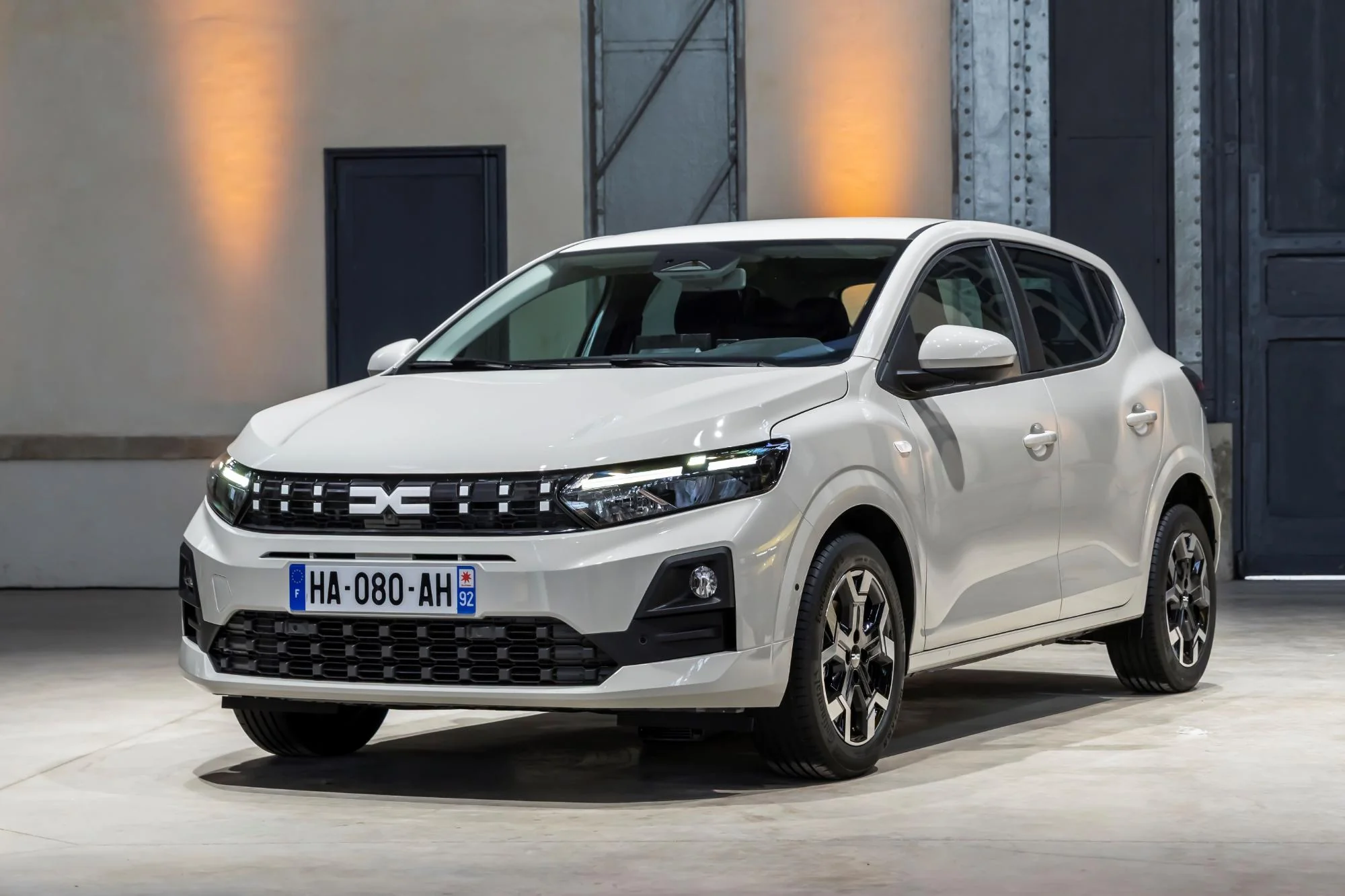
Connected cars can communicate over cellular, Wi-Fi, Bluetooth or satellite networks. Photo source: Alliance for Automotive Innovation
Carmakers ask the US to ban Chinese connected cars permanently
The leading US auto-industry organisation is asking Congress to adopt, before the current legislative session ends, a permanent ban on the sale, import and manufacture of connected cars, hardware and software associated with China.
The request was sent on 3 September 2026 by the Alliance for Automotive Innovation to the leadership of the House of Representatives and the Senate. The organisation represents manufacturers that produce most of the cars sold in the US, as well as suppliers of components, batteries and semiconductors.
The move does not mean a new ban has already taken effect. The industry supports the bipartisan Connected Vehicle Security Act of 2026, filed in the Senate as S.4429. The initiative was introduced by Senators Bernie Moreno and Elissa Slotkin and passed the Senate Commerce Committee unanimously in July. To become law, the bill still has to complete the legislative process and be signed.
What the bill seeks to ban
The official title of S.4429 describes a ban on importing, manufacturing, selling, reselling or placing in interstate commerce connected vehicles and associated technologies that have links to foreign adversaries of the United States.
In its communication, the Alliance for Automotive Innovation emphasises China and asks that the restrictions cover three categories:
- connected vehicles produced by targeted companies;
- software that provides connectivity or automated-driving functions;
- hardware components through which the car communicates with the outside world.
The legislative text aims to lock in the existing Commerce Department rule and reduce the chance that it can later be changed by an administrative decision alone.
The US already has staged restrictions
The Bureau of Industry and Security in the Department of Commerce, known as BIS, adopted in January 2025 a rule for connected vehicles and technologies with a sufficient nexus to China or Russia. The rule has been in force since 17 March 2025, but its prohibitions are scheduled in stages.
| Measure | When it applies |
|---|---|
| Ban on the sale of connected cars by manufacturers controlled by or under the jurisdiction of China or Russia | Model year 2027 |
| Ban on importing or selling cars that use connected software or automated-driving software from targeted entities | Model year 2027 |
| Ban on importing connectivity hardware from targeted entities | Model year 2030; 1 January 2029 for components without a model year |
The current rule allows general authorisations for certain lower-risk situations and individual authorisations for transactions that would otherwise be prohibited. That administrative character and those authorisation mechanisms explain why the industry is now asking for a permanent legislative solution.
What a connected car actually is
The term does not refer only to robotaxis or fully autonomous vehicles. BIS defines the car’s connectivity system through components such as the telematics unit and Bluetooth, cellular, Wi-Fi or satellite modules. Automated-driving software also falls within the rule.
These technologies can transmit the car’s position, operating information and user-generated data, receive remote updates and communicate with external apps or services. US authorities consider that unauthorised access to such systems could allow the collection of sensitive data or, in certain conditions, remote manipulation of the vehicle.
That is the risk assessment on which US policy is based. The mere presence of an internet connection does not prove that a given car is sending data to a foreign government; the restriction starts from the origin and control of the manufacturer, software or components, not from a documented incident for each model.
National security, and industry protection
John Bozzella, president of the Alliance for Automotive Innovation, argues that subsidised Chinese cars are gaining market share in Europe, Australia, Southeast Asia, Mexico and South America. The organisation describes the situation both as a data and security risk and as a threat to production and jobs in the American industry.
These claims are the position of the lobbying organisation. The economic effect of the bill is nevertheless clear: besides a cybersecurity filter, a statutory ban would raise a barrier that would be very hard to overcome for Chinese manufacturers trying to enter the US market, including through local production or partnerships.
Support for the initiative does not come only from American manufacturers. The Alliance for Automotive Innovation membership list includes companies from the US, Europe, Japan and South Korea, such as Ford, General Motors, BMW, Mercedes-Benz, Volkswagen, Toyota, Honda, Hyundai, Kia and Stellantis. The statement is issued in the association’s name, however, and should not automatically be read as an identical individual statement from each member.
What could change for manufacturers and suppliers
If S.4429 becomes law in the form sought by its sponsors, manufacturers selling in the United States will have to demonstrate more rigorously where communication modules and the software code integrated into cars come from. In practice, that may lead to:
- replacing some Chinese hardware or software suppliers;
- checking the ownership structure of suppliers and partners;
- developing distinct technical configurations for the US and for other markets;
- extra compliance and certification costs.
The exact impact depends on the final text approved by Congress. Amendments can change definitions, ownership thresholds, exemptions and the application timetable.
Does this measure affect Romania?
Not directly. A US law applies to the US market, and Chinese cars can still be sold in Romania if they meet the European Union’s type-approval, safety, data-protection and cybersecurity rules.
Indirect effects can appear in the supply chain. An auto group present in both Europe and the US may decide to use different suppliers, split software platforms or drop certain components from all models to simplify production. That is why the American dispute is about more than Chinese brands’ access to a single market: it can influence the technical architecture of future global cars.
Sources
- Alliance for Automotive Innovation – request to Congress on 3 September 2026
- GovInfo – S.4429, Connected Vehicle Security Act of 2026
- US Senate Commerce Committee – the bill was advanced by the committee
- BIS – federal rule for connected vehicles and the application timetable
- BIS – statement on the final form of the rule