Dacia is trying to solve three problems at once: customers want lower prices, vehicle development has become more expensive, and European manufacturers are under pressure to electrify faster. In an interview with Automotive News Europe, Dacia CEO Katrin Adt discusses how the Renault Group brand intends to grow without abandoning the value proposition that made it successful.
Adt took over as Dacia CEO on 1 September 2025, succeeding Denis Le Vot. Renault Group said at the time that her previous automotive experience, including her work at Mercedes-Benz, would be an asset for the brand. Her 2026 interview comes at a point when Dacia is no longer defined only by small cars such as the Sandero and Logan. The brand is moving into larger vehicles, while trying to keep price, cost and customer value aligned.
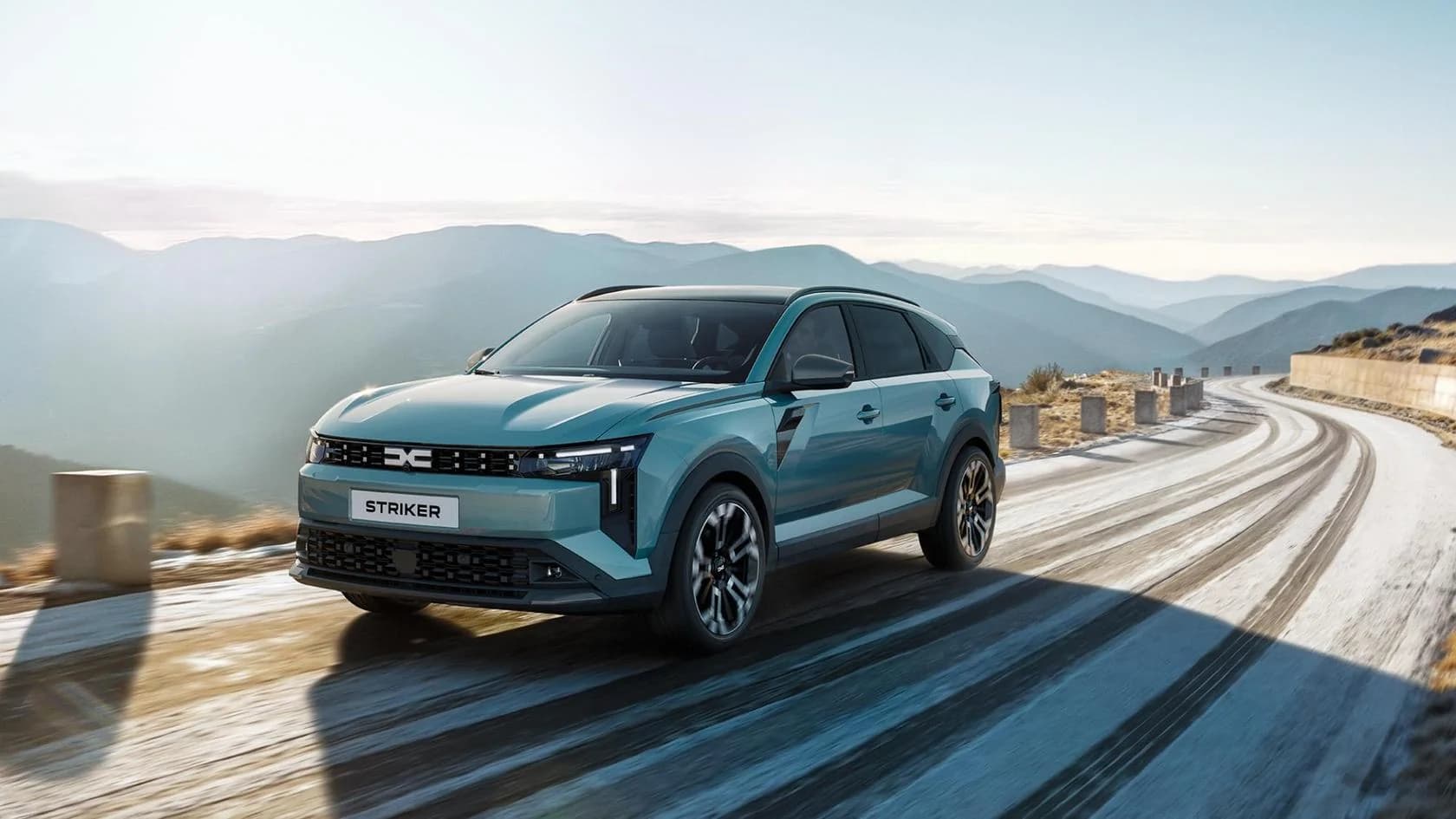
Striker is Dacia’s next step into the C-segment
The clearest product expression of that change is the Dacia Striker. It is a crossover positioned above the brand’s traditional small-car territory and designed to complement the Bigster, Dacia’s first major move into the C-segment. Dacia’s official launch material says prices start below €25,000 and presents the model as a combination of SUV seating position, estate-car versatility and saloon-like efficiency.
That description is also a useful explanation of Dacia’s product logic. Striker is not presented as a premium vehicle offered at a bargain price. Instead, the brand is trying to limit unnecessary complexity and focus on equipment that customers actually use. The result should be a car with more space, a raised driving position and electrified powertrains, without turning every convenience feature into an expensive option pack.
The timing matters. New-car prices have risen across Europe, while families and company fleets often need more interior space than a small hatchback can provide. Bigster has given Dacia access to this group of buyers; Striker is meant to broaden that appeal with a more dynamic crossover shape and a complementary position in the range. Dacia is not saying that Sandero, Logan or Jogger will disappear. The stated direction is to add sales opportunities rather than abandon the products that built the brand.
Electrification must remain affordable
Renault Group’s 2030 plan says Dacia intends to launch four electric vehicles by the end of the decade, compared with one in the current range. It also targets two-thirds of Dacia sales being electrified by 2030. The term “electrified” includes battery-electric and hybrid vehicles, so the target should not be read as a promise that two-thirds of sales will be fully electric.
That distinction is important for an affordability-focused brand. Battery-electric vehicles require cells, power electronics and charging hardware that can raise the purchase price. A hybrid can reduce fuel consumption while allowing customers to keep familiar refuelling habits. Dacia’s approach is therefore likely to involve several technologies, including mild-hybrid and full-hybrid systems alongside smaller battery-electric models.
The Spring remains the best-known electric reference point. Renault Group has announced a Europe-built Spring for 2026, with official launch communication quoting a starting price of €17,900. Actual prices and equipment can vary by market and by version, and public incentives may also affect the final transaction. The model illustrates the type of electric car Dacia is pursuing: simple, compact and comparatively easy to buy, rather than a vehicle designed to win a range or performance contest.
Chinese competition raises the stakes
The AutoNews interview also places Dacia’s strategy against growing competition from Chinese manufacturers. The issue is not only the headline price. Several Chinese brands are entering Europe with electric and hybrid vehicles offering large screens, extensive software functions and generous standard equipment. This can make established European models appear expensive even when their production and compliance costs are different.
Dacia cannot respond simply by cutting prices. Suppliers, labour, batteries, distribution and European approval requirements create a practical floor. Its answer is to protect total value: a controlled purchase price, reasonable running costs, straightforward maintenance and equipment that has a clear benefit. Renault Group describes the underlying business model through design-to-cost and an efficient industrial and sourcing footprint. These are strategic principles, not a guarantee that every future Dacia will cost the same as its predecessor.
For European buyers, Striker will therefore be judged on more than its entry price. Customers will compare cabin space, fuel or electricity costs, warranty conditions, equipment and expected resale value with a growing number of alternatives. A sub-€25,000 starting point is meaningful, but it does not describe every version or every national market. Local prices, equipment and delivery dates must be checked when orders open.
The risk of growing too far from the core
Dacia must also prove that its expansion into the C-segment does not weaken its original advantage. Bigster and Striker can attract new customers, but a larger and more complex range can increase costs and move the brand away from buyers for whom the initial price is the decisive factor. Electrification adds another test: battery supply, charging expectations and local incentives will influence whether affordable electric vehicles remain genuinely accessible.
Adt’s message is consequently one of balance. Dacia wants to sell larger cars, electrify more of its range and compete in a market with increasingly aggressive rivals. At the same time, price and value remain filters for product decisions. Striker is the first clear signal of that next phase, but it is not proof that every future model will use the same powertrain, equipment mix or price position.