
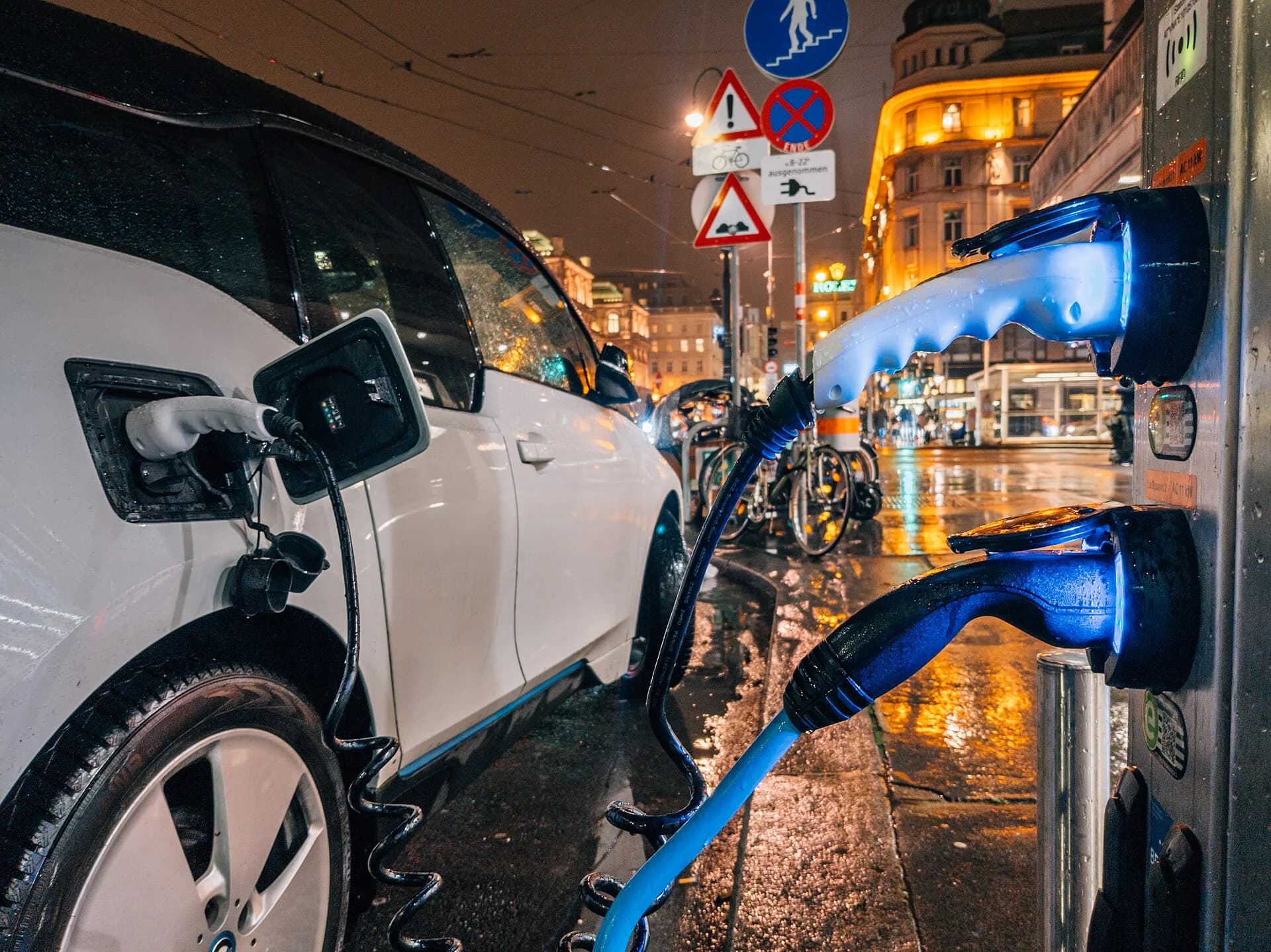
Battery-electric vehicle sales accelerated across major European markets in September, as higher petrol and diesel prices changed the ownership calculation for some buyers. Automotive News reported that BEVs reached a record share of about 33 percent across the 12 European markets covered by its analysis, while sales rose 62 percent from the same month a year earlier. The report linked the result to two forces arriving together: more expensive fuel and a larger supply of electric models at lower price points.
A record month with a limited scope
The 33 percent figure applies to the 12 markets and the single month covered by the Automotive News report. It is not the annual battery-electric share for the European Union and should not be applied automatically to every European country. The European Automobile Manufacturers’ Association, ACEA, reported on 24 September that BEVs represented 21.7 percent of EU registrations during the first eight months of the year, up from 15.8 percent in the same period of 2025.
Those figures measure different things. The Automotive News result is a monthly snapshot of a selected group of markets, while ACEA’s figure covers eight months and the EU. September can also bring unusual registration patterns in some countries because deliveries are timed around plate changes and quarterly targets. The monthly record points to real acceleration, but it cannot by itself prove that a 33 percent share will persist through the whole year.
ACEA’s data nevertheless shows that the increase is broad. During the first eight months, battery-electric registrations rose 77.6 percent in Italy, 33.9 percent in Spain and 15.6 percent in Germany. ACEA attributed the strength to support measures in some markets and to the wider range of models available to buyers.
Why petrol and diesel prices matter
Fuel prices affect drivers through a cost that is easy to see every week. A petrol or diesel car has a variable running cost determined by mileage, fuel economy and the price displayed at the pump. An electric car still requires paid energy, and public charging can be expensive, but a driver who charges at home may face a more stable cost per kilometre.
The International Council on Clean Transportation, ICCT, estimated that in 2025 a battery-electric car in Europe was 33 percent cheaper to drive than a comparable gasoline car when the calculation included a mix of home and public charging. That does not mean every EV is cheaper to buy or that every owner will achieve the same saving. Purchase price, financing, insurance, charging tariffs and depreciation remain separate parts of the ownership calculation.
Higher fuel prices can move a decision forward for people who were already considering an EV. They do not solve the problems of upfront affordability or access to charging. A driver without a home charger may depend on public fast chargers and their tariffs, reducing the difference compared with a petrol car. The financial result therefore depends on usage and local infrastructure, not only on the energy source.
More choice is part of the story
The September result cannot be explained by fuel prices alone. Europe now has more battery-electric hatchbacks, small cars, crossovers and family models than it did a few years ago. Automotive News also identified the arrival of more affordable new models as a reason for the stronger result.
The United Kingdom provides a useful separate example. The Society of Motor Manufacturers and Traders, SMMT, reported 99,201 new BEV registrations in September, up 36.3 percent from September 2025. BEVs accounted for 28.3 percent of the UK’s monthly new-car market. Total registrations rose 12 percent to 350,536 vehicles, while private registrations increased 13.9 percent and fleet registrations grew 9.6 percent.
SMMT said the broader choice of vehicles and high fuel prices were giving more drivers a reason to consider an electric car. The British data should not be added directly to the 12-market Automotive News result, because the coverage and reporting method are different. It does show that the same factors were visible in another major European market.
Incentives and company fleets also shape registrations
Purchase grants, leasing support and tax rules still influence electric-car demand. ACEA said that market support measures and a wider model offering helped drive the stronger EU result. The ICCT has also linked adoption to the relationship between purchase prices, operating costs and public policy.
Registration data includes company cars and other fleet purchases. Those decisions can be shaped by emissions targets, benefit-in-kind taxation and total cost of ownership rather than by the price of fuel alone. A record market share therefore does not mean that every household is switching to a battery-electric car at the same rate.
This distinction matters when comparing countries. A market with strong company-car demand may show rapid registrations even when private buyers remain cautious. Another country may have strong private demand but fewer fleet deliveries. The headline share is useful, but the buyer mix explains how durable the increase may be.
Charging access remains a practical limit
The European Alternative Fuels Observatory, the European Commission’s platform for alternative-fuel data, listed preliminary figures of 202,597 BEV registrations and a 26.3 percent share in 13 of the EU’s 27 member states for the period reported. The same platform counted more than 1.15 million public recharging points across the EU27. The figures show the scale of the network, but a European average hides large differences between countries and regions.
For higher sales to continue after a fuel-price shock, drivers need a practical place to charge at home, at work or close to where they live. Without that option, the running-cost advantage is harder to estimate. Waiting time, charger reliability, payment systems and the price difference between home and public energy all affect the ownership experience.
What happens after the price shock
The September result shows that fuel prices can quickly change interest in battery-electric cars when buyers also have access to suitable models and financial support. It is not enough to prove a permanent shift. If fuel prices fall, some customers may delay their decision. If prices remain high, demand may stay strong but still be limited by purchase prices, finance costs and charging availability.
The next useful indicators will be monthly registrations, fuel and electricity prices, the number of affordable models, and the growth of charging networks. The 33 percent share from the 12-market analysis is not a forecast for every European country. It is a measure of how quickly demand moved in the markets covered during September.
Sources
- ACEA – EU registrations through August 2026
- SMMT – UK September registration results
- ICCT – electric-car running costs in Europe
- European Alternative Fuels Observatory
Image: Ivan Radic / Wikimedia Commons, CC BY 2.0.


