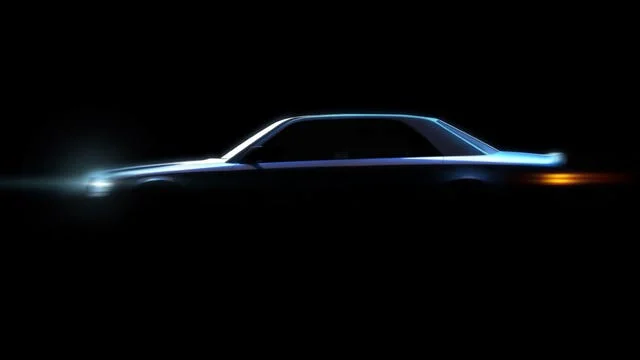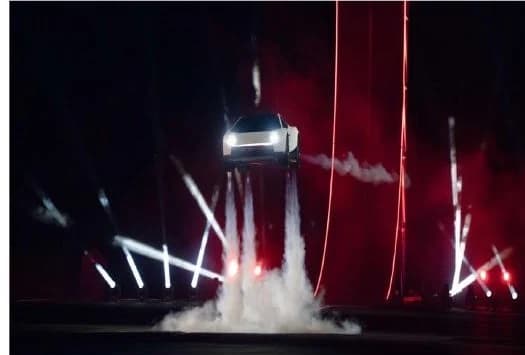
Image: Tesla / Tesla Investor Relations, frame from the official Roadster presentation report.
Ferrari CEO Benedetto Vigna has given Tesla’s redesigned Roadster a 10 out of 10 for both technology and presentation. He made the assessment during a Quattroruote Next interview, where the discussion focused on how established carmakers can still take visible risks in a mature industry. The comment is notable because Ferrari is developing its own first fully electric production car, but it should be read as Vigna’s opinion about Tesla’s reveal rather than as an endorsement of a finished Tesla product.
What Vigna actually praised
The Ferrari executive said Tesla had shown that the automotive industry still has room for bold ideas. His remarks concentrated on the decision to stage a dramatic demonstration and on the engineering concepts displayed during the event. He also thanked Elon Musk for showing that companies in an “old” industrial world can still innovate and dare.
That distinction matters. Vigna did not confirm that the Roadster will reach customers on the timetable discussed in media reports. He did not validate Tesla’s acceleration, range or top-speed claims through an independent test. The two perfect scores were directed at the technology and the communication of the product, not at a production car that journalists or customers have already driven.
Vigna’s position gives the comment extra context. Ferrari appointed him chief executive in 2021 after his career at STMicroelectronics, where he worked on motion sensors and other semiconductor technologies. He has since overseen Ferrari’s response to electrification, including the development of the fully electric Luce. A Ferrari CEO praising a Tesla presentation therefore speaks to the industry conversation around electric performance, even though it does not establish a technical comparison between the two brands.
Tesla’s Roadster demonstration
Tesla’s own investor filing confirms that the next-generation Roadster was unveiled on 15 October 2026. The event was held at a SpaceX test facility in McGregor, near Waco, Texas. The presentation used aerospace-inspired staging and showed systems that are unusual for a road car: a multi-mode suction fan for generating downforce and cold-gas thrusters associated with the Rocket configuration.
Tesla’s Roadster website describes several different levels of the concept. The regular reservable version is presented as a two-seat electric sports car with active aerodynamics and a multi-mode suction system. The Thrust version is described as a limited release with cold-gas thrusters, while the Rocket trim is intended for a more extreme demonstration and is explicitly marked as not approved for public-road use.
The public images can make these versions look like one product, but they are not interchangeable. A Roadster that performs an airborne manoeuvre in a controlled presentation is not the same thing as a road-legal car that a customer can operate on a European motorway. Tesla’s own notes say that some of the features belong to an optional augmentation and that availability can vary by region.
Official figures versus tested results
Tesla lists a 1.9-second 0–60 mph time, a top speed above 250 mph and 620 miles of range on its Roadster page. Converted approximately, those figures correspond to 0–97 km/h in 1.9 seconds, more than 402 km/h and roughly 998 km of range. They are manufacturer figures, and they should not be presented as independent test results. The page also distinguishes between features available by reservation and those associated with the Thrust or Rocket options.
For European readers, the headline figures are only part of the question. A final European car would need an applicable type approval, a confirmed configuration, a charging and energy-consumption specification in a European test cycle, and a delivery process. The current official material does not settle all of those points. Nor does a public launch demonstration establish the final kerb weight, battery capacity, thermal strategy or everyday range.
Tesla’s 2028 production target has also been reported as a goal rather than a guaranteed delivery date. The Roadster has been discussed for years, so the gap between an announcement and a customer car is part of the story. Vigna’s praise does not remove that uncertainty; it only explains why the presentation caught his attention.
Why the comparison with Ferrari matters
Vigna used Tesla as an example while discussing Ferrari’s own approach to outside input. He said that working with people from outside the company can force a project team to ask questions it might otherwise overlook. Ferrari has worked with LoveFrom, the design studio founded by Jony Ive, on the Luce project. Vigna has described the collaboration as a way to challenge assumptions about what a Ferrari electric car should look like and how it should be used.
The parallel is about process rather than hardware. Tesla used a theatrical reveal to present an electric sports car with a very different set of visual and mechanical promises. Ferrari is trying to create a battery-electric model that still fits the expectations attached to its brand. Both approaches can attract attention, but attention alone does not determine whether a car is practical, homologated or commercially successful.
A strong reaction, not a product guarantee
The most accurate reading of Vigna’s statement is that he values Tesla’s willingness to put an unconventional idea in front of the public. His 10/10 scores describe the ambition and staging of the Roadster reveal. They do not certify the Tesla’s claimed performance, confirm a European launch or prove that the Rocket features will be available to ordinary buyers.
The Roadster will be easier to judge once Tesla publishes final specifications, regulatory information, customer pricing, production details and independently repeatable performance data. Until then, the Ferrari CEO’s praise is an interesting signal about the appetite for risk in electric performance cars, while the practical questions remain open.