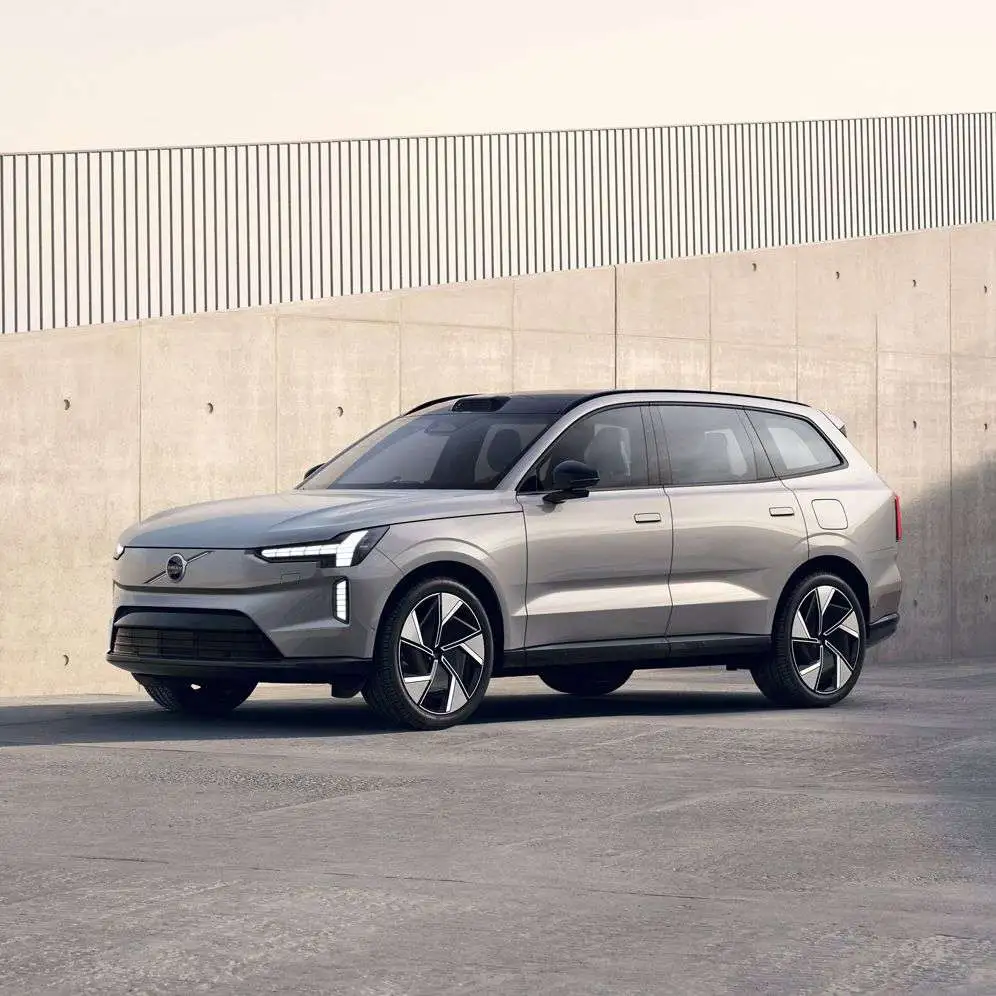
Image: Volvo Cars.
Volvo Cars has appointed Klaus Zellmer as its next President and Chief Executive Officer. Zellmer currently chairs the Board of Management and serves as CEO of Škoda Auto. Volvo says he will assume the new position no later than 1 October 2027, while current CEO Håkan Samuelsson and the board prepare the handover.
A succession announced ahead of a major strategy programme
Volvo published the appointment on 20 September 2026, only days after presenting its 2026 Strategy Update. The company used that event to outline a plan for long-term profitability, stronger cash generation, regionalised products and a large new-model programme.
The wording “no later than 1 October 2027” is a deadline rather than a confirmed start date. Zellmer could join earlier, but Volvo has not published a specific day. Until the handover, Samuelsson remains responsible for the business. He led Volvo Cars from 2012 to 2022 and returned to the CEO role in April 2025.
Volvo says Samuelsson has provided stability during a difficult period and has been preparing a long-term successor. The company has not said which duties Zellmer will take on before his formal start, nor has it named the person who will replace him at Škoda. That part of the succession process remains open.
Zellmer’s career covers volume and premium brands
Klaus Zellmer was born in 1967 and has more than 30 years of automotive experience, according to Volvo’s announcement. His current role is at Škoda, a high-volume brand within the Volkswagen Group, but his earlier career includes senior positions at Porsche and Volkswagen Passenger Cars.
Before joining Škoda, Zellmer served on the Volkswagen Passenger Cars Board of Management with responsibility for marketing, sales and aftersales. He spent more than 20 years at Porsche, including periods as CEO of Porsche Deutschland and CEO of Porsche North America. Those jobs gave him experience of both a home market and a major international sales region.
His education also has a direct link to the car industry. After studying business administration, Zellmer worked for three years from 1994 at the Institute for Automotive Economics at Nürtingen-Geislingen University of Applied Sciences. Volvo describes him as having industrial, commercial and technological expertise, as well as experience leading organisations through transformation and changing market conditions.
That background is relevant to Volvo, but it does not mean that the company will copy Škoda’s decisions. Volvo Cars has a different brand position, ownership structure, product range and regional footprint. Zellmer will inherit an existing strategy rather than start with an empty plan.
What Volvo highlights from his Škoda record
Volvo’s announcement says Škoda has become one of Europe’s best-selling car brands under Zellmer’s leadership. It also refers to record results in 2025, followed by further growth and record electric-vehicle deliveries in the first half of 2026.
These statements come from Volvo’s appointment release and are not a full Škoda financial statement. They nevertheless explain the board’s choice. Volvo is looking for a leader who has managed a broad model range, handled more than one powertrain strategy and led a volume brand through an increasing shift towards electric vehicles.
Škoda’s experience cannot be transferred mechanically to Volvo. Škoda sells in a different price and customer segment, while Volvo must protect a premium identity and coordinate its work with Geely. The appointment gives Zellmer relevant experience, but the results of his Volvo tenure will depend on how he applies it to the Swedish company.
The roadmap Zellmer will inherit
Volvo’s 17 September Strategy Update set an ambition to build a company capable of an EBIT margin above 8% with strong cash flow. This is a forward-looking target, not a result already achieved by Zellmer or by the new management team.
The company also announced 13 all-new cars between now and the end of 2030. Seven are planned for Western markets and six for China. Volvo’s stated direction is to develop more regionally tailored offerings instead of assuming that nearly identical global models will meet the needs of customers in Europe, China and the United States.
That creates a broad brief for the incoming CEO. A 13-car programme affects product planning, engineering, manufacturing, software, sales and aftersales. Volvo has not linked any individual model or technical decision directly to Zellmer. The appointment should therefore be read as a leadership change alongside an existing roadmap, not as a product announcement made by the incoming CEO.
Electrification with more room for regional differences
Volvo’s strategy describes growth through flexible electrification. The company did not present the transition as a single timetable in which every market moves to battery-electric cars at the same speed. Instead, its regional approach recognises different customer demand, charging infrastructure and regulatory conditions.
Zellmer has led Škoda while its electric range has expanded, but Volvo has not said that he will change the balance between battery-electric, plug-in hybrid and other models. It has also not announced a new powertrain platform, a cancellation or a confirmed launch date connected to his appointment.
This distinction matters for readers following Volvo’s model range. The appointment alone does not change the specifications, prices or availability of an EX30, EX40, EX90, XC60 or any other vehicle. Those details will continue to come from separate product announcements. Zellmer’s influence will become visible later through investment choices and future products.
Geely, regional products and complete customer offers
Volvo says it wants to make better use of synergies with Geely. The company also talks about a regional governance model and a shift from simply selling cars to delivering complete customer offers. The press material does not define every future service or explain which operations will be shared with other Geely companies.
For the incoming CEO, this means that product work will be only one part of the job. Regional sales organisations, digital services, software, supply chains and manufacturing decisions will all affect the profitability target. It would be premature to claim that Zellmer will merge Volvo’s operations with another Geely brand or move production to a particular plant; no such decision has been announced.
What changes for customers now
There is no immediate model change attached to the announcement. Zellmer may not take the role for another year, and Volvo’s already announced product programme remains the public framework. Customers will not receive a new price list, a revised warranty or a different technical specification simply because the board has selected a successor.
The possible medium-term effects are more practical: the order of product launches, the balance between powertrains, the degree of regional adaptation and the way Volvo invests in digital and aftersales services. None of these choices has been confirmed by Volvo as a Zellmer decision.
The company has also not announced a change to the Volvo brand identity. Zellmer said in the appointment release that he admires Volvo’s reputation for safety, its design language and its clear brand identity. That statement describes his view of the company, not a new design or safety policy.
The questions still open
Volvo has not named Zellmer’s successor at Škoda, confirmed the exact handover date or described an interim management arrangement. It has not said whether the new CEO will change the executive team, revise the 13-car roadmap or modify the 8% EBIT ambition.
The confirmed facts are narrower but clear: Zellmer has been appointed, he is expected to join no later than 1 October 2027, Samuelsson will help manage the transition, and Volvo is entering a period with a large product and regional strategy already on the table.
The appointment therefore connects two stories. Zellmer arrives with a record at Škoda, Porsche and Volkswagen, while Volvo needs to execute a plan involving 13 new cars, flexible electrification and stronger profitability. Whether his experience translates into the intended results will become visible only after he takes the job and the first decisions are made.