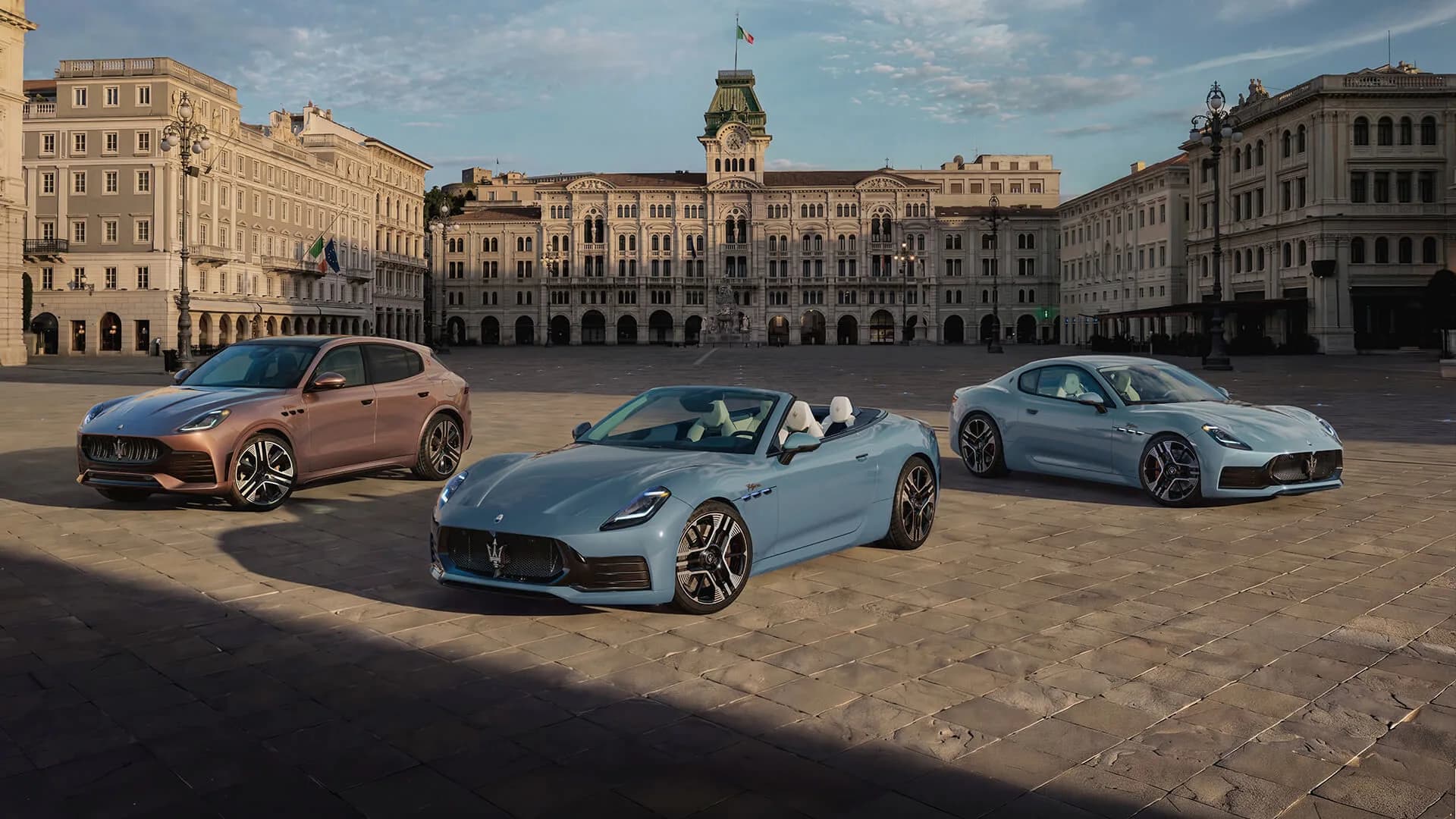
Photo: Maserati. The December concept has not yet been shown publicly.
Maserati will present its product direction in Modena this December, after Stellantis confirmed two new E-segment vehicles for the luxury marque. Comments from Maserati executive Santo Ficili, reported by ANSA, connect that work with a return to the areas once covered by the Levante and Quattroporte. The company has not published production images, launch dates, platforms, batteries or engine specifications, so the project should be treated as a plan in development.
What Stellantis has confirmed
Stellantis announced at its 21 May 2026 Investor Day that Maserati would be strengthened with two new E-segment vehicles. The group’s statement does not name the Levante or Quattroporte as the two cars and does not define their body styles. E-segment is a size and positioning reference rather than a complete product description. It can include large SUVs, saloons, estates or related body types.
That distinction matters. There is no public production order for a new Levante, no final specification for a new Quattroporte and no customer price. Stellantis has promised a detailed roadmap in Modena in December 2026. Until that presentation, claims about range, output, battery capacity, transmission or showroom timing would be assumptions.
The wider FaSTLAne 2030 plan commits more than €24 billion over five years to platforms, powertrains and technology. It also describes a broader mix of efficient combustion engines, hybrids and battery-electric vehicles. Those statements apply to Stellantis as a whole and do not identify the technology selected for Maserati’s two E-segment products. Maserati’s current range already includes Nettuno combustion models and Folgore electric versions, while the updated Grecale, GranTurismo and GranCabrio arrived in 2026.
Why Levante and Quattroporte are being mentioned again
The Levante was Maserati’s large SUV, extending the brand into a market served by cars such as the Porsche Cayenne, BMW X5 and Mercedes-Benz GLE. Its disappearance left a gap above the Grecale. A return to that area could give Maserati a product aimed at buyers who want space, a high driving position and everyday usability. Stellantis has not yet confirmed that the future SUV will use the Levante name.
The Quattroporte has a different role. It has traditionally been a large, sporty luxury saloon rather than an SUV. In September, Ficili told ANSA that Maserati needed to return to the segments associated with Levante and Quattroporte, while Grecale supported volume and GranTurismo and GranCabrio covered the grand-touring range.
Ficili has also described a possible future flagship as a low, large vehicle somewhere between a shooting brake and a crossover. That wording indicates an attempt to preserve the Quattroporte idea while moving beyond a conventional three-box saloon. It is not a final body-style announcement. Dimensions, seating, luggage capacity, doors, powertrain and production timing remain unknown.
The December concept is a design statement
The concept due in Modena should be read as a design manifesto. Maserati can use it to show proportions, surfaces, lighting, grille treatment and interior themes. A concept may lead to a production model, but its show-car details do not automatically survive type approval or manufacturing decisions.
The current range provides a verified reference point. Maserati’s June 2026 update gave the Grecale, GranTurismo and GranCabrio sharper front-end treatments, revised digital interfaces and updated Nettuno or Folgore versions. The company says those vehicles are developed and built in Italy, in Modena and Cassino. The new concept may continue that visual direction, but it should not be treated as a disguised photograph of the next Levante or Quattroporte.
Two product pillars and a volume model
Ficili has described a future range with two main pillars. One is centred on GranTurismo, GranCabrio, MC20 and their performance derivatives. The other would contain the large SUV and the Quattroporte-related flagship. Grecale would sit between them as the model expected to provide more volume than the low-volume sports and GT cars.
That structure explains the different jobs of the two proposed vehicles. A large SUV could broaden the customer base, while the low flagship would preserve the brand’s link to large, formal Maseratis. There is no public sales forecast showing how quickly either product could improve the brand’s commercial performance. The roadmap will need to explain whether both cars share an architecture and which one reaches production first.
Technology and partnerships are still open
In June, Stellantis CEO Antonio Filosa said the group was discussing Maserati-related cooperation with two partners able to bring technology, development and ideas. He did not identify them. Ficili said in September that the final solution had not been selected. It is therefore not possible to attribute a battery, software stack, supplier or platform to the future cars.
The decision has practical consequences. A large SUV and a flagship GT-style vehicle require a rigid structure, suitable power delivery, safety systems, software validation and an international service plan. The technical choice affects weight, cabin space, range, cost and development time. It also determines whether the car can be offered as a combustion, hybrid or electric product. None of those choices is public yet.
What to watch in Modena
The December event should clarify whether Levante and Quattroporte return as names, when production begins and which Italian plants are involved. European buyers will later need confirmed prices in euros, type approval, warranty terms, dealer availability and service support. The current announcement supplies none of those details.
The verified picture is therefore narrow but clear: Stellantis has committed Maserati to two new E-segment vehicles, Maserati is preparing a concept and roadmap for December 2026, and its executives have identified the Levante and Quattroporte areas as missing parts of the range. The final design, technology, manufacturing plan and order dates remain to be announced.