Renault press release, IAA Transportation Hanover, 14 September 2026 — republished for Carboratory readers.
Renault opens a new chapter in its LCV push with the Trafic Van E-Tech electric
- As part of its futuREady plan, Renault intends to launch five new LCVs by 2028.
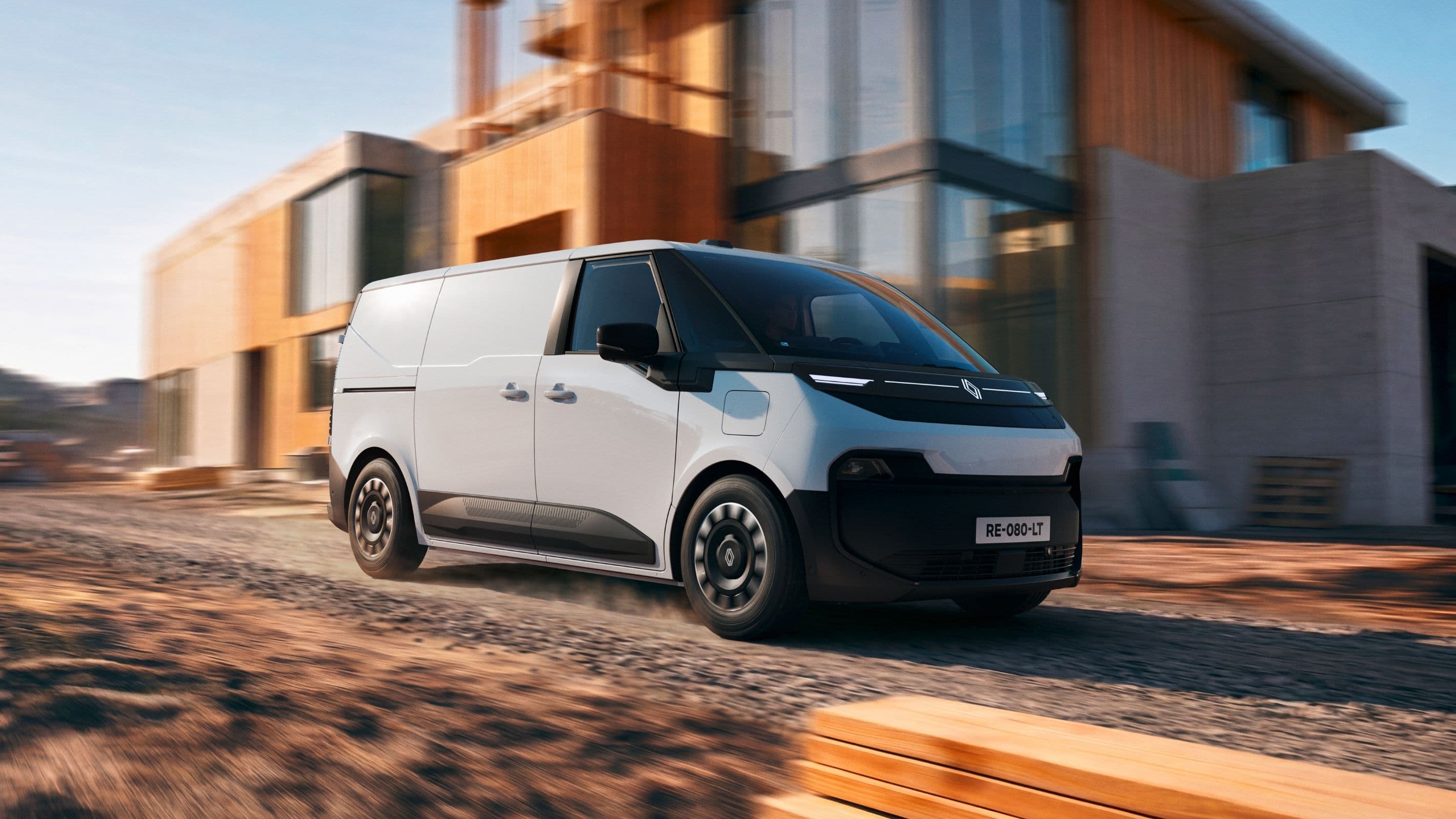
- The new Trafic Van E-Tech electric is the first of this generation. Renault presents it as more advanced, more efficient and more comfortable.
- According to the manufacturer, the fully electric van is a turning point on the European market: a customisable, scalable software-defined van that is meant to cut total cost of ownership (TCO) while improving efficiency and working conditions.
- Alongside new models, the brand announces three-level conversion solutions and the Uptimize programme, scheduled for 2027.
- Using data from connected vehicles, Renault Uptimize is intended to offer personalised support to cut LCV downtime by up to half after an incident.
- Also under Renault Uptimize, the brand will supply an in-vehicle app that automatically applies efficiency, performance and safety settings set by the fleet manager.
“The new Trafic Van E-Tech electric is more than a simple addition to our range. It is a game-changer on the European LCV market, offering more technologies, more services and more conversions. It is a key moment for customers on the electric van market.”
— Jan Ptacek, VP, Renault LCV
LCVs as a growth lever for the brand
Renault is presenting the next stage of its commercial-vehicle strategy at IAA Transportation 2026 in Hanover. Part of the futuREady plan, the offensive confirms the role of LCVs in brand growth, with five new models planned by 2028.
The new Trafic Van E-Tech electric is one of those five vehicles. According to Renault, the brand is consolidating second place on the European LCV market, outpacing market growth for a fourth consecutive quarter. Master leads the European large-van segment, while Kangoo and Trafic are also on the podium in their categories.
The new Trafic Van E-Tech electric
Since 1980, Renault Trafic has served professional customers. With more than 2.8 million units sold, it has set a standard in the mid-size van segment. The new Trafic Van E-Tech electric is the next chapter of that story, according to the manufacturer.
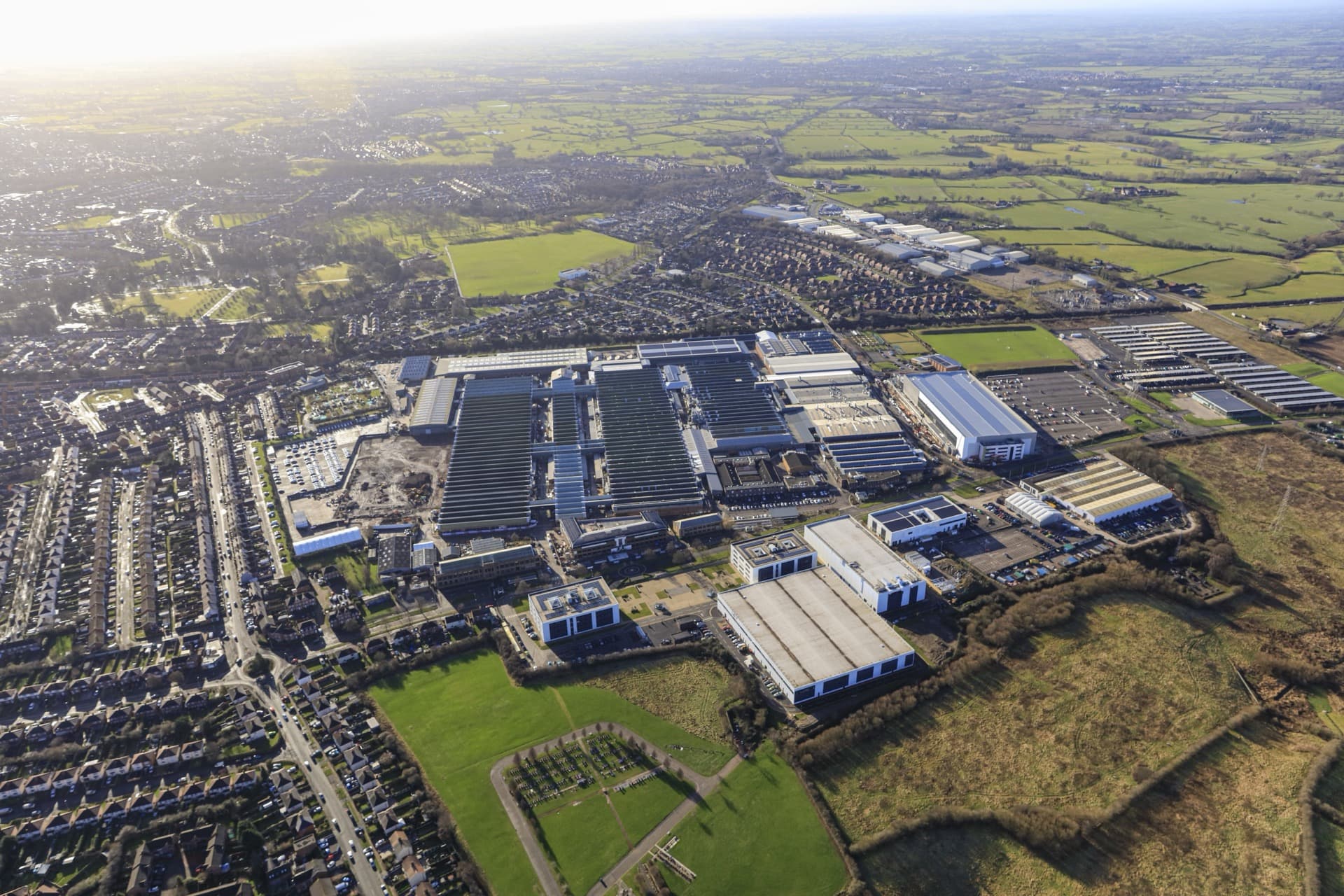
Designed and built in Europe at the Sandouville plant in France, the model is presented as evidence of Renault’s commitment to developing and producing technically advanced vehicles on the continent.
The announced offer includes:
- a van version, available by the end of the year;
- single- and double-cab chassis versions, to be added to the range in 2027.
Lower running costs
For professional users, range and fast charging affect productivity, vehicle availability and total cost of ownership (TCO). With a range of more than 470 km (WLTP approval pending), the new Trafic Van E-Tech electric is built, Renault says, for daily use and longer trips. In town, range can reach almost 690 km, equivalent to up to five working days without charging, according to Renault.
The van sits on the new RGEV platform, dedicated to Renault Group’s mid-size LCVs. With an 800V electrical architecture, the manufacturer claims the best fast-charging solution in the European LCV segment. In 20 minutes, the new Trafic Van E-Tech electric can regain up to 280 km of range and up to 380 km in town.
As a result, Renault estimates a total cost of ownership (TCO) up to 10% lower than an equivalent combustion version.
Working conditions
The new Trafic Van E-Tech electric is designed, Renault says, to make business users’ work simpler, more comfortable and safer. Agility is compared with a Renault Clio, with a 10.3-metre turning circle, suited to urban environments and tight manoeuvres. At 1.89 metres high, it can enter all standard underground car parks.
Front and side visibility are presented as contributing to safer driving. Cabin comfort is described as close to a passenger car, with a multi-link rear suspension, an ergonomic driving position and the quiet running typical of electric vehicles.
An adaptable, customisable van
The new Trafic Van E-Tech electric introduces what Renault calls a major change: it is the first Renault Group vehicle and the first LCV in Europe with SDV (software-defined van) architecture for centralised, flexible operation.
That architecture is based on a connected operating system able to control, analyse and update vehicle functions quickly. It replaces 80 ECUs with two supercomputers running CAR OS (Operating System for Cars), an Android-based operating system developed with Google.
Announced customer benefits include regular updates, a personalised driving experience, predictive maintenance and higher residual value through continuous updates. SDV technology is intended to give access to new functions throughout the vehicle’s life, similar to a computer or smartphone.
The basics expected of an LCV
The new Trafic Van E-Tech electric retains the core figures expected of an LCV:
- load volume of up to 5.8 m³;
- payload of 1.3 tonnes;
- towing capacity of 2 tonnes;
- space for three euro pallets;
- loading height of 53 cm.
“I could use every superlative that exists to sum up the new Trafic Van E-Tech electric. But let’s keep it simple: it is unique. Unique in terms of running cost, unique as value, unique in the combination of passenger-car comfort and technological equipment. And it offers all the LCV fundamentals that, in the end, make it our customers’ best business partner.”
— Frédéric Clermont, VP, Renault Product LCV
Sustainability and decarbonisation
The new Renault electric van reduces environmental impact throughout the life cycle, from design and manufacture to use and end-of-life management, according to a “cradle to grave” approach, the manufacturer says.
The carbon footprint of the new Trafic Van E-Tech electric is reduced by more than 45% compared with a diesel van of equivalent size. Based on a life-cycle assessment over 200,000 km (WLTP range increased by 20% to reflect real-world emissions) and using the average European electricity mix, the new Trafic generation emits 33 tonnes of CO₂ equivalent (tCO₂e), compared with about 63 tonnes of CO₂ for a comparable diesel vehicle.
Through the balance of range, battery capacity and vehicle weight, the Trafic Van E-Tech electric offers up to 470 km of range with an 81 kWh battery. Optimised aerodynamics bring a 6% improvement in drag efficiency (SCx), and the powertrain has an efficiency above 90%. Built in France at Sandouville, with low-carbon energy and close to Europe’s largest LCV markets, the model is presented as contributing to a lower overall environmental footprint.
Renault’s conversion experience
From the start of design, the Trafic Van E-Tech electric was developed to make modifications and conversions easier. The flat floor, generous load space — 1.30 metres between the wheels — and 1.3-tonne payload, for both panel van and chassis versions, are meant to ease fitting or conversion.
The model comes with Vehicle-to-Load (V2L) functions, which allow electrical appliances, for example on a building site, to be powered from a socket in the load compartment. Planned for the near future, an ePTO (power take-off) function will ease integration of heavy conversions such as refrigeration units or ambulance equipment, with powers of up to 3.6 kWh and 10 kWh respectively.
Convertor Companion lets bodybuilders integrate conversion-related controls directly into the openR link multimedia system, as dedicated apps, without an extra screen.
Three conversion levels
Renault offers a conversion service structured on three complementary levels:
- Converted by Renault — conversions carried out directly at Renault’s three LCV plants in France (Maubeuge, Sandouville and Batilly), suited to the most requested transformations, such as double cab or box volumes.
- Qstomize — a conversion specialist wholly owned by Renault Group, with workshops at Renault sites, for needs from service vehicles to specialised conversions, including for people with reduced mobility.
- A network of 300 authorised bodybuilders across Europe, each partner audited every three years for compliance with Renault standards.
Renault Uptimize
When an LCV stops, the business stops. In response, Renault announces the Renault Uptimize programme, available from 2027. The stated aim: to cut vehicle downtime in half after an incident.
Using software-defined vehicle (SDV) technology, Renault Uptimize uses real-time data and artificial intelligence to move from reactive maintenance to proactive optimisation.
The programme rests on three pillars:
Smart data for planning and optimisation
The SDV architecture provides more data than before, making it possible to predict potential incidents before they occur, Renault says. The programme also uses artificial intelligence to optimise maintenance scheduling by grouping operations. Fleet managers in the programme get a view of the connected fleet, with information such as energy consumption, route planning, charging, eco-driving score and safety score.
Faster, personalised customer assistance
In an incident, Renault Uptimize offers personalised, priority support from the Renault network, without the need to book. Each case combines remote diagnosis with B2B aftersales expertise. The service is backed by 400 Renault Pro+ centres in Europe, dedicated to professional customers.
In-vehicle apps for higher efficiency
Renault will offer an “energy & safety control” app that automatically applies efficiency, performance and safety settings defined by the fleet manager. By optimising energy management, drive modes and maximum speeds, the solution aims to increase range, operational efficiency and safety. With Renault’s support, customers will also be able to create their own in-vehicle apps, adapted to their activities.
“The Renault Uptimize programme helps customers reduce downtime and running costs thanks to smart data that enable proactive and predictive maintenance, fast customer assistance after an incident and the energy & safety control app. Thanks to its position on the European market, Renault relies on a vast Pro+ agent network, with more than 400 centres dedicated to professionals.”
— Zakaria Zeghari, VP, Sales and Marketing, LCV
About Renault
Renault is France’s number-one car brand worldwide, according to the company. With more than a century of innovation behind it, it develops voitures à vivre with desirable design, useful, people-centred technologies and electrified powertrains. After the Renaulution plan, the brand starts a new strategic cycle with futuREady, a plan to grow competitive advantage and long-term performance in Europe and internationally. The stated ambition rests on desirable products, a stronger international push and a pragmatic approach to electrification through two pillars — 100% hybrid and 100% electric.
Sources: Renault – official IAA Transportation 2026 / new Trafic Van E-Tech electric press release