Škoda is being compared with Porsche inside Volkswagen Group, but not because the two brands sell similar cars. The comparison is financial. Škoda reported an 8.3 percent operating return on sales in 2025, while Porsche’s figure fell to 1.1 percent. Automotive analyst Matthias Schmidt told Reuters that the Czech brand had effectively become the Group’s “new Porsche” in that specific sense.
The wording needs an important qualification. Operating return on sales is the relationship between operating profit and sales revenue. It is useful for comparing operating performance, but it does not show profit per vehicle, average transaction price, brand value or the full cost structure of two businesses with very different products.
The numbers behind the comparison
Škoda Auto reported record 2025 revenue of €30.1 billion and an operating profit of €2.5 billion. Its return on sales stayed at 8.3 percent, the same level as in 2024. Global deliveries reached 1,043,900 vehicles, up 12.7 percent year on year.
Porsche had a much weaker year. Porsche AG reported revenue of €36.27 billion and operating profit of €413 million, producing an operating return on sales of 1.1 percent. The previous year’s figure was 14.1 percent. The 2025 result was heavily affected by extraordinary expenses of approximately €3.9 billion, so the percentage should not be treated as a normal long-term measure of Porsche’s earning power.
Porsche expects its operating return on sales to recover to between 5.5 and 7.5 percent in 2026. That is a forecast, not a reported result. The company is changing its product strategy and electric-car plans while dealing with weaker demand in China, tougher competition and additional costs linked to tariffs and its transition programme.
Why Škoda delivered a strong year
Škoda’s results came from a broad product line-up, higher deliveries, cost control and synergies inside Volkswagen Group. The Octavia remained the brand’s best-selling model, followed by the Kodiaq, Kamiq and Fabia. Škoda passed one million global deliveries for the first time in six years.
In Europe, defined by Škoda as EU27+4, the brand recorded 840,295 registrations, up 9.6 percent. It ranked third among all brands and fourth among electric-car manufacturers. This definition includes the EU27 together with the United Kingdom, Switzerland, Norway and Iceland, so it should not be confused with an EU-only ranking.
Electrified models also became more important. Škoda delivered 218,700 electrified vehicles worldwide in 2025, including 174,900 battery-electric cars and 43,800 plug-in hybrids. In Europe, battery-electric and plug-in models represented 25.7 percent of the brand’s deliveries. The Elroq and Enyaq helped move Škoda into a broader electric-car discussion without changing its volume-market positioning.
The figures do not mean every Škoda model has the same margin, nor that a volume brand earns more per vehicle than Porsche. Škoda benefits from shared platforms, components and purchasing structures across Volkswagen Group. Its cost base and production volumes are different from those of a premium sports-car manufacturer.
Why Porsche’s profitability collapsed
Porsche was once one of Volkswagen Group’s most dependable profit engines. The brand sells expensive sports cars and luxury SUVs, but its 2025 result was hit by several pressures at once. Volkswagen pointed to extraordinary expenses, weaker demand in China, the cost of revising its electric strategy and broader product changes.
China is particularly important because Porsche relies on customers willing to pay premium prices. Weaker demand and stronger local electric-car competition reduce the pricing power that helped support the brand’s margins. At the same time, an electric portfolio that does not perform as expected can require more investment and more complicated decisions about launches, factories and technology.
Porsche is responding with a “value over volume” approach. Instead of chasing deliveries at any cost, it wants to focus on vehicles and configurations with stronger value and margin potential. That may help protect the average price, but it cannot immediately reverse the effect of the 2025 exceptional charges or weak demand in key regions.
Škoda is not becoming a premium brand
Calling Škoda the new Porsche does not mean that a Superb is equivalent to a Panamera or that a Kodiaq competes with a Cayenne. The brands have different customers, products, dealer experiences and cost structures. The phrase concerns a financial ratio, not a change in brand identity.
Škoda earns its results by selling practical cars at higher volumes across compact, family and SUV segments. Porsche operates in sports cars and luxury vehicles, with higher average prices and greater exposure to premium-market confidence. A higher operating return at Škoda does not automatically mean higher profit per car or a larger valuation contribution to the Group.
The comparison is still useful because it shows how the balance within Volkswagen Group has changed. Škoda is no longer merely the affordable brand filling gaps in the portfolio. It has become a consistent source of revenue and operating profit while Porsche, once the Group’s financial showcase, is restructuring its product strategy.
What the figures mean in Romania
Škoda has a strong position in Romania, where the Octavia, Kodiaq, Kamiq, Fabia, Elroq and Enyaq cover several segments and powertrain types. The brand’s group-level return on sales does not automatically determine Romanian prices. Local prices depend on equipment, exchange rates, taxes, logistics, financing and importer policy.
For buyers, the comparison with Porsche should therefore be read as a business indicator, not as proof that Škoda has become premium. Official figures show that Škoda delivered record revenue, operating profit and global deliveries in 2025. Porsche’s 1.1 percent result was depressed by extraordinary charges and a difficult market environment. The next test will be whether Porsche can reach its 2026 forecast and whether Škoda can preserve an 8.3 percent return while expanding its electric range.
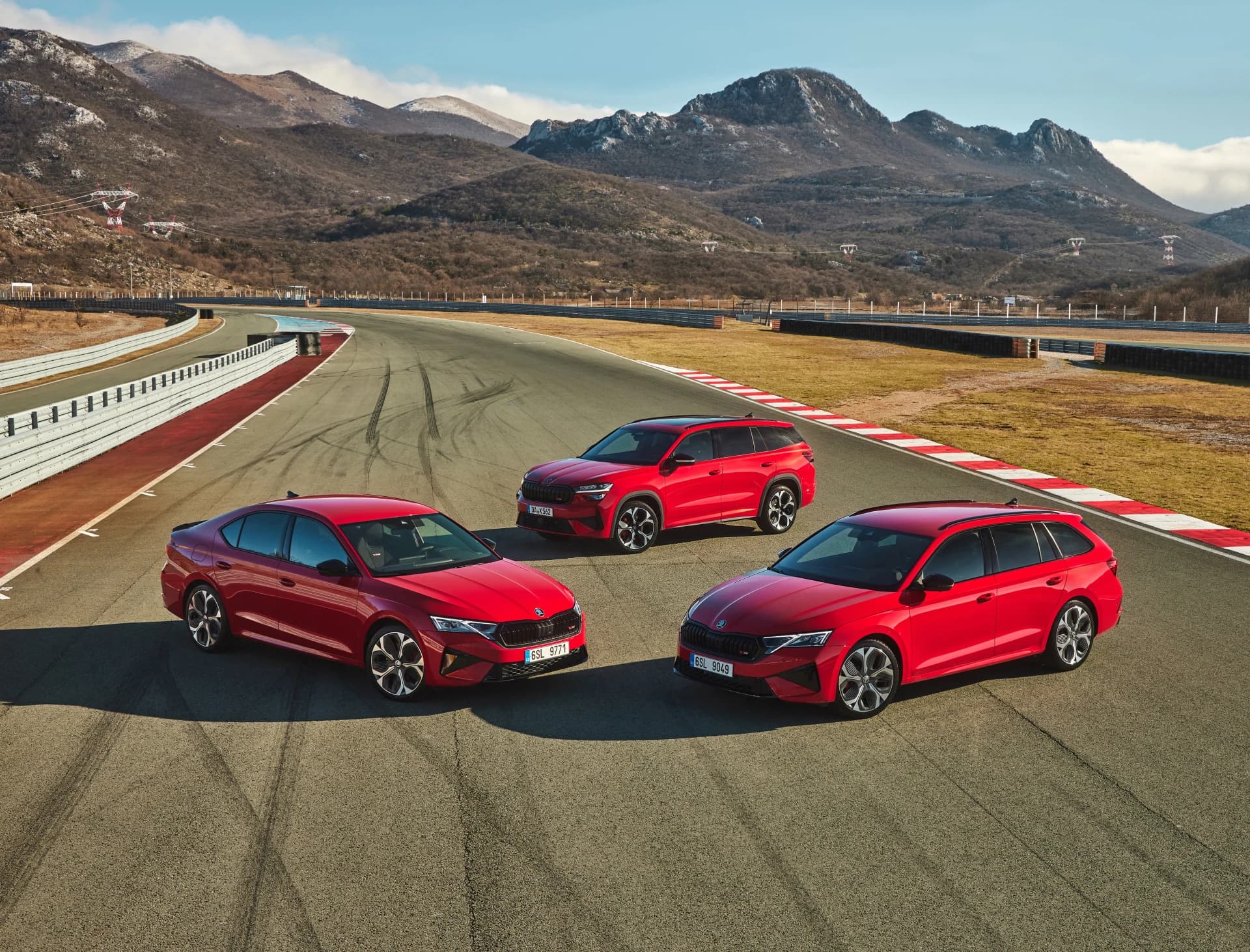
Photo: Škoda Auto. Official Octavia RS and Kodiaq RS image used as an article illustration.