Jaguar Land Rover North America is recalling 170,169 mild-hybrid vehicles because a DC-DC converter can stop charging the 12-volt electrical system. If the condition develops while the vehicle is being driven, the affected vehicle may eventually lose drive power and exterior lighting.
The campaign is listed by the National Highway Traffic Safety Administration as recall 26V248. It applies to vehicles in the United States and should not automatically be described as a global recall. JLR’s filing says that a final remedy is still under development. Owners have received an interim notice explaining the risk, with a second notice expected once the repair is ready.
How the failure can develop
The DC-DC converter supports the 12-volt network in the 48-volt mild-hybrid system. JLR’s report identifies an internal fault in the converter’s boost-control microchip. If the converter stops working, the 12-volt battery may stop receiving charge and gradually lose its available energy.
The first warning described in the recall documents is “Stop Safely Electrical Fault Detected”. Further messages can appear for lane-keeping assistance, stability control and the suspension. If the driver continues to operate the vehicle after the warning, the vehicle may shift into neutral, show a gearbox fault and coast to a stop. The centre display and air conditioning can switch off, the engine can shut down and the exterior lights may no longer operate.
NHTSA says that a loss of drive power increases the risk of a crash. This is a description of the potential failure sequence, not a statement that every recalled vehicle will fail in that way. Recall eligibility is determined by the vehicle identification number. Owners should follow the manufacturer’s instructions and use an authorised repairer rather than trying to isolate the electrical component themselves.
Vehicles covered by the US campaign
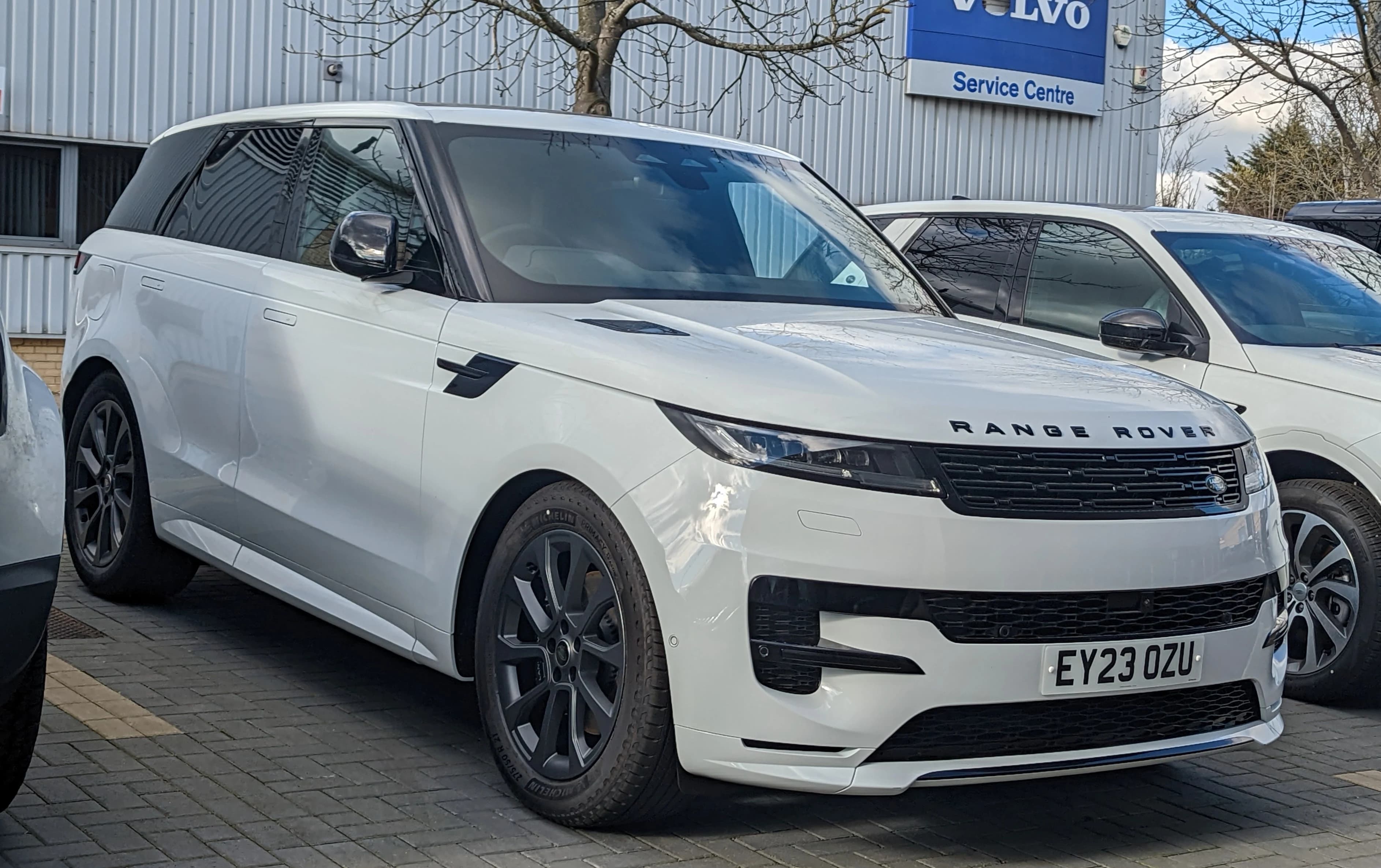
The recall covers selected 2019–2024 Land Rover Range Rover Sport vehicles, 2020–2023 Range Rover Evoque vehicles, 2020–2024 Range Rover vehicles, 2020 Discovery Sport vehicles, 2020–2024 Defender vehicles, 2021–2024 Discovery vehicles and 2021–2024 Range Rover Velar vehicles. On the Jaguar side, selected 2021–2022 E-Pace and 2021–2024 F-Pace mild hybrids are included.
The internal JLR campaign numbers are D126 for Land Rover and H575 for Jaguar. The model and model-year ranges do not mean that every vehicle within them is affected. Build dates, specifications and VIN ranges determine the actual population. NHTSA’s recall lookup and an authorised dealer are the appropriate sources for an individual vehicle.
The public filing does not yet describe a completed repair procedure. JLR says it is developing a robust remedy and will update owners when the work can be carried out. Interim letters were scheduled for June 2026. Until the remedy is available, an owner who receives the electrical warning should stop safely as instructed and contact the manufacturer or dealer.
Why the recall was issued
JLR first reviewed the issue in September 2024 after an increase in warranty claims involving DC-DC converter replacements. At that time, the company’s safety and compliance committee concluded that the gradual progression of the symptoms did not represent an unreasonable safety risk. More reports arrived during 2025, leading JLR to set up an engineering task force to investigate the failure and find a durable solution.
According to the NHTSA report, the task force worked from November 2025 to March 2026 with hardware-in-the-loop testing, physical tests and virtual simulations. JLR also discussed the field events and the progression from warning messages to power loss with government agencies. On April 7, 2026, NHTSA clarified that it viewed the matter as a safety issue rather than only a customer-satisfaction concern. JLR’s internal forum reviewed that position on April 10 and decided to launch a safety recall in markets where the local authority has a similar assessment.
JLR reported 5,952 US claims and field reports involving DC-DC converter replacements between July 2019 and April 2026. The same filing says that the company was not aware of accidents, injuries or fires in the United States caused by the issue. That information sets out the company’s known US record; it does not remove the potential safety risk identified by NHTSA.
Does the recall apply outside the United States?
Campaign 26V248 is a US safety recall. JLR’s report says vehicles in other markets may be addressed through quality campaigns if the local authority does not classify the condition in the same way. Owners in Europe therefore cannot establish eligibility simply by comparing a model name and model year with the US list.
In Romania, the correct step is to have the VIN checked by an authorised JLR retailer or the official importer. NHTSA’s database does not determine the recall status of a Romanian-registered vehicle. Similar vehicles can have different specifications, software, suppliers and production ranges between markets.
Other JLR recalls should also not be confused with this campaign. Australia has listed a separate recall affecting 7,153 vehicles for a front-end auxiliary drive-belt idler pulley that may damage oil pressure and temperature sensors and cause an engine stall. That is a different defect, with a different campaign number and a different remedy process.
For US owners, the practical steps are to check the VIN, wait for the remedy notification and arrange the free repair when the parts and procedure are available. For owners elsewhere, the practical step is local verification through JLR. The official material reviewed here does not provide a European equivalent to recall 26V248.
Image: Calreyn88/Wikimedia Commons, CC BY-SA 4.0. The Range Rover Sport photograph was converted and stored locally as WebP.