
Stellantis puts Wayve-powered supervised driving into two prototypes
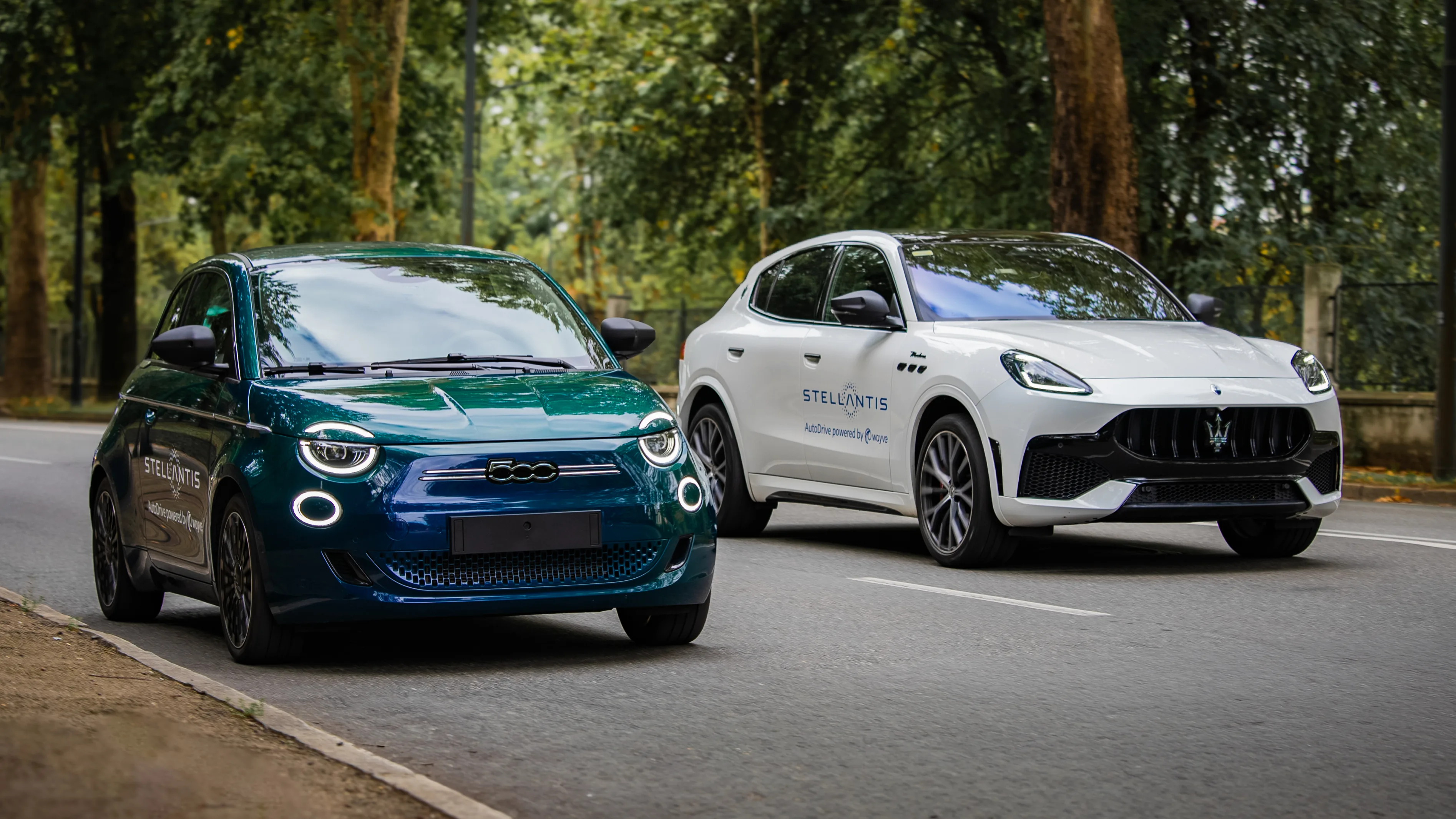
Stellantis has started demonstrating a new supervised driving system in development vehicles based on the Fiat 500e and Maserati Grecale. The technology combines Wayve’s AI Driver with Stellantis’ STLA AutoDrive platform and is described as hands-free, door-to-door automated driving at Level 2++. The prototypes are being shown in real traffic during Wave by Vento 2026 in Turin, held from 7 to 9 October.
The demonstration is an engineering milestone, but it is not a production launch. Stellantis has not announced a final customer model, a European sales date, pricing, or the complete operating envelope. The company’s current plan targets the first commercial product for North America in 2028. Showing the vehicles in Italy does not confirm that the same feature will reach European customers on the same timetable.
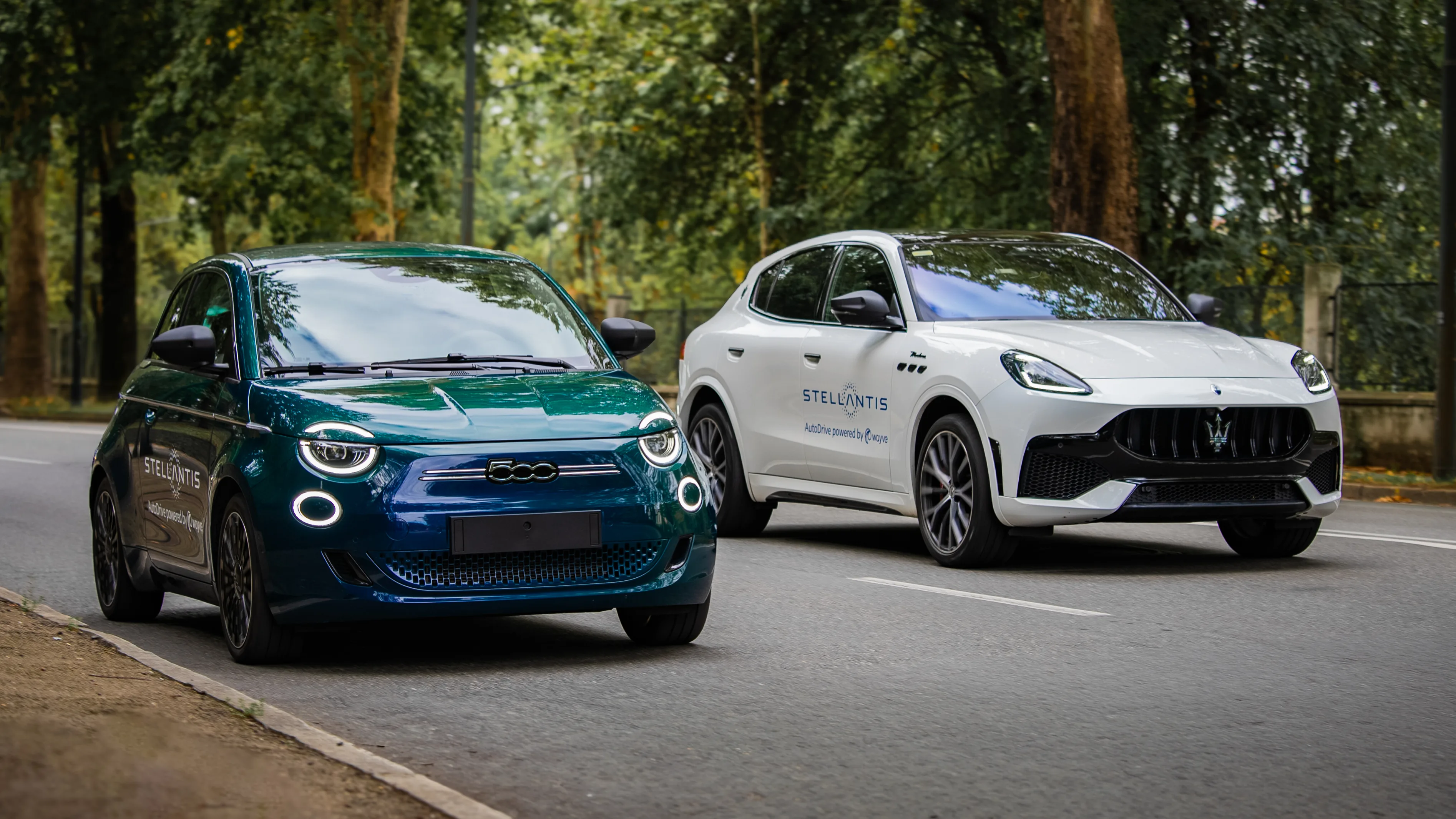
Official Stellantis Media image. The vehicles shown are development prototypes and may not represent final production equipment.
Level 2++ still requires an attentive driver
The Level 2++ label used by Stellantis and Wayve describes supervised assistance, not a driverless vehicle. The system is intended to handle steering, acceleration and braking in compatible conditions while allowing the driver to take their hands off the wheel. The driver must still monitor the road, remain seated and belted, and be ready to take control whenever the system requests it.
That distinction matters because marketing language around automated driving can easily blur the boundary between assistance and autonomy. A Level 2++ system cannot be treated as a robotaxi and does not allow the driver to stop paying attention. Stellantis’ earlier STLA AutoDrive material also states that drivers must comply with local rules and be prepared to resume control. The final legal and operational limits will depend on the market in which the system is approved.
The planned feature is designed for both highway and urban environments. Stellantis has not yet published a complete list of speeds, road types, weather conditions, map requirements or driver-monitoring rules for the production version. Those details are important because a system that works on a controlled demonstration route may face different challenges on temporary lane markings, construction zones, emergency vehicles or poorly mapped streets.
What Wayve contributes
Wayve supplies the Wayve AI Driver, an end-to-end driving intelligence system intended to interpret the road environment and produce driving decisions from real-world data. Stellantis integrates that software with STLA AutoDrive, its own platform for advanced driver assistance and automated driving functions. The partnership therefore combines Wayve’s AI stack with Stellantis’ vehicle engineering, electronics, validation and manufacturing capabilities.
The companies announced the strategic technology partnership on 21 May 2026. The initial product described at that time was hands-free, door-to-door supervised driving in urban and highway environments, with the first vehicle integration planned for North America in 2028. Stellantis also said that STLA AutoDrive provides a common foundation that can evolve as regulations and customer expectations change.
Wayve’s software is being shown on three Stellantis vehicle types so far. The Fiat 500e and Maserati Grecale join a Jeep Grand Cherokee development vehicle presented at Stellantis’ Investor Day in May. The different vehicles let the engineering teams examine how a common driving foundation adapts to different dimensions, seating positions, vehicle dynamics and electronic architectures.
Why the Fiat 500e and Grecale matter as test vehicles
The two new prototypes represent very different applications. The Fiat 500e is a compact electric city car, while the Maserati Grecale is a larger SUV with a different driving position and a different vehicle package. Testing both helps Stellantis assess whether the system can be integrated across brands without creating a separate driving intelligence stack for every model.
The demonstration does not prove that both production cars will receive the feature. Stellantis has described them as development vehicles, and it has not released independent measurements such as intervention frequency, performance in poor weather or response time in emergency situations. Nor has it confirmed that the sensor suite and computing hardware shown on the prototypes will be identical to the future production configuration.
The distinction between software portability and production readiness is important. A prototype can demonstrate that the AI Driver communicates with the vehicle platform, but production deployment also requires validation, cybersecurity work, functional-safety analysis, regulatory approval and a reliable driver-monitoring strategy. None of those steps can be assumed to be complete simply because passengers can experience a demonstration ride.
A 2028 North American target, with Europe still unspecified
Stellantis and Wayve currently target 2028 for the first commercial application in North America. The company has not announced the model, trim level, price, subscription structure or exact region in which the feature will first be sold. There is also no confirmed European launch date. The Turin event gives visitors a chance to observe the technology, but it should not be read as a European market announcement.
For customers, the practical value of the system will depend on how often it can be used, how clearly it communicates its limits, and how naturally it handles the transition back to the driver. The quality of the road network, local legislation and the performance of attention monitoring will matter as much as the AI model itself. Until Stellantis publishes production specifications and independent testing becomes available, the Fiat and Maserati prototypes are best understood as an early validation step for a planned driver-assistance product.


