
SUVs dominate many new-car markets, but the format is not the only way to carry a family, a week’s shopping or bulky equipment. A hatchback can be easier to park, a wagon can provide a longer loading floor, and a minivan can use its interior more efficiently than a three-row SUV. Several electric cars also offer a long wheelbase and a flat floor without following the traditional SUV recipe.
This selection starts with the vehicles discussed by Motor1, but it is not an official ranking and it is not a direct recommendation for every European market. The source article uses US prices, EPA-style fuel figures and cubic feet. Those numbers cannot simply be presented as German, Romanian or European specifications. The useful comparison is the reason each body style works as an SUV alternative.
Chevrolet Bolt: a compact electric hatchback
The Chevrolet Bolt is a tall hatchback rather than a conventional SUV. Motor1 lists 16.9 cubic feet of cargo space behind the second row and 56.6 cubic feet with the seats folded, roughly 478 and 1,602 litres. It seats five and the source quotes a 262-mile range, approximately 422 km. Its compact footprint should make it easier to manoeuvre and park than many small SUVs. European availability and homologation are separate questions, so the US price and range should not be treated as a local offer.
Kia Carnival: a seven- or eight-seat family vehicle
The Kia Carnival is the clearest answer for families that need several seats. Sliding rear doors, a low floor and seven- or eight-seat layouts make access easier than in many large SUVs. Kia’s US specifications quote 40.2 cubic feet of minimum cargo volume and up to 145.1 cubic feet in the maximum configuration, approximately 1,138 and 4,107 litres. The range includes a V6 and a hybrid powertrain in the US. European engines and equipment can differ, so buyers must consult the local importer.
Kia K4 Hatchback: useful space in a lower body
The K4 Hatchback uses a five-door layout instead of a raised cabin. Motor1 lists 22.2 cubic feet behind the rear seats and 59.3 cubic feet with them folded, or roughly 629 and 1,679 litres. Rear legroom is quoted at 38 inches, close to 965 mm. For a driver who spends most of the week in town, the lower loading height and smaller footprint may be more valuable than the extra ground clearance of a small SUV. The model’s US pricing should not be converted into a European retail claim.
Hyundai Ioniq 5: an EV between hatchback and crossover
The Ioniq 5 looks like a crossover, but its long wheelbase, flat floor and low loading floor give it some of the advantages of an electric hatchback. The source lists 26.3 cubic feet behind the second row and 58.5 cubic feet with it folded, around 745 and 1,657 litres. A Long Range rear-wheel-drive version is quoted at up to 318 miles, about 512 km, in the US test system. Hyundai publishes separate WLTP figures for Europe, and the two methods should not be mixed.
Mercedes-Benz E-Class All-Terrain: a raised wagon
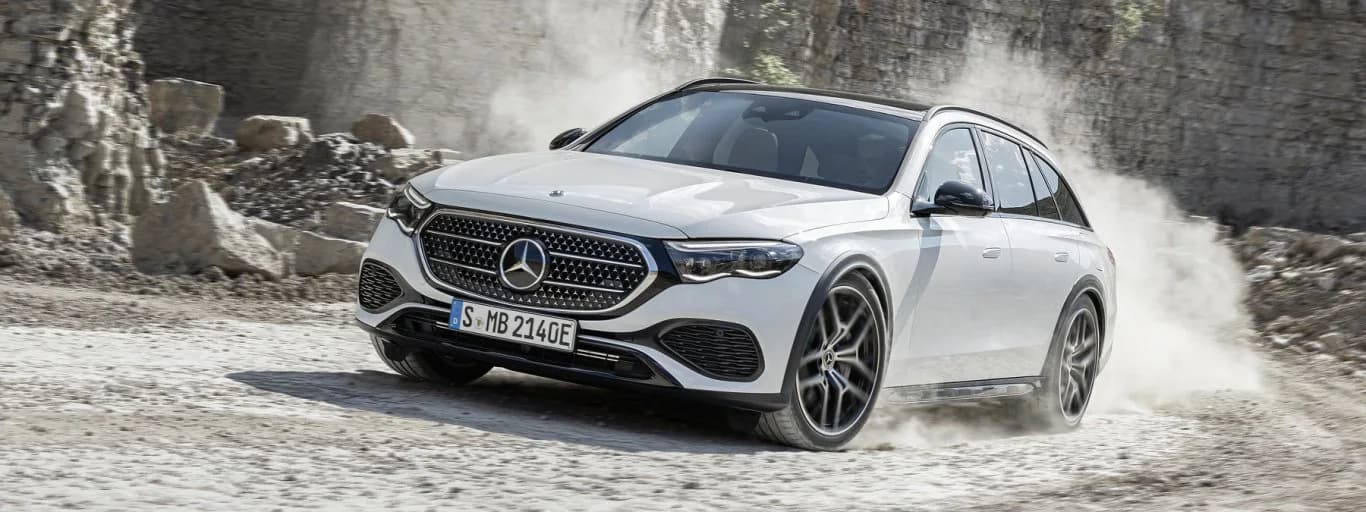
The E-Class All-Terrain retains a wagon body while adding standard 4MATIC all-wheel drive, AIRMATIC air suspension and an off-road driving mode. Mercedes-Benz lists 615 to 1,830 litres of luggage space for non-plug-in versions and 460 to 1,675 litres for the plug-in hybrid. The increased ride height and exterior protection help on gravel access roads without turning the car into a tall SUV. The official German press material is the basis for the image used here; the US price mentioned by Motor1 is not used as a European price.
Subaru Impreza: a five-door car with all-wheel drive
The Impreza remains one of the few compact five-door cars built around standard symmetrical all-wheel drive. Subaru quotes 20.4 cubic feet of cargo space with the rear seats up and 56.0 cubic feet with them folded, approximately 578 and 1,586 litres. It seats five and has a lower roof and smaller footprint than an SUV. That makes it relevant for buyers who need winter traction but spend most of their time on paved roads. The latest US model-year information does not automatically define the European range.
Subaru Outback: the boundary between wagon and SUV
The Outback is a borderline case. Its raised ride height, standard all-wheel drive and Wilderness version give it strong crossover appeal, but the long wagon body remains useful when loading bulky items. Subaru’s 2026 brochure quotes up to 80.5 cubic feet of cargo volume, about 2,280 litres, and 8.7 inches of ground clearance, roughly 221 mm. Wilderness raises that figure to 9.5 inches. It suits drivers who use unpaved roads but prefer a lower, longer car.
Toyota Corolla Hatchback: a simple city alternative
The Corolla Hatchback is smaller than most compact SUVs, yet it retains five seats and a practical tailgate. The source lists 17.8 cubic feet behind the second row and a quoted combined economy of 35 mpg, approximately 6.7 l/100 km in a direct conversion. That is not a WLTP figure. For shopping, weekend luggage and everyday equipment, the format can be enough without the additional height and mass of a crossover. Local equipment and hybrid availability must be checked separately.
Volkswagen ID. Buzz: electric van practicality
The ID. Buzz is closer to a minivan than to a normal passenger car. Its upright body creates generous headroom, sliding doors simplify access and some versions offer three rows. Motor1 quotes a 91.0-kWh battery, with 86 kWh usable, and up to 234 miles of range, approximately 377 km. Cargo figures run from 30.8 to 145.5 cubic feet, roughly 872 to 4,120 litres. European battery, seating and range specifications depend on the exact version and market.
Volvo V60 Cross Country: a wagon for mixed weather
The V60 Cross Country combines a wagon body with increased ground clearance, all-wheel drive and an all-weather focus. Motor1 lists 18.3 cubic feet behind the rear seats and 60.5 cubic feet with them folded, about 518 and 1,714 litres. Its strength is the long, low loading area rather than maximum vertical space. Volvo’s local availability and current pricing should be checked before comparing it with a new SUV, because model ranges can change by market.
How to choose between an SUV and these alternatives
The first question is how many people need to travel. Carnival and ID. Buzz use their length and interior height more effectively for seven or eight occupants than a small hatchback. For five people and luggage, an E-Class All-Terrain, Outback or V60 can offer a longer cargo opening and a lower centre of gravity. In a city, the Impreza, Corolla Hatchback, K4 and Bolt are easier to place in narrow spaces.
Charging access is the next practical filter. The Ioniq 5 and ID. Buzz make more sense for drivers who can charge at home or work. A petrol or hybrid car remains simpler for long trips through areas with fewer public chargers. Finally, ground clearance should match the actual route. A raised wagon is suitable for gravel roads; it is not a substitute for a vehicle designed for difficult terrain.
Sources
- Mercedes-Benz Media — E-Class All-Terrain
- Kia Media — 2026 Carnival specifications
- Subaru — brochures and vehicle information
- Hyundai Newsroom — IONIQ 5
Image: Mercedes-Benz Media, official press photograph. The supplied Motor1 feature was used as the editorial brief, not as the image source.


