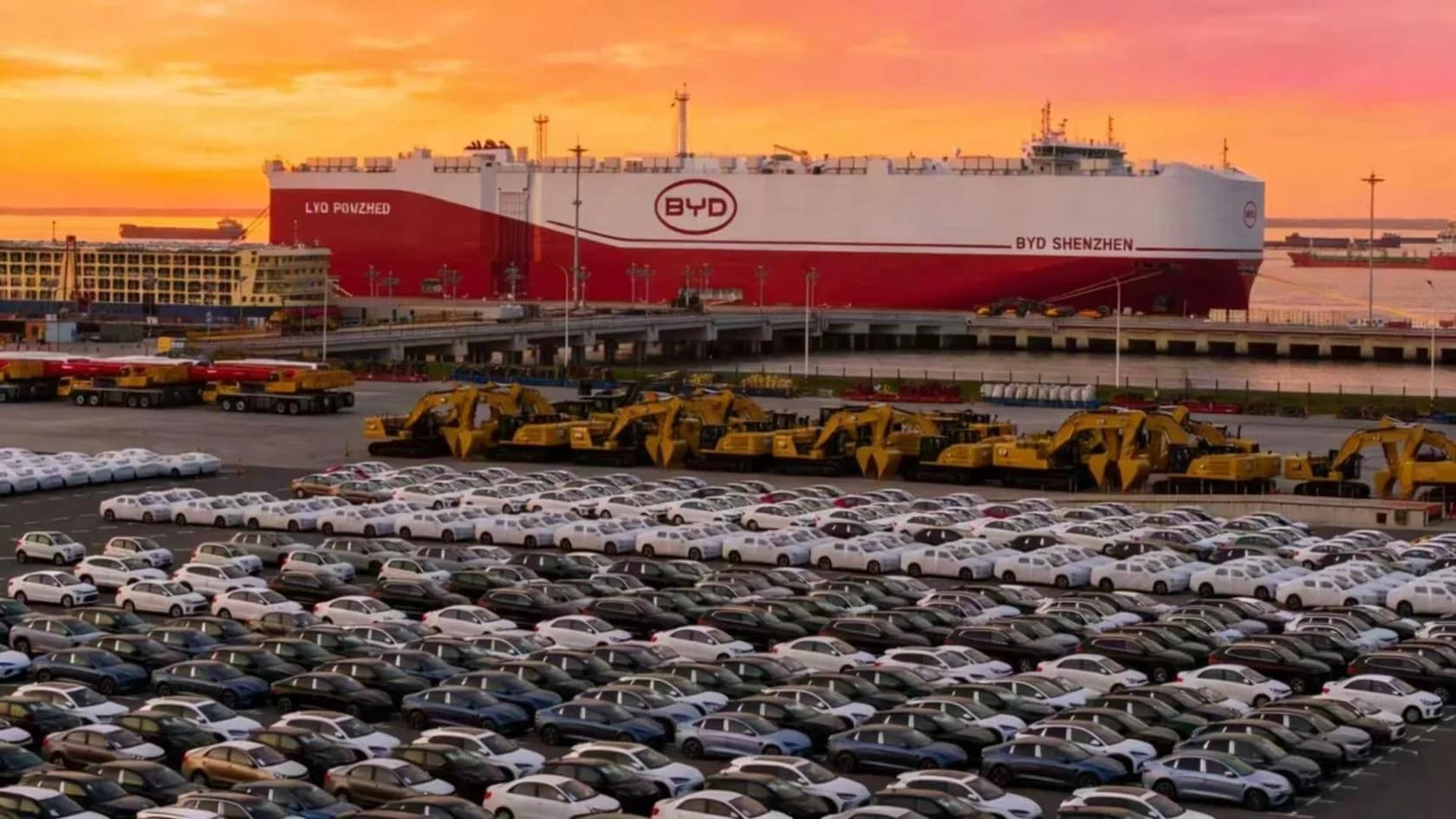
BYD was, in July 2026, China’s largest exporter of electrified passenger cars, according to CPCA data. Photo source: Carboratory archive
China car sales fall for a 10th month as exports nearly double
China’s domestic passenger-car market fell in July 2026 for a tenth consecutive month, while factories sent more cars, especially electric and plug-in hybrid models, to foreign markets. Data from the China Passenger Car Association (CPCA), republished by the China Automobile Dealers Association (CADA), show domestic retail of 1.461 million units, −20.9% versus July 2025. Passenger-car exports, including complete vehicles and CKD kits, reached 918,000 units, +87.8%.
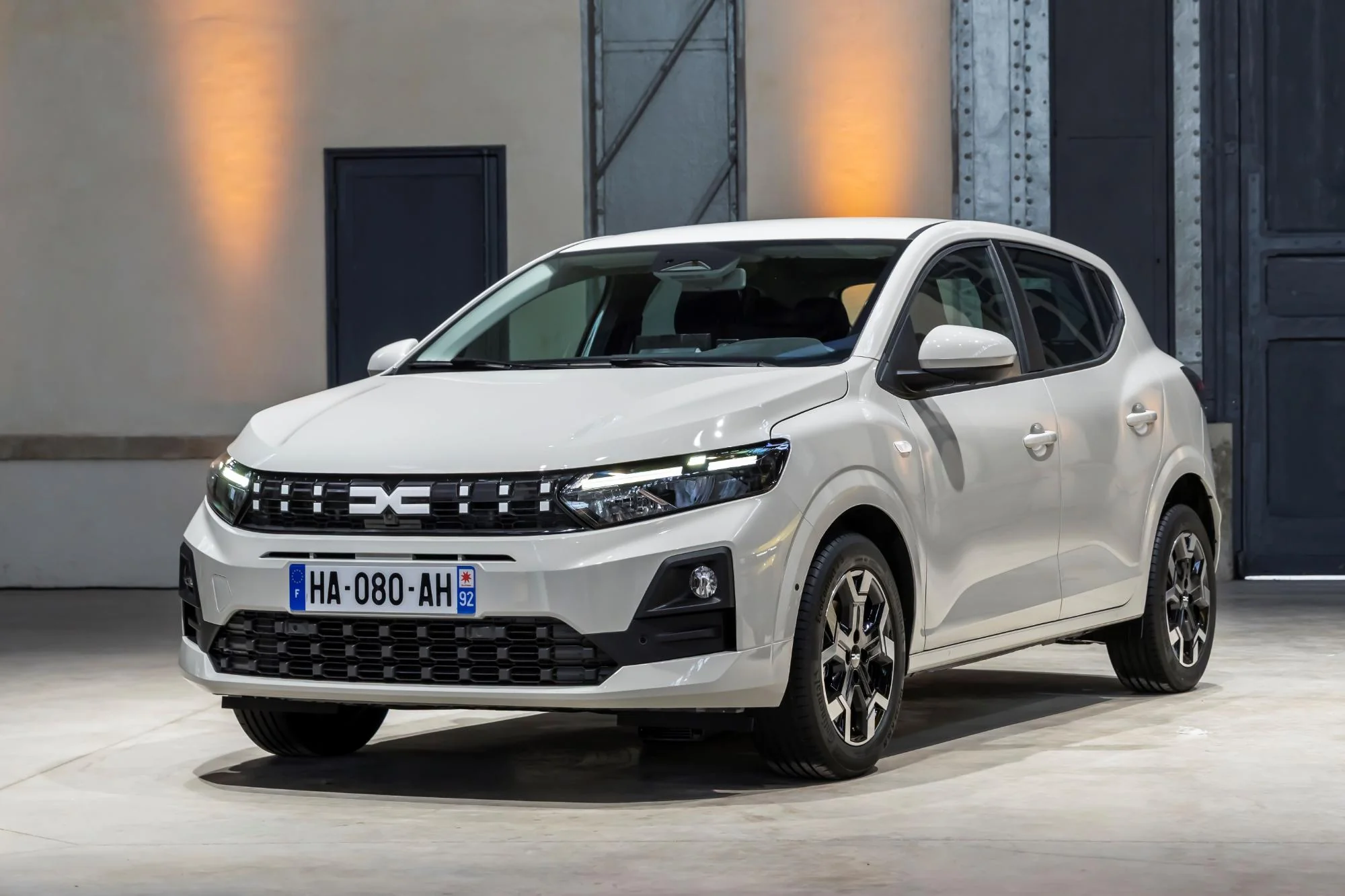
For a buyer in Romania, the figures are not a distant statistic. Part of that volume is already arriving in the European Union, where BYD, SAIC (MG), Chery and Leapmotor grew strongly in the first half, according to ACEA. In parallel, Dacia recorded 262,511 EU registrations, −8.8%. Romania’s Rabla 2026 scrap-and-buy programme does not fund cars manufactured in China.
What sold in China in July
Domestic passenger-car retail was 1.461 million units in July, −20.9% year on year and −8.8% versus June. In the first seven months, retail totalled 10.173 million units, −20.3%.
The structure of the domestic market polarised:
- petrol passenger cars fell 44% at retail, and combustion vehicles as a whole (including conventional hybrids) 41%;
- new-energy vehicles (electric, plug-in hybrid and range-extender) fell 3.9%, to 951,000 units, but reached 65.1% of domestic retail;
- domestic brands took 1.04 million units and 71% of retail;
- German brands had 12.4% of retail (−2.0 percentage points versus July 2025), Japanese 10.9% (−1.9 pp), and American 4.2% (−1.0 pp).
Reuters, citing the same CPCA data, rounded domestic retail to 1.47 million units (−21.1%) and exports to 923,000 (+88.2%). The differences from the CADA report are rounding; the direction is the same. Reuters quotes CPCA secretary-general Cui Dongshu: the drop was more severe than the association had expected, and higher fuel prices hit petrol-model sales and demand for entry-level saloons.
Exports have become a larger share of production. In July, the 918,000 exported passenger cars represented 41% of factory sales, versus 21% in July 2025. Of those, 540,000 were new-energy vehicles, +147.8%.
Electric exports approached the whole of 2025
For the auto industry as a whole, not only passenger cars, the China Association of Automobile Manufacturers (CAAM) reported 5.1 million vehicles exported in the first half of 2026, +65.3%. New-energy vehicle exports were 2.355 million, +120%, according to CAAM data carried by Xinhua. For the whole of 2025, those same NEV exports were 2.615 million. The 2026 half-year therefore covered almost the entire 2025 volume.
ECNS, also citing CAAM, rounded first-half NEV exports to 2.35 million. The 2.355 million figure is the detailed one. It should not be mixed with CPCA passenger-car exports: CAAM also includes commercial vehicles.
In July, the largest Chinese exporters of new-energy passenger cars, according to CPCA, were BYD (173,721), Chery (82,768), Tesla China (66,330) and Geely (60,584). Tesla Shanghai produces in China and exports, including to Europe; it is not a Chinese brand, but its volumes enter China’s export statistics.
Geely: exports already surpassed all of 2025 by June
Geely Automobile Holdings is a measurable example. In its June 2026 sales announcement, the group reported 474,228 exports in the first half, +158% versus 184,114 in H1 2025. June alone accounted for 102,874 exported units. The half-year volume exceeded the 2025 export total of 420,000 units, later confirmed in the interim-results release.
In the 17 August 2026 release, Geely raised its 2026 export target from 640,000 to 920,000 units after monthly volumes exceeded 100,000 in both June and July. The July announcement confirms 106,663 sales outside mainland China that month. The group’s total first-half sales were 1.42 million vehicles, up only 1%: exports offset weak demand at home.
The Geely Auto in those reports is not identical to Geely Group in ACEA tables. ACEA also includes Volvo, Polestar, Lotus, Lynk & Co, Zeekr and Smart in the group. The group’s +4.1% rise in the EU (157,253 registrations) does not measure only the group’s Chinese brands.
Pressure on Volkswagen, Mercedes and BMW
In China, European manufacturers are losing more than the overall market. Volkswagen Group delivered 973,000 vehicles in China in the first half of 2026, −25.9%, according to the 10 July 2026 deliveries release. In the second quarter, China deliveries were 424,300, −36.6%. Globally, the group fell 6.3%, to 4.13 million. Outside China, Marco Schubert (Volkswagen sales) said the group grew by about 2%.
Volkswagen electric deliveries in China fell 47.9% in the half-year, to 30,900 units. In Europe, the same BEV deliveries rose 8.4%, to 377,000.
Mercedes-Benz reported a 30% drop in passenger-car sales in China in the second quarter. BMW Group delivered 117,815 vehicles in China in Q2 (−30.2%) and 261,773 in the half-year (−20.4%). Full figures are in the separate article on Mercedes, BMW and Volkswagen declines in China.
Those declines do not automatically translate into lower prices in Romania. They do, however, force the model mix, launch pace and margins of the groups that sell Volkswagen, Škoda, Audi, BMW and Mercedes here.
Where the exports go: Europe, not only emerging markets
In the European Union, new passenger-car registrations rose 5.7% in the first half of 2026, according to the ACEA release of 23 July 2026. Battery-electric cars reached 20.7% of the market (1,220,890 units).
Chinese brands listed separately by ACEA recorded clear increases:
| Group (ACEA, EU, H1 2026) | Registrations | Change | Share |
|---|---|---|---|
| BYD | 130,743 | +168.2% | 2.2% |
| SAIC Motor (including MG) | 127,585 | +19.1% | 2.2% |
| Chery (including Omoda, Jaecoo, Jetour) | 84,987 | +268.7% | 1.4% |
| Leapmotor | 48,261 | +526.7% | 0.8% |
| Dacia | 262,511 | −8.8% | 4.5% |
| Volkswagen Group | 1,559,974 | +2.6% | 26.5% |
| Ford | 132,780 | −20.2% | 2.3% |
Leapmotor is distributed in the EU through Leapmotor International, controlled by Stellantis (51%). Volumes are reported separately from Stellantis. SAIC includes MG, present in Romania for several years.
EU countervailing duties on new battery-electric passenger cars imported from China remain in force under Regulation (EU) 2024/2754: 17.0% for BYD, 18.8% for Geely, 35.3% for SAIC, 7.8% for Tesla Shanghai. They apply to battery-electric cars, not plug-in hybrids. A model assembled in the EU is not taxed as a China import; manufacturing origin must be read on the individual car, not the brand.
What it means for the buyer in Romania
The local offer of Chinese brands is already visible: BYD, MG, Geely, plus Chery/Omoda, Leapmotor and XPeng. China’s export volume does not say how many units will be sold in Romania next month. It does show why these brands have reached local classifieds and why Dacia, Volkswagen or Ford calculate their European range in a market where Chinese alternatives have measurable shares.
Rabla 2026 changes the arithmetic for a new car. The Ministry of the Environment limited eligibility to vehicles manufactured in the European Union, the European Economic Area, the United Kingdom, Switzerland, Turkey and Morocco. A car produced in China does not receive a voucher, even if the brand has a dealer in Romania. The country of manufacture on the certificate of origin matters, not only the badge on the bonnet. Some Chinese-brand models assembled in the EU, Turkey or Morocco can enter the programme; examples brought directly from China cannot.
For used cars, the Rabla rule does not apply. As European registrations of BYD, MG, Chery and Leapmotor rise, more used examples will appear, including from intra-EU import. That does not reduce the checks: the European version, registration papers, VIN warranty, a workshop that will take the car and battery condition remain conditions, not details. The practical guide is here: a used Chinese car in 2026.
Dacia remains the volume brand manufactured in Romania, but its European competition has changed. In the EU, Dacia fell 8.8% in the half-year, while BYD more than doubled and a half. Those figures do not show that Dacia is losing Romanian customers to BYD; they show that on the markets where Dacia sells its production, Chinese alternatives have become a measurable share.
Frequently asked questions
Is the Chinese market falling only for foreign brands?
No. Total passenger-car retail fell 20.9% in July. Domestic brands also fell (−14%), but rose as a share, to 71%. Volume joint ventures fell 35%, and the luxury segment 27%.
Are China’s exports only electric cars?
No. In July, new-energy vehicles accounted for 58.8% of passenger-car exports. The rest are mainly petrol and hybrid models. At CAAM level, in the half-year, conventional-vehicle exports were 2.74 million, +35.5%.
Can a new Chinese car in Romania take Rabla 2026?
Only if it is manufactured in an eligible country (EU, EEA, United Kingdom, Switzerland, Turkey or Morocco), not if the certificate of origin indicates China. The check is on the individual car’s document, not the brand’s reputation.
Is Geely in ACEA statistics the same firm as Geely Auto in China?
Not exactly. Geely Auto reports cover the Geely, Lynk & Co and Zeekr brands. ACEA’s “Geely Group” table also includes Volvo, Polestar, Lotus and Smart.
Sources
- CADA / CPCA — passenger-car market analysis, July 2026
- Reuters / ETAuto — CPCA retail and exports, July 2026
- CAAM / ECNS — auto exports H1 2026
- Xinhua / SCIO — NEV exports 2025 and H1 2026
- Geely Auto — June 2026 sales
- Geely Auto — H1 2026 results, 920,000 export target
- Geely Auto — July 2026 sales
- Volkswagen Group — H1/Q2 2026 deliveries
- ACEA — EU registrations, June / H1 2026
- European Commission — countervailing duties on BEVs from China
- Ministry of the Environment — Rabla 2026 financing guide, vehicle origin