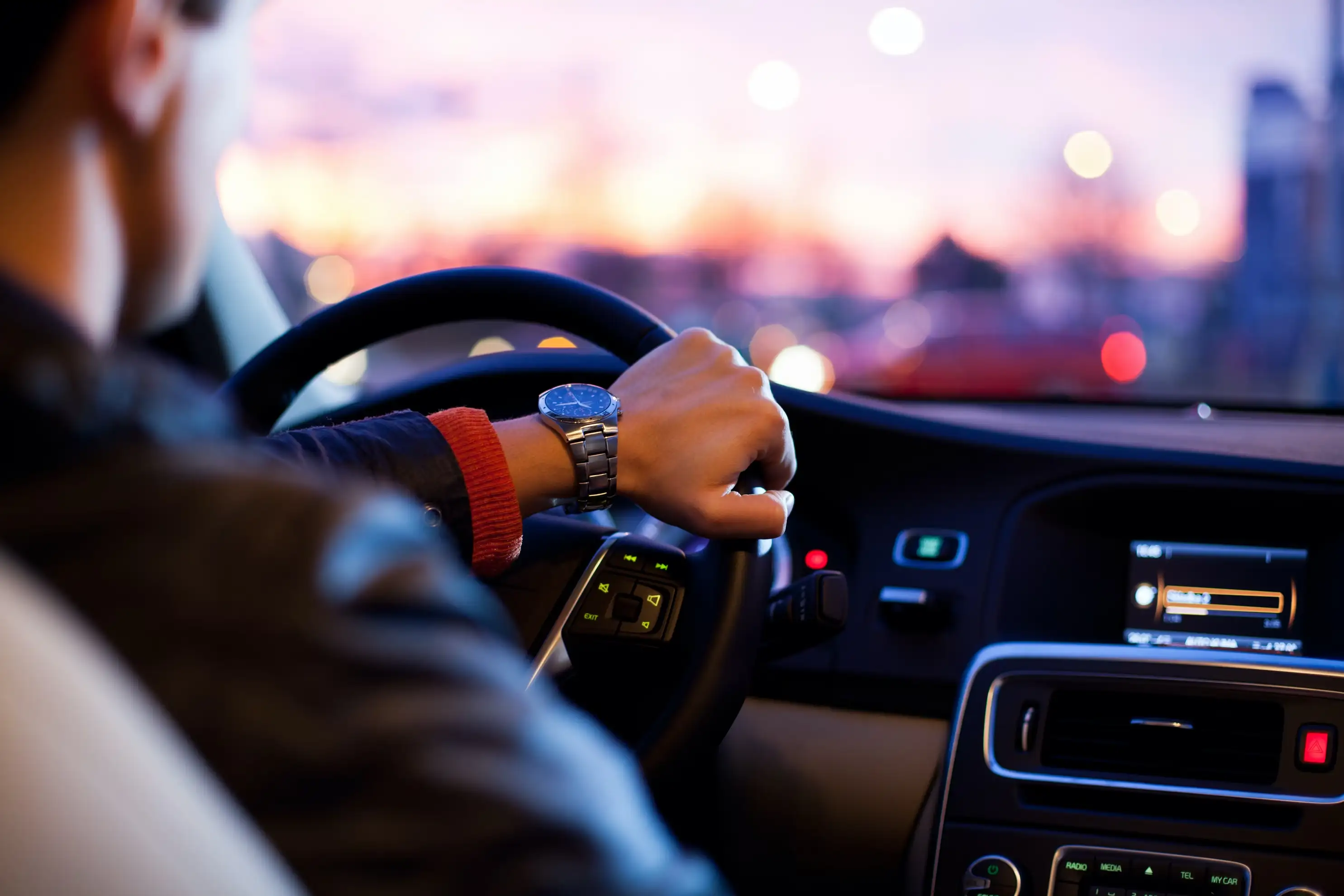
Driving pleasure depends on attention, control, the car's responses and the difficulty of the route, not only on the figure shown by the speedometer. Illustrative image
Why speed is not the same as driving pleasure: what happens in the driver's brain
A powerful car can reach high speeds quickly without necessarily being enjoyable to drive. At the same time, a modest car can become absorbing on a suitable road, at legal speeds. The difference appears because the brain does not respond only to speed, but to the combination of stimulation, control, difficulty, feedback and the driver's skill.
Research shows, however, that speed has a real effect. Images that suggest rapid movement can activate regions associated with the reward system, and experiment participants report more pleasure when the visual sensation of speed increases. These results do not mean that fast running automatically produces satisfaction, nor that excessive speed is justified.
A large share of the data comes from clips filmed from the driver's perspective, simulators and small samples. They explain a possible mechanism; they do not offer a universal recipe for the “fun car”.
Speed can activate a region involved in reward
A study published in Scientific Reports tracked through functional magnetic resonance imaging the reactions of 34 young adults who drove daily. Participants did not drive in the scanner, but watched clips filmed from the perspective of a moving car.
Researchers compared sequences presented at about 41 km/h with sequences that suggested about 124 km/h. In the fast condition, activity in the ventral tegmental area, abbreviated VTA, was higher.
The VTA is part of the mesolimbic dopaminergic system and takes part in processing reward, motivation and stimuli that capture interest. The result suggests that the visual flow associated with speed can have motivational value for the brain.
It is incorrect, however, to translate the observation into the simple formula “speed releases dopamine and causes happiness”. The study measured variations in the fMRI signal in a brain region, not the quantity of dopamine released and not the pleasure felt during real driving.
Moreover, participants who were enthusiasts of sports cars did not have significantly different VTA activation from those without such an interest. The authors found exploratory differences in connectivity between regions, but called for further research based on real behaviour in traffic.
The “flow” state explains why the right difficulty matters
Another study, by Richard Stephens and Maddie Smith of Keele University, analysed the link between speed, pleasure and the psychological state called flow.
Flow describes deep absorption in an activity: attention is concentrated, actions run naturally, and the difficulty of the task is high enough to be interesting without exceeding the person's abilities. In driving, this state can appear when the route demands precision and offers clear feedback, and the driver feels in control.
Participants in the experiment watched clips from a driver's perspective, from congested traffic to simulated speeds between about 32 and 56 km/h. They then rated pleasure and the intensity of the flow state. On average, both scores rose with speed.
The result contradicts the idea that speed has no connection with pleasure. But it does not demonstrate that “faster” always means “better”. The experiment stopped at moderate urban speeds, participants watched clips and did not have the responsibility, physical demand or risk of a driver in traffic.
People with a greater need for thrills reported more flow in some conditions, which shows that the same stimulus is not experienced identically by everyone.
Why a slower car can be more absorbing
Absolute speed is only one of the information sources received by the brain. A communicative car can create involvement through elements that also work at a legal pace:
- fast, progressive steering response;
- predictable resistance and travel of the brake pedal;
- a correct driving position and good visibility;
- fine control of acceleration;
- low mass and direction changes that are easy to anticipate;
- sound proportional to mechanical effort, without excessive artificial volume;
- a gearbox that involves the driver;
- suspension that transmits information without turning bumps into shocks.
These characteristics increase the number of useful decisions and the quality of feedback. The driver feels that their action produces a clear response, one of the conditions favourable to a flow state.
In a very high-performance car, acceleration and grip can be so great that a large part of its capability cannot be explored safely on a public road. The experience becomes a succession of short impulses, followed by braking and fear of consequences, not a fluent activity.
A car with more accessible limits can allow the driver to use more of the acceleration, brakes and chassis without reaching extreme speeds. This is a plausible psychological explanation for the popularity of light models with moderate power, but it is not a rule valid for every person.
When stimulation becomes overload
Flow appears when challenge and skill are balanced. If the task is too easy, boredom appears. If it becomes too difficult or risky, anxiety can appear, and the brain must allocate more resources to control and monitoring danger.
At high speeds, visual information changes faster, the time available for a decision falls, and an error produces more serious consequences. The brain must track lane position, vehicles, markings and potential trajectories in a shorter interval.
An EEG study carried out in a simulator found differences in activation in the lateral prefrontal cortex between excessively fast driving and controlled driving. Participants who went fastest and showed more risk-taking presented patterns interpreted by the authors as related to reduced prefrontal control.
This result does not allow a driver to be diagnosed by speed either. It only shows that fast running involves not only reward and stimulation, but also processes of control, attention and risk evaluation.
Why speed feels lower in a modern car
Perception of speed depends on noise, vibration, visual field, seat height and distance from landmarks. Good sound insulation, comfortable suspension and the stability of a modern car reduce the signals the brain uses to estimate the pace of travel.
At the same speed, a low, light and noisy car can feel much faster than a well-insulated SUV. Paradoxically, comfort can push the driver to seek a higher speed to obtain the same level of stimulation.
This is one of the reasons why power and acceleration time do not fully describe driving pleasure. A car that filters almost all sensations can be impressive on a stopwatch, but less involving at normal speeds.
How you can obtain pleasure without excessive speed
The authors of the flow study propose that the driving experience be designed so that involvement can appear even at low speeds. In practice, this means better feedback, predictable controls and routes or activities in which precision matters more than maximum speed.
For a driver, safe options include:
- a defensive driving course, where exercises have clear objectives and immediate feedback;
- a circuit or practice ground, with an instructor and specific rules;
- legal roads chosen for scenery and fluidity, not for reaching the car's limits;
- practising smooth braking, looking far ahead and correctly tracing corners at compliant speeds;
- choosing a car by the quality of its controls and comfort, not only by power.
On a public road, surprises cannot be controlled: a pedestrian, a cyclist, an animal or a vehicle entering from a side road can turn stimulation into an accident before the driver has time to react.
What we can actually say about the brain and speed
The available data support three cautious conclusions. The first is that visual stimuli associated with speed can activate brain circuits involved in reward. The second is that moderately higher speed can increase, on average, pleasure and flow in video experiments. The third is that the reaction differs between people and depends on context, competence and the perception of control.
The research does not demonstrate that excessive speed produces lasting satisfaction, that all drivers respond the same way, or that a faster car is automatically more enjoyable. Driving pleasure arises from the relationship between person, car and road. Speed can amplify that relationship, but it cannot create it alone.