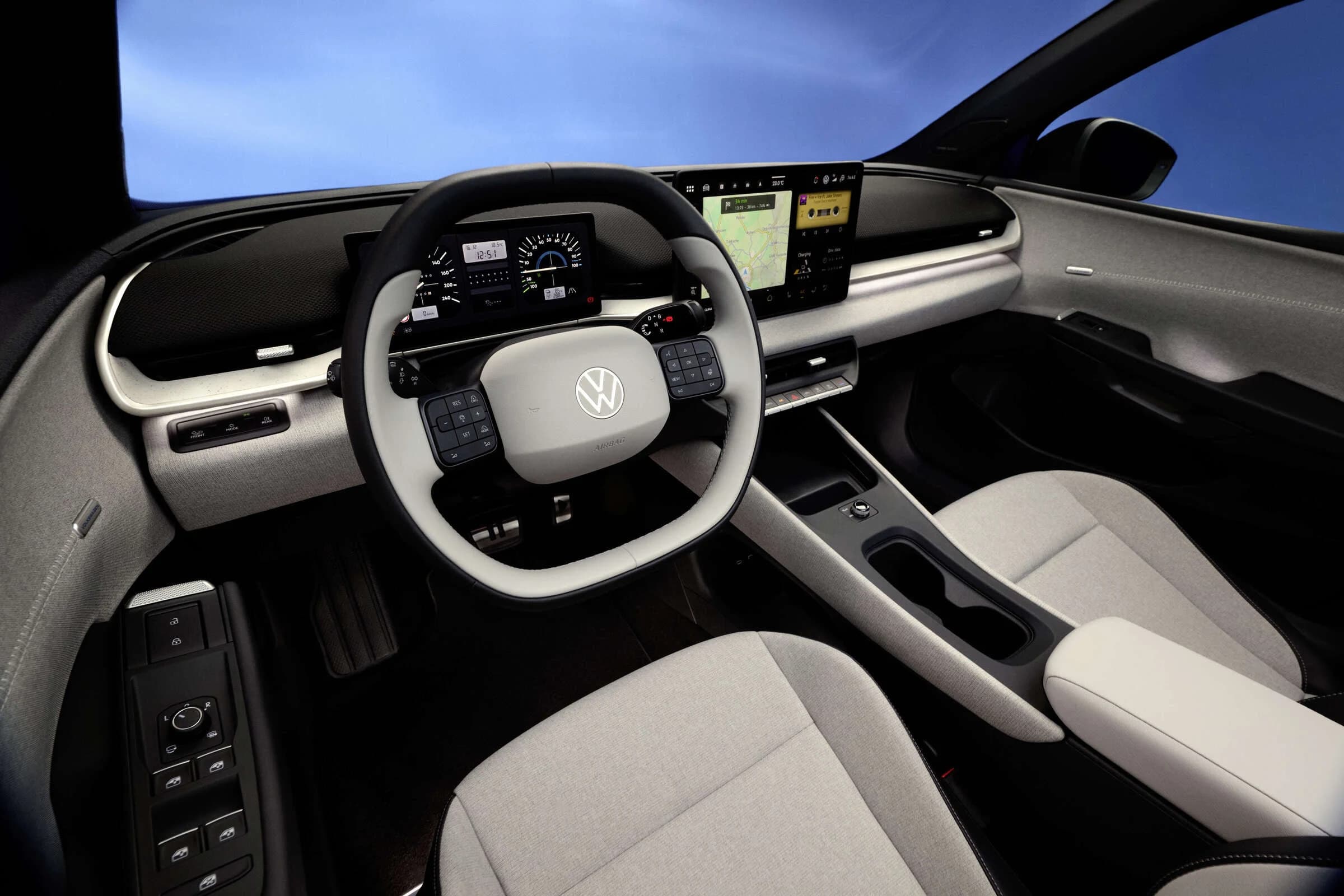
Photo: Volkswagen AG / Volkswagen Newsroom. The image is available free of charge for editorial use.
Volkswagen now gets more EV orders than combustion orders in Germany
Volkswagen is now receiving more orders for fully electric cars than for combustion-powered models in Germany, according to a report by Automobilwoche cited by Motor1. The shift is already affecting production planning. Volkswagen is cancelling planned extra shifts at its Wolfsburg plant, while factories that build electric models are preparing for stronger demand.
What the order comparison does — and does not — mean
The claim concerns incoming orders for the Volkswagen brand in Germany, not completed registrations. An order can be cancelled, postponed or delivered at a later date. The comparison also does not mean that most German cars are electric or that every brand has reached the same point.
It is nevertheless a useful signal because it connects customer demand with Volkswagen’s industrial footprint. Wolfsburg currently builds the Golf, Tiguan and Tayron, all models associated with combustion powertrains in the current production setup. Reports cited by Motor1 say the plant is expected to build around 580,000 vehicles in 2026 instead of exceeding 600,000, after planned additional shifts were removed.
The affordable electric family behind the change
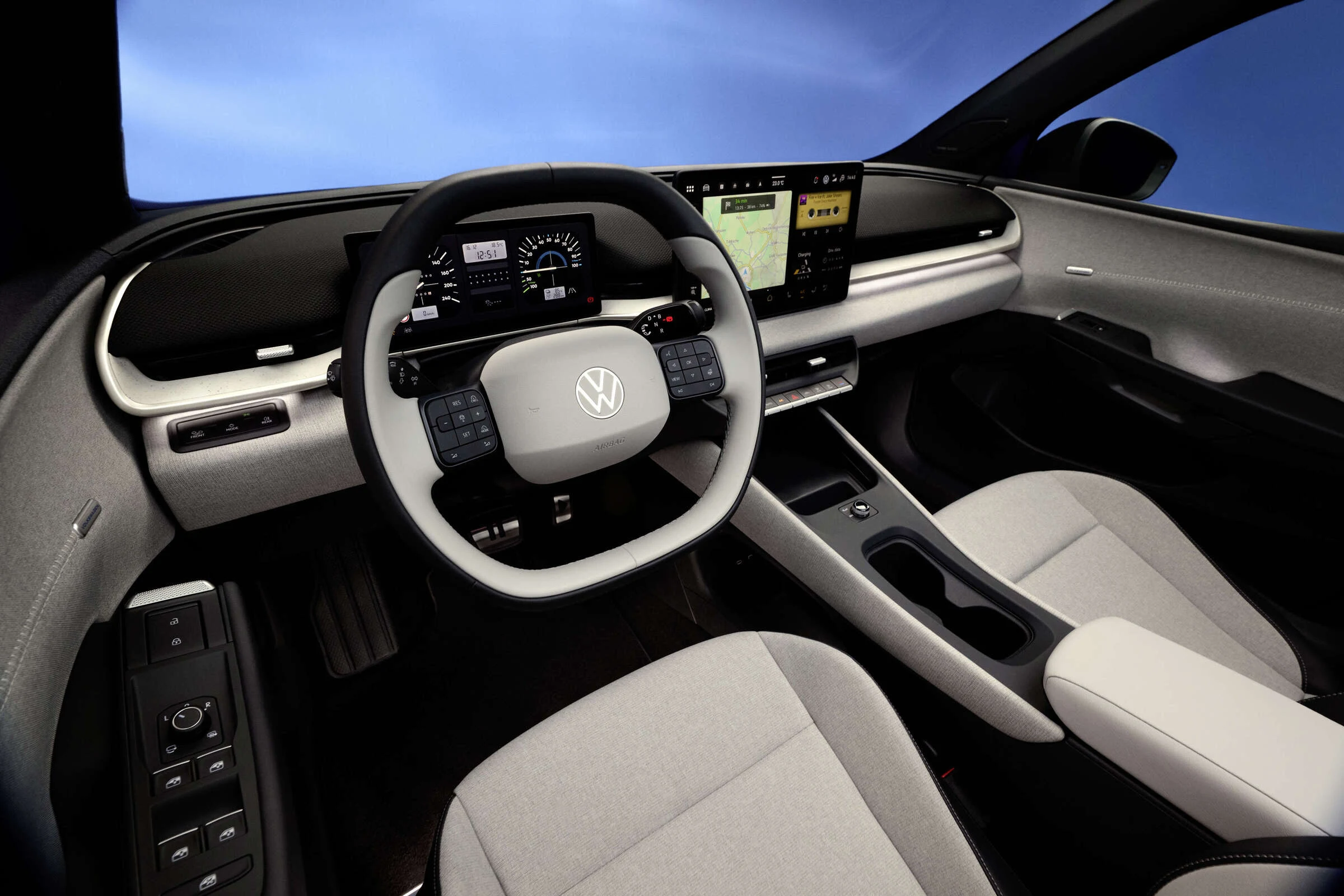
Volkswagen and its Brand Group Core partners launched a new group of smaller electric cars in 2026. The family includes the Volkswagen ID. Polo, Škoda Epiq and CUPRA Raval, with a fourth model planned. Volkswagen Group said the Electric Urban Car Family had received more than 70,000 orders within a few weeks, including 25,000 for the ID. Polo, in a July update.
The ID. Polo matters because it uses a familiar name in a more accessible segment than the first ID models. Volkswagen lists versions with 37 kWh and 52 kWh net batteries, outputs of 85, 99 and 155 kW, and up to roughly 454 km of WLTP range depending on configuration. In Germany, the 37-kWh Trend starts at €24,995 and is aimed at urban driving and typical commuting.
Why the orders cannot immediately be built in Wolfsburg
Orders do not automatically become cars at the same plant. Wolfsburg is still configured around combustion models, while Volkswagen’s current electric production is spread across other locations. The Motor1 report says Emden is preparing at least two additional shifts for the ID.7 liftback and wagon, while Zwickau is benefiting from demand for the ID.3 Neo.
That explains the apparent contradiction: Volkswagen can have more electric than combustion orders in Germany while its best-known factory removes overtime. This is not a shutdown, and it does not mean that Golf, Tiguan or Tayron have no customers. It is a capacity adjustment at a site whose product mix has not yet changed at the same speed as the order mix.
Volkswagen has already announced that Golf production will move to Puebla, Mexico, later in 2027. Wolfsburg is expected to receive future electric projects, including the electric Golf and a planned SUV counterpart, but the exact industrial timetable should not be confused with the current order comparison.
Higher EV demand does not automatically mean higher profit
Electric cars can bring more orders without generating the same margin as comparable combustion vehicles. Volkswagen has acknowledged that profitability is one of the difficult parts of the transition, while the group is also reducing costs, capacity and product complexity. An EV has fewer mechanical components and can require fewer assembly operations, changing both labour needs and plant utilisation.
For Wolfsburg, the problem is amplified by the size of the site and by the supplier network built around traditional vehicles. If customer demand moves towards EVs faster than a factory can be converted, the company can have a growing electric order book and an underused combustion line at the same time. If conversion happens too quickly and demand slows, fixed costs remain a risk.
What Volkswagen’s official numbers confirm
Volkswagen Group reported in July that its European order book for all-electric vehicles rose by more than 50% in the second quarter. The company also said that the Electric Urban Car Family had more than 54,000 orders in early July, when only three of the four planned models were available. A later update lifted the family total above 70,000.
These are European figures covering the Brand Group Core brands, not a calculation of all German Volkswagen-brand orders. They cannot be used to derive the exact electric share of German demand. They do show measurable momentum for smaller and more affordable models, after the first ID products were often criticised for their prices and limited choice.
The role of price
The ID. Polo Trend starts at €24,995 in Germany with the 37-kWh battery. Volkswagen quotes up to 334 km of WLTP range for that version and around 23 minutes for a 10–80% DC charge under the stated conditions. These are official manufacturer figures, not Carboratory test results.
The entry price places the car closer to buyers who do not want or cannot afford a larger electric SUV. For city use, the smaller battery may be sufficient. Commuters and long-distance drivers will still need to consider weather, speed, charging access and the difference between WLTP and daily range. Volkswagen also offers a 52-kWh battery for customers who need more buffer between charging stops.
Wolfsburg remains an industrial problem
Volkswagen cannot replace every Golf or Tiguan with an electric model built elsewhere and keep the plant fully utilised without changing its production plan. Emden and Zwickau can add capacity for electric vehicles, while Wolfsburg has to manage lower overtime demand and prepare for future products.
The order shift gives Volkswagen a clear signal about the direction of German demand, but it does not solve the cost, employment or conversion questions. For buyers, the relevant change is a wider supply of smaller electric cars. For Volkswagen, the task is to build those cars in sufficient volumes and at margins that support the restructuring of a manufacturing system designed for the combustion era.