
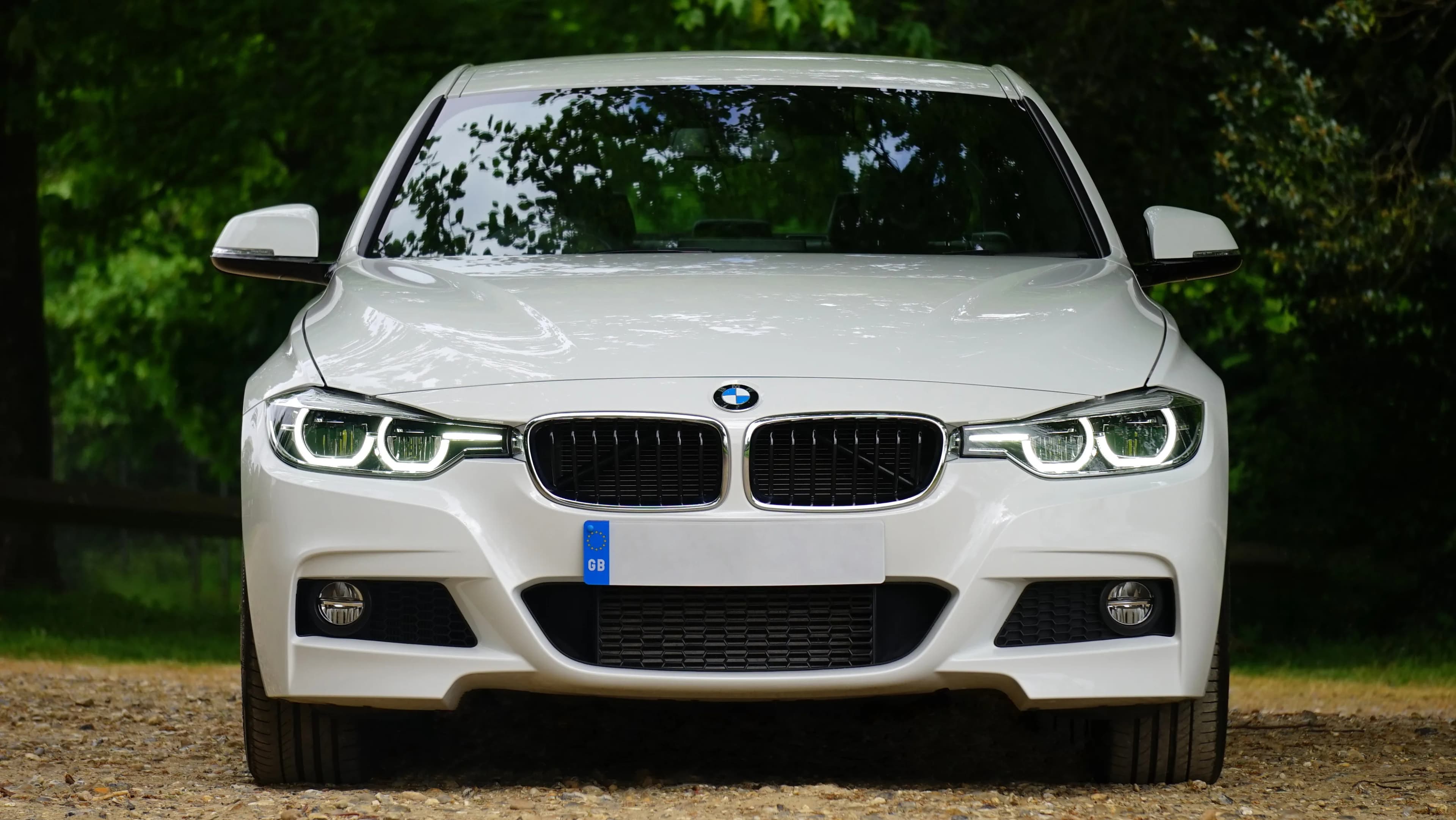
White cars are common because white works for several parts of the vehicle business at the same time. It is easy for a broad group of buyers to accept, fits fleet and commercial use, and remains a strong production colour in most global markets. That does not make white the universal favourite, and it does not mean every white finish is inexpensive or easy to repair.
Axalta’s 2025 Global Automotive Color Popularity Report put white at 29% of the global production mix. Black followed at 23% and grey at 22%. The report is based on vehicle build data from major production regions and markets, so it describes what manufacturers produced rather than a simple poll of private buyers. That distinction matters. A colour chosen for rental fleets, company cars or commercial vehicles can influence production totals even when the individual reasons behind the purchase are different.
BASF reported a different global share for 2024: 34% white, 22% black and 17% grey in its Color Report for Automotive OEM Coatings. BASF says its calculation uses available information on global automotive production and paint application for passenger cars. The two reports should not be merged into a single time series because their methods and reference years are not identical. They do, however, point in the same direction. White is not merely a visual impression on the road; it occupies a large part of the manufacturing market.
Regional data complicate the simple story
Axalta’s 2025 results show grey leading Europe at 26%, with white at 25% and black at 22%. White led North America at 31% and South America at 35%. In Asia, black reached 26%, while smaller chromatic groups such as green, yellow and orange gained some ground. A European driver who sees mostly grey and white cars is therefore seeing a regional pattern, not a universal ranking.
BASF’s 2024 data give another useful view. In EMEA, white represented 27%, grey 22% and black 20%. BASF also said achromatic colours — white, black, grey and silver — rose from 72% of the EMEA mix in 2021 to almost 80% in 2024. In Asia Pacific, white remained at 38%, ahead of black at 24% and grey at 15%. These figures explain why a colour can be dominant in one market and second place in another without either report being contradictory.
Climate and culture may influence the choice, but the reports do not prove a single causal explanation. Axalta describes South American white as associated with practicality and warmer climates, while BASF discusses neutral tones in terms of design and consumer preference. Those are industry observations, not a guarantee that a white car will be cooler, more efficient or more valuable in every country.
Manufacturing rewards a controlled palette
A modern paint shop handles bodies, primers, basecoats and clear coats in a tightly managed sequence. Every additional colour affects material supply, process controls, quality checks, stock planning and the mix of vehicles moving through the plant. Concentrating demand in a smaller number of colours can make scheduling and distribution simpler. This is one reason neutral colours appear across many model ranges, even when designers show a much larger palette in brochures.
White is not automatically the cheapest pigment. A solid white can be a standard finish on one model, while a pearl white may use effect pigments and additional layers and cost extra. The name “white” therefore covers different technical systems. The same is true of black, grey and silver: a solid black is not equivalent to a metallic grey, and a pearlescent white should not be treated as a flat colour when a body shop estimates a repair.
The operational advantage is also visible in fleets. A white van can carry a company livery, rental branding or temporary graphics without forcing the operator to start with a highly specific colour. The neutral base is easy to identify across a large fleet and does not tie the vehicle to one design campaign. That does not explain every white passenger car, but it helps explain why white remains especially visible among commercial vehicles.
Repair and used-car arguments are often overstated
Paint matching depends on the colour code, finish, application process, age and exposure of the panel. A white solid finish may be straightforward to inspect, but a pearl white can require careful blending because the visual result depends on the angle and distribution of the effect layer. White is not a shortcut around proper repair practice.
Resale is another reason often given for choosing neutral colours. A white, black or grey car may be acceptable to more used-car shoppers than a strongly personal shade, which can help a seller reach a wider audience. But colour is only one variable. Depreciation also reflects the model, powertrain, mileage, equipment, service history, accident record and local demand. Neither Axalta nor BASF’s colour reports proves that every white car retains its value better than every coloured car.
The same caution applies to visibility and heat. A light surface can reflect more visible light than a dark one, but cabin temperature depends on glazing, roof area, insulation, ventilation and how long the vehicle sits in the sun. Visibility depends on background, weather, lighting and other road users. The industry colour reports do not support a universal claim that white is the safest or most economical body colour.
White remains strong while the palette slowly widens
Axalta recorded blue as the leading chromatic colour globally in 2025, at 6%. BASF noted growth in green and in warmer colours such as yellow and beige. These changes matter because they show that demand is not frozen. At the same time, the combined weight of white, black, grey and silver means that the industry still prefers colours with broad market acceptance.
The answer to the question is therefore structural rather than mysterious. White remains common because it is widely available, visually neutral, useful for fleets, compatible with a large range of vehicle designs and familiar to buyers in many regions. Its popularity is real, but it is not identical everywhere and it does not erase the technical differences between solid, metallic and pearl finishes.
Sources
- Axalta, 2025 Global Automotive Color Popularity Report
- BASF Coatings, Color Report 2024 for Automotive OEM Coatings
- Wikimedia Commons, White BMW car seen from front, Mikes Photos, CC0



