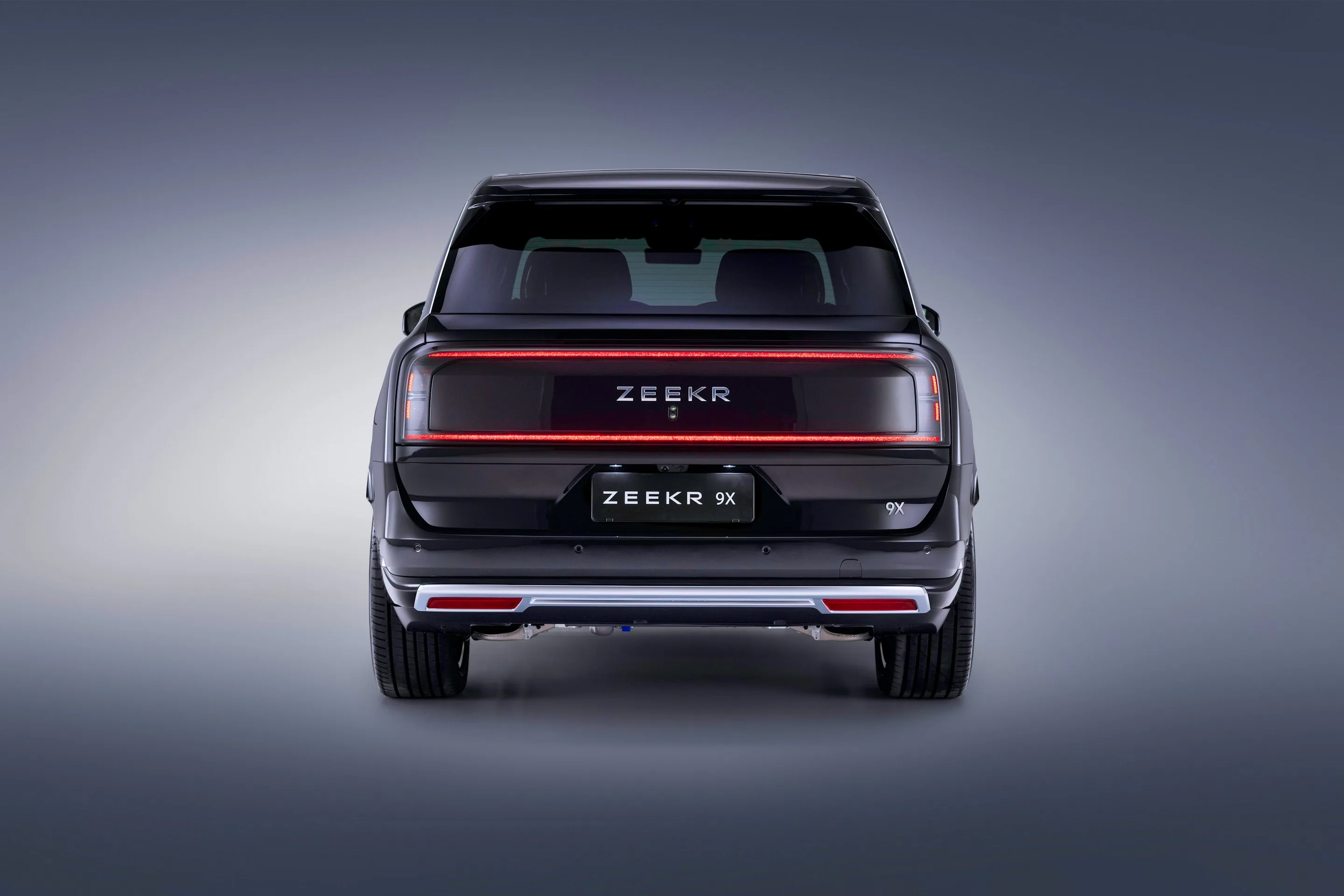
Official Zeekr press image of the 9X. Manufacturer figures in this article are identified as claims or targets.
Zeekr wants to win Europe with value, not heritage
Zeekr is trying to enter Europe’s premium-car market with a simple proposition: buyers should compare what they receive for their money, not only the badge on the bonnet. Lothar Schupet, CEO of Zeekr Europe, has said in interviews around the Paris Motor Show that the brand wants to offer technology, equipment and performance without asking customers to pay an extra amount purely for a long-established name.
The message comes as Zeekr accelerates its European expansion. The company reported 9,525 European deliveries in the first nine months of 2026, compared with 3,025 in the same period of 2025. Zeekr says it is now active in 22 European markets and plans to add another eight by the end of the year. The growth rate is substantial, but it starts from a small base and should not be confused with a large market share.
A product-led strategy
Schupet describes Zeekr’s advantage as value for money. In practical terms, the company is trying to combine a high equipment level, digital systems, rapid charging and strong performance in one offer. This is a brand position stated by an executive, not an independent comparison with BMW, Mercedes-Benz, Audi or other established premium manufacturers. A buyer still needs to check the final price, warranty, service access and running costs.
Zeekr is building its commercial structure as it enters new countries. The brand began selling in Germany in December 2025 and reported more than 850 orders by early October 2026. Its German plan for 2027 includes more than 60 retail partners and a service network with over 100 certified aftersales locations already in place. Across Europe, the stated objective is 200 sales locations and 95% coverage by the end of 2026.
These are company targets and company-reported figures. They do not replace a local availability check. In Romania, a prospective customer would need to know who sells the cars, where warranty work is carried out, how parts are supplied and what terms apply to the battery and software updates.
How European is a Chinese-owned brand?
Zeekr is part of Geely Auto Group, but it emphasises the European side of its product development. The company has research and development activity in Europe, while its global design centre is based in Gothenburg. Schupet has said European teams help adapt suspension, dampers, steering feel, accelerator response and digital interfaces for local customers.
That approach is meant to reduce the gap between a vehicle created for China and one sold in Europe. Road surfaces, regulations, weather and expectations of comfort are not identical. For a new brand, software translation and updates matter as much as the hardware. Driver-assistance systems also have to work within European road rules and conditions.
This does not turn Zeekr into a European manufacturer. The company remains owned by Geely, and production and much of the technology are tied to the group’s Chinese industrial base. “European soul” is a positioning statement about design and market understanding, not a change in ownership or manufacturing origin.
The growing European line-up
Zeekr says its European range has expanded from two to five models in three years. The line-up mentioned at Paris includes the compact Zeekr X, the Zeekr 001 shooting brake, the mid-size 7X SUV, the 7GT grand tourer and the new 9X. This broader range reduces reliance on one product and gives the brand an entry point in several body styles.
The 9X is the model that takes Zeekr into the luxury-SUV segment. In Europe, the Ultra AWD version uses two electric motors and a 2.0-litre turbocharged engine that can act as a generator. Zeekr quotes 660 kW, or 897 hp, 0–100 km/h in 4.1 seconds, up to 179 km of electric range and up to 737 km of combined range. The European product page labels these as manufacturer figures or targets; they are not Carboratory test results.
Zeekr has announced a German starting price of €119,500 and first deliveries from January 2027. The model was shown in Hamburg and then at the Paris Motor Show, where Zeekr also presented an owners’ programme. A German price does not automatically establish pricing or availability in Romania.
Value has limits
Offering more equipment at a similar price to an established rival can attract attention. But premium value is not only a list of screens, speakers or horsepower. It also includes finance costs, insurance, warranty support, replacement parts, software updates and residual value. Zeekr says it wants to build trust through the product, but that trust can only be measured over years.
A new car can be well equipped at launch and still be difficult to resell if customers do not know how the warranty, software or service network will develop. Zeekr’s European expansion therefore has to continue beyond the showroom opening. It needs reliable parts logistics, trained technicians and clear communication in each market.
Chinese brands also enter Europe within a regulatory and political framework that includes tariffs, connected-vehicle rules and type-approval requirements. Zeekr must explain how connected services and vehicle data are managed, while its assistance systems must meet local requirements. Operating in 22 markets means managing different commercial and technical environments at the same time.
What to watch next
Zeekr has to show that fast growth from a small base can become a stable presence, and that its planned network can provide a consistent ownership experience. The 9,525 deliveries are an indicator of early interest, but they do not reveal how the cars will perform in the used market after five or ten years.
The strategy is clear: Zeekr wants to challenge European premium brands with equipment, technology and pricing rather than heritage. For buyers, the outcome will depend on less visible issues: reliability, aftersales support, parts, updates, warranty and resale value.