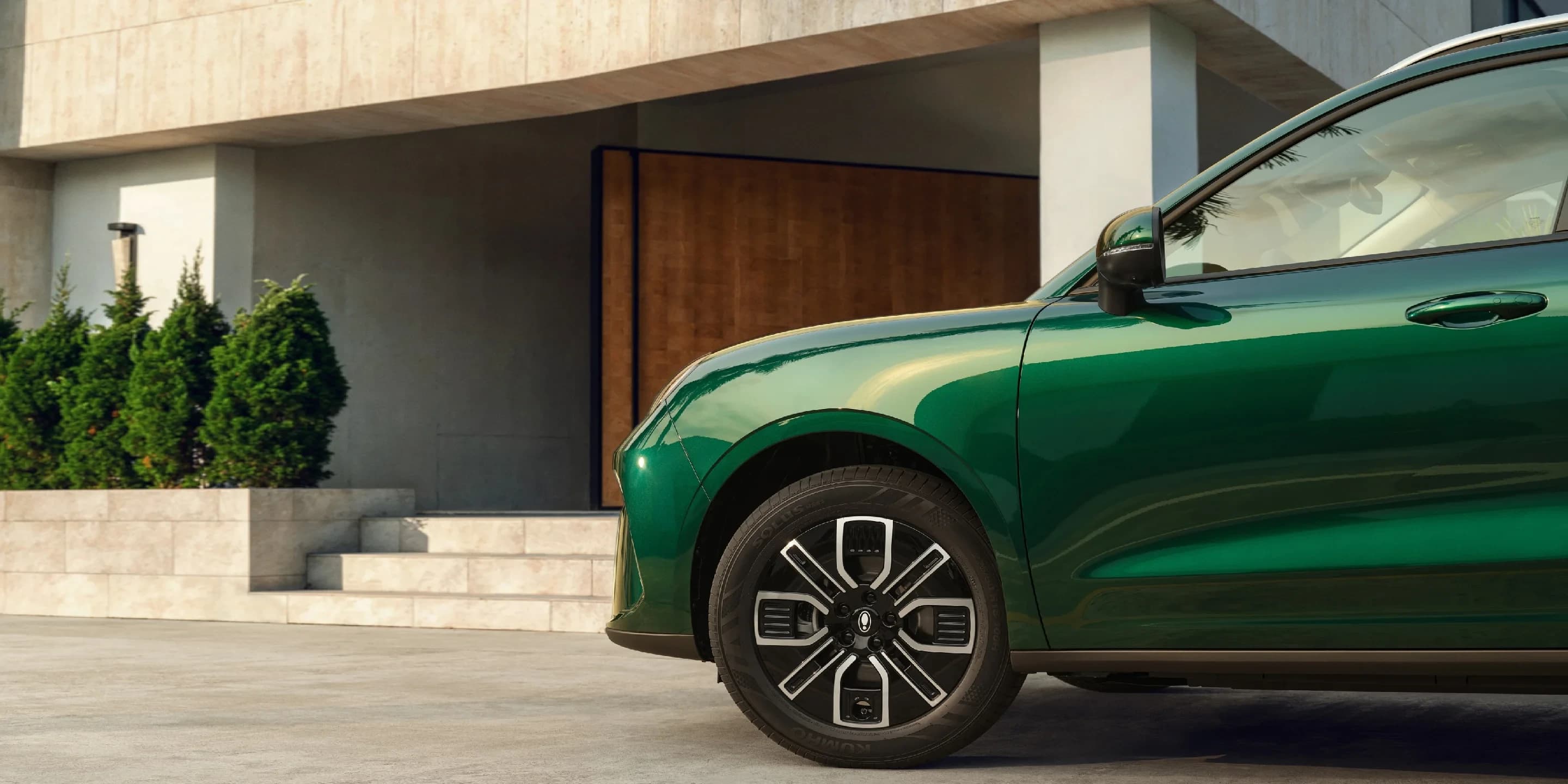
GWM Ora 5 on the manufacturer’s European website. Image source: GWM Europe.
Great Wall Motor will assemble the Ora 5 in Bulgaria from 2027
Great Wall Motor has announced a manufacturing agreement that will bring Ora 5 assembly to Bulgaria. Production is scheduled to begin in the first quarter of 2027 at Bahovitsa, near Lovech, with a planned capacity of 50,000 vehicles a year. The site is operated by local partner Bulgaria Automotive Industry.
This is GWM’s first announced European manufacturing base in its current expansion phase. The company has not disclosed the financial terms and has not described the project as a new greenfield factory. The operation will start with SKD assembly, using semi-knocked-down kits shipped from other GWM facilities. GWM says some components will be localised from the beginning.
The electric Ora 5 comes first
GWM sells the Ora 5 in Europe with petrol, hybrid and fully electric powertrains. The company has indicated that Bulgarian production will begin with the electric version. Other powertrains and models may follow, but no detailed timetable has been published.
GWM’s European Ora 5 page presents the model as a compact SUV. The SUV is 4.47 metres long, and the wider Ora 5 family is planned to include several body styles. GWM’s European strategy has referred to an SUV and a hatchback, followed by a longer estate model. Those product plans do not confirm that every derivative will be built in Bulgaria.
GWM’s German website lists a 58 kWh battery, a 150 kW electric motor and up to 435 km of range for the European electric Ora 5. These are commercial model figures and do not prove that every Bulgarian-built car will use exactly the same specification. Equipment and homologation can vary by market.
What SKD assembly means
SKD, or semi-knocked-down assembly, means that a vehicle reaches the plant as a set of partially assembled components and is completed locally. The Bahovitsa operation will therefore turn imported kits into finished vehicles. It is different from a fully integrated plant that presses body panels, builds battery packs and assembles complete powertrains in the same location.
GWM Chief Technology Officer Nicole Wu told Reuters that some parts would be sourced locally from the beginning. The company has not said which parts, what percentage of the vehicle will be local, or how many suppliers will be involved. Those details will matter when assessing the Bulgarian project’s effect on the regional automotive supply chain.
The 50,000-vehicle figure is a planned capacity, not a guaranteed first-year output. A Q1 2027 start does not mean that the plant will build 50,000 cars during 2027. Production may ramp up as staff are trained, equipment is validated, suppliers are approved and demand is established.
A site with previous GWM history
Bahovitsa is not a completely new location for Great Wall Motor. Cars were assembled there in the past in cooperation with Litex Motors. That earlier operation ended after several years and should not be treated as the same legal or industrial project as the current agreement with Bulgaria Automotive Industry.
Using an existing site can reduce the time needed to restart assembly compared with building a new factory. It does not remove the need to inspect and upgrade equipment, certify processes and meet current European requirements. The final production rate will depend on those practical steps as much as on the nominal capacity.
Why local assembly matters to GWM
Reuters reports that GWM electric vehicles imported from China face the European Union’s standard 10% car import tariff plus a 20.7% anti-subsidy duty. European assembly can reduce exposure to some trade barriers, although the exact treatment depends on the origin of the components and the rules applied to vehicles assembled from kits.
GWM entered Europe early among Chinese manufacturers, but its sales remained small. Reuters reported that the company sold about 3,500 vehicles in Europe in 2025, almost 30% fewer than in the previous year. Chinese rivals such as BYD, Chery and Leapmotor grew more quickly in the same region.
GWM is targeting 60,000 European vehicle sales in 2027 and a 3–5% European market share by 2030. It has also discussed a European production target of 300,000 vehicles by 2029. At full planned capacity, Bahovitsa would represent roughly one sixth of that volume, but there is no evidence that the plant will reach 50,000 vehicles in its first year.
The company’s European product plan includes at least ten new or derivative models over the next two years and a broader mix of petrol, hybrid and electric vehicles. GWM has operated an R&D centre in Munich since 2021, working on local demand, regulatory compliance and vehicle validation. Manufacturing is one part of a wider attempt to rebuild the brand’s European presence.
Ora 5 versus Kia EV3 and Hyundai Kona Electric
The Ora 5 will compete in the compact SUV area occupied by vehicles such as the Kia EV3 and Hyundai Kona Electric. That comparison is based on size, body style and intended use; it does not establish equal pricing, equipment or performance.
Kia’s European technical information lists the EV3 at about 4.30 metres long, with battery options including an 81.4 kWh pack depending on version and market. Hyundai builds the Kona Electric in the Czech Republic and has described that production as part of its European strategy. GWM has not announced the Bulgarian Ora 5’s final price, trim levels, warranty terms or Romanian delivery schedule.
The fact that the Ora 5 is already shown on GWM’s European website should not be confused with Bulgarian production. Sales, import logistics and local assembly are separate stages. The first Bulgarian-built cars still need a functioning line, approved suppliers, completed validation and a distribution plan.
What remains to be confirmed
Before the start of production, GWM and Bulgaria Automotive Industry will need to clarify the actual investment, employment, local supplier list, battery origin and vehicle-origin calculation. The market will also need information on spare parts, service coverage and the allocation of Bulgarian-built cars to Romania and other EU countries.
The announcement gives GWM a concrete European assembly plan: Ora 5 EV production at Bahovitsa from Q1 2027, with 50,000 vehicles of planned annual capacity. It does not yet provide proof of that output, a final local-content percentage or a confirmed production date for other models. Those are the facts to watch as the project moves from agreement to operation.