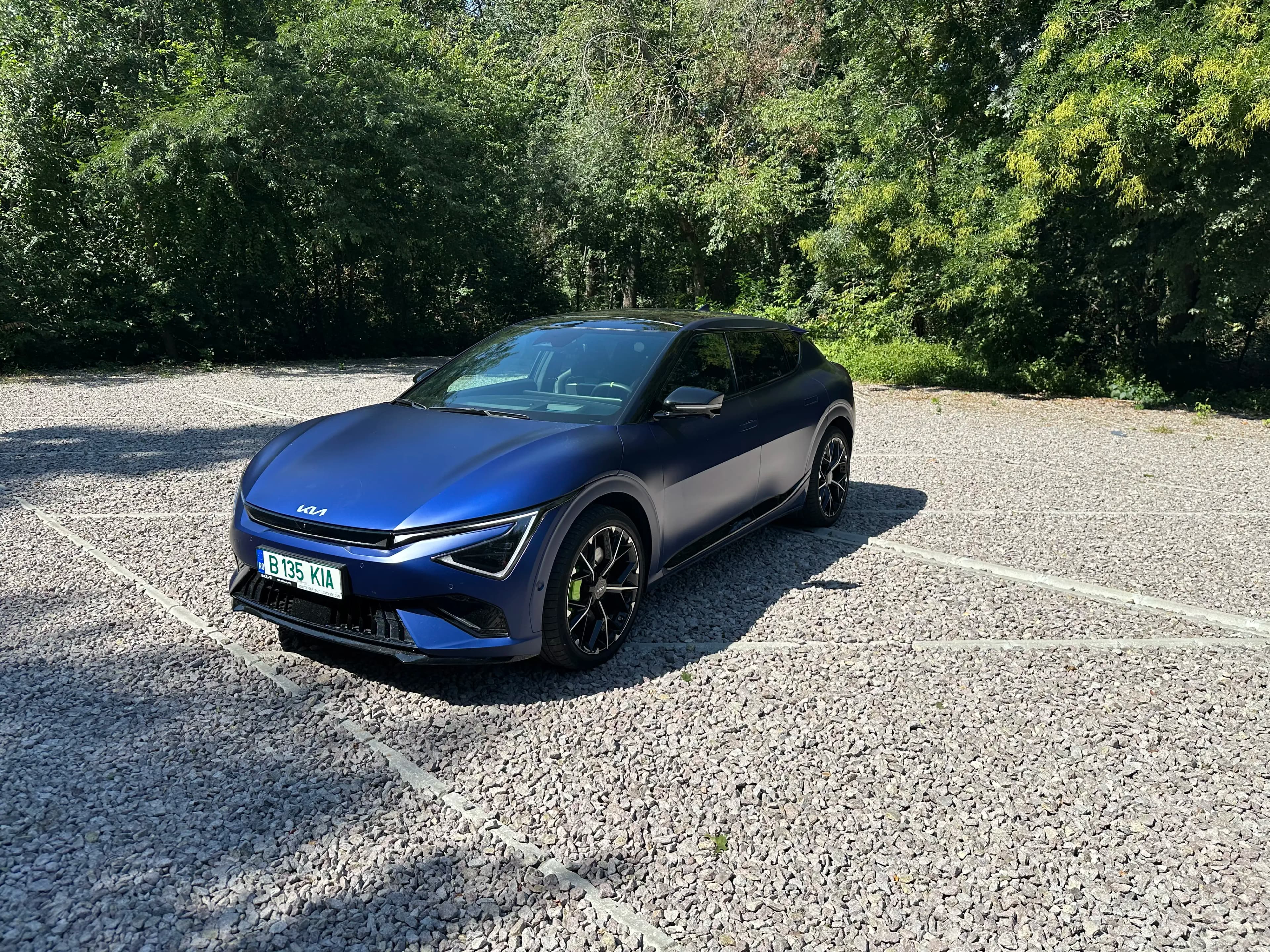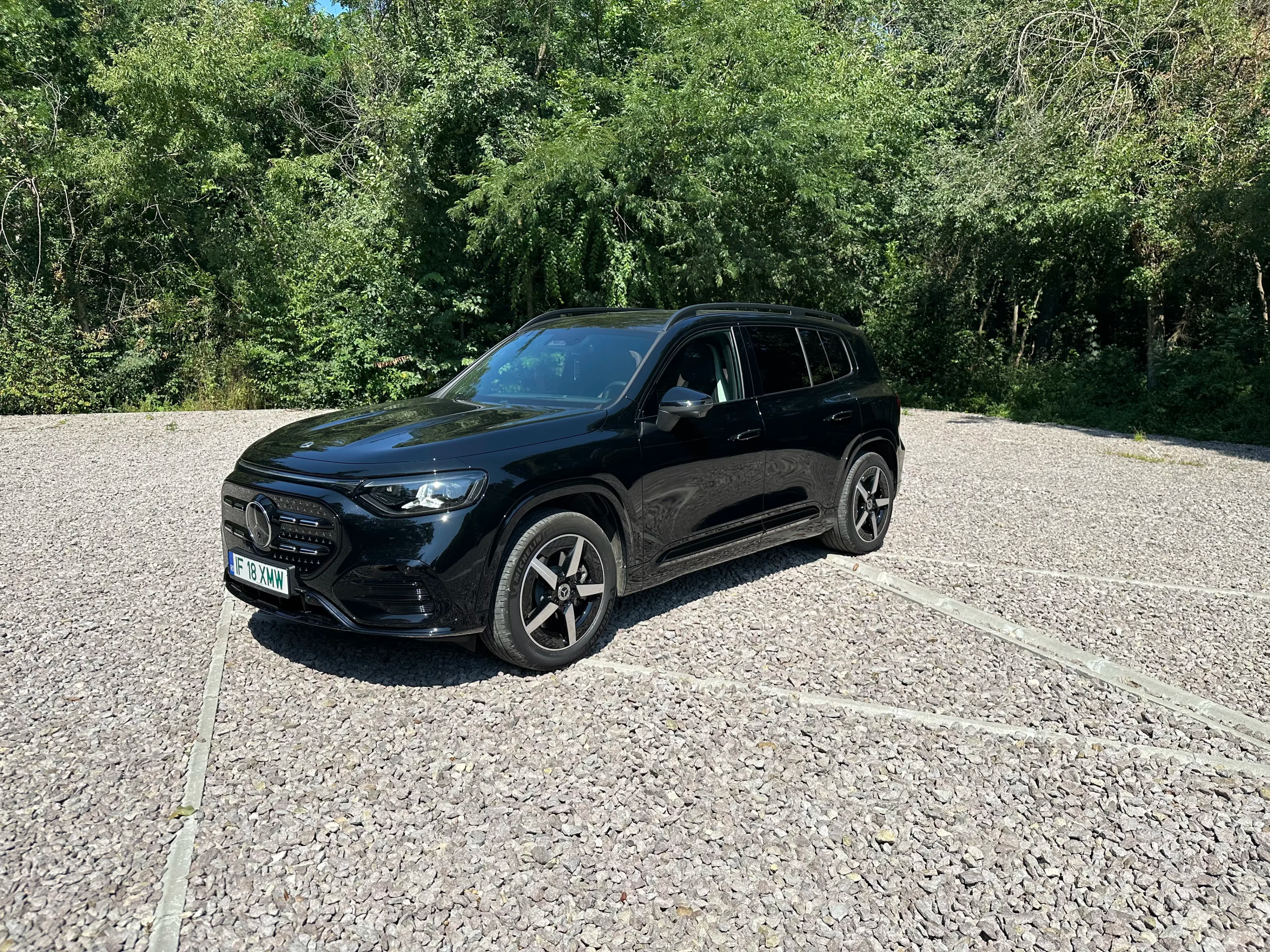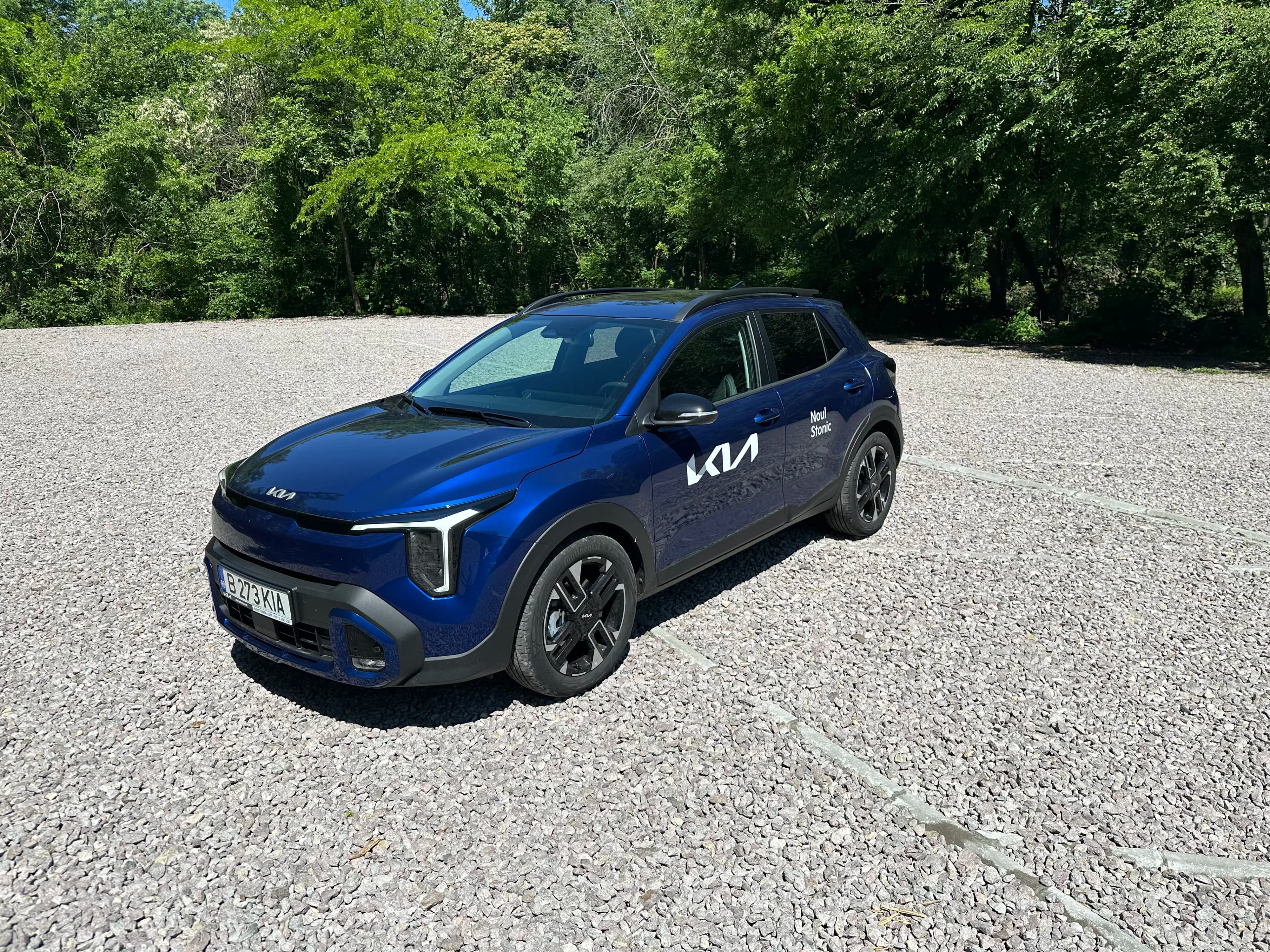
The Fiat 600 MHEV arrived in Romania as a fresh take on the compact hybrid crossover segment.
We ran it for a full week on city streets and longer trips to judge whether €22,900 (starting price) and the 48 V mild-hybrid system are convincing. The standard 100 hp version and 385-litre boot promise practicality; Italian styling draws attention. Below we cover powertrains, cabin space, road behaviour, real consumption and pricing.
What is the Fiat 600 MHEV and who is it for?
The 600 MHEV revives an iconic name as a modern B-segment crossover on the same platform as the Jeep Avenger, with distinct Italian character.
Powertrains: 100 hp vs 136 hp
Both use a 1.2-litre three-cylinder turbo petrol with 48 V mild-hybrid assistance and a six-speed automatic integrating an electric motor fed by a 0.89 kWh battery. Fiat quotes 100 hp (98 hp exact) or 136 hp (134 hp exact).
Despite the “hybrid” label, this is not a full or plug-in hybrid. The system assists at low speed and under deceleration; pure-electric running is limited to roughly 0.6–1 km in urban conditions (manufacturer).
Official mixed consumption is 5.1–5.3 l/100 km for both outputs. The 100 hp version suffices in town; 136 hp adds motorway passing reserve.
Versus Fiat 500 and 500X
The 600 is larger than the 500, with more passenger space and a 385-litre boot expanding to 1,231 litres with the bench folded. Driving position is higher.
Against the 500X, the 600 looks newer and adds mild-hybrid tech the 500X lacks. Styling blends Fiat 500 and Jeep Avenger cues; the cabin mixes retro Fiat touches with Avenger practicality.
Who should buy it
Urban drivers wanting a compact but usable daily car; new drivers thanks to easy dimensions; young families of four; design-focused buyers; anyone testing electrification before a full EV.
In town the 600 shines—light steering and compliant suspension on trams, speed bumps and rough pavement. Above 100 km/h, road noise rises and it is clearly not a sports SUV.
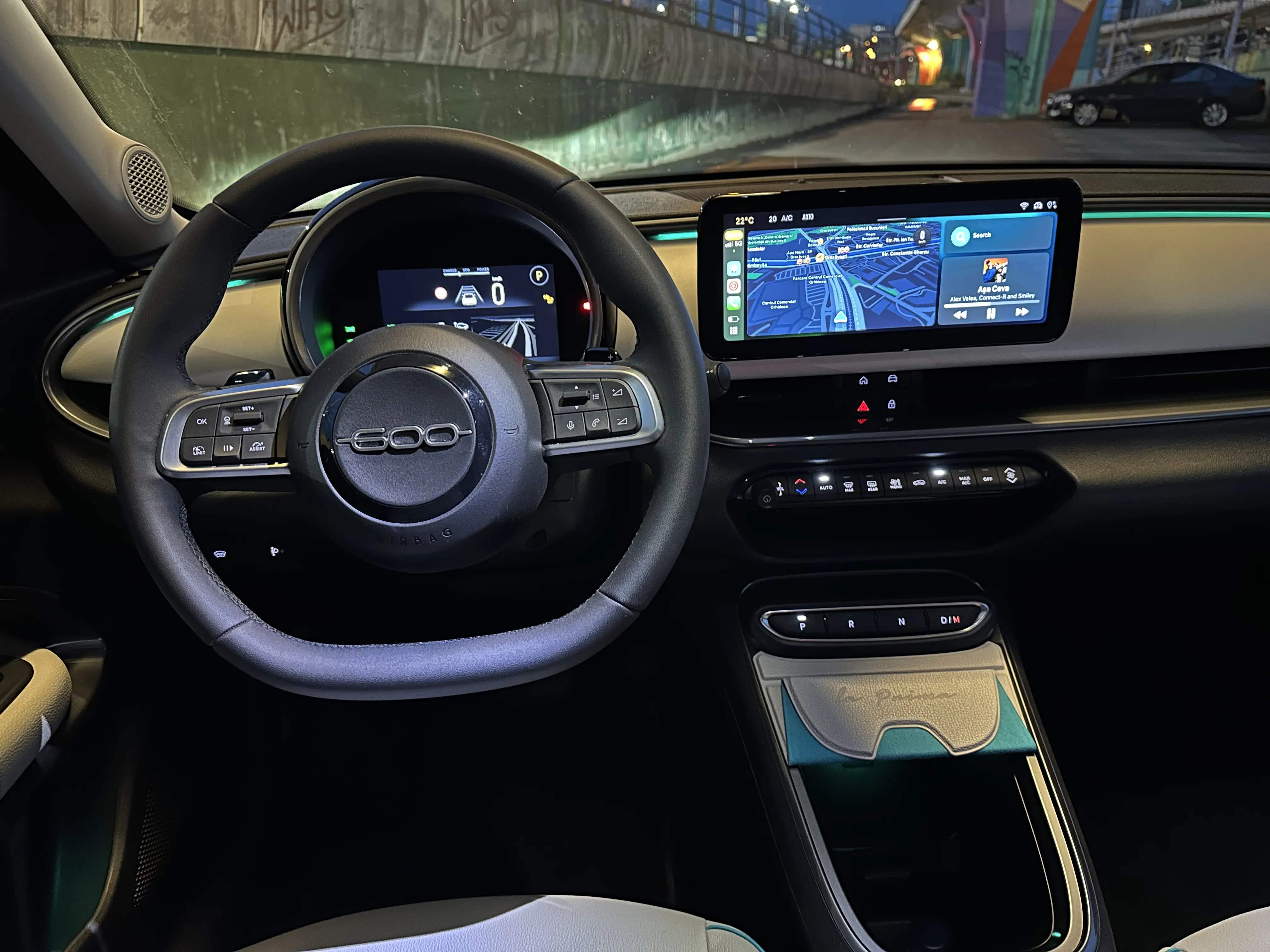
Interior space and comfort
Storage is a highlight, compensating for B-segment size.
Front seats
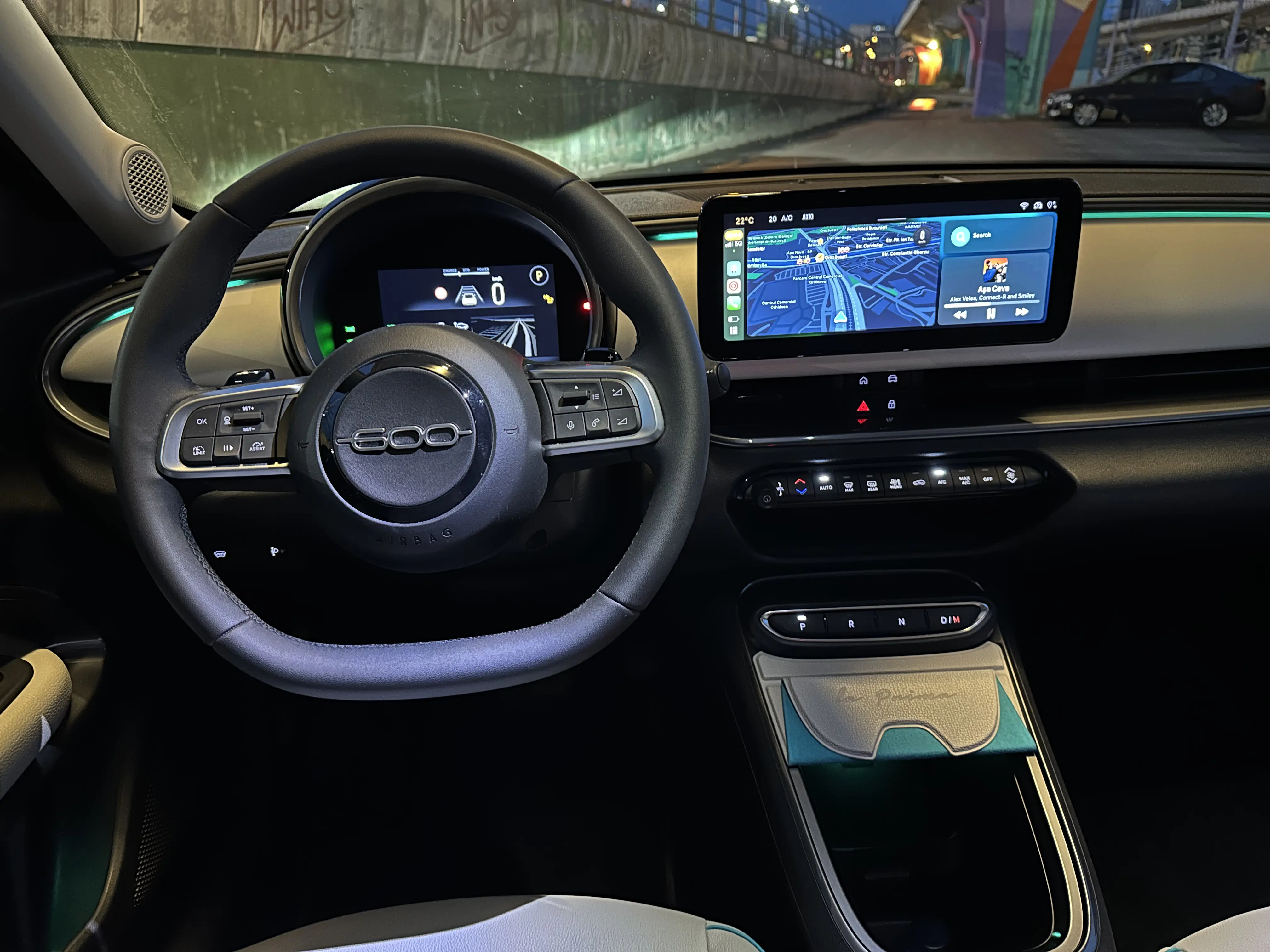
High seating gives good forward view. At 1.83 m driver height, headroom is fine; cabin width can feel tight elbow-to-elbow. La Prima adds massage and six-way power adjustment for the driver. Gear-selector placement between console and tunnel is awkward.
Rear seats
With the front seat set for 1.83 m, rear knee room is tight. Headroom remains good. The middle seat is symbolic—the tunnel hurts comfort. Best as 2+2 adults or children; child seats can force the front seat forward.
Boot: 385 litres, dual floor
385 litres, up to 1,231 litres folded—not class-leading (Renault Captur up to 616 litres with the bench slid). Dual floor adds flexibility. La Prima offers power tailgate plus an in-cabin release button.
Storage
Door bins sized for 0.5-litre bottles, Torino panorama tray on the console, wireless charging under a folding tunnel lid, two USB ports, 12 V socket, cup holders with sliding divider, sliding armrest bin and deep glovebox. Rear pockets and a central USB complete the picture.
Materials are hard plastic in places; La Prima uses soft eco-leather with embroidered Fiat logos.
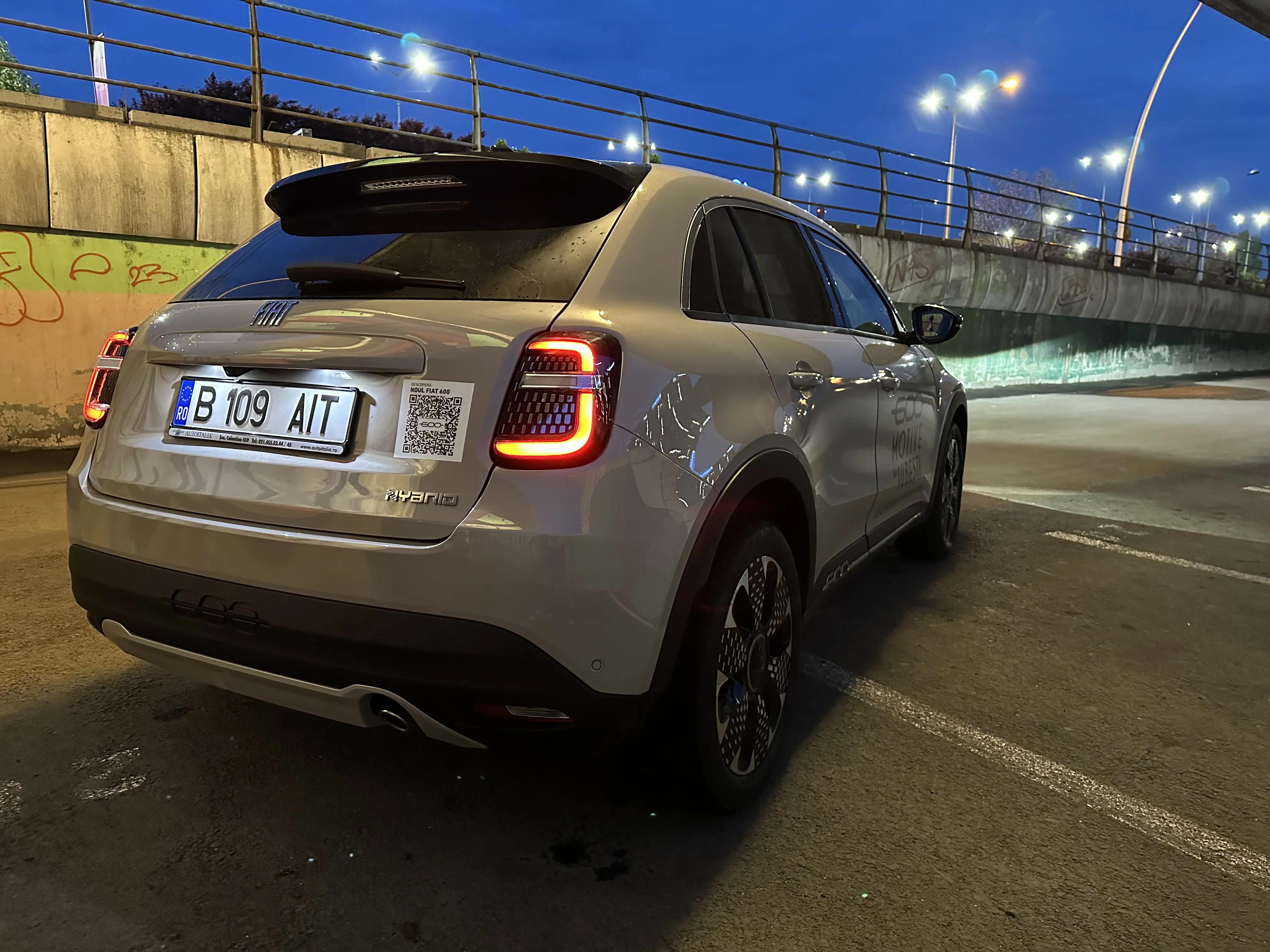
City and motorway behaviour
After intensive testing in Bucharest and on longer roads:
Urban manoeuvrability
Compact size eases parking and narrow streets. Soft steering helps low speeds; sensors and a clear reversing camera assist. 100 hp keeps pace in traffic; the auto box sometimes holds a high gear—paddle shifters help.
Suspension
Absorbs urban imperfections well—a plus on Romanian roads. Suspension noise enters the cabin; more insulation would match the “La dolce vita” marketing.
Motorway
Noise stays acceptable to about 90 km/h; beyond 100 km/h conversation or louder audio is needed. High-speed stability is adequate but less confidence-inspiring than in town; 136 hp suits frequent long trips.
Real consumption and mild-hybrid efficiency
Official mixed consumption for 100 hp is 5.1 l/100 km. Our week averaged 6.7 l/100 km on the trip computer—urban spikes of 8–9 l/100 km in heavy traffic, down to 4.4 l/100 km on steady national roads including motorway sections.
Regeneration under braking and electric assist at low speed help, but this is not a economy champion. The trip summary shows the percentage driven electrically—useful feedback, not a range game.
Pure electric range remains about 0.6–1 km. For meaningful EV use, Fiat’s 600e offers up to 406 km WLTP.
Prices and equipment
Standard vs La Prima
Shared mild-hybrid hardware; differences are trim and comfort kit.
Standard equipment highlights
Manual air conditioning, LED front and rear lights, 10-inch centre screen and 7-inch digital cluster, heated front seats and heated wiper zone, nine safety systems, cloth seats and eco-leather wheel, power windows all round.
La Prima adds automatic climate, LED fog with cornering, driver massage and six-way power seat, wireless phone charging, power tailgate, reversing camera, blind-spot assist, adaptive cruise, eco-leather upholstery, ambient LED lighting and 18-inch alloys.
Romanian pricing from €22,900
100 hp automatic standard trim from €22,900. La Prima costs substantially more with the extra kit. Price is competitive for the tech offered, though no longer the bargain it might have been years ago.
Rivals
Renault Captur, Dacia Duster and Volkswagen T-Cross sit mid-pack on price; many offer more space. Toyota Yaris Cross full hybrid is more efficient in real use (around 6.0 l/100 km in comparable testing referenced in the source)—choose design and mild-hybrid convenience versus maximum practicality.
Conclusion
After a week, the Fiat 600 MHEV is a credible urban crossover: distinctive design, easy manoeuvring, comfortable suspension on rough streets and workable mild-hybrid efficiency in town—all from €22,900.
Rear space and high-speed refinement lag some rivals; frequent motorway drivers should favour 136 hp. It is not perfect, but it delivers what it promises: a practical urban companion with Italian flair.