MG Motor, a British brand with deep roots in automotive history but now under Chinese giant SAIC, recently launched the new-generation HS. This compact SUV promises to redefine standards in its segment with advanced technology, improved comfort and value that is hard to match. We tested the vehicle first on the Romanian market, and the experience was revealing.
The new MG HS 2024 presents an extremely attractive proposition for buyers seeking a spacious, well-equipped and affordable SUV. With modern design, a varied range of efficient powertrains and generous equipment, this model has the potential to compete successfully with established rivals such as the Nissan Qashqai, Kia Sportage or Volkswagen Tiguan.
In this extended test drive, we analyse the key aspects of the new MG HS, from design and performance to onboard technology and value for money. We also explore how the model positions itself in the competitive compact SUV landscape in Romania and what impact it could have on the local market.
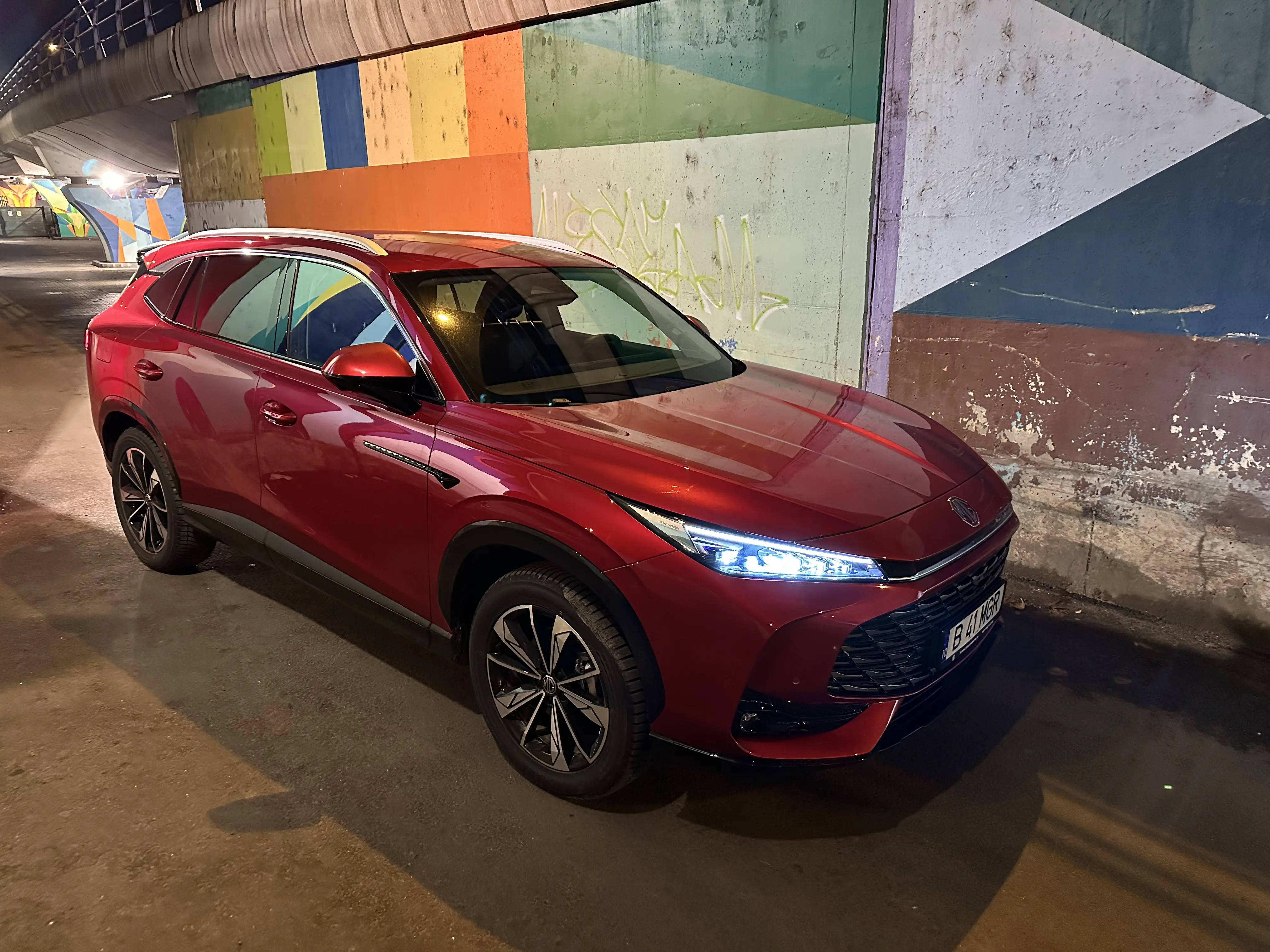
The new MG HS 2024 stands out with exterior design that blends elegance and robustness—essential traits for a modern SUV. Compared with its predecessor, the model gains significant improvements that give it a more imposing road presence.
Dimensions were optimised for more generous interior space without compromising urban agility. Overall length grew by 45 mm to 4,655 mm, while width increased by 14 mm to 1,890 mm. Interestingly, despite more space, overall height dropped by about 30 mm, yielding a more aerodynamic, elegant profile.
The front is dominated by a large grille characteristic of MG’s new brand identity, flanked by complex LED headlights that incorporate distinctive daytime running lights. The side line is dynamic, with an upward window line that adds a sporty look. The rear is completed by modern-graphic LED tail lights and a diffuser integrated into the bumper.
A notable design element is the LED light bar spanning the full width of the vehicle, front and rear. It improves visibility and gives the HS a high-tech look in line with current industry trends.
19-inch wheels, standard on all trim levels, complete the premium appearance. They are fitted with Bridgestone Alenza tyres known for strong performance and comfort.
Overall, the exterior design of the new MG HS 2024 impresses with elegance and modernity, positioning it alongside more expensive competitors in the compact SUV segment.
The interior of the new MG HS 2024 represents a significant step up from the previous generation, with refinement and technology that rival much more expensive models. Generous interior space is complemented by high-quality materials and a range of cutting-edge equipment.
The dashboard is dominated by a modern infotainment setup combining two 12.3-inch screens in a unique layout. The first serves as a digital instrument panel, giving the driver essential information in an easy-to-read, customisable format. The second, dedicated to infotainment, controls navigation, climate and advanced driver-assistance settings.
Material quality in the interior is notable. Soft-touch surfaces cover most frequently used areas, and aluminium or wood inserts (depending on trim) add elegance. Seats, available in fabric, artificial leather or natural leather, offer excellent comfort and support for long journeys.
Passenger space is generous front and rear. The wheelbase, extended by 45 mm versus the previous model, translates into impressive rear legroom. Even tall occupants find adequate head and leg room, making the HS an excellent family choice.
The boot offers 507 litres with all seats in place, expanding to 1,484 litres with the rear bench folded. Those figures place the new HS among segment leaders for load capacity.
Technology is a strength. The infotainment system supports Apple CarPlay and Android Auto for seamless smartphone integration. The vehicle also has a 360-degree camera system that eases manoeuvres in tight spaces and gives excellent visibility all around.
An innovative aspect is the driver monitoring system, which uses a camera on the A-pillar to detect signs of fatigue or distraction. The intention is laudable, though some users may find it overly sensitive and triggering frequent alerts.
Overall, the interior of the new MG HS 2024 impresses with space, material quality and high technology, positioning it as a serious alternative to premium models in the segment.
The new MG HS 2024 offers a varied powertrain range designed to meet different needs. MG engineers focused on efficiency and performance, with options for conventional engines and hybrid solutions.
The base engine is a 1.5-litre turbocharged petrol unit producing 170 hp and 275 Nm maximum torque. Known under code 15E4E, it evolves the previous generation’s engine with significant improvements in efficiency and refinement.
Transmission comes as a six-speed manual or seven-speed dual-clutch automatic (DCT). The manual reaches 0–100 km/h in 9.4 seconds; the automatic does the same in 9.6 seconds. Top speed is 195 km/h for both.
Official WLTP average consumption is 7.6 l/100 km—not the most economical in the segment, but reasonable for an SUV of this size and power.
An important addition is the plug-in hybrid (PHEV) version, combining the 1.5-litre petrol engine with a powerful electric motor for combined output of 303 hp and 432 Nm. A 24.7 kWh lithium-ion battery allows up to 75 km of electric range, making the HS PHEV an excellent option for daily urban travel.
PHEV performance is strong, with 0–100 km/h in 6.8 seconds. Low CO2 emissions (12 g/km) also make this variant attractive for fleets seeking to reduce carbon footprint.
The chassis is tuned for a good balance of comfort and manoeuvrability. Multi-link rear suspension on all versions ensures excellent road manners and improved comfort on rough roads. Steering is precise with good feedback, though some drivers may want a sportier response in tight corners.
Driver assistance systems grouped under MG Pilot include automatic emergency braking, lane keeping assist, adaptive cruise control and blind-spot monitoring. These contribute to active safety and place the HS at the top of its segment for assistance technology.
Overall, the MG HS 2024 powertrain range balances performance and efficiency, with options for economy-minded drivers and those who want extra power and dynamism.
The new MG HS 2024 stands out for advanced technology and connectivity, showing the brand’s commitment to innovative solutions at accessible prices. The infotainment system is the centre of this experience, with an intuitive interface and a wide range of functions.
The 12.3-inch central screen dominates the console, giving access to all vehicle functions. The interface is customisable, allowing users to configure the home screen to preference. The system supports Apple CarPlay and Android Auto for seamless smartphone integration.
The innovative MG iSMART system allows remote control of certain vehicle functions via a smartphone app. Users can check vehicle status, locate the car in a busy car park or pre-condition the cabin before setting off.
Built-in navigation offers real-time updated maps and traffic information for optimal route planning. Voice recognition enables hands-free control of many functions, improving safety while driving.
For audio enthusiasts, HS offers a premium multi-speaker system capable of high-quality sound. Bluetooth enables audio streaming and hands-free calls, while USB ports charge mobile devices.
The 12.3-inch digital instrument panel offers clear, customisable display of essential driver information—from current speed and fuel consumption to navigation data and assistance system status.
The 360-degree camera system is another notable feature, giving a panoramic view of the surroundings—especially useful when parking or in tight spaces.
On safety, HS is equipped with a full suite of driver assistance systems, including automatic emergency braking with pedestrian and cyclist detection, lane keeping assist, adaptive cruise control and blind-spot monitoring. These use sensors, cameras and radar for a safer, more relaxed drive.
The innovative, though sometimes considered intrusive, driver attention monitoring system uses a camera on the A-pillar to detect fatigue or distraction, issuing audible and visual alerts when needed.
Overall, the technology package on the new MG HS 2024 is impressive and rivals much more expensive models, demonstrating MG’s aim to offer advanced technology at accessible prices.
Safety was a major priority in developing the new MG HS 2024, resulting in top-level protection in its class—highlighted by a five-star Euro NCAP rating, demonstrating excellence in occupant and pedestrian protection.
The body structure uses high-strength steels to create a robust safety cell around passengers. Programmed crumple zones absorb energy effectively in an impact, reducing injury risk.
Passive safety includes multiple airbags—front, side and curtain—and a driver knee airbag. Seat belts have pretensioners and force limiters for optimal protection in a collision.
MG offers a generous seven-year or 150,000 km warranty, showing confidence in quality and durability— a strong argument for HS and long-term peace of mind for owners.
Powertrains were tested extensively for reliability. The 1.5-litre petrol engine, though relatively new in the MG line, builds on mature, well-proven technology. The PHEV version benefits from SAIC’s experience in electrified vehicles.
Braking is sized appropriately for the vehicle’s power and weight, with excellent performance in varied conditions. Ventilated discs at all wheels dissipate heat efficiently, maintaining braking performance under intensive use.
Overall, the new MG HS 2024 presents as a safe, reliable vehicle with protection and safety technology comparable to premium segment models. Extended warranty and attention to safety detail make HS an excellent choice for families prioritising safety and reliability.
The new MG HS 2024 excels in comfort and practicality, with intelligent solutions to improve daily use. Interior design and functionality were conceived for the diverse needs of modern families.
Generous interior space is a key strength. With a longer wheelbase than the previous generation, the vehicle offers ample legroom front and rear. Even tall rear passengers find enough space, making HS excellent for long trips with family or friends.
Seats, in various finishes by trim, offer excellent support for long distances. Top versions get heated and ventilated front seats and massage for the driver’s seat.
Dual-zone climate control allows independent temperature for driver and front passenger, while rear vents distribute air evenly through the cabin.
The boot offers 507 litres with seats up, expanding to 1,484 litres with the rear bench folded. A wide tailgate opening and low load sill ease loading bulky luggage. Numerous storage compartments are distributed strategically inside.
A practical hands-free tailgate opening allows easy access when your hands are full—useful for shopping or loading sports equipment.
Acoustic comfort improved significantly versus the previous model. Superior sound insulation and sound-absorbing materials reduce engine and wind noise, creating a quiet, relaxing environment.
Infotainment contributes to overall comfort, with easy access to vehicle functions. Voice control allows climate, navigation or audio adjustments without taking hands off the wheel.
For families with young children, HS offers ISOFIX anchor points on the rear bench. Rear doors open wide, easing child seat installation and access.
The 360-degree camera system gives a clear view of surroundings—extremely useful when parking or in tight spaces, reducing the risk of minor bumps and scratches.
Overall, the new MG HS 2024 proves extremely practical and comfortable, well adapted to modern family life. Generous space, smart storage and comfort technology make HS an excellent choice for a versatile, easy-to-live-with SUV.
The new MG HS 2024 was designed not only for performance and comfort but also for cost-efficient ownership—crucial for many buyers, especially when efficiency and low maintenance matter in the purchase decision.
For the petrol 1.5-litre engine, official WLTP average consumption is 7.6 l/100 km—not the most economical in the segment, but reasonable for size and power. In mixed real-world use, consumption often sits around 8–9 l/100 km, acceptable for the class.
The PHEV version offers significantly higher efficiency, especially for urban and short trips. With up to 75 km electric range, many users can cover most daily driving without using petrol. In hybrid mode, average consumption can fall below 2 l/100 km depending on driving style and charging frequency.
Maintenance costs stay competitive thanks to MG’s policy of quality yet accessible components. Service intervals are every 20,000 km or one year, in line with industry norms. MG offers prepaid service packages that can reduce long-term maintenance costs.
The extended MG warranty—seven years or 150,000 km—gives owners long-term peace of mind and reduces unexpected repair costs.
For the PHEV, running costs can be even lower for users who can charge at home or work. Electricity cost is significantly lower than fossil fuel, which can mean substantial long-term savings.
The PHEV also benefits from fiscal advantages in many European countries, including Romania. Low CO2 emissions (12 g/km) can reduce registration taxes and annual charges depending on local rules.
Resale value is another consideration. Although MG is relatively new in Europe, its growing reputation and extended warranty should help maintain competitive residual values.
Insurance generally falls in moderate price categories thanks to advanced safety systems and reasonable spare-part costs.
In conclusion, the new MG HS 2024 is a cost-efficient ownership option, balancing performance and economy. The PHEV in particular can deliver significant savings for users who can exploit electric driving. Competitive maintenance, extended warranty and improved efficiency make HS attractive for budget-conscious buyers who do not want to compromise on quality and equipment.
The new MG HS 2024 enters an extremely competitive compact SUV segment, facing established rivals such as Nissan Qashqai, Kia Sportage, Hyundai Tucson and Volkswagen Tiguan. To understand its market position, we compare HS with these main competitors on key aspects.
Price and value: MG HS stands out for competitive pricing. The base model starts at €24,995, while the PHEV starts at €31,495. By comparison, Nissan Qashqai starts at €32,710, Kia Sportage at €32,575 and Volkswagen Tiguan at around €40,000. That price advantage is significant, especially given HS equipment levels.
Space and practicality: With 507 litres of boot space (1,484 litres with the bench folded), HS sits well in the segment—more spacious than Nissan Qashqai (504 litres) and Ford Kuga (412 litres), though behind Hyundai Tucson (620 litres). Passenger space is generous and rivals more expensive competitors.
Technology and equipment: HS offers an impressive technology package, including a 12.3-inch infotainment screen comparable to premium models. Driver assistance is on par with competitors and in some cases exceeds them—for example, 360-degree cameras standard on top trims where many rivals charge extra.
Performance and efficiency: The 170 hp 1.5-litre HS delivers competitive segment performance. The PHEV, with 303 hp combined and 75 km electric range, beats many rivals on power and efficiency. Petrol WLTP consumption (7.6 l/100 km) is slightly higher than some rivals such as Nissan Qashqai (6.3 l/100 km for an equivalent engine).
Safety: With five Euro NCAP stars, HS matches main rivals on safety. Assistance systems are comprehensive and comparable to more expensive brands.
Warranty and reliability: MG’s seven-year or 150,000 km warranty exceeds most competitors’ standard offers. Kia offers a similar warranty; most others offer three to five years.
Design and brand image: Although HS design is modern and attractive, MG as a brand does not yet have the prestige of established European or Japanese marques. That may matter to some buyers but can be offset by excellent value.
In conclusion, the new MG HS 2024 positions itself as an extremely competitive alternative in the compact SUV segment. It offers a complete package of features and technology at a significantly lower price than many direct rivals. Its strengths are accessible pricing, high equipment levels, generous interior space and extended warranty. Although it may be slightly disadvantaged on brand image and petrol fuel consumption, HS represents excellent value for buyers seeking an SUV without giving up equipment or space.