Every time you sit behind the wheel of a Porsche-badged SUV, it is not only about figures, equipment or trim — it is about feel. With the new Cayenne E-Hybrid 2025, expectations were high: a modern hybrid, comfort and versatility. Our test car — a Cayenne E-Hybrid Coupé in metallic black, with Black and Mojave Beige leather, 21-inch RS Spyder wheels, adaptive PASM air suspension, adjustable sport seats and modern LED headlights — promised that mix of refinement and practicality. List price: €131,658.
We set out expecting to judge not just a large SUV but a plug-in hybrid that must deliver a coherent premium experience. Below is what stood out, what disappointed, and whether a Cayenne E-Hybrid 2025 deserves a place on your list.
How the Cayenne is powered: engine, electric motor, battery, transmission
The hybrid heart combines a 3.0-litre turbocharged V6 petrol engine with an electric motor fed by a 25.9 kWh lithium-ion battery. That plug-in layout makes the Cayenne a versatile SUV for urban commuting and long journeys.
The V6 is refined, quiet and predictable — it aims for balance rather than aggression. Combined with the electric motor, the system is rated at 463 hp and roughly 649 Nm of total torque. That does not turn the Cayenne into a supercar, but it is enough for sober, secure behaviour on any road, from city to motorway, with luggage or a trailer.
The electric motor’s instant torque is integrated into the eight-speed Tiptronic S automatic, giving smooth, controlled take-offs. In electric mode the Cayenne moves silently and calmly — ideal for commuting, town work and short trips. For many owners, the 25.9 kWh battery is a realistic solution for daily mileage.
Charging is straightforward at home or from an AC wallbox. With an 11 kW onboard charger, a full recharge takes about 2.5–2.7 hours — reasonable for everyday use.
In normal driving, with urban traffic and motorway stints, transitions between electric and petrol are hard to notice. The calibration favours comfort over jolts, reflecting a Porsche philosophy: a hybrid for real life, not zero-emissions hype.
Behind the wheel: comfort, suspension, dynamics and Porsche character
From the first metres, the difference from a generic SUV shows in precise steering and calm but confident responses. Adaptive PASM air suspension is probably this Cayenne’s strongest card — it helps a large SUV absorb bumps like a big saloon. Raised sections and imperfect asphalt become minor issues; passengers get a smooth ride without harsh shocks.
In corners, even in a heavy vehicle, the Cayenne does not feel clumsy. Inertia is well controlled, you feel in charge, and the steering inspires confidence. Suspension and chassis settings aim for comfort and dynamics together — what you would expect from Porsche.
At motorway speed, noise isolation is good: the petrol engine stays unobtrusive, road noise is damped, and 21-inch tyres do not add excessive vibration. In electric mode, silence is even more marked — useful for commuting or a discreet departure.
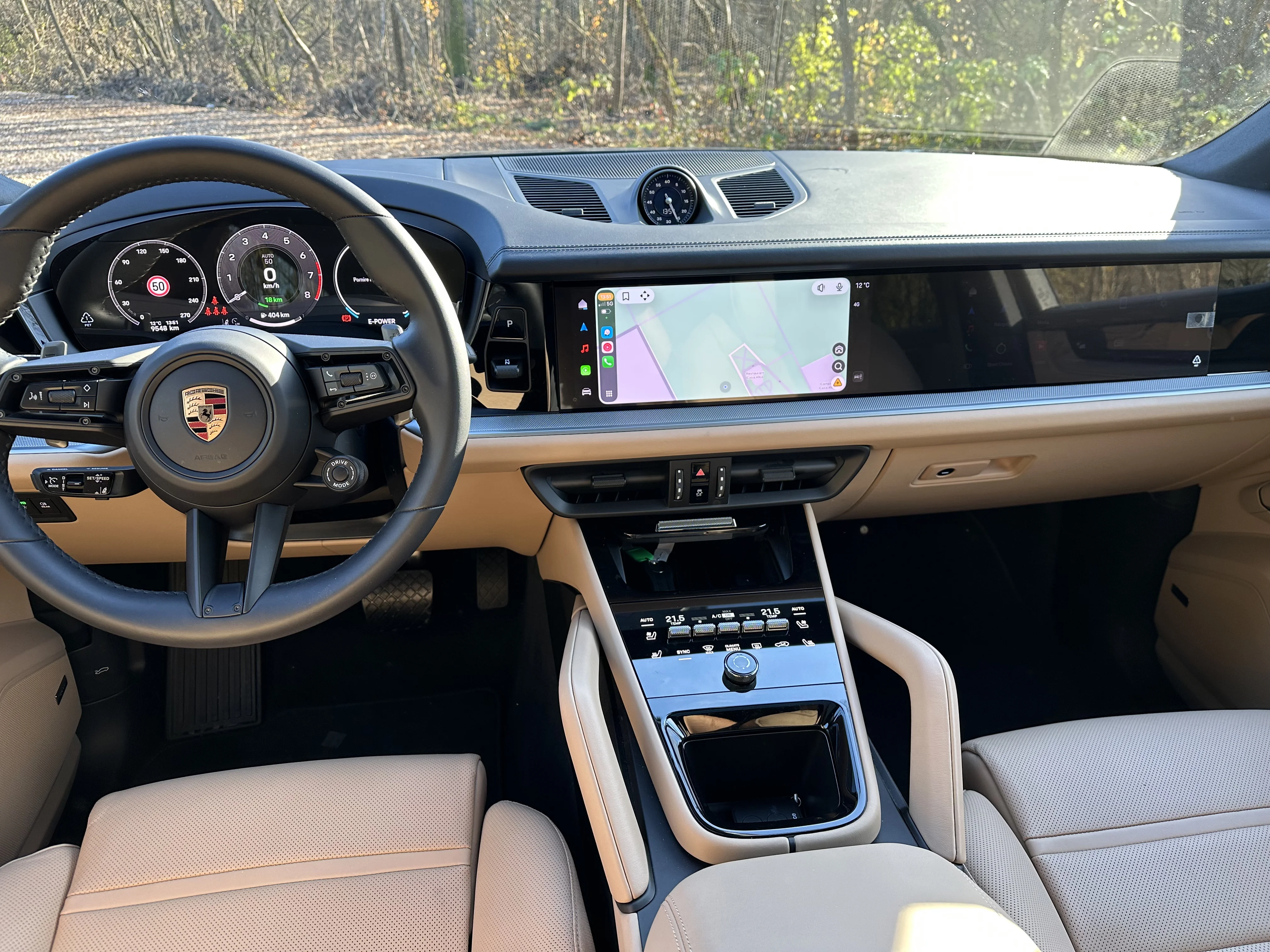
Interior: luxury, compromises and the “expensive car” feeling
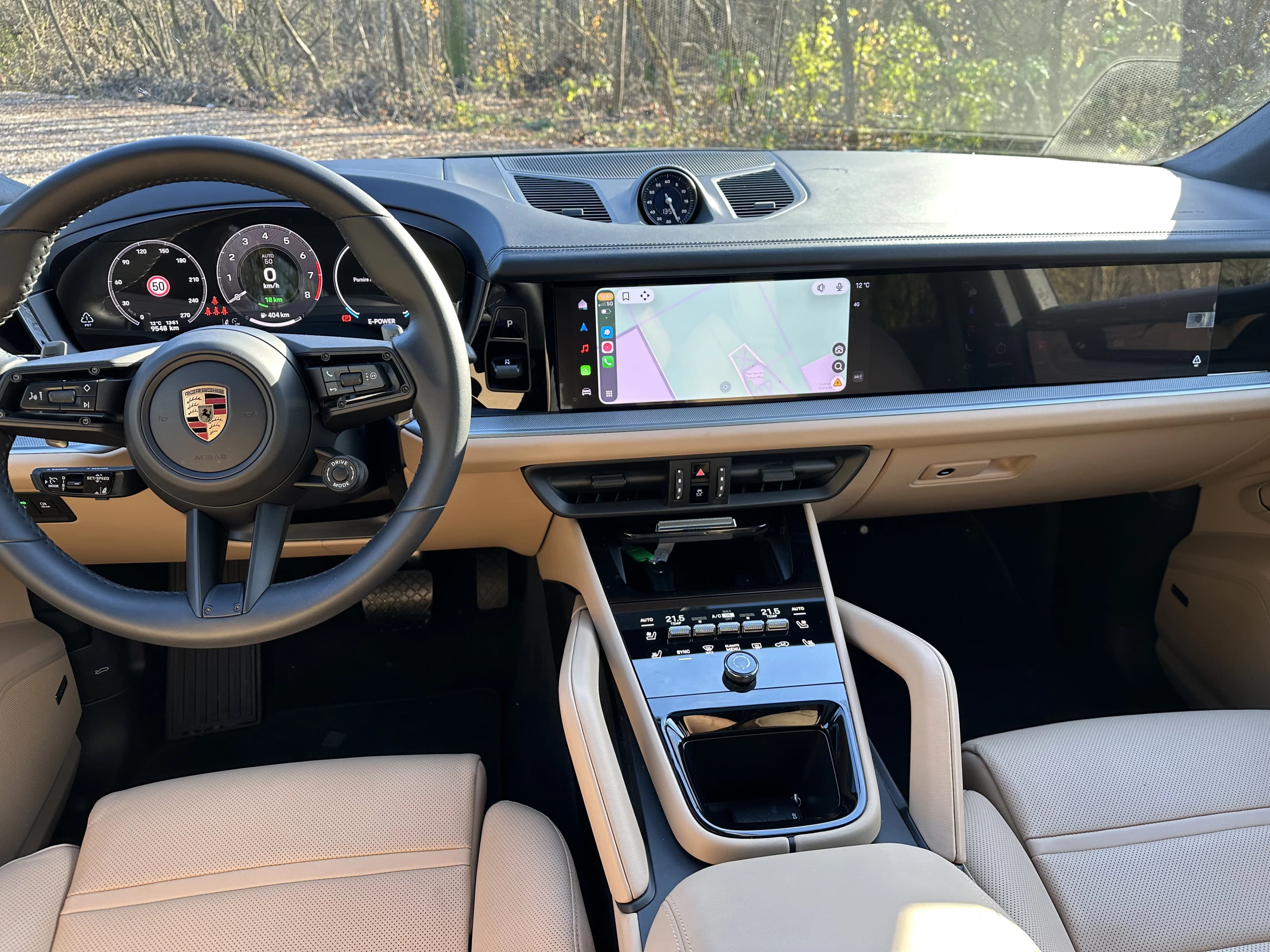
Opening the door reveals an elegant cabin. Leather trim, adjustable seats, four-zone climate control and the audio system all support a modern comfort impression. The upper dashboard, fascia and door panels are finished with care and feel premium. In those moments it is easy to forget you are in an SUV.
The picture is more nuanced lower down. The lower dashboard, centre console and footwell areas use simpler plastics — acceptable, but not always what you expect above €130,000. That contrast creates a sense of partial luxury: what you see is upscale; what you touch lower down reveals compromise.
Another serious minus on our test car: no head-up display. In 2025 that omission hurts on a premium plug-in SUV, especially against rivals that offer HUD even in mid-range trims. It dulls the top-tier impression and suggests you are paying a lot for a package that could have been more generous.
The hybrid in daily use
Mornings often started with a silent electric pull-away, the petrol engine joining only when needed. In urban traffic, residential streets and jams, the Cayenne E-Hybrid behaved with restraint: no smoke, little engine noise, minimal vibration. The 25.9 kWh battery is a real asset if you charge often — ideal for daily commuting and short trips.
On the motorway or on long runs the V6 takes over without hesitation. With 463 hp combined, the car stays consistent whether empty or loaded. Tiptronic S shifts smoothly, and the generous torque is felt when overtaking or pulling away with weight. Electric-to-petrol transitions remain smooth — evidence of careful calibration.
The electric motor’s instant torque is not tuned for an aggressive launch. The Cayenne moves in a controlled, elegant way — closer to a silent luxury saloon than a sport-focused PHEV. For some that is a plus; for others a concession.
How it compares with direct rivals
Choosing a premium plug-in SUV in 2025 means comparing with the BMW X5 xDrive50e, Mercedes-Benz GLE 400e and Audi Q7 55 TFSI e quattro.
The BMW X5 often feels more uniform and coherent inside, frequently with HUD available — a clear advantage if ergonomics and tech matter. Its suspension is comfortable, but the Cayenne keeps a dynamic edge: sharper steering, a lower stance, a stronger sense of control. If you want a well-equipped hybrid SUV at a more balanced price, the X5 makes sense. If you want an SUV that communicates when you drive it, the Cayenne has real strengths.
The Mercedes GLE is known for luxurious interiors and comfort equipment, with consistent materials and a saloon-like ambience. In large SUVs like the GLE, dynamics and involvement can suffer. The Cayenne’s suspension and chassis let it behave with more agility — a solid pick if that matters.
The Audi Q7 offers more space, a large boot and often better value for equipment. Yet for buyers who want sportier character, refined road manners and the Porsche badge, the Q7 can feel dynamically neutral. The Cayenne retains a clearer personality at the wheel.
Who the Cayenne E-Hybrid 2025 suits — and who might regret it
It makes sense if you:
- want a premium plug-in SUV that combines comfort with versatility,
- commute daily and can charge the battery,
- value soft but controlled suspension, engaging steering and genuine dynamic behaviour,
- care about the Porsche brand and what it represents.
Then the Cayenne E-Hybrid 2025 delivers a pleasant drive, elegant rolling comfort, real utility and versatility: electric in town, petrol on long trips, capable with luggage or a trailer.
It may disappoint if you:
- expect premium materials everywhere without compromise,
- assume high-tech items such as HUD and a full assist suite are standard,
- want an aggressive, instant electric punch from a performance PHEV,
- prioritise the best equipment-per-euro ratio in the segment.
In those cases a BMW X5, Audi Q7, Mercedes GLE — or a higher Cayenne grade — may fit better.
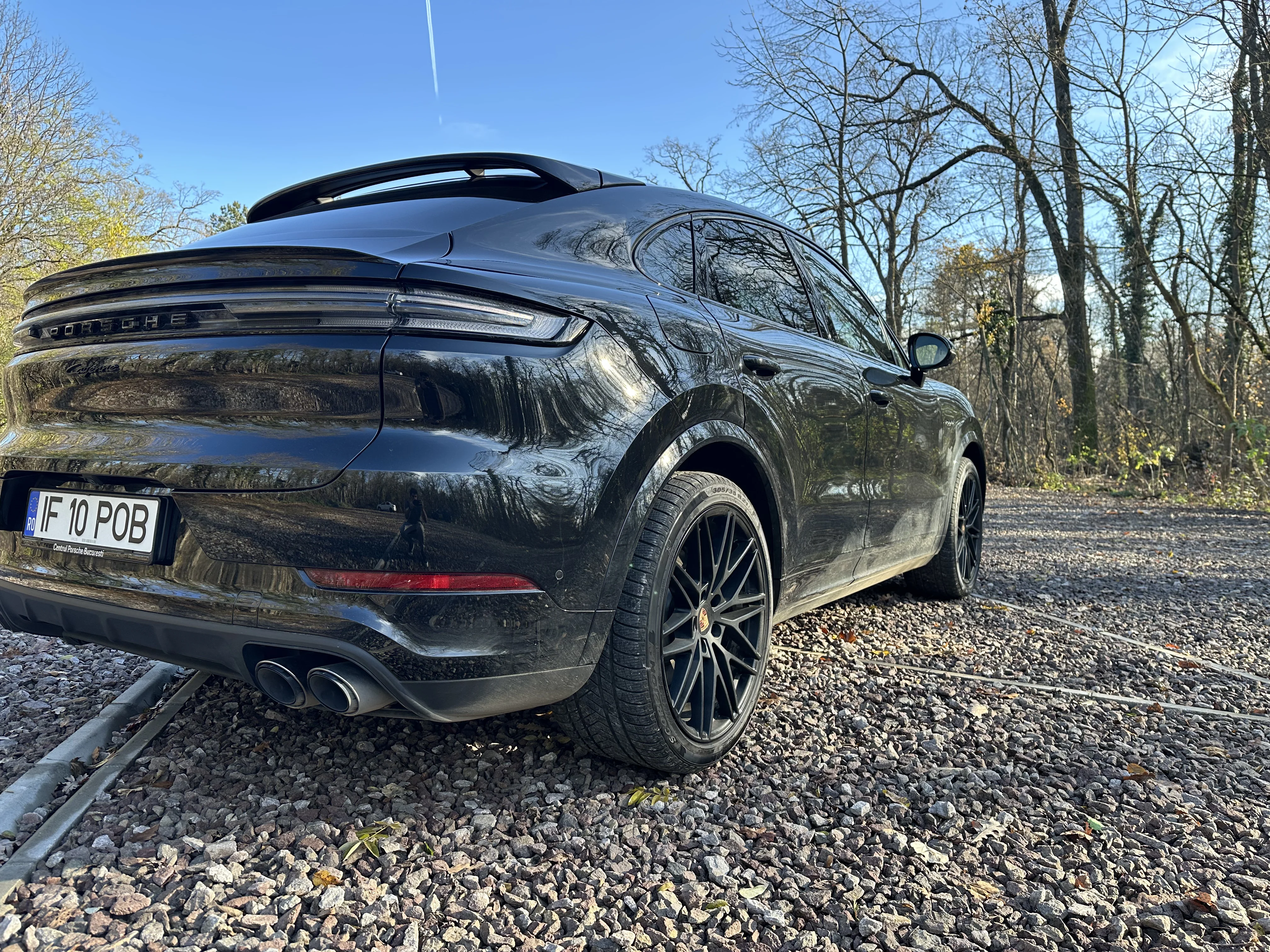
Conclusion: verdict after the test drive
After several hundred kilometres in the Cayenne E-Hybrid 2025, the overall impression is mixed but clearly positive. This plug-in SUV is a coherent package of comfort, refinement, dynamics and versatility. Air suspension is a genuine benchmark in the class and makes every trip comfortable. Chassis tuning still tells you that you are driving a Porsche — even in hybrid form, even without a Turbo badge.
Equipment and materials leave room for improvement: no HUD, lower plastics, and a sense of partial luxury may bother buyers who expect everything for the money paid. The electric motor, though useful and well calibrated, does not deliver the aggressive shove some expect from a premium PHEV.
The Cayenne E-Hybrid 2025 deserves serious consideration if you prioritise comfort, suspension, driving dynamics and the Porsche image. It is not a perfect SUV — it has compromises, and buyers seeking absolute luxury or maximum electric performance should look elsewhere too.
For many owners it will be the right balance of utility, refinement and driving pleasure. For fans of the marque, it is a reminder that Porsche builds SUVs that feel different.