The compact SUV class is crowded. Names like Volkswagen Tiguan and Nissan Qashqai are established, yet SsangYong has been here a long time—the Korando name is cited in record books as Korea’s longest-running model badge. We review the 2023 Korando.
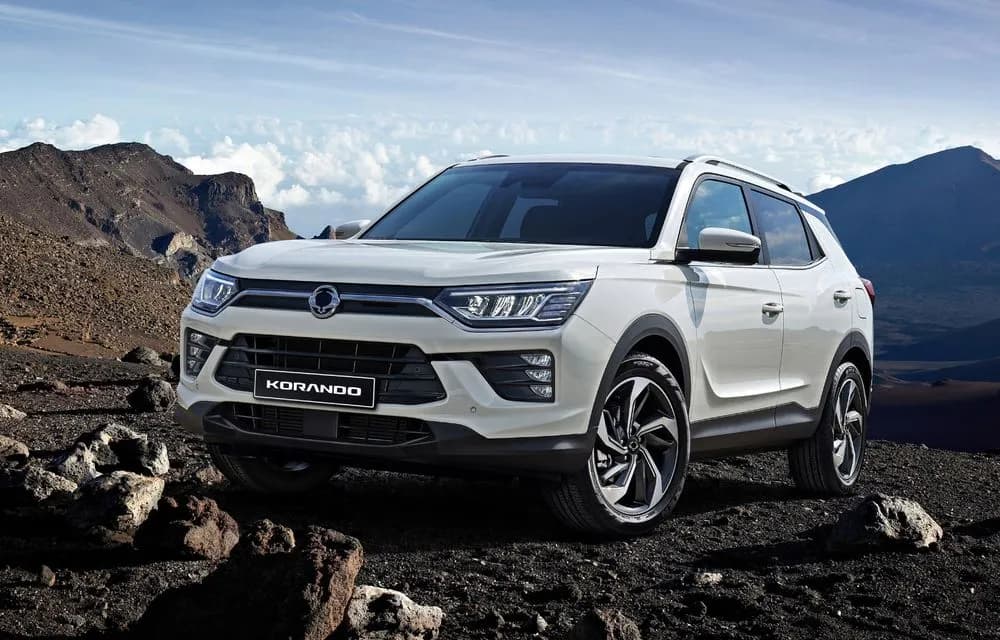
SsangYong Korando is a pleasant-looking SUV that can feel generic at times. It neither shouts for attention nor offends. Compared with the old Actyon, the new Korando is handsome. The front is dominated by a chrome grille lower down and sizeable headlamps with an interesting LED signature.
In profile, creases along the doors and above the rear wing add edge. The third pillar leans forward without the coupe look common on many rivals. Wheel size is sensible—proportions were not masked with oversized rims.
Inside, a light colour scheme lifts the cabin. Very soft leather-trimmed seats, fine for this price level, add comfort. The interior feels airy, and although plastic dominates, it is pleasant to the touch.
The dashboard layout is tidy and ergonomic: the media screen sits centrally, with physical climate buttons directly below. The 10.25-inch display is touch-operated and the menus stay intuitive.
Korando carries the expected driver aids—hill-descent control, blind-spot monitoring, adaptive cruise and lateral parking assist, among others. It feels as modern as its rivals.
On price, Korando is among the most accessible offers. A base price of €21,900 puts it close to Dacia Duster and well under many competitors. Even in top trim at €26,890, it stays competitive.
Under the bonnet is a 1.5-litre T-GDI turbo petrol producing 163 hp and 280 Nm. That output sits mid-pack between roughly 150 hp from German rivals and 170–180 hp from some others.
Dynamically, Korando is not the liveliest SUV in the class; the engine is tuned for relaxed cruising rather than high-rev bursts. It can feel sluggish when asked for more. The six-speed Aisin automatic, though, is near-perfect—smooth, without jerk or obvious shift shock, relaxed yet solid.
Well-judged suspension made the car feel composed, and very light steering suits urban traffic more than fast mountain roads. Korando targets young families—school runs in the week, a chalet trip at the weekend.
I was sceptical at first, but the Korando proved genuinely competitive. It deserves a place on any compact-SUV shortlist and at least a test drive. In my view, that is partly why there are not more Korandos on the road: the SsangYong name still carries older associations. This year confirmed that future generations, likely electric, will be built under the KG Mobility identity—so expect more Korean SUVs, not always under the badge we knew.