What is the new Jeep Compass Hybrid, exactly?
Before design or on-road behaviour, it helps to clarify what e-Hybrid means on the new Compass.
This is not a plug-in hybrid you charge from the wall, nor a full hybrid in the same sense as a Toyota RAV4, Hyundai Tucson Hybrid or Kia Sportage Hybrid. Jeep Compass e-Hybrid uses a 1.2-litre three-cylinder turbo petrol engine assisted by a 48 V electric system.
The electric motor is integrated into the dual-clutch automatic transmission and can move the car on its own over very short distances — mainly when pulling away, during manoeuvres and at low speed. The battery, with a capacity of about 0.9 kWh, recharges automatically through energy recovery. There is no cable and no charging stop to plan.
In practice it sits between a conventional mild hybrid and a full hybrid. It helps in town, cuts periods when the petrol engine runs for no reason and makes getaways smoother, but you should not expect to cross a city entirely on electric power.
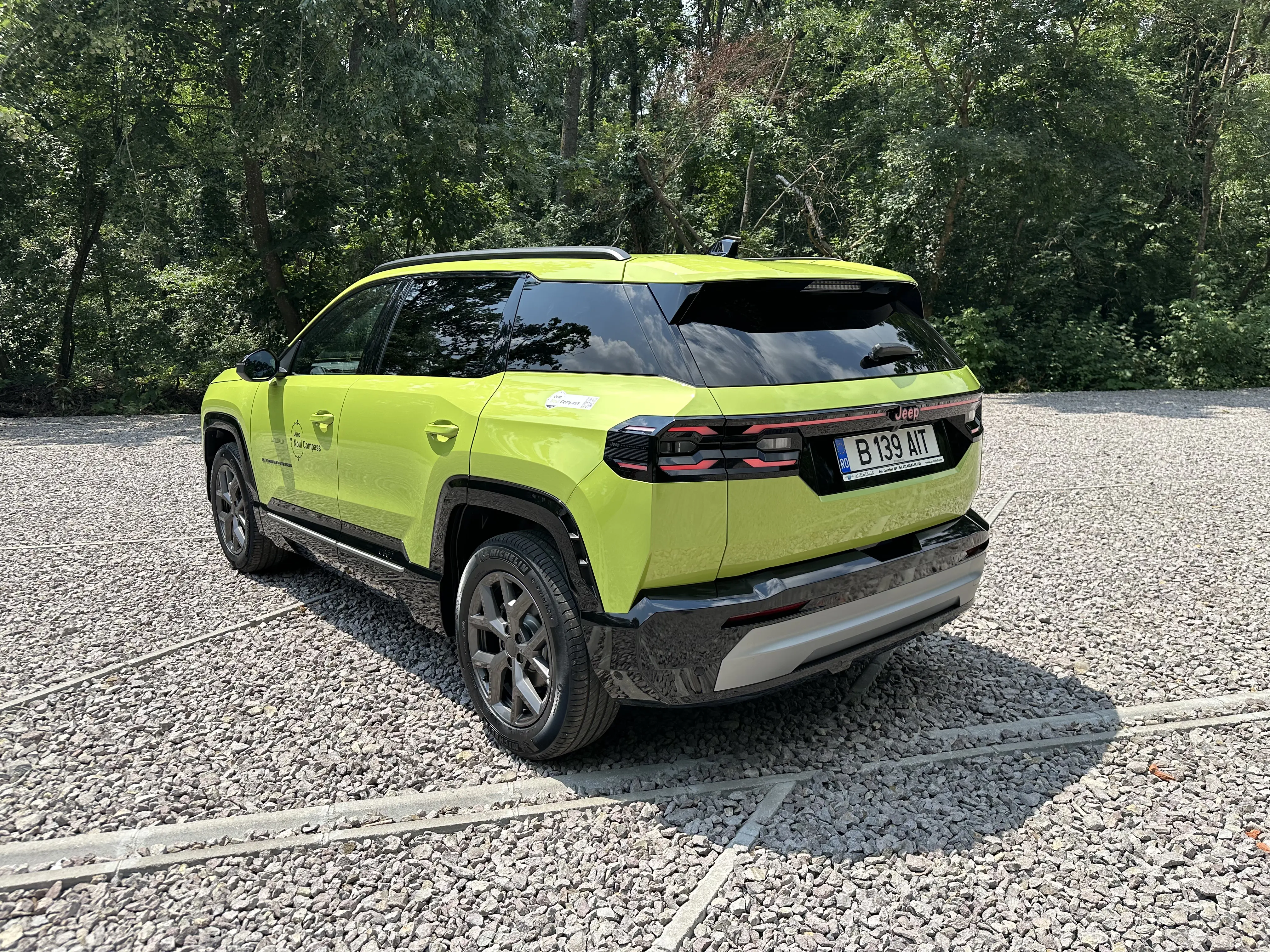
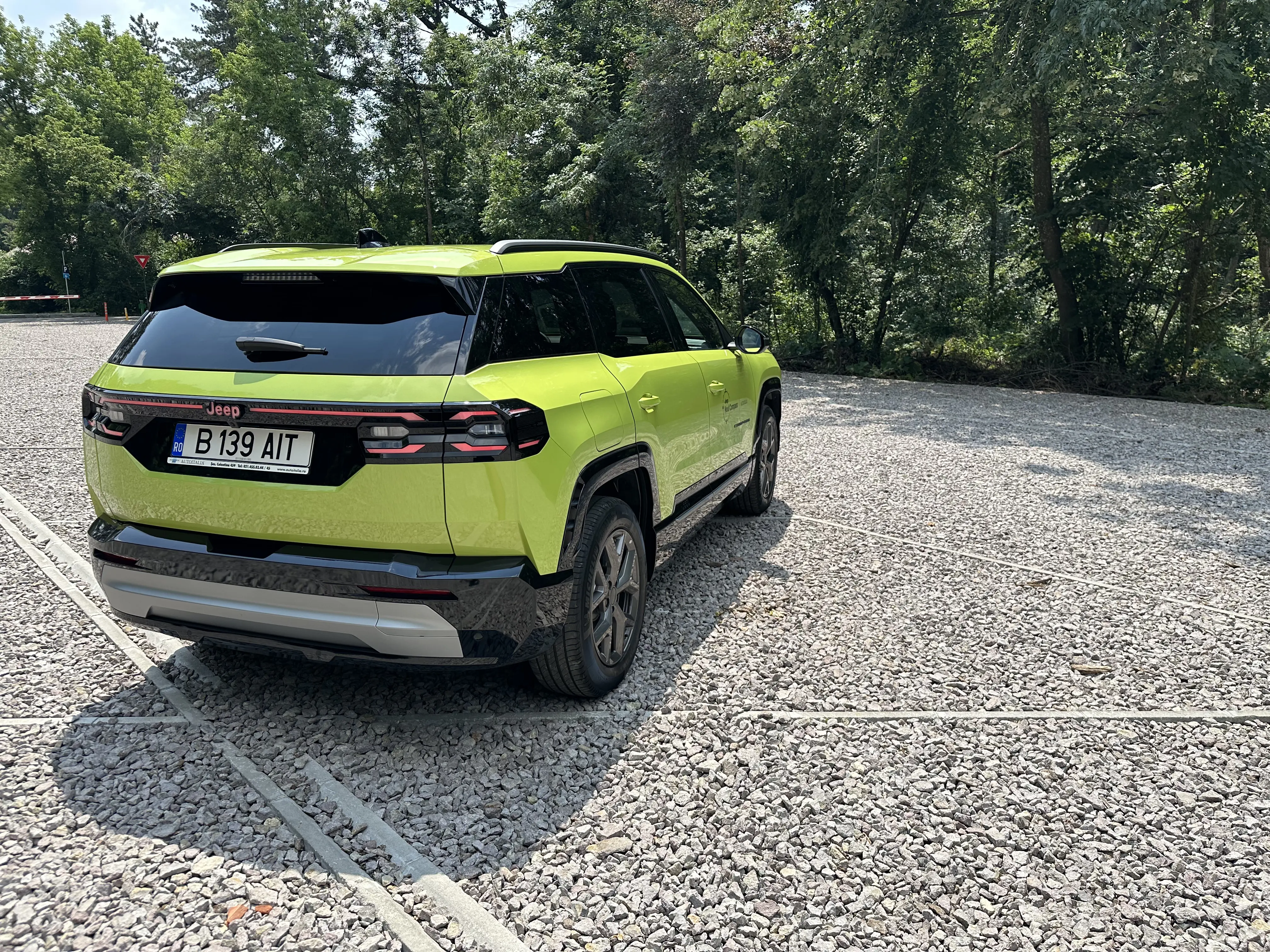
Exterior design: it looks like a real Jeep
Design is one of the strongest arguments for the new Compass.
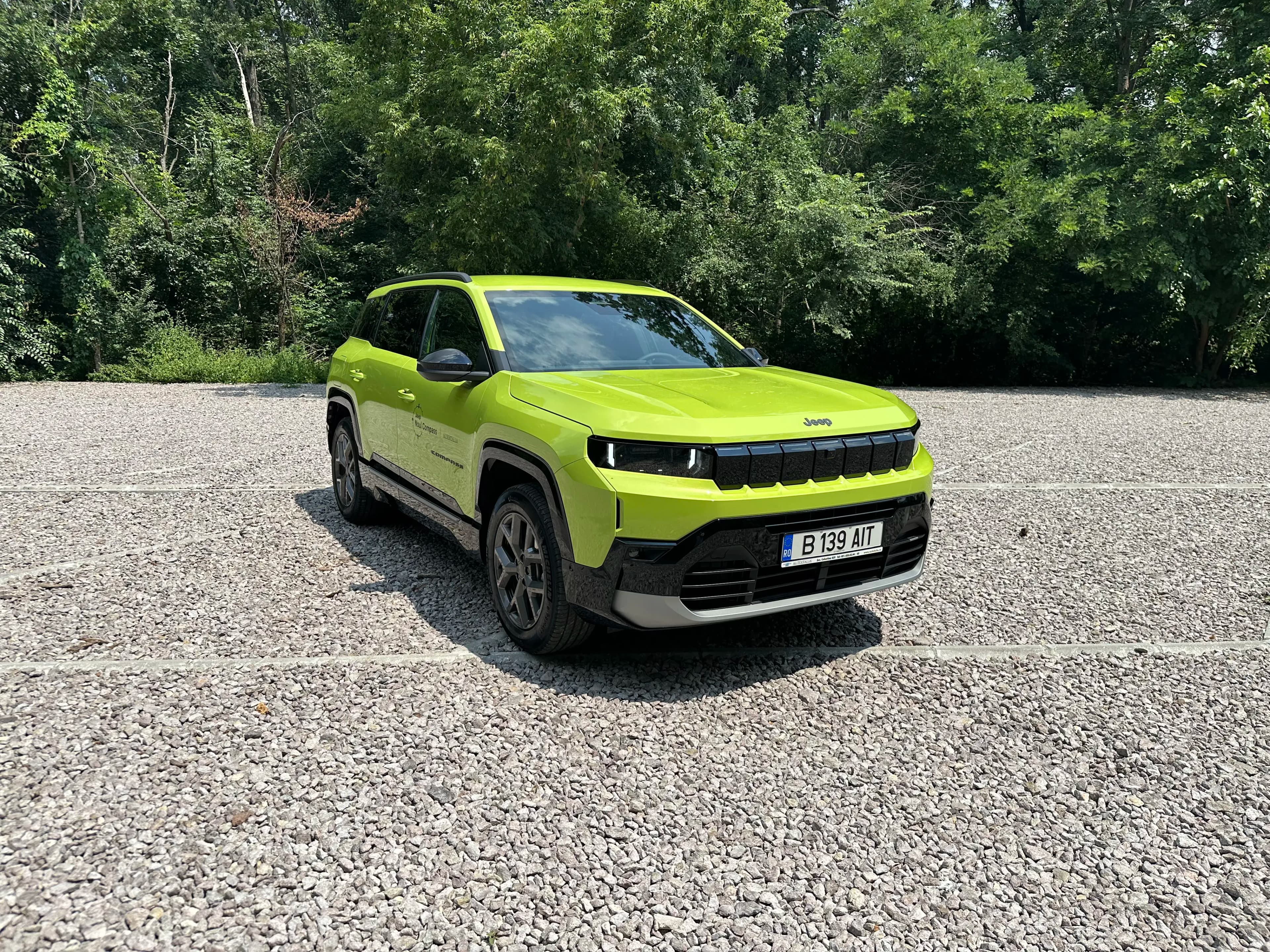
Although it uses Stellantis STLA Medium architecture shared with other models, Jeep’s designers have given it enough personality. The upright front, trapezoidal wheel arches and reinterpreted seven-slot grille make it instantly recognisable.
It is robust without being loud. The Compass does not pretend to be a raised coupé and does not sacrifice interior space for a dramatic roofline. Its relatively square shape helps both visually and practically.
At 4.55 metres long, the new generation is about 15 cm longer than its predecessor. The Compass has become a family SUV in the proper sense, close in size to the Kia Sportage and larger than the Nissan Qashqai.
The exterior cladding is not purely decorative. Jeep quotes ground clearance of about 200 mm and the ability to ford water up to 470 mm deep. For a front-drive SUV those are respectable figures, even if they do not turn it into a miniature Wrangler.
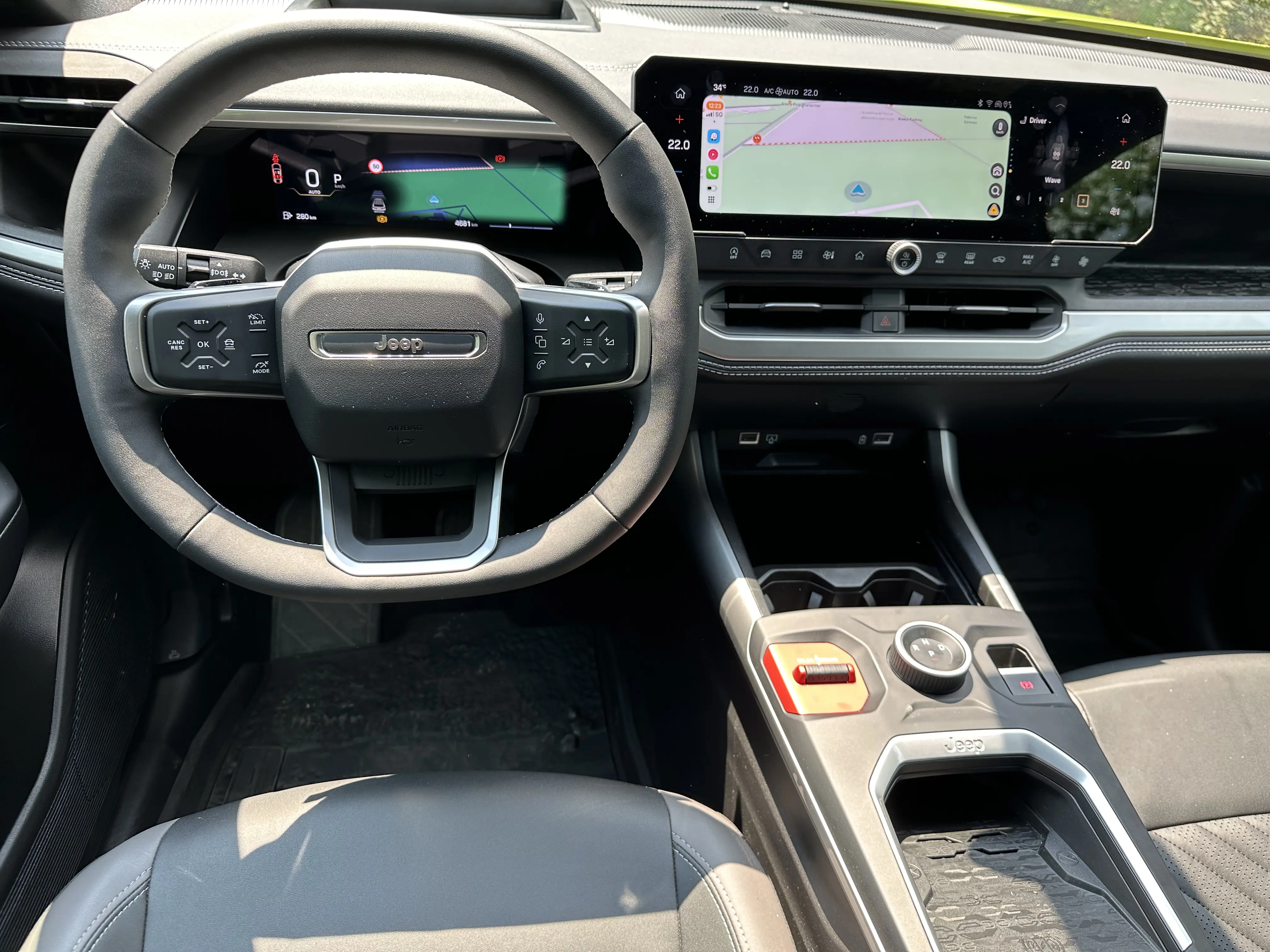
Interior: lots of space and a huge screen
The size increase is felt most in the cabin. The new Jeep Compass offers more room for rear passengers, and the wheelbase of almost 2.8 metres lets adults travel on the bench without compromise.
The driving position is high and the straight body sides help visibility. The seats are comfortable and suited to long journeys without squeezing you at the hips.
The dashboard is dominated by a 16-inch central screen. In front of the driver sits a 10.25-inch digital instrument cluster. The interface looks modern and wireless Apple CarPlay and Android Auto remove some reasons to dig through native menus.
The central screen impresses by size, but not every function is equally easy to find. Some menus need more attention than they should and system response is not always instant. Fortunately Jeep has not removed all important physical controls.
Material quality is good where you touch often, but the Compass is not trying to be a premium SUV. Lower in the cabin you find hard, durable plastics that are easy to clean. In a family car that approach can be more useful than fragile show surfaces.
There are roughly 34 litres of storage distributed through the cabin. The centre console has generous compartments and the front passenger gets a practical shelf in the dashboard.
550-litre boot
Boot capacity is 550 litres, 45 litres more than the previous generation. That is enough for a family’s luggage and competitive in the class.
The rear bench folds in a 40:20:40 split, a more flexible solution than a classic 60:40. You can carry long items without giving up both outer seats entirely.
The Kia Sportage can offer a slightly larger boot in some configurations and the new Citroën C5 Aircross pushes practicality even harder. Even so, the Compass does not lose important points here. The boot shape is regular and the loading sill is reasonable for an SUV.
How does the Jeep Compass e-Hybrid drive?
At the wheel the new Compass is not trying to be sporty. Steering is light, controls do not demand effort and the car feels natural in town. Dimensions have grown, but the high seating position and assistance systems keep manoeuvres relatively simple.
Suspension prioritises comfort. It absorbs long undulations well and isolates the cabin decently on imperfect asphalt. Short potholes and sharp edges come through more clearly, especially on the large wheels available on upper trims.
In corners the body rolls, but predictably. The Compass does not have the precision of a Ford Kuga and does not imitate a sporty hatchback. Grip is adequate and responses are progressive, which matters more in a family SUV.
At motorway speeds stability is good and wind noise stays reasonable. The three-cylinder engine is discreet enough at a steady cruise but becomes more vocal when you ask for full power.
Are 145 hp enough?
Total output of 145 hp sounds adequate for a compact SUV, but mass and size mean performance is sufficient rather than exciting.
0–100 km/h takes 10.3 seconds. In town the electric motor masks some of the petrol engine’s hesitation and gives a pleasant response when pulling away. The Compass feels relaxed in traffic and lively enough up to medium speeds.
For overtaking or on mountain roads you need a firmer push on the throttle. The automatic downshifts, the engine climbs in revs and the characteristic three-cylinder note enters the cabin. The car gets the job done but does not offer generous power reserves.
The dual-clutch transmission has six speeds and integrates the electric motor. For most of the time it works smoothly, yet repeated transitions between electric running, the petrol engine and energy recovery can produce small hesitations at low speed.
How much does the Jeep Compass e-Hybrid use?
Official consumption, depending on configuration, sits around 5.7–5.9 l/100 km.
In real conditions, about 6.0–6.5 l/100 km on a mixed route is realistic with normal driving. In town the electric system can help more, especially in flowing traffic with frequent decelerations and gentle getaways. On the motorway the hybrid advantage fades and consumption depends mainly on the petrol engine.
An independent test by Auto Express returned the equivalent of about 6.3 l/100 km. That is decent for the size of the car but not a class benchmark.
The Nissan Qashqai e-Power and full-hybrid versions of the Kia Sportage or Hyundai Tucson can be more efficient in town. The Compass advantage is simplicity: no charging, no routine change and an automatic gearbox as standard.
Is it a real Jeep without all-wheel drive?
Here lies the biggest image compromise. The 145 hp e-Hybrid version is front-wheel drive only.
It gets Selec-Terrain with modes for snow and low-grip surfaces. That adjusts throttle response and traction control intervention but cannot replace all-wheel drive.
For light forest tracks, moderate snow, kerbs or muddy car parks, ground clearance and electronics are enough. For serious off-road or buyers who choose Jeep mainly for 4x4, this version is not the right pick.
Compass e-Hybrid is, above all, a family SUV with Jeep design. Its off-asphalt ability beats a very low crossover but is not the main reason to buy it.
Equipment and safety
Even Altitude trim offers a solid equipment base. Depending on configuration, the list can include:
- 16-inch multimedia screen
- 10.25-inch digital instruments
- Wireless Apple CarPlay and Android Auto
- Two-zone automatic climate control
- Front and rear parking sensors
- Reversing camera
- Adaptive cruise control
- Lane keeping assistance
- Autonomous emergency braking
- Keyless entry and start
- Wireless phone charging
- LED matrix headlights
- Heated seats and steering wheel
- Power tailgate
- 360-degree camera
- Level 2 assisted driving
First Edition looks better and adds comfort items, but the €3,750 gap over Altitude needs careful analysis. If appearance and premium equipment are not priorities, Altitude looks like the more balanced choice.
Jeep Compass Hybrid prices in Romania
At the time of writing, hybrid range list prices are:
| Version | Price incl. VAT |
|---|---|
| Jeep Compass 1.2 e-Hybrid 145 hp Altitude | €34,490 |
| Jeep Compass 1.2 e-Hybrid 145 hp First Edition | €38,240 |
At €34,490, Compass Altitude enters the segment with a competitive price. First Edition passes €38,000, a zone where very well equipped alternatives appear, sometimes with more powerful full-hybrid powertrains.
For comparison, Romania also offers the 225 hp plug-in hybrid from about €44,500 and the 213 hp electric version from about €48,000.
Who does the new Jeep Compass compete with?
Jeep Compass e-Hybrid vs Nissan Qashqai e-Power
The Nissan Qashqai e-Power is more refined in town and can achieve lower consumption. Its system feels closer to an electric car. The Compass hits back with design, boot space and an attractive starting price.
Jeep Compass e-Hybrid vs Kia Sportage Hybrid
The Kia Sportage Hybrid is more powerful and has a more efficient full-hybrid system. It also offers a very strong warranty. The Compass has a tougher image and a cabin with more personality but does not match the Korean powertrain on performance.
Jeep Compass e-Hybrid vs Hyundai Tucson Hybrid
The Tucson is one of the most complete choices in the class: comfortable, spacious and available with more powerful hybrid engines. The Compass is simpler and slower but can be more appealing for buyers who want Jeep-specific design.
Jeep Compass e-Hybrid vs Volkswagen Tiguan
The Tiguan offers a more refined experience and a wide engine range. Its interior can seem more sophisticated, but price rises quickly with options. Compass Altitude can represent a better deal if you want generous equipment without entering the premium zone.
Jeep Compass e-Hybrid vs Peugeot 3008 and Citroën C5 Aircross
All three use the same Stellantis platform and engine family. The Peugeot 3008 emphasises interior design and a more futuristic experience; the Citroën C5 Aircross prioritises comfort and practicality. Jeep Compass stands out through its robust image, driving position and details inspired by the brand’s off-road models.
Pros and cons
What we liked
- Strong, easily recognised exterior design
- Much roomier interior than the previous generation
- Generous 550-litre boot
- Good driving position
- Adequate comfort on long journeys
- Large central screen and modern equipment
- Competitive price for Altitude
- Electric motor useful in urban traffic
- Good ground clearance for a front-drive SUV
What we did not like
- Performance only adequate
- Three-cylinder engine becomes vocal under load
- Not a true full hybrid
- e-Hybrid version has no all-wheel drive
- Some materials are hard
- Multimedia interface can be complicated
- Full-hybrid rivals can use less fuel
- First Edition enters a very competitive price band
Verdict
The new Jeep Compass is the most mature and convincing Compass yet. It looks good, offers plenty of space, has a family-suitable boot and enough technology to stay relevant against very strong rivals.
The 145 hp e-Hybrid version suits buyers who want an automatic, lightly electrified car without plug-in charging worries. In town it is quiet when pulling away and efficient enough; on long journeys it offers comfort and stability.
Buy it with the right expectations. It is not quick, not a very efficient full hybrid and, above all, not a 4x4 Jeep. It is a European family SUV dressed in very successful Jeep styling.
Our pick would be Compass e-Hybrid Altitude from €34,490. It keeps the car’s essential advantages at a price that is easier to justify. First Edition looks and feels more special, but at €38,240 it must be compared carefully with hybrid versions of the Kia Sportage, Hyundai Tucson and Nissan Qashqai.
Rating: 8/10
Frequently asked questions about the Jeep Compass e-Hybrid
Does the Jeep Compass e-Hybrid need plugging in?
No. The 48 V system battery recharges automatically through energy recovery when decelerating and braking.
Can the Jeep Compass e-Hybrid drive electrically?
Yes, but only over short distances and in certain conditions — mainly when pulling away, during manoeuvres and at low speed. It does not offer the electric range of a plug-in hybrid.
Does the new Jeep Compass Hybrid have all-wheel drive?
No. The 145 hp e-Hybrid version is front-wheel drive. Selec-Terrain optimises response on difficult surfaces but does not replace 4x4.
How much does the Jeep Compass e-Hybrid consume?
Official consumption is about 5.7–5.9 l/100 km. In mixed use, a realistic figure is around 6.0–6.5 l/100 km depending on traffic, temperature and driving style.
How much does the new Jeep Compass Hybrid cost in Romania?
Jeep Compass e-Hybrid Altitude starts at €34,490 incl. VAT and First Edition at €38,240 incl. VAT.
How large is the boot?
The boot holds 550 litres and the rear bench folds in a 40:20:40 split.
Is the Jeep Compass e-Hybrid worth buying?
Yes, if you want a spacious family SUV with distinctive design, automatic transmission and a hybrid system that needs no charging. If minimum urban consumption or all-wheel drive is the priority, better alternatives exist.
Jeep Compass e-Hybrid 2026 technical specification
| Specification | Jeep Compass e-Hybrid |
|---|---|
| Powertrain type | Petrol mild hybrid, 48 V |
| Petrol engine | 1.2-litre turbo, 3 cylinders |
| Displacement | 1,199 cc |
| Petrol engine power | 136 hp |
| Petrol engine torque | 230 Nm |
| Electric motor power | 28 hp |
| Total system power | 145 hp |
| Battery capacity | About 0.9 kWh |
| Transmission | 6-speed DCT automatic |
| Drive | Front |
| 0–100 km/h | 10.3 seconds |
| Top speed | 188 km/h |
| Declared combined consumption | About 5.7–5.9 l/100 km |
| Length | 4,552 mm |
| Width | 1,928 mm |
| Height | 1,675 mm |
| Wheelbase | 2,795 mm |
| Ground clearance | About 200 mm |
| Water fording depth | Up to 470 mm |
| Boot volume | 550 litres |
| Seats | 5 |
| Altitude price in Romania | From €34,490 incl. VAT |
| First Edition price in Romania | From €38,240 incl. VAT |
Consumption figures can vary with equipment, wheel size, traffic, temperature and driving style. Prices are those available in Romania at the time of writing and may change through commercial campaigns.