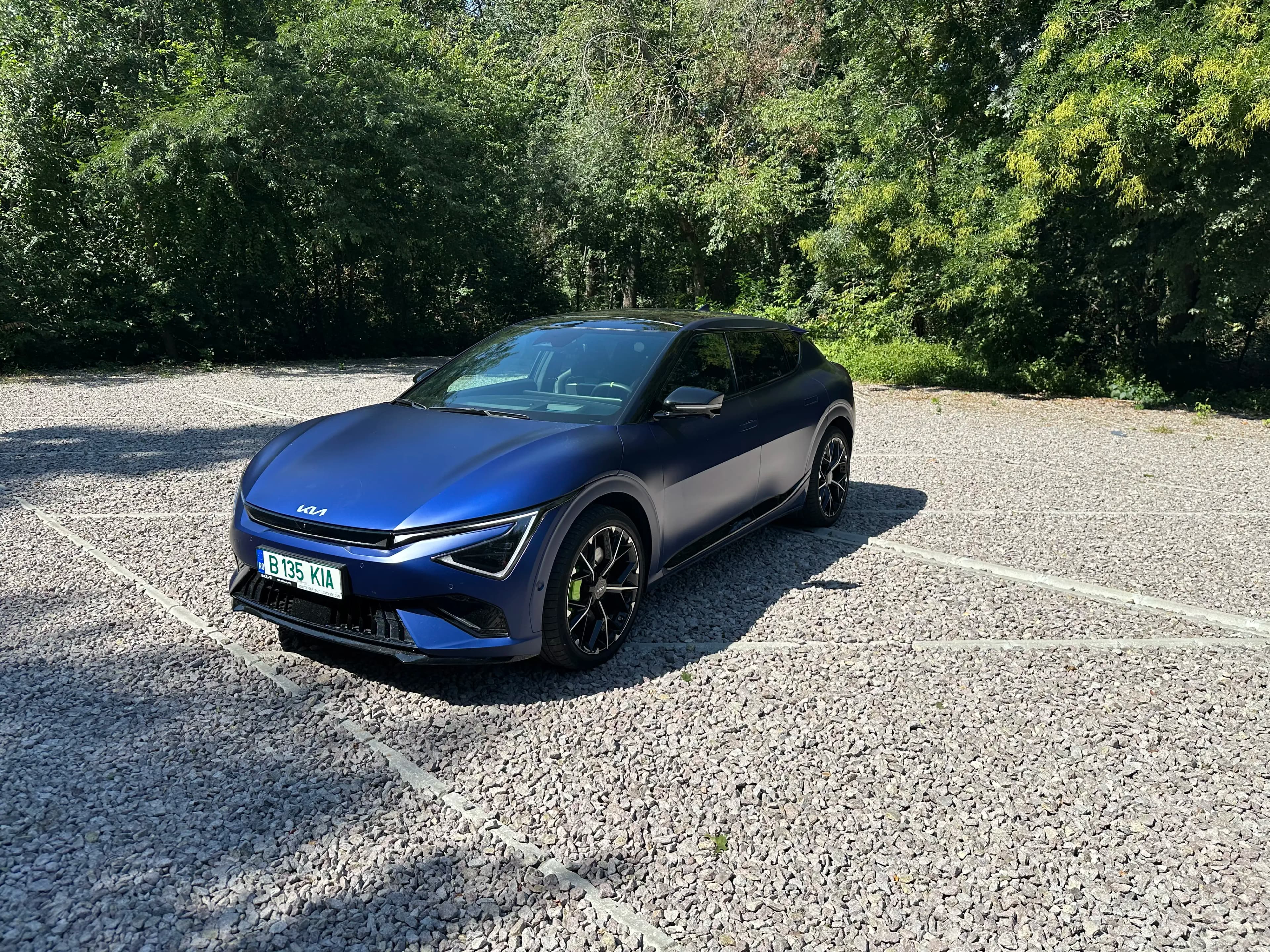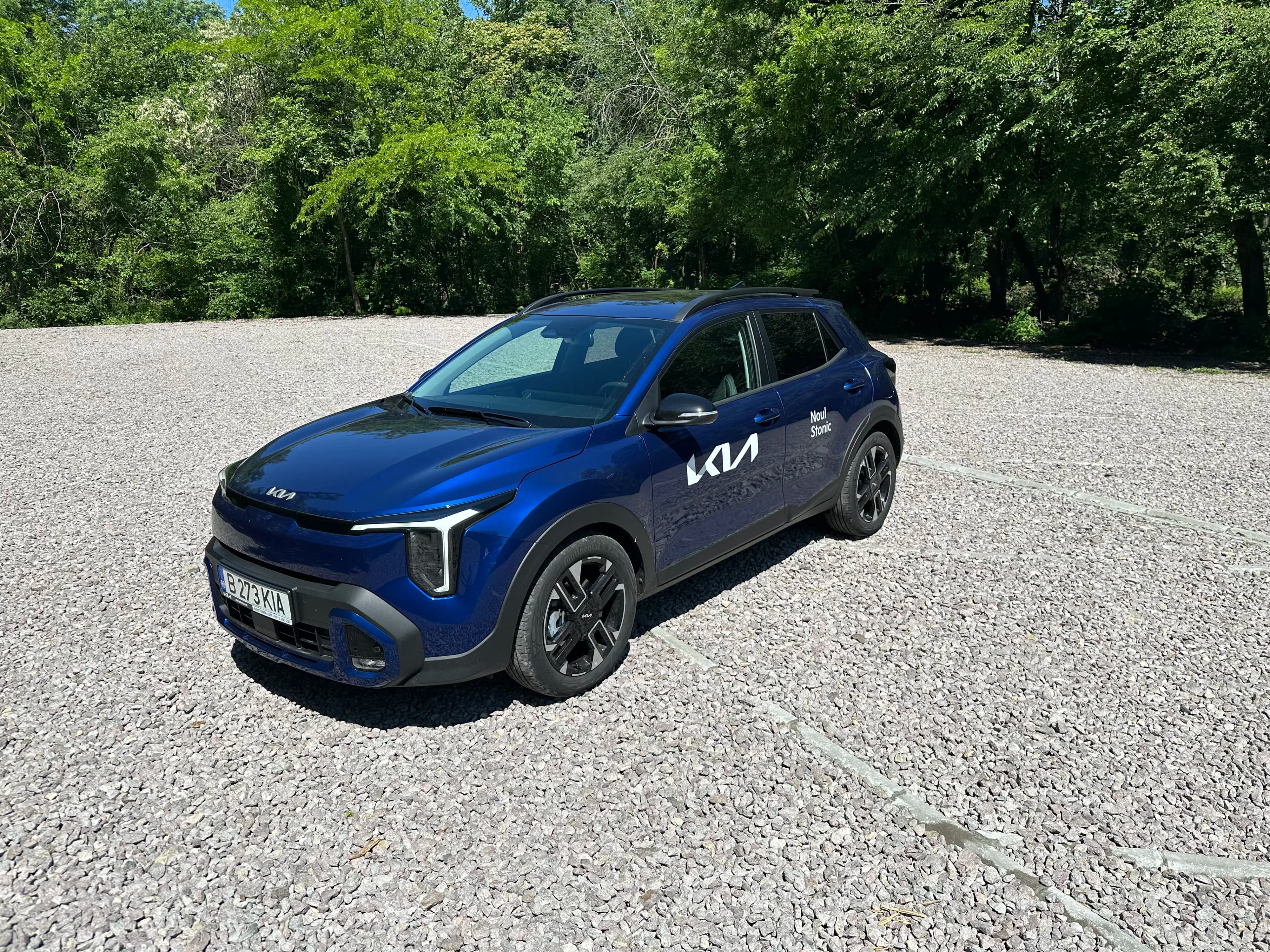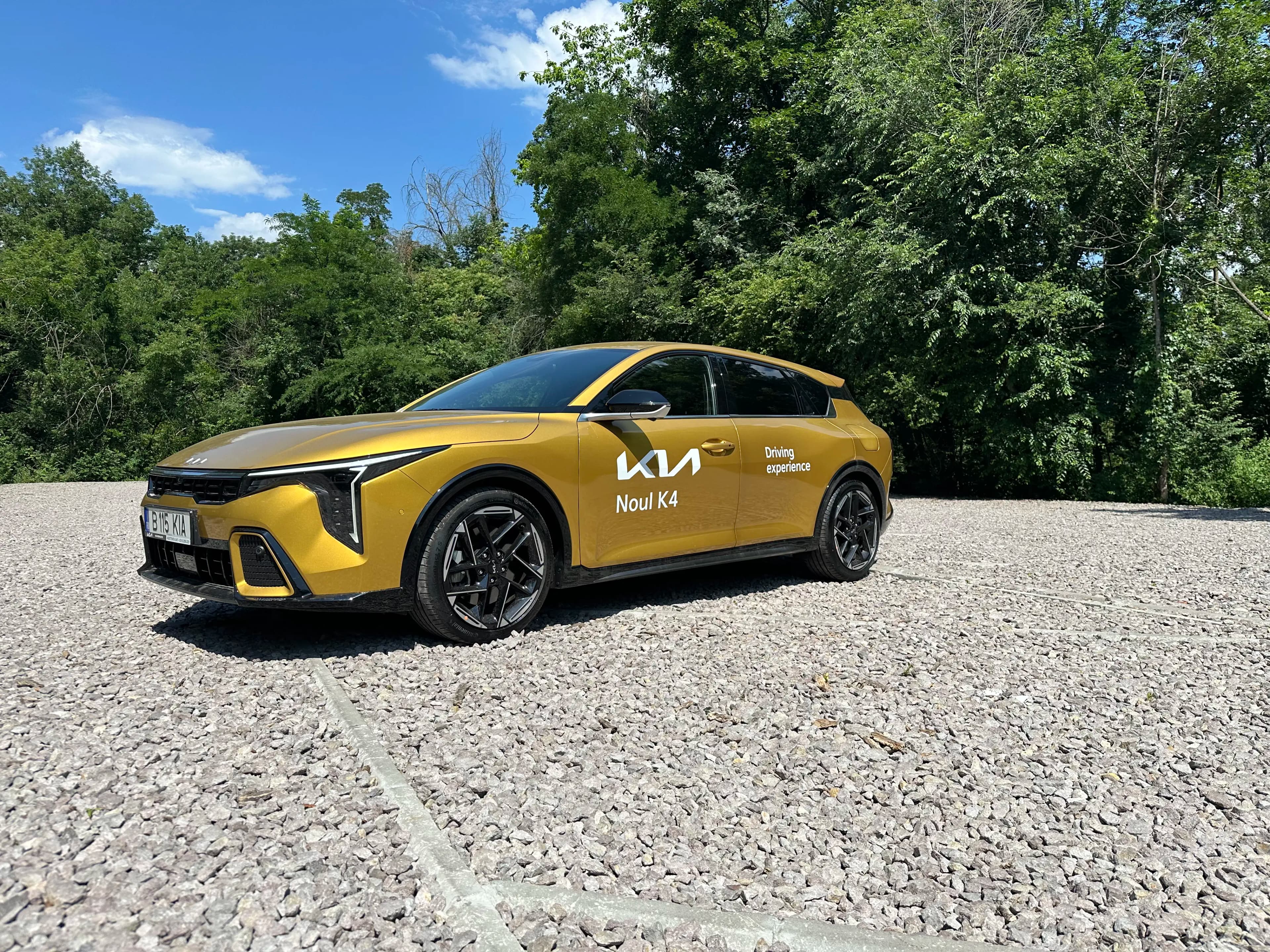
At a time when almost every new model tries to look like an SUV, Kia is launching a low, long and surprisingly spacious car in Europe. The new Kia K4 is not a simple continuation of the old Ceed. It is larger, more sophisticated, more tech-heavy and, in 180 hp 1.6 T-GDI form, fast enough to make a family compact genuinely pleasant to drive.
We tested the most interesting configuration on offer: the 1.6-litre turbo, 180 hp, front-wheel drive and seven-speed dual-clutch automatic. On paper the combination promises performance close to a hot hatch from a few years ago, but the K4 is not trying to be a sports car. Its priorities are comfort, space and technology.
Kia K4 is not just a Ceed with another name
It is easy to assume the new Kia K4 is the direct replacement for the Ceed. In reality the picture is more complicated. The K4 occupies the same market space, but it is a global model built in Mexico and developed with different priorities from the European compact we knew.
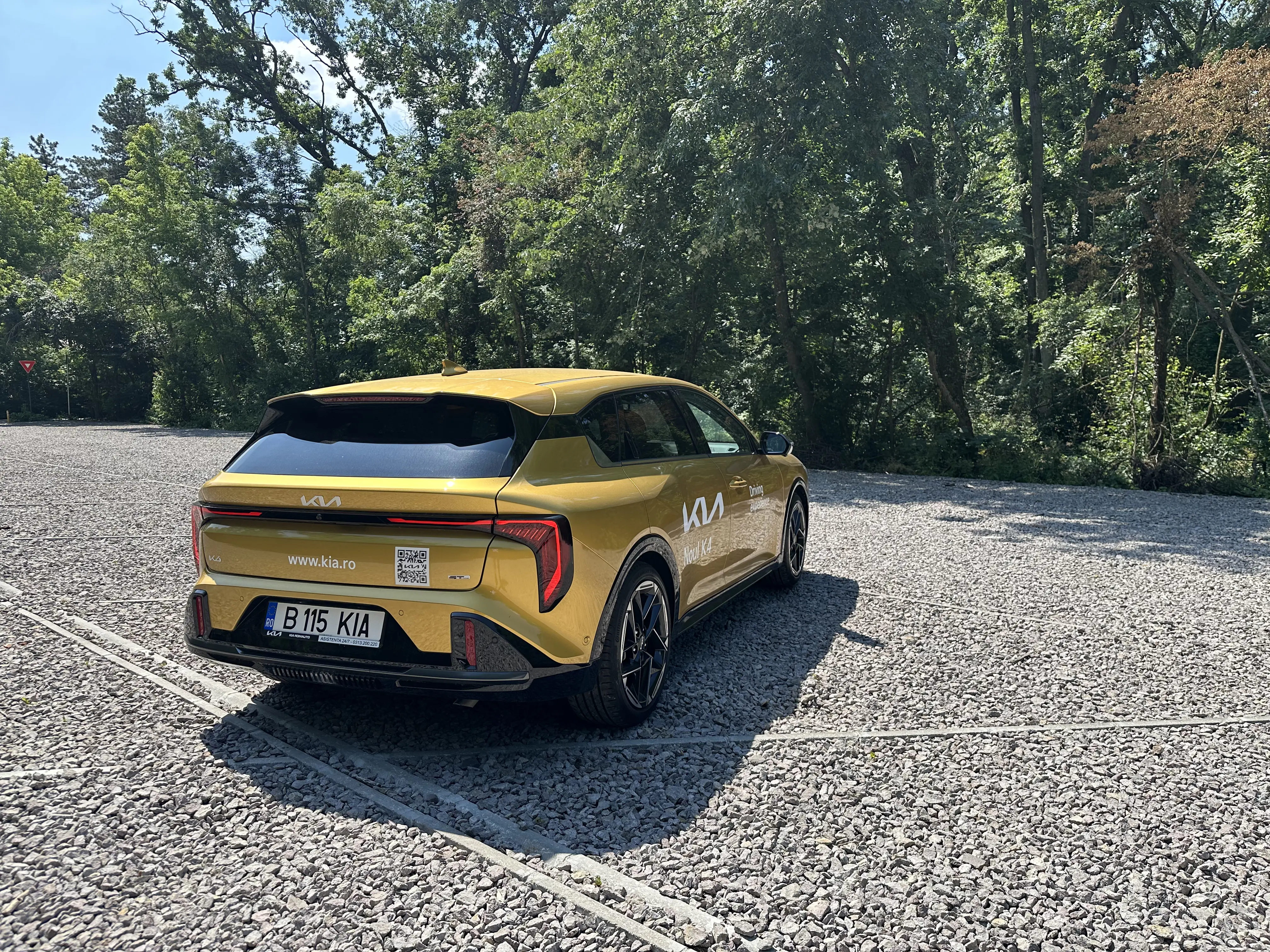
The difference shows first in size. The Kia K4 measures 4,440 mm long, 1,850 mm wide and 1,435 mm tall, with a 2,720 mm wheelbase. It is longer and wider than a Volkswagen Golf and close in footprint to models on the border between the compact and mid-size segments.
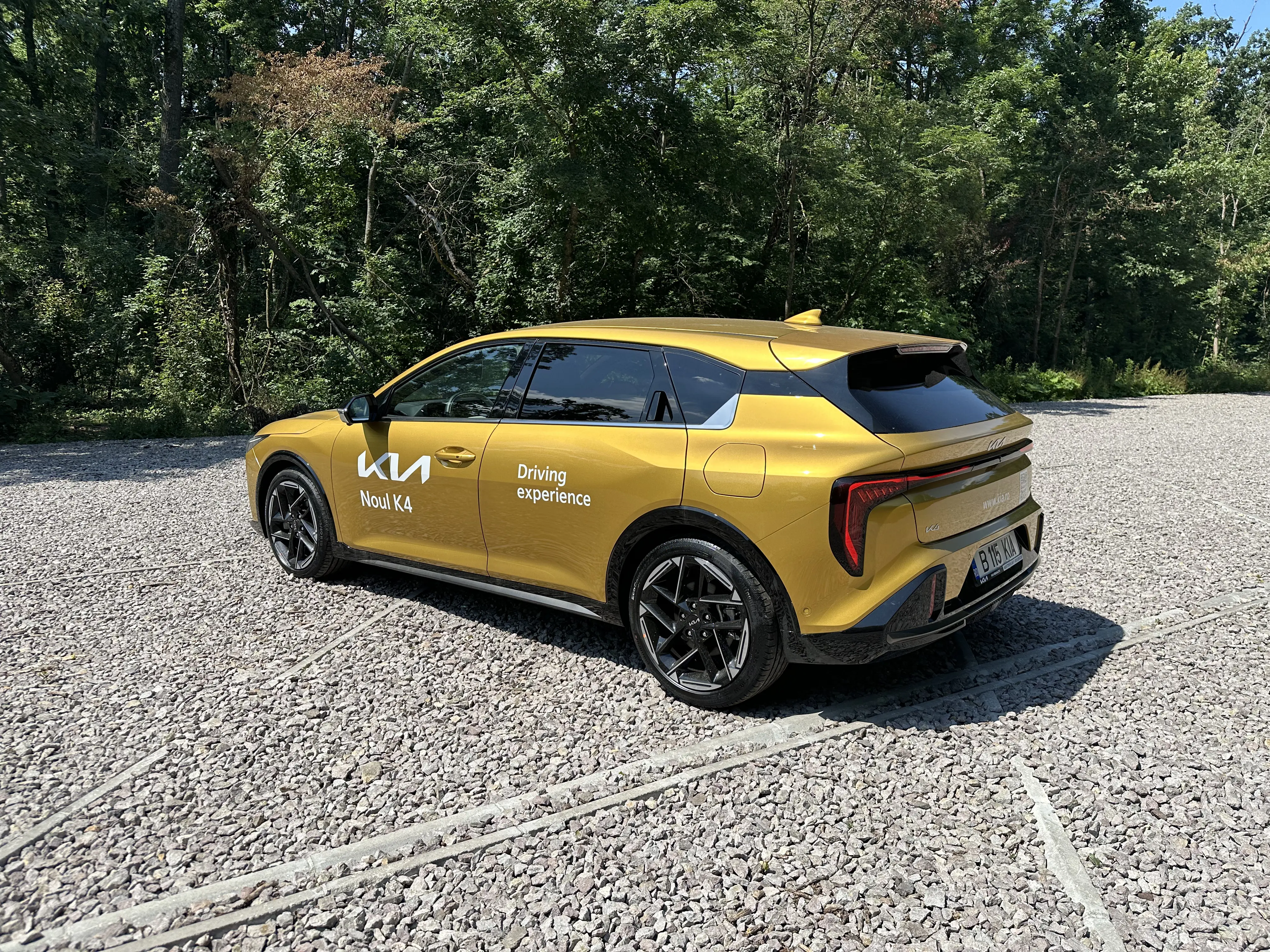
At first glance the proportions can be slightly confusing. The front is low and wide, the roofline drops towards the rear, and the vertical taillights and graphics inspired by Kia’s electric models give it a distinct appearance. From some angles it reads as a hatchback; from others it resembles a shooting brake.
The design follows Kia’s “Opposites United” philosophy used on recent models. It will not suit everyone, but it is far from anonymous. In a car park full of grey SUVs, the K4 stands a good chance of being noticed.
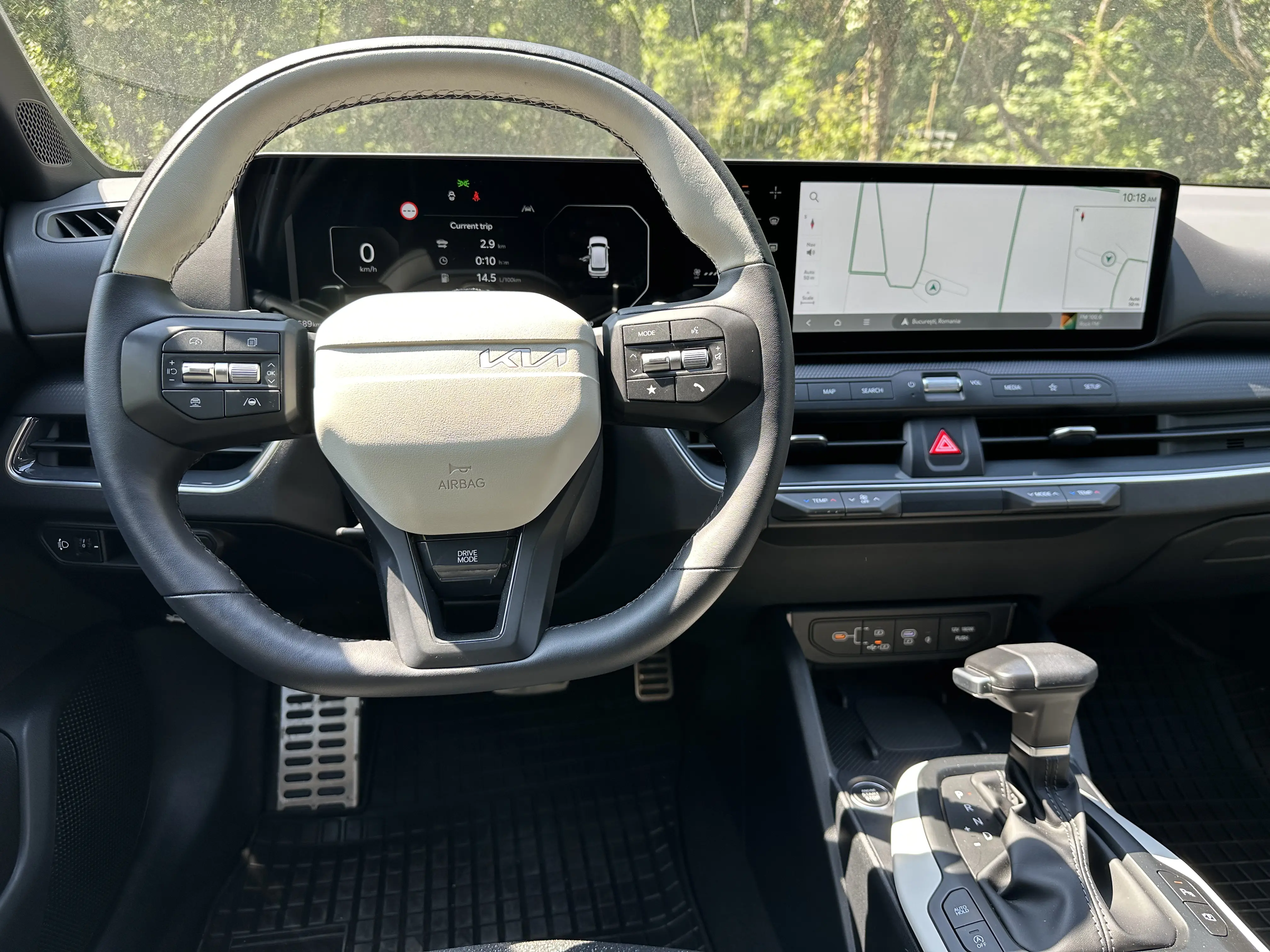
Modern interior, but not button-free
The cabin is one of the car’s strongest points. The dashboard combines a 12.3-inch digital instrument cluster, a 12.3-inch central screen and a separate 5.3-inch touch zone for climate control.
The presentation recalls Kia’s more expensive electric models, but ergonomics are better than in many modern cars. Kia has not removed every physical control, so frequently used functions remain reachable without deep menu diving.
The infotainment system is responsive, the graphics are clear and wireless Apple CarPlay and Android Auto are available. Depending on trim, the K4 can add wireless phone charging, a power driver’s seat, a surround-view camera, a glass roof, digital key and advanced driver aids.
Perceived quality is good on visible and touched surfaces. Materials do not turn the K4 into a premium car, but assembly feels solid, controls have a pleasant action and the interior design looks more mature than the old Ceed. International tests of the model have also highlighted cabin quality, a good driving position and an intuitive interface.
There are still some hard plastics lower on the dashboard and doors, but nothing unusual for the class.
Rear space is a main selling point
The 2.72-metre wheelbase pays off as soon as you open the rear doors. Knee room is very good, even for tall adults, and the wide door openings make fitting a child seat easier.
The floor is not completely flat and the middle passenger must accept the transmission tunnel and the gap between the front seats. For two people or a family with two children, however, the bench is among the roomiest in the segment.
Head room is less impressive than leg room because of the dropping roofline. Most adults will be fine, except the very tall in cars with a panoramic roof.
Boot volume on 1.6 T-GDI versions is 438 litres, rising to 1,217 litres with the rear seats folded. That is a strong figure for a hatchback, even if the Skoda Octavia remains the absolute benchmark here. Mild-hybrid 1.0-litre versions lose space because of battery packaging and offer a smaller volume.
The 180 hp engine is the right match for the K4
The range available in Romania starts with the 115 hp 1.0 T-GDI, including mild-hybrid and 7DCT automatic options. Above that sits the 1.6 T-GDI, with 150 or 180 hp and the seven-speed automatic.
The 180 hp version fits the car’s size and character best. The 1,598 cc turbo delivers 180 hp and 265 Nm, and 0–100 km/h takes 8.4 seconds. Claimed top speed is 210 km/h.
It is not explosive, but there is enough reserve for overtaking and relaxed motorway entries. The engine pulls convincingly from around 1,500 rpm and stays elastic in everyday rev ranges.
The step up from the base engine is not only about the performance figures. The 1.6 suits a wide car close to 1.5 tonnes, giving calmer responses and less need to stay on the throttle.
In town progress is smooth enough for daily use. On a national road the 1.6 shows its real advantage: you can overtake without planning every manoeuvre far ahead.
The 7DCT is quick on the move but can hesitate at low speed
The seven-speed dual-clutch shifts quickly once the car is rolling. Under hard acceleration it downshifts and keeps the engine in its power band, and paddles allow extra control.
In urban traffic the behaviour is not always as convincing. At slow getaways, parking manoeuvres or abrupt changes of pace the gearbox can show brief hesitation. That trait is common on many dual-clutch transmissions and has been noted in international tests of the model.
Sport mode sharpens throttle response and holds lower gears longer, but does not fundamentally change the character. The Kia K4 remains a comfort-oriented compact, not a car built to attack corners.
How does the new Kia K4 drive?
The driving position is low compared with a crossover, but not excessively sporty. The seats offer good support, the steering wheel has plenty of adjustment and forward visibility is adequate.
Steering is light in town and precise at higher speeds, but offers little information about front-axle grip. This is not a car that encourages you to seek out every twisty road, but it tracks corners accurately and stays predictable.
The 180 hp version uses a multi-link rear axle, which helps stability and gives a more mature feel over repeated bumps. Body control is good and the 1.85-metre width adds a sense of stability closer to a class above.
The suspension filters normal bumps and motorway joints well. Short potholes and sharp edges can be felt in the cabin, especially on larger wheels, but the K4 does not become tiring.
At motorway speeds the car feels settled and secure. Wind noise is well controlled and the engine is not intrusive when the gearbox selects seventh. Overall refinement is one of the model’s main arguments.
Real-world fuel use for the Kia K4 1.6 T-GDI 180 hp
Official combined consumption for the 180 hp version is about 6.9 l/100 km and the tank holds 47 litres. In favourable conditions range can exceed 600 km.
In real use, drivers should expect figures close to:
- 8–10 l/100 km in heavy urban traffic;
- 5.5–6.5 l/100 km on national roads;
- 6.5–7.5 l/100 km on the motorway;
- about 7–8 l/100 km in a realistic mixed pattern.
Results depend heavily on traffic and driving style. The engine can be economical when cruising steadily, but 180 hp and a dual-clutch box can encourage you to use the performance more often.
Safety and assistance systems
The Kia K4 can be equipped with a generous safety package: autonomous emergency braking, blind-spot monitoring, lane keeping, cross-traffic alert and adaptive cruise control.
On upper trims, Blind-Spot View Monitor can show the side camera image in the digital cluster when the indicator is on. It is a feature borrowed from more expensive Kia models and is very useful in urban traffic.
Lane-keeping interventions can sometimes feel insistent, but physical controls and shortcuts in the cabin make adjusting them easier than in cars that hide every setting in the screen.
How much does the Kia K4 cost in Romania?
At the beginning of August 2026, list prices in Romania start at €30,400 for the 1.0 T-GDI Urban with manual gearbox. Through the importer promotion, valid on the official page until 31 August 2026, that version drops to €27,400.
1.6 T-GDI 7DCT versions start at:
- €30,950 for Urban;
- €32,546 for Comfort Line;
- €34,376 for GT Line;
- €34,038 for Comfort Line+;
- €36,246 for GT Line+.
These are promotional prices shown by Kia Romania and include VAT, but can vary with exchange rate, availability and dealer offers.
Above €36,000 a GT Line+ is no longer cheap. It sits alongside a well-equipped Skoda Octavia, Toyota Corolla Hybrid, Hyundai i30, Peugeot 308 or even compact SUVs on promotion.
The K4 compensates with space, equipment and Kia’s seven-year or 150,000 km warranty.
Which Kia K4 version is worth buying?
For drivers who mainly use the car in town and are not focused on performance, the 1.0 T-GDI can be enough. The price gap to the 1.6 is not huge once you add automatic transmission and a similar equipment level.
For that reason the 1.6 T-GDI 150 hp Comfort Line looks like the rational pick. It offers adequate performance, the larger 438-litre boot and a promotional price of €32,546.
The 180 hp version is worth it if you often drive outside the city, carry loads or simply want a faster car. GT Line also shows off the K4 design best, but upper levels need careful analysis because the price approaches €40,000 before promotions.
Kia K4 advantages
The Kia K4 impresses with very good rear passenger space, a modern interior, a generous boot on 1.6 versions and refinement on long journeys. The 180 hp engine delivers convincing performance and the extended warranty remains an important argument.
The design differs from almost any other hatchback on the market, and not being another SUV can be an advantage for drivers who prefer a lower seating position and more stable behaviour.
Kia K4 disadvantages
Well-equipped versions are expensive and the 7DCT can hesitate at low speeds. Steering is precise but short on feedback, and the exterior design will not please everyone.
The 1.0 T-GDI feels modest for the car’s size, while the 180 hp version lacks a hybrid system that would significantly cut urban consumption.
Verdict: is the new Kia K4 worth buying?
The Kia K4 is not the sportiest, most economical or cheapest compact. It is, however, one of the most spacious and well-equipped petrol models in the segment.
The 180 hp 1.6 T-GDI offers the power reserve the K4’s large body needs. It is quick without being aggressive, comfortable without becoming unstable and high-tech without forcing the driver to operate every function through a screen.
At a promotional price of roughly €34,000–€36,000 for GT Line levels it is not an obvious bargain. For a family that does not want an SUV, is not ready to go electric and wants a spacious, modern car with a long warranty, the Kia K4 belongs on the short list.
Rating: 8.2/10
Kia K4 1.6 T-GDI 180 hp 7DCT technical data
| Specification | Value |
|---|---|
| Engine | 1.6 T-GDI, petrol, turbo |
| Displacement | 1,598 cc |
| Maximum power | 180 hp |
| Maximum torque | 265 Nm |
| Transmission | 7DCT automatic |
| Drive | Front |
| 0–100 km/h | 8.4 seconds |
| Top speed | 210 km/h |
| WLTP combined consumption | 6.9 l/100 km |
| Fuel tank | 47 litres |
| Length | 4,440 mm |
| Width | 1,850 mm |
| Height | 1,435 mm |
| Wheelbase | 2,720 mm |
| Ground clearance | 140 mm |
| Boot | 438–1,217 litres |
| Warranty | 7 years or 150,000 km |
Frequently asked questions about the Kia K4
Is the Kia K4 the replacement for the Kia Ceed?
The Kia K4 occupies a position in Europe close to the old Ceed, but it is not a simple direct successor. It is a global model, longer, wider and built in Mexico, with a different approach to design and interior space.
Which engines are available for the Kia K4 in Romania?
The Kia K4 is offered with the 115 hp 1.0 T-GDI, including mild-hybrid, and the 150 or 180 hp 1.6 T-GDI. The 1.6-litre versions use the 7DCT automatic.
What does the Kia K4 1.6 T-GDI 180 hp consume?
Official combined consumption is about 6.9 l/100 km. In real use, 7–8 l/100 km in mixed driving is a realistic estimate, depending on traffic and style.
How large is the boot?
1.6 T-GDI versions have a 438-litre boot, rising to 1,217 litres with the rear bench folded.
Is the Kia K4 a good family car?
Yes. Large rear leg room, wide rear doors, a 438-litre boot and modern safety systems make the K4 a sound choice for families with one or two children.
Is the 180 hp engine worth it?
The 180 hp engine is especially worthwhile for drivers who often use motorways or national roads. It is more relaxed when overtaking and suits the car’s dimensions better than the 1.0-litre unit.