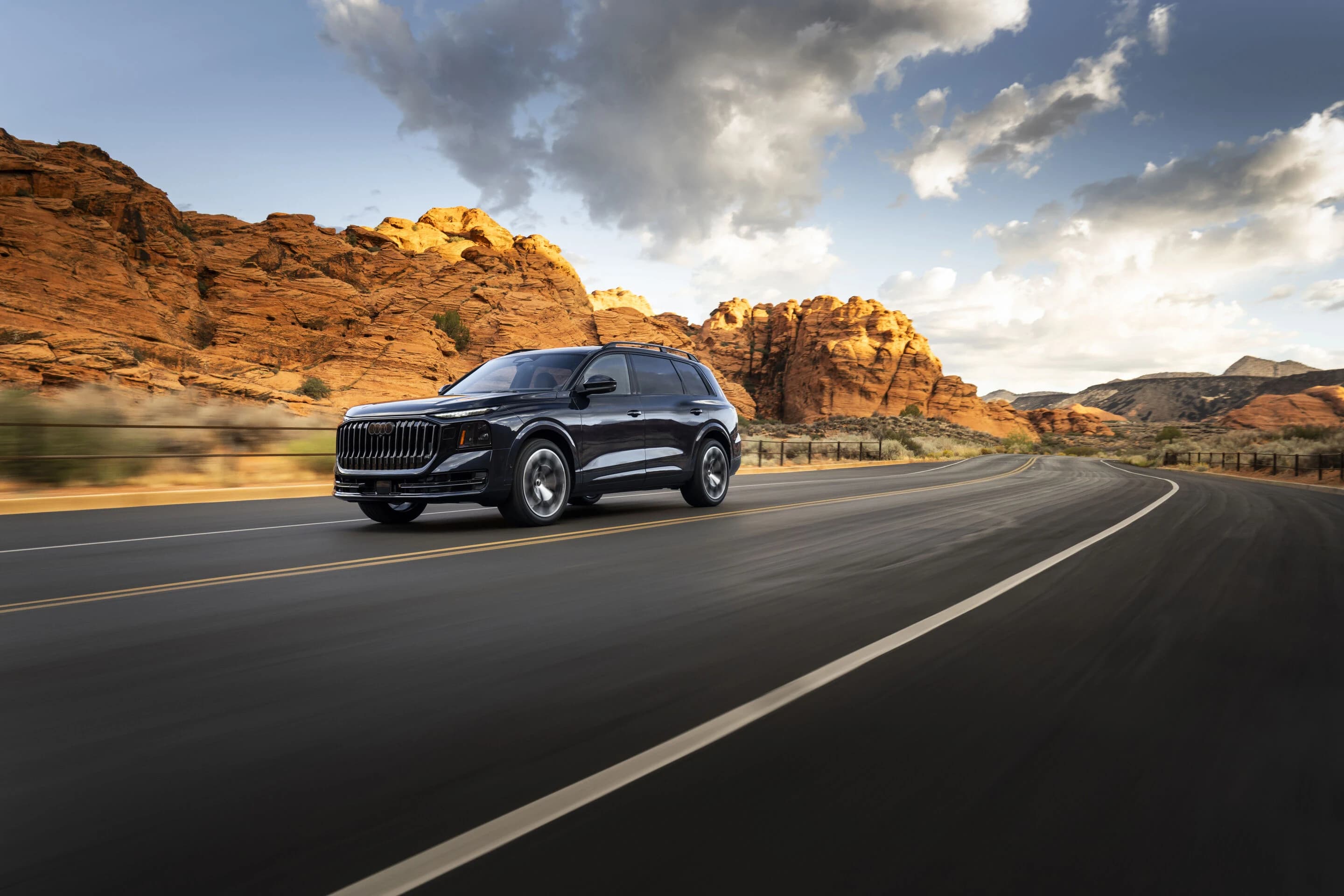
Photo: AUDI AG, A264904. US-specification Audi Q9 in Utah; free editorial use under the official image rights.
Audi has lowered its 2026 revenue and operating-margin forecasts after a tougher third quarter, citing weaker conditions in China and persistent competition and pricing pressure internationally. The revised outlook, published on 30 October, puts annual revenue at €55–59 billion and operating margin at 3–5%. Its half-year forecast had called for €58–63 billion and a margin of 5–7%.
The downgrade is not a uniform story of falling deliveries everywhere. Audi-branded vehicle deliveries rose modestly in Germany and the rest of Europe over the first nine months, while China and North America declined. Even within China, the brand's electric deliveries increased as the total fell. Those differences are important to understanding both the financial result and the product changes Audi is making.
What changed in the annual forecast
Audi now expects net cash flow of €2.5–3.5 billion for the full year, against €3–4 billion in its half-year outlook. All three ranges are forecasts for the financial year, rather than results already achieved. The latest forecast also excludes potential restructuring expenses beyond those agreed in 2025, an explicit limit on what the projected margin includes.
Finance chief Jürgen Rittersberger says existing measures are working but need to be strengthened because competitive pressure has intensified. The company describes tighter cost discipline, lower complexity and more efficient structures alongside investment in new products. Software, artificial intelligence and driver-assistance systems remain named investment areas; the release does not describe a blanket halt to technology spending.
The nine-month accounts need precise labels
Group revenue for January–September was €42.063 billion, down from €48.380 billion in the comparable 2025 period. Operating profit fell to €1.150 billion from €1.555 billion, with operating margin at 2.7%, against 3.2% a year earlier. These are group financial figures, rather than a separate margin for every brand or region.
Profit after tax was €1.218 billion, compared with €2.064 billion. Audi also reported a financial result of €513 million and profit before tax of €1.663 billion. Calling all of these measures simply “profit” would obscure different movements within the accounts. The operating result is the figure linked to the operating-margin discussion in the annual outlook.
Net cash flow moved in the other direction, increasing to €2.439 billion from €2.107 billion. That does not cancel the weaker earnings: cash flow and operating profit measure different aspects of the business. It does show why a single declining figure is insufficient to describe the entire nine-month financial position.
China fell sharply, but its electric business grew
Worldwide Audi-brand deliveries totalled 1,042,150 vehicles, down 11.4%. China, including Hong Kong, accounted for 328,042 deliveries, a decrease of 24.5%. Audi specifically identifies the decline in China's combustion-engine market as a major burden on performance.
The regional electric figure tells a different story. Audi delivered 24,203 battery-electric vehicles in China, up 84.7%. It would therefore be inaccurate to describe the Chinese downturn as a decline across every powertrain. The total is much larger than the electric subset, and the movement of that subset does not reverse the decline in overall regional deliveries.
Audi also points to increasing exports from Chinese manufacturers into Europe, more intense competition and the pace of Europe's electric transition. Other burdens it lists include uncertainty in the Middle East, higher associated energy costs and US tariffs. The release does not allocate a separate earnings amount to each cause, so their individual contributions cannot be calculated from these statements.
Europe's total volumes mask a split in electric deliveries
Germany delivered a 1.8% increase to 152,011 Audi vehicles. Europe excluding Germany rose 1.3% to 360,649. Audi reports those areas separately; the second number should not be described as including the German home market. Rising total deliveries also do not establish that price pressure has eased.
German battery-electric deliveries grew 39.1% to 39,476 vehicles, whereas the rest-of-Europe electric total fell 12.5% to 70,637. Globally, Audi's electric deliveries declined 12% to 143,748. Plug-in hybrids, meanwhile, rose 103% worldwide. Growth in rechargeable hybrids is therefore not the same as growth in all plug-in vehicles or in the brand's entire range.
North America excluding Mexico recorded 128,749 total deliveries, down 17.3%. Its electric deliveries fell 87.8% to 3,867 vehicles. The geographical qualifier matters: these figures should not be expanded to the whole continent when the manufacturer's table expressly excludes Mexico.
Group deliveries are not the Audi-brand total
The Brand Group car-delivery figure was 1,056,103, against 1,191,141 a year earlier. Audi's own 1,042,150 deliveries sit within that figure alongside Bentley and Lamborghini. Ducati motorcycles are listed separately, rather than being added to the car-delivery total.
Bentley delivered 5,970 cars and generated €49 million in operating profit; Lamborghini delivered 7,983 cars and recorded €564 million. Ducati delivered 39,093 motorcycles and made €29 million in operating profit. The reported operating margins were 3.5%, 22.3% and 4.4%, respectively. None should be confused with the group's 2.7% margin.
New models arrive as further measures are discussed
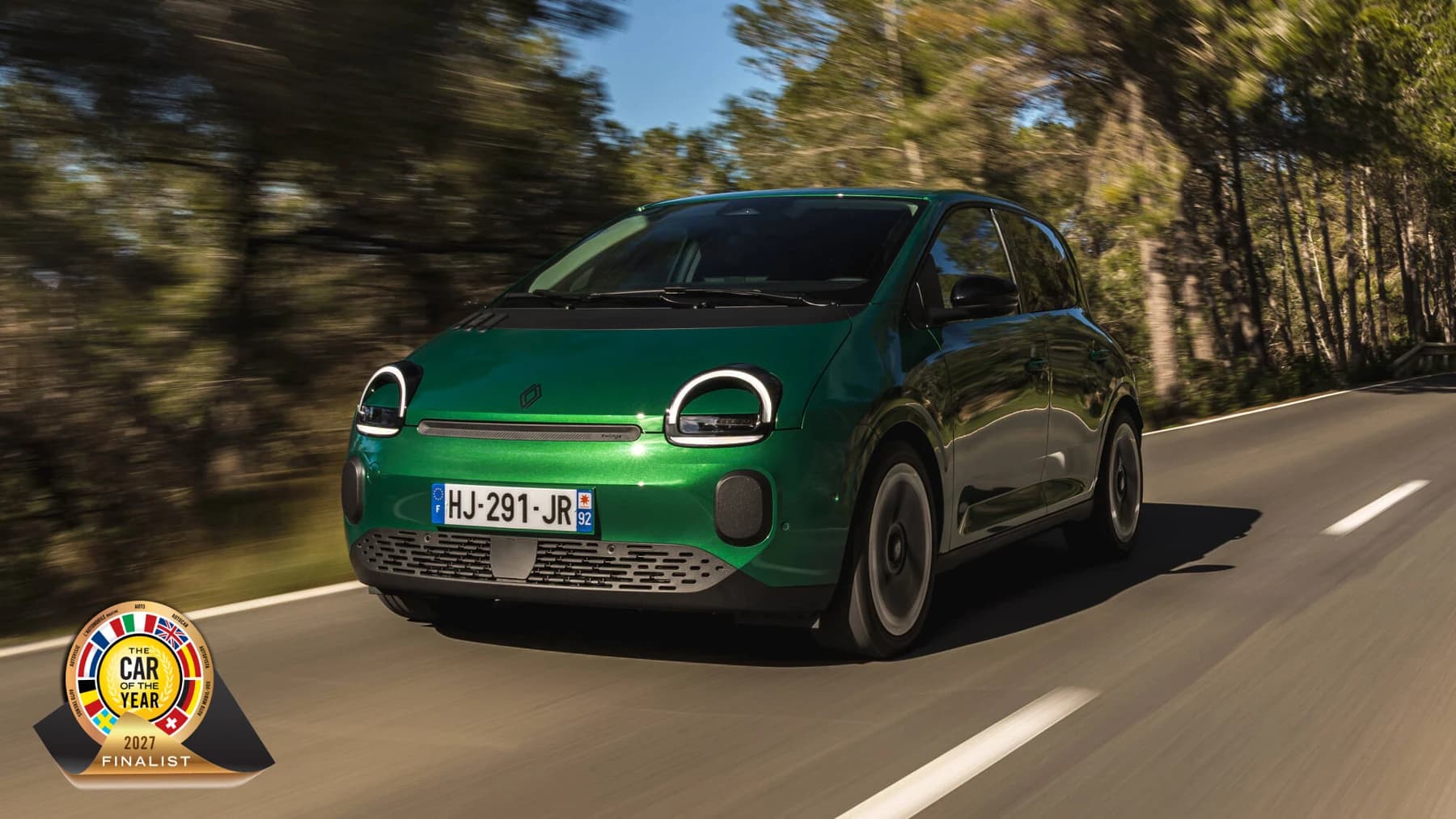
Audi's European schedule places the Q9 in early November and the electric A2 e-tron in December. The compact electric car is built in Ingolstadt, and Audi says its development took 21 months less than comparable predecessor models. The transition from A1 and Q2 to A2 e-tron also weighed on the reporting period, according to the company.
The RS 5, built in Neckarsulm, is Audi's first RS plug-in hybrid. The manufacturer says its planned 2026 production is sold out and European orders are almost twice expectations. That is a specific product claim, rather than evidence that the group's reduced annual financial forecast has already been recovered.
Further measures for German sites will be developed with employee representatives, building on the March 2025 agreement. The latest release does not set a new job-cut total. Nor does the European model schedule establish Romanian prices or delivery dates: local configurations and offers still need their own announcements.