
Photos: Automarket.
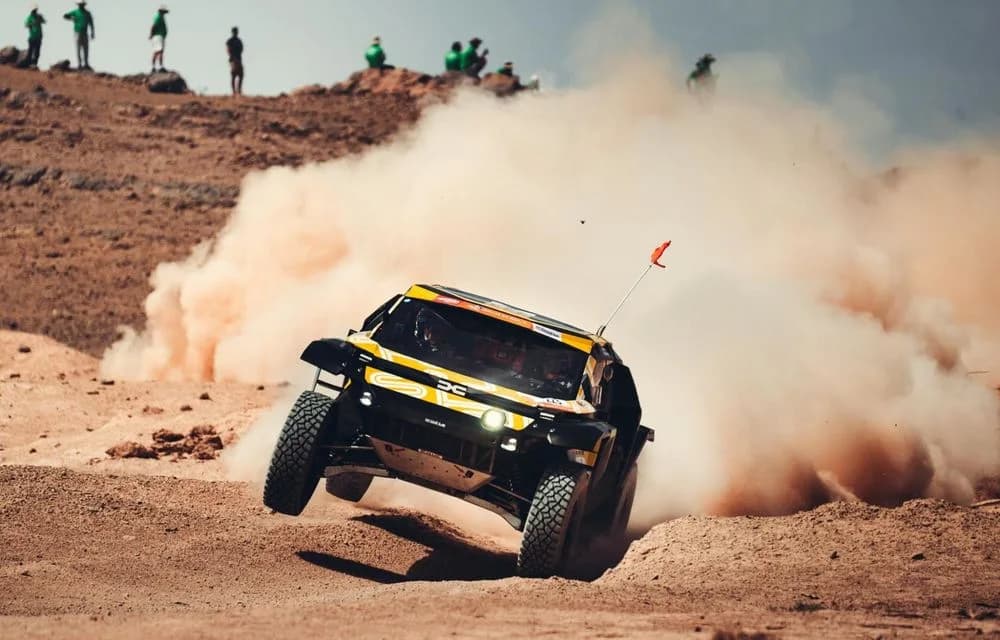
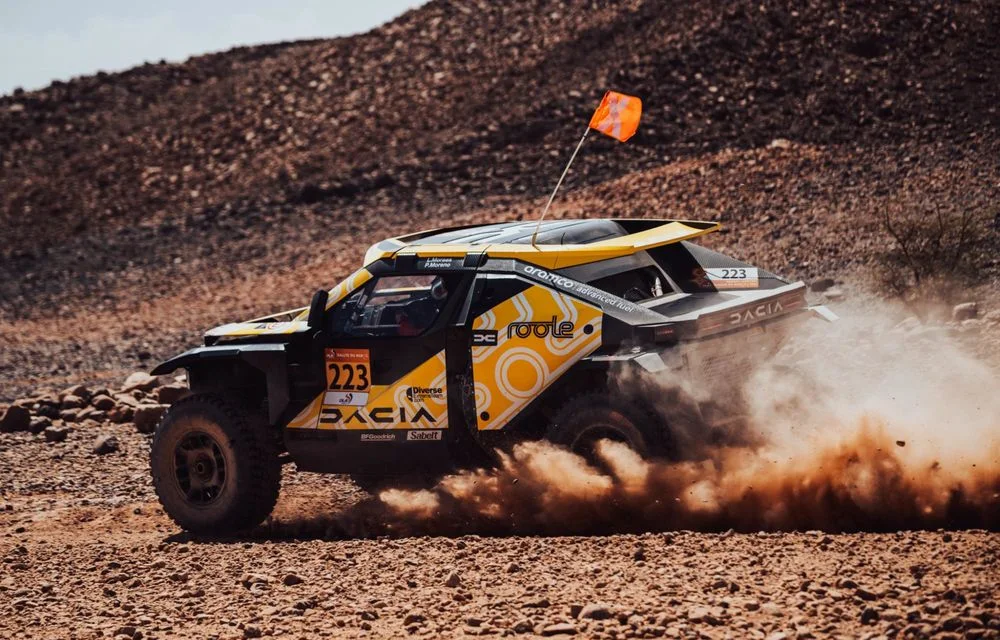
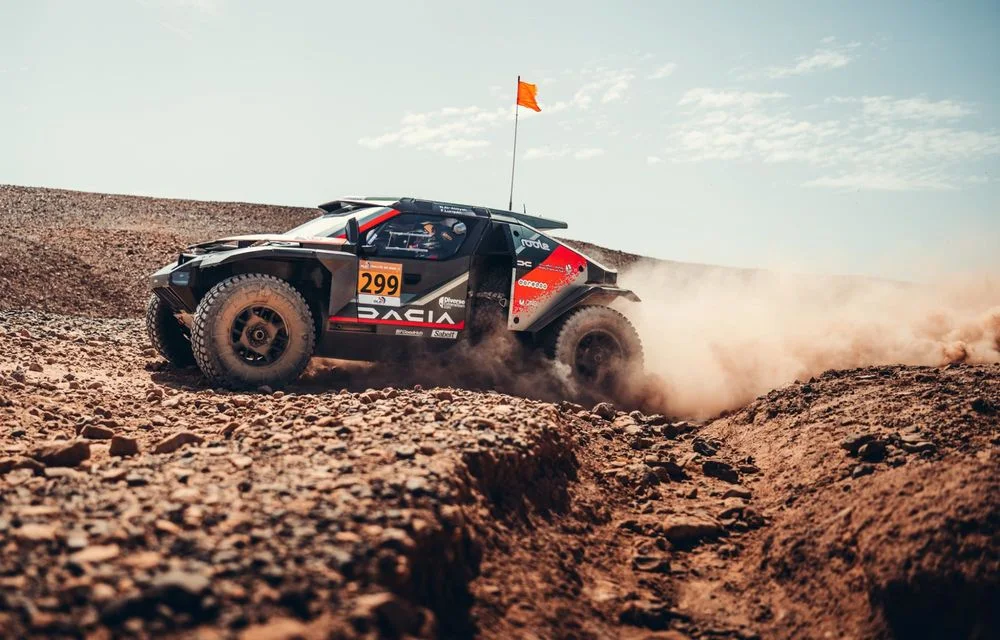
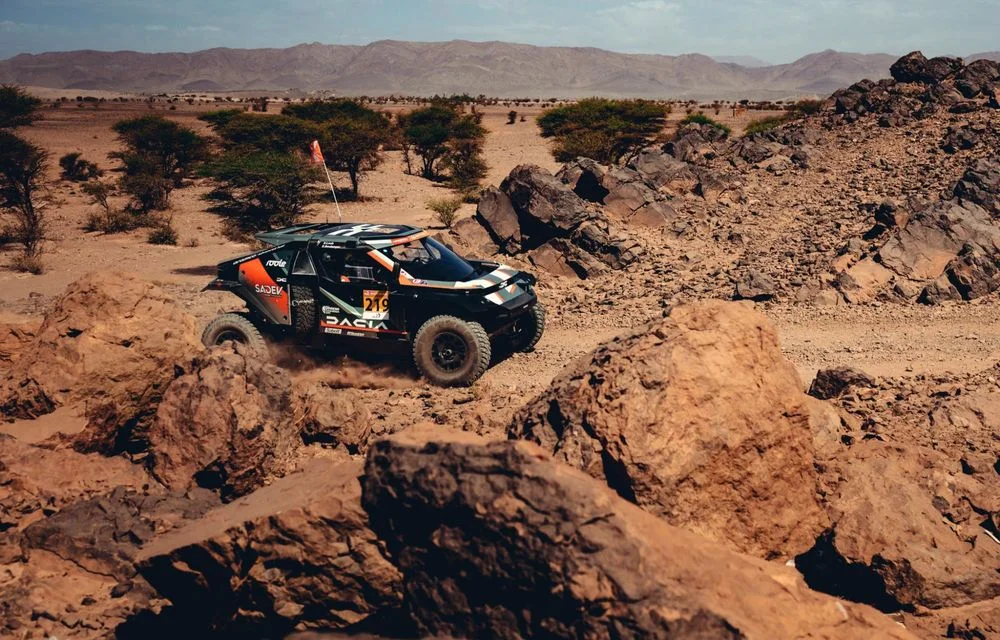
The Dacia Sandriders began Rallye du Maroc 2026 with Lucas Moraes and Pablo Moreno in second place. The Brazilian-Spanish crew finished the opening special stage only three seconds behind João Ferreira of Toyota Gazoo Racing SA. The result gives Dacia an early position in the rally and keeps the team close to the fight for the FIA World Rally-Raid Championship, with Morocco serving as the penultimate round of the season.
Ferreira was awarded the stage win after his time was adjusted because he stopped to assist a motorcycle competitor. The official World Rally-Raid Championship classification places the Portuguese driver first, with Moraes three seconds behind. Mathieu Serradori was third at 16 seconds, while Mitch Guthrie completed the top four at 1 minute 7 seconds. Four different cars filled the first four positions, underlining how closely matched the opening stage was.
Moraes starts with a new navigator
The stage was Lucas Moraes’s first Rallye du Maroc appearance with Pablo Moreno. The Spaniard has taken over the navigator role after previously competing alongside Cristina Gutiérrez. The change is part of The Dacia Sandriders’ crew adjustments for the final part of the 2026 season.
Moraes had enough pace to remain in contention through the final kilometres. The route combined rocky ground and dunes, and the Dacia lost time while running in the dust of another competitor. After passing that car in the dunes, the crew could increase its pace. A three-second gap to Ferreira means that even a short delay had a direct effect on the final order.
Second place is a useful start, but it does not decide the rally. Rallye du Maroc contains five stages, with 1,575 kilometres of timed sections and 2,524 kilometres in total according to the event information released before the start. The second stage includes a 299-kilometre timed section, so the small gaps from the opening day can disappear quickly after one difficult navigation or tyre problem.
A major setback for Sébastien Loeb
The day was far worse for Sébastien Loeb and Édouard Boulanger. The French crew was running at a similar pace to Moraes until around kilometre 202, when its Dacia Sandrider stopped with an electrical problem. The car no longer had enough energy for essential systems, and the crew tried to use the 12-volt battery to feed the other battery and restart the car.
The workaround did not last. Loeb explained that the car lost power steering and engine cooling, leaving the crew able to use only easier sections to reach a normal road. They eventually reached the finish, but more than two hours behind the leader. Loeb was classified 52nd after the opening stage and is no longer in contention for the overall rally victory.
The problem also affects the championship picture. Loeb arrived in Morocco leading the drivers’ standings, while Dacia held the manufacturers’ lead. A delayed finish does not automatically remove the team from a title fight, but it reduces the points margin available for the remaining stages. Rally-raid awards stage and overall points through a long event, and a single technical failure can change the balance.
A cautious opening for Nasser Al-Attiyah
Nasser Al-Attiyah and Fabian Lurquin finished the first stage with the eighth-fastest time. The Qatari driver is one of Loeb’s principal championship rivals and chose a more conservative approach. Starting position can matter in rally-raid because cars further back may follow clearer lines and can sometimes use the tracks created by earlier competitors.
That approach also carries a cost. A gap of several minutes can become difficult to recover if the leaders maintain a consistent pace, while Moroccan stages combine fast tracks, rocks, dunes and navigation. Al-Attiyah must balance the need to score championship points with the need to preserve the Sandrider for a five-day event.
Before Morocco, The Dacia Sandriders had completed three W2RC rounds. The team won the Dakar Rally in January and Rally-Raid Portugal in March, then scored a podium with Al-Attiyah and Lurquin at Desafío Ruta 40 in Argentina. Dacia had also won the 2024 and 2025 editions of Rallye du Maroc, so the stated target before the start was a third consecutive victory in Morocco.
The Sandrider and the W2RC context
The Dacia Sandrider is a rally-raid prototype built for the top Ultimate category. Dacia describes the car as using a reinforced steel-tube chassis, a carbon-fibre body and four-wheel drive. The car has a 3.0-litre twin-turbo V6, while the team’s W2RC vehicles run on sustainable fuel supplied by Aramco and use BFGoodrich tyres.
Those details do not make the Sandrider a road-car derivative, but they show what is required in the championship’s leading category. Results depend on more than engine output: navigation, tyre management, cooling, suspension and the crew’s ability to avoid stops all matter. Loeb’s first-stage problem illustrates the point. A strong pace can be erased by a failure after hundreds of kilometres.
Rallye du Maroc runs from Agadir to Zagora, with the four remaining days based around the Zagora area. For Moraes and Moreno, second place provides a good platform, but a three-second advantage or deficit is not meaningful protection in a rally-raid event. For Al-Attiyah, the opening day was about limiting risk. For Loeb, the focus now shifts to limiting the championship damage and collecting any available stage points.
The overall order will become clearer after longer days and more extensive dune sections. The opening stage confirmed that Dacia has the pace to fight for wins, while also showing how quickly rally-raid fortunes can change. Moraes starts the next stage three seconds behind the leader, with strategy and reliability likely to matter as much as speed.


