The European Commission has proposed a more flexible way for carmakers to meet the European Union’s 2035 emissions rules. The proposal would lower the required reduction in average tailpipe emissions from 100% to 90% and allow the remaining 10% to be compensated through low-carbon steel made in the EU and credits linked to e-fuels and biofuels.
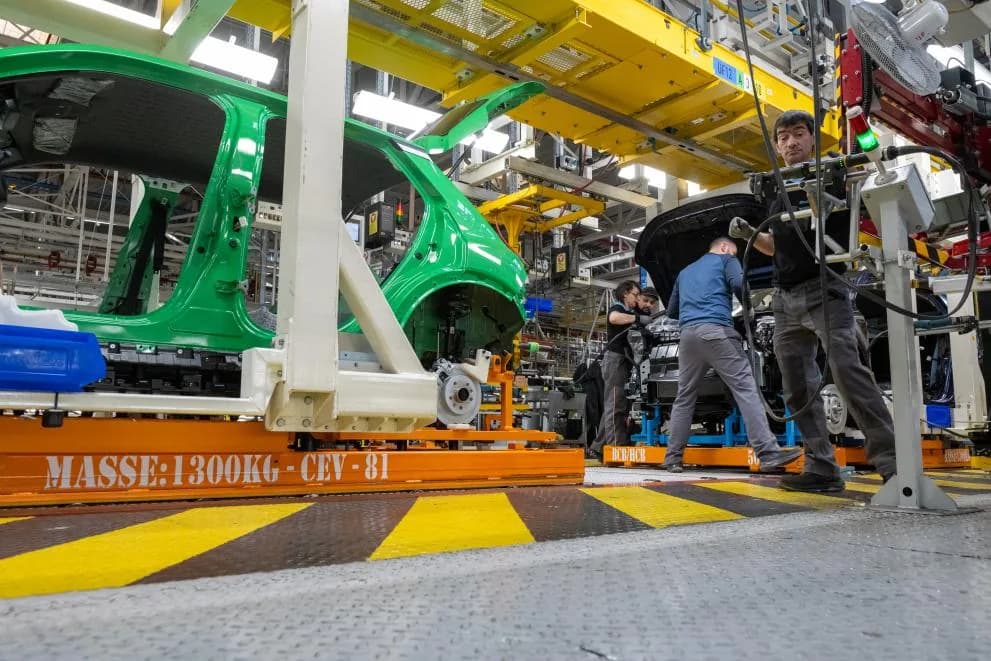
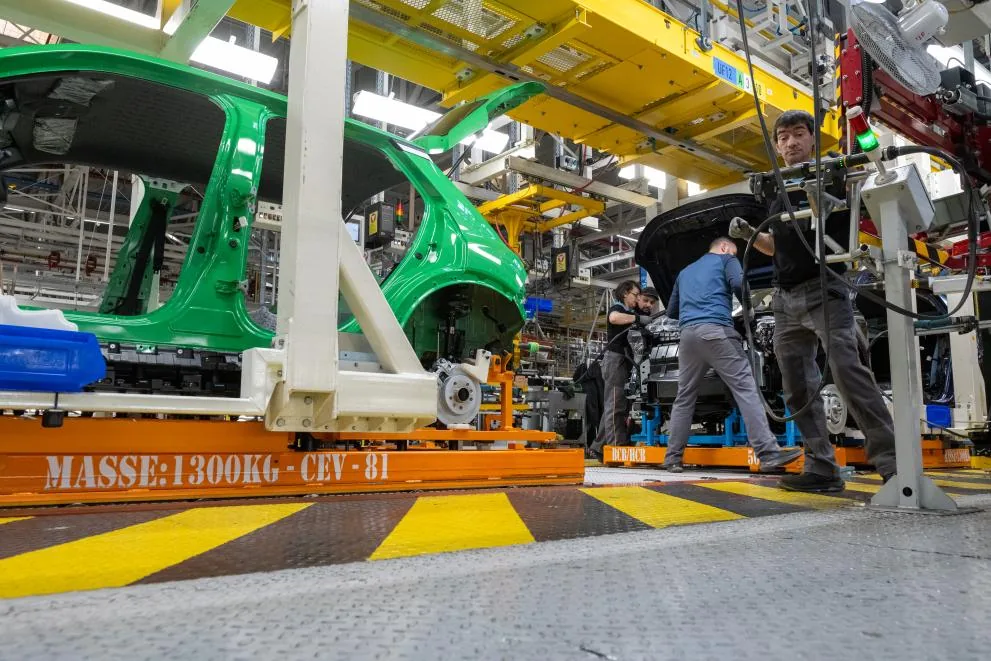 European Commission image, “Electric car production – France”. The image illustrates the subject; the Commission’s portal conditions apply to its use.
The change would be significant, but it is not yet a change in law. The EU’s current regulation still sets a 100% reduction target for the average tailpipe emissions of new cars and vans registered from 2035. The Commission’s proposal must go through negotiations between the European Parliament and the Council before it can become final legislation.
A reprieve, not a free pass
The existing rule concerns a manufacturer’s fleet average. It does not require every individual car to have the same powertrain, but it does set a very demanding average for all new vehicles registered by a company. A 90% tailpipe target would therefore create room for some vehicles that still use a combustion engine, provided that the fleet meets the final conditions and that the remaining emissions are compensated as required.
That distinction matters. The proposal would not give manufacturers an unlimited right to sell petrol or diesel cars after 2035. It would establish a different compliance calculation. The final text would have to define which credits count, how low-carbon steel is verified, which renewable fuels are eligible and how the system prevents the same reduction from being counted twice.
The Commission’s factsheet lists plug-in hybrids, range-extender vehicles, mild hybrids and some combustion-engine vehicles among the technologies that could continue to play a role alongside battery-electric and hydrogen cars. This is a description of the options opened by the proposal, not an approval of a specific model or a guarantee that every technology will remain available in every market.
How the compensation would work
Under the proposal, the direct tailpipe target would cover 90% of the reduction required by 2035. The remaining 10% could be offset through two broad mechanisms. One is the use of low-carbon steel made in the Union. The other is the use of credits associated with e-fuels and biofuels that meet European sustainability and emissions rules.
The approach connects vehicle regulation with industrial policy. A carmaker could improve its compliance position by supporting demand for steel produced with lower emissions in Europe. It could also benefit from the verified use of renewable fuels in road transport. The idea is to keep the climate objective while giving the European automotive supply chain more time to adapt.
There is also a potential communication problem. A vehicle that emits CO2 at the exhaust does not become a zero-tailpipe-emission vehicle because a manufacturer has used a steel or fuel credit elsewhere. Direct vehicle emissions and permitted fleet compensation are different measurements. Consumers will need clear labels if the final system allows both to appear in the same regulatory calculation.
Why Brussels proposed the change
The Commission says the automotive sector is under pressure from rapid technological change and stronger international competition. Carmakers are investing in batteries, software, charging, factories and new supply chains, while demand for electric cars differs sharply between EU countries. Affordability, charging access and company-car policies all affect the speed of the transition.
The automotive package therefore covers more than the 2035 rule. It includes a proposal for greener corporate fleets, revised vehicle labelling, a battery booster strategy and an automotive omnibus intended to reduce administrative burdens. The Commission says the battery strategy includes €1.8 billion for a fully EU-made battery value chain.
The package follows a strategic dialogue launched in January 2025 with industry, social partners, member states, regions and civil society. The dialogue does not replace the legislative process, but it explains why the Commission presented a broader set of industrial and regulatory measures at the same time.
The EU has also already granted limited short-term flexibility. For the 2025, 2026 and 2027 targets, compliance can be assessed over the three-year average rather than separately in each year. That measure deals with the near-term path and does not by itself rewrite the 2035 rule.
What it could mean for powertrains
Plug-in hybrids could retain a role if the proposal is adopted, particularly in markets where drivers cannot charge every day. Their real-world emissions would still depend on charging behaviour and usage. Mild hybrids would offer a smaller efficiency benefit, while e-fuel-compatible combustion engines could remain relevant only if the fuels and credits were available at scale and met the final rules.
Battery-electric vehicles would still be central to the proposal. A 90% average reduction would require manufacturers to sell a large share of zero-tailpipe-emission cars, even if a limited number of combustion or hybrid vehicles remained in the mix. The proposal should therefore be described as a relaxation of the route to compliance, not as a return to the pre-electrification market.
For buyers, fleet rules do not create a catalogue of cars that will definitely be legal after 2035. Availability will also depend on type approval, national taxation, company-car incentives, costs, market demand and each manufacturer’s strategy. The Commission has not announced a list of models that will continue, nor has it set a final price impact.
The legislative process is still open
The proposal now has to be considered by the European Parliament and the Council. Both institutions can amend the text, and the final regulation may differ from the Commission document. The timetable is not yet the same as an implementation date, and the proposal should not be presented as an adopted repeal of the 2035 zero-emission target.
The confirmed facts are narrower and clearer: the current 100% tailpipe reduction rule remains in force; the Commission has proposed a 90% target; and the remaining 10% would be compensated through mechanisms involving low-carbon EU steel and renewable fuels. The open questions concern the final credits, technical definitions, approval date and the vehicles that manufacturers will actually offer.
For Europe’s car industry, the proposal is a reprieve from a single-path transition. It is not an end to the transition itself. For consumers, the practical consequence will depend on the final legislation and on whether lower-carbon materials and fuels can be supplied at the scale the system assumes.