This is a commission proposal, not a new Alfa Romeo model
Castagna Milano has imagined an unusually radical way to extend the Alfa Romeo Giulia Quadrifoglio family: remove the rear seats and fixed roof, move the cabin backwards, and turn the sports sedan into a two-seat convertible grand tourer. The project has been presented as a digital design proposal and is looking for a customer willing to commission the finished one-off car.
That distinction matters. Alfa Romeo has not announced a production Giulia coupé or convertible based on this proposal, and the project is not part of the manufacturer’s current configurator. Castagna Milano is an independent coachbuilder, so the project belongs to the world of bespoke automotive commissions rather than a conventional model launch.
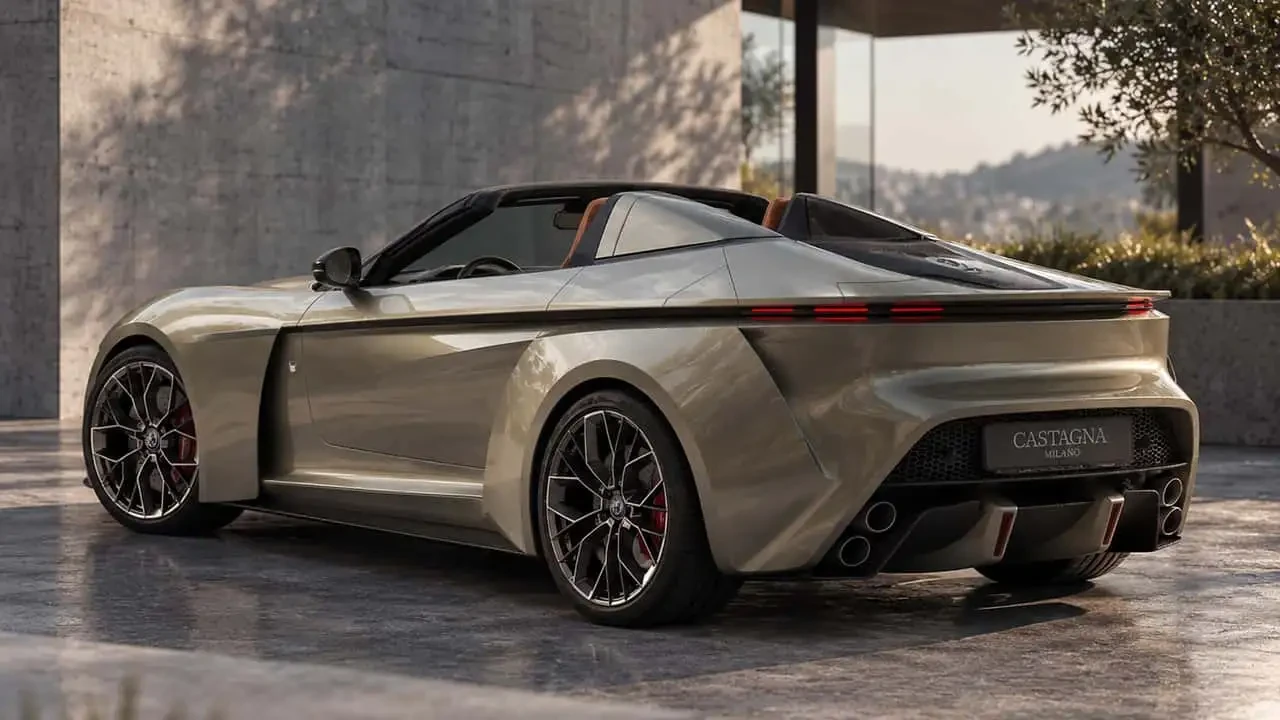
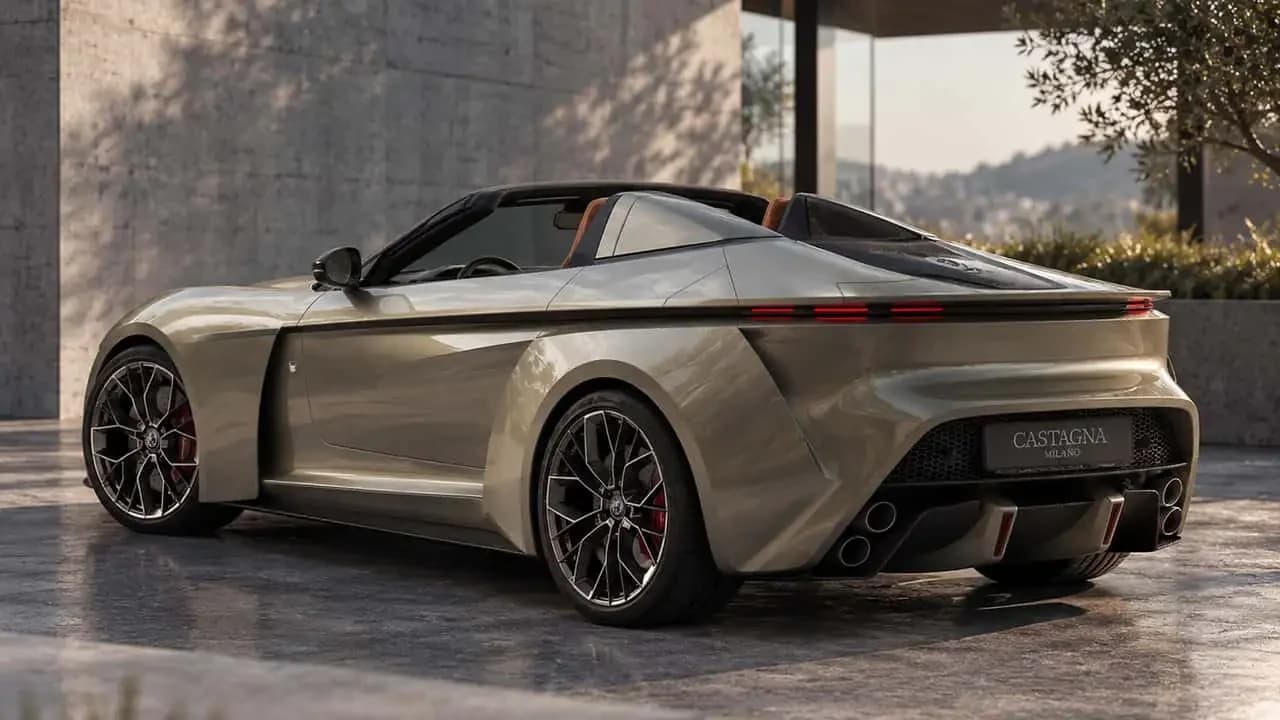
Motor1 image of the Castagna Milano design proposal, used at the user’s request.
A 330-millimetre move changes the whole car
The most revealing figure in the proposal is the 330-millimetre relocation of the front seats. Castagna Milano wants to move the cabin rearwards to create space for a much longer bonnet. On a standard Giulia, the relationship between the four doors, the windscreen and the front axle is designed around a five-seat sports saloon. The proposed car would use the same starting point but would aim for the proportions of a traditional Italian long-bonnet tourer.
The bonnet itself is described as 40 millimetres lower than the standard part and would include a large exposed carbon-fibre section. At the front, angular Y-shaped elements would form brake-cooling ducts while partly hiding the headlamps. The result is more theatrical than the restrained face of the regular Giulia Quadrifoglio.
Motor1 also noted that the front treatment can evoke Peugeot design. That is an editorial comparison based on the images, not evidence of a Peugeot partnership or shared components. The proposal’s identity is still meant to come from Castagna Milano’s coachbuilt interpretation of Alfa Romeo’s sedan.
Carbon bodywork and a wider stance
The planned body would use extensive carbon fibre. The material is useful here for two reasons: it allows the coachbuilder to create new panels without preserving the sedan’s original surface language, and it offers a route towards containing the mass added by the convertible structure. Castagna Milano is targeting a weight of 1,420 kilograms, but there is no completed prototype to verify that number.
Both tracks would be widened to match the visual attitude of the Giulia GTAm, with prominent extensions over the wheels. The rear design is just as different from the donor car. A cut-out beltline would wrap around the body and incorporate the rear lamps, while a diffuser and active rear spoiler would give the car a lower, more deliberate stance.
Those parts remain design intentions. No drag figure, downforce figure, crash-test result or production engineering schedule has been published. A convertible conversion also requires extensive structural work, and the final car would need to satisfy the regulations of the market where it is registered.
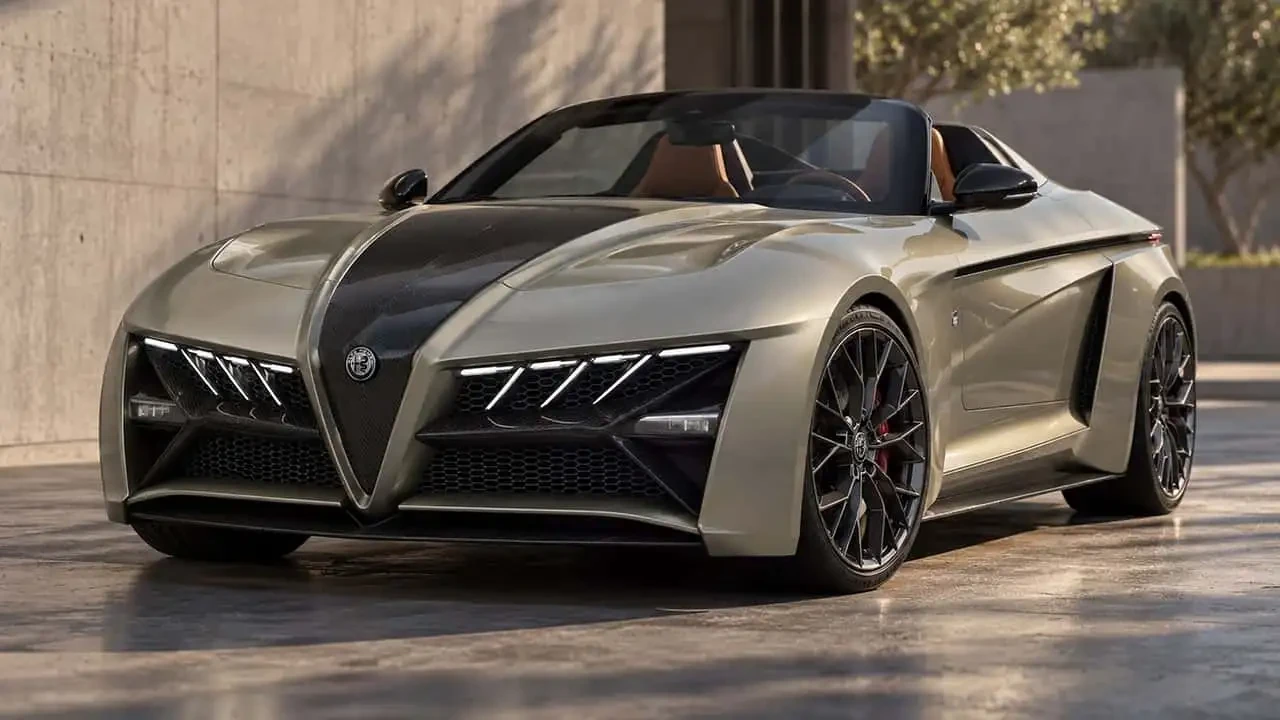
The second Motor1 image shows the proposed cut-out beltline, diffuser and active rear spoiler.
The 2.9-litre V6 stays in the plan
Castagna Milano’s proposal retains Alfa Romeo’s 2.9-litre twin-turbo V6. The coachbuilder has not announced a new output figure. Instead, it suggests a longer final-drive ratio, which would suit a car intended to cover distance as a grand tourer rather than chase lap times.
The distinction from the factory Giulia GTA and GTAm is important. Alfa Romeo’s official GTA used an enhanced version of the 2.9-litre V6 with 540 horsepower and was limited to 500 cars. The GTAm used the same engine in a more track-focused two-seat configuration, with lightweight materials, carbon-shell seats and a rear roll bar. Castagna’s idea starts from the Giulia Quadrifoglio and is not an official GTA, GTAm or new Alfa Romeo special series.
The engine plan is therefore one of the few elements that remains recognisably close to the donor car. Everything around it—the roof, rear seats, body panels, seating position and luggage area—would be reworked.
A claimed 623 litres with the roof folded
Despite losing the rear bench and fixed roof, the proposal is said to offer 623 litres of luggage space with the fabric roof stowed. That would be an unusually generous figure for a two-seat convertible. It should be read as a project target rather than a tested capacity because no finished vehicle exists and no standard measurement procedure has been published.
The cabin would receive wood trim, two types of leather and new glazing. Those choices point towards a bespoke touring car, not a stripped-out track special. They also show why the project would need a customer: a one-off body, custom interior and re-engineered roof structure would be difficult to justify through normal series production.
Alfa Romeo’s official position is broader, not specific
In May 2026, Stellantis said that Alfa Romeo was studying ways to remain in the D segment through new interpretations of the Giulia and Stelvio line-up. The company also said the current Giulia and Stelvio, including Quadrifoglio versions, would remain in production until 2027. That statement confirms that the nameplates remain part of the brand’s planning, but it does not confirm Castagna Milano’s project or promise a factory-built convertible.
The coachbuilder’s proposal is interesting precisely because it sits outside that official product plan. It asks what an independent specialist could do with a recognised Alfa Romeo performance car when the manufacturer has not offered a two-door or open-top Giulia. Whether the answer is elegant will remain a matter of opinion; whether it becomes a real car depends on a buyer, engineering work and homologation.
For now, this is an unusually detailed digital commission brief: a two-seat carbon-bodied Giulia Quadrifoglio with a long bonnet, a folding fabric roof, a V6 and grand-touring ambitions. It is not a car that can be ordered from Alfa Romeo, and its proposed 1,420-kilogram weight and 623-litre luggage figure are not independently verified.