
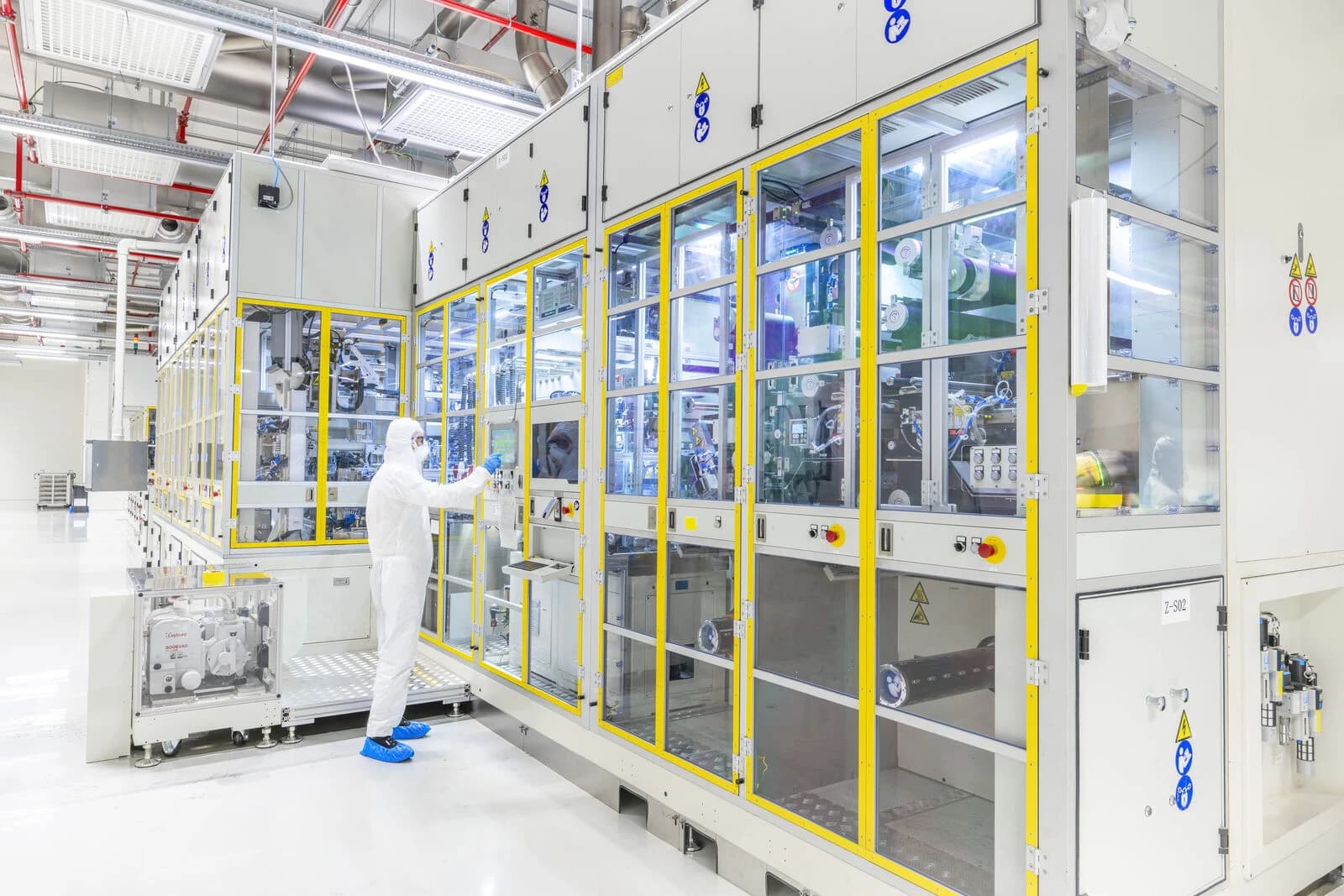
Gotion High-Tech will invest about €1.1 billion to acquire a 49% stake in PowerCo's battery project in Valencia, Spain. The agreement with Volkswagen Group and its battery subsidiary expands a partnership that began in 2020 and adds two more joint ventures covering LFP cells and cathode materials in Europe.
The €1.1 billion figure does not describe a new investment in Volkswagen's already operating Salzgitter cell factory. It refers to Gotion's planned 49% stake in the Valencia project, which is still under construction. PowerCo will retain 51% of the Valencia joint venture. The companies did not publish the total construction cost for the Spanish plant in their joint announcement; they disclosed the ownership structure and the contributions linked to the transaction.
Three sites, three parts of the supply chain
The agreement announced on 28 September 2026 covers three locations. Valencia will focus on LFP battery cells. At Šurany in Slovakia, Gotion's cell factory will be transferred into a joint venture intended to make LFP cells for electric vehicles and stationary energy-storage systems. In Kenitra, Morocco, the partners plan a new facility for LFP cathode-active material.
The ownership split is different at each site. PowerCo will hold 51% of the Valencia joint venture, with Gotion owning 49%. At Šurany and Kenitra, Gotion will hold 51% and PowerCo 49%. Volkswagen says the partners will manage the three ventures together. The cooperation also includes joint purchasing and sales activities in Europe.
Gotion's contribution at Valencia is approximately €1.1 billion for its 49% stake. PowerCo says it will remain the majority shareholder and that previously announced investment and employment plans for the Spanish factory will remain in place. The agreement is not yet unconditional. It still requires regulatory approvals and the usual closing conditions, including approval by Gotion's shareholders' meeting.
PowerCo expects to contribute about €470 million through 2030 to acquire 49% stakes in the Šurany and Kenitra ventures. That amount is separate from Gotion's €1.1 billion contribution for Valencia. The two figures should therefore not be added together as if they described one factory or one single investment package.
Why the partners are focusing on LFP
LFP stands for lithium iron phosphate. This battery chemistry is commonly associated with a focus on cost, cycle life and durability. Volkswagen says LFP can support electric vehicles in the volume segment, but the agreement does not identify specific Volkswagen models or vehicle plants that will receive cells from the three new ventures.
Volkswagen also says the European share of LFP batteries could rise from about 10% today to 40–60% by 2030. That is a company-cited forecast, not a result produced by the new joint ventures. The group adds that Europe currently has no relevant LFP production capacity, which is why the agreement is designed to localise cell and cathode-material manufacturing closer to the European market.
The choice of chemistry does not mean every Volkswagen battery programme will use LFP. PowerCo's Salzgitter plant has already started producing the first Unified Cells, with the first cells based on NMC chemistry. Volkswagen plans initial annual capacity of up to 20 GWh at Salzgitter and an expansion path to 40 GWh. The company says LFP versions will follow, while Salzgitter will act as the lead plant for the PowerCo factory planned in Valencia and the future site in St. Thomas, Canada.
The Salzgitter and Valencia projects therefore have different stages and roles. Salzgitter began cell production in December 2025 and is being used to validate production processes and the Unified Cell format. Valencia is still being built and is now intended to become a European LFP production centre under a PowerCo–Gotion joint venture. Keeping these timelines separate avoids treating the €1.1 billion agreement as a change to the German plant's ownership.
A partnership dating back to 2020
Volkswagen and Gotion have worked together since 2020. In that year, Volkswagen China Investment Company agreed to invest about €1.1 billion in Gotion High-Tech and become its largest shareholder with a 26% holding. The new agreement broadens the relationship from battery-supply and technology cooperation into joint European manufacturing.
Alongside the new ventures, Volkswagen has signed a binding agreement to sell a 5.3% portion of its stake in Gotion. Volkswagen says it will remain a relevant strategic investor after the transaction closes. The sale also requires the necessary approvals. The group says its board representation and nomination rights at Gotion will not be affected by the proposed transaction.
For PowerCo, the arrangement covers more than the purchase of finished cells. Volkswagen established PowerCo to manage its global battery activities and to develop a standardised factory concept. At Valencia, PowerCo will remain the majority partner and can transfer manufacturing experience from Salzgitter to LFP production. At Šurany and Kenitra, Gotion will be the majority owner, while both companies will manage the joint ventures together.
What has not been announced
The announcement does not give production start dates for the LFP lines in Valencia, Šurany or Kenitra. It also does not publish the annual output of the three ventures in GWh, battery prices, the Volkswagen models assigned to them or detailed employment numbers for each site.
The confirmed part of the deal is its structure and its technical direction. Gotion will invest about €1.1 billion for 49% of the Valencia project, PowerCo will retain 51%, and two additional ventures will add LFP cells and cathode materials to the European supply chain. The transaction remains subject to corporate and regulatory approvals.


