Press image credited to Mercedes-AMG.
2028 Mercedes-AMG GT SUV brings 1,153 hp and a 128-kWh battery
Mercedes-AMG has revealed the electric GT SUV, its first SUV engineered entirely within the Affalterbach performance division. The model will be sold as a 2028 vehicle in the North American naming convention, with a range built around GT53, GT55 and GT63 versions. The GT63 uses three electric motors and produces 1,153 hp at peak output. GT55 makes 805 hp, while the SUV-specific GT53 uses two permanent-magnet motors and produces 536 hp.
The figures come from the first technical information reported after the 17 October 2026 world premiere. Mercedes-AMG has not yet published the complete European price list, final WLTP range for every trim, or the full equipment specification for each market. The launch schedule and first-delivery timing should therefore be treated separately from the model year used in the United States.
AMG.EA turns the GT name into an SUV
The GT SUV is not an AMG derivative of the GLE or GLS. Mercedes-AMG describes it as an in-house project, built around the high-performance AMG.EA electric architecture. That makes it the second series vehicle associated with the platform after the electric GT 4-Door Coupé. The relationship is technical rather than cosmetic: the SUV uses related motors, battery principles and software, but its taller body demands different suspension tuning, thermal management and aerodynamic work.
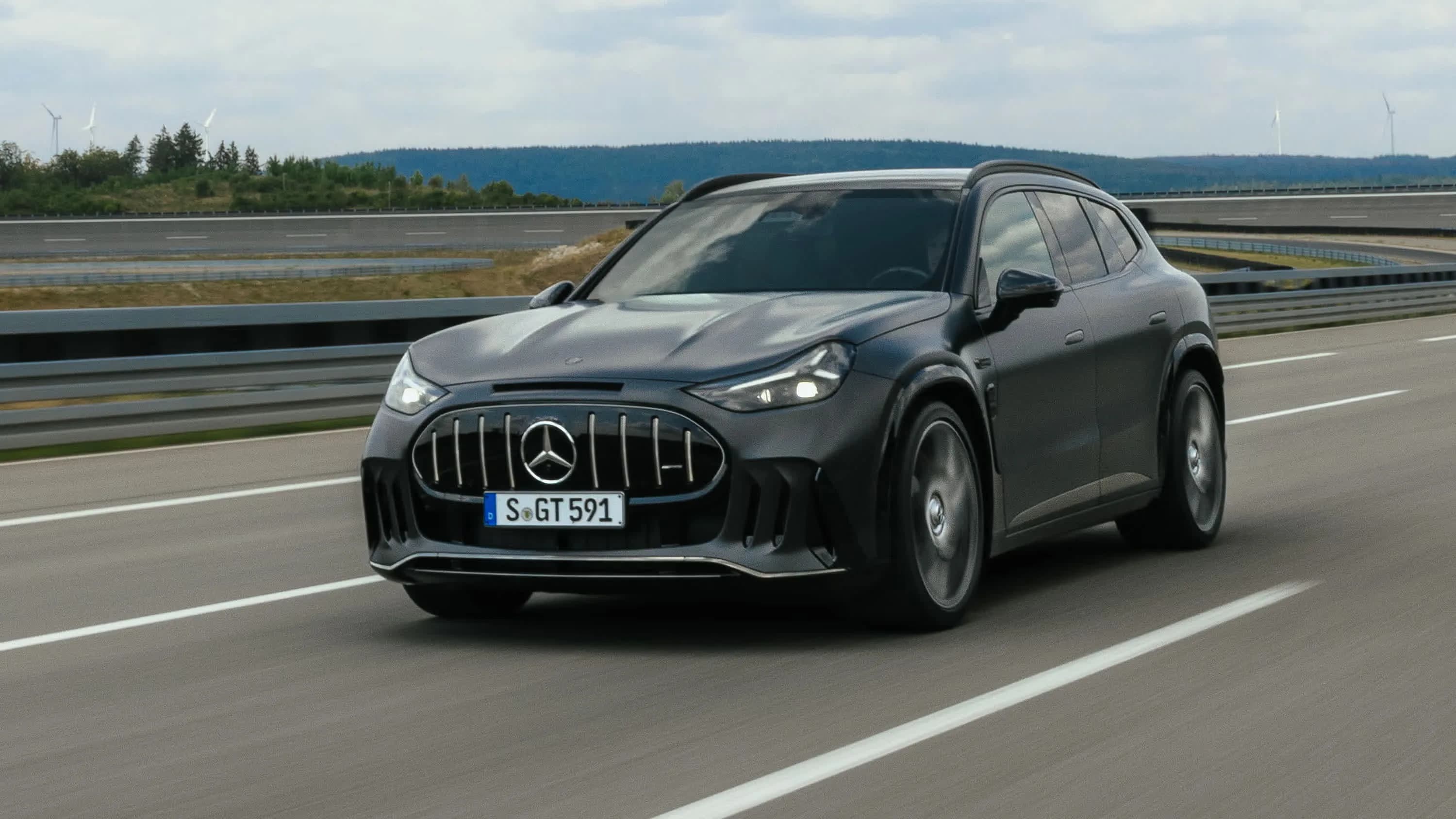
The design keeps the GT family’s low nose and wide grille treatment while adding a higher roof and a large rear hatch. The roofline falls toward the rear, but the side glass and rear doors remain more useful than those of the four-door coupé. The exterior gallery shows the car in grey and yellow, including front, side and rear views. Those images are manufacturer press photographs credited to Mercedes-AMG.
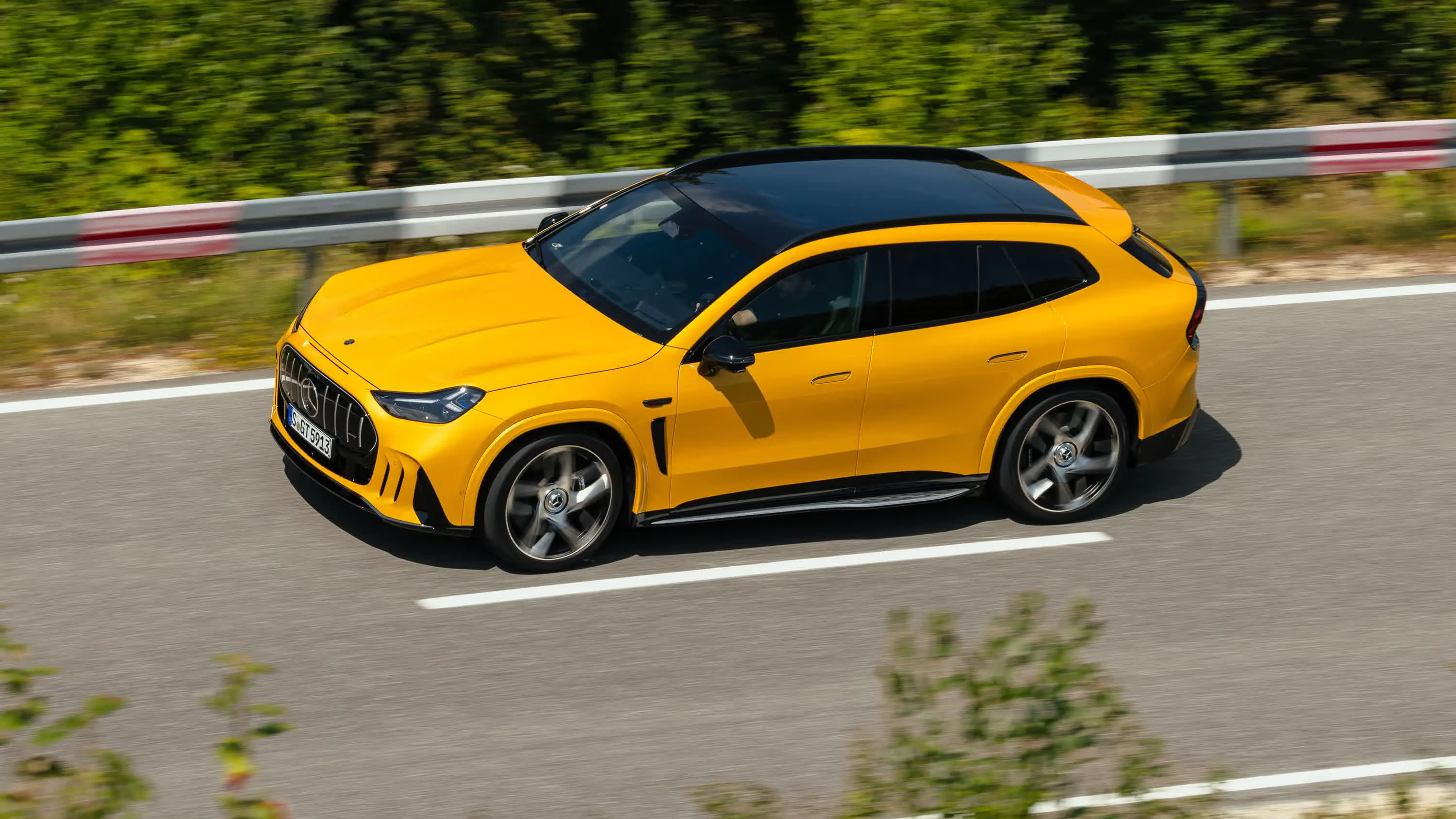
The SUV’s higher roof and tapered rear section are visible in the manufacturer photograph.
GT55 and GT63 use three axial-flux motors
The GT55 and GT63 have two axial-flux motors on the rear axle and a third unit at the front. The rear motors can contribute to propulsion and torque vectoring, while the front motor is used when the control system requires extra traction or acceleration. The arrangement gives both versions all-wheel drive without a mechanical propeller shaft.
GT55 is rated at 805 hp peak and 711 hp sustained. GT63 raises peak output to 1,153 hp while retaining the same 711-hp sustained figure. That distinction matters. A peak rating describes a short high-load window, while a sustained figure is more useful when considering repeated acceleration or extended high-speed use. Neither figure is a Carboratory measurement; both are manufacturer or launch-report specifications.
GT53 follows a different route. It has one permanent-magnet motor at each axle, with the rear unit connected to a two-speed automatic transmission and the front motor using direct drive. Its 536 hp and 590 lb-ft of torque make it the least powerful version, but also the lighter one. The final European torque figure and kerb weight have not yet been published in a complete AMG data sheet.
A larger battery for the two performance trims
GT55 and GT63 use an 800-volt battery with 22 modules and 128 kWh of usable capacity. That is roughly 22 percent more usable energy than the 106-kWh pack used by the related GT 4-Door. GT53 retains the smaller 18-module battery. A larger pack is necessary in the heavier SUV, but it does not translate directly into 22 percent more range.
The body is taller and has a larger frontal and drag area than the coupé. Additional battery mass also offsets part of the energy gain. Car and Driver expects the SUV’s range to end up close to the GT 4-Door’s range, with the GT53 potentially losing less ground than its battery size suggests because its radial-flux motors should be more efficient. Those are editorial estimates, not official WLTP values.
Mercedes-AMG has already published charging figures for the related electric GT 4-Door: its 800-volt system can accept up to 600 kW under suitable conditions. The SUV’s final charging curve and 10-to-80-percent time still need to be confirmed in its own technical release. Infrastructure matters as much as the headline number; a 600-kW-capable vehicle cannot draw that power from an ordinary public fast charger.
Active suspension and a more usable cabin
An SUV’s higher centre of gravity changes the loads during braking and cornering. Mercedes-AMG therefore developed Active Ride Control Plus with active roll and pitch control for the GT SUV. The system is related to the hydraulic suspension used by the GT 4-Door, but the front and rear axles are interconnected to control dive under braking and squat under acceleration. Three-chamber air springs are retained and retuned for the SUV body.
The cabin is visually close to the electric GT 4-Door at the front. The main display angles toward the driver, and three rotary controls operate the AMG Race Engineer functions for response, agility and traction. GT55 and GT63 can also generate a software-based V8-style experience with simulated gearshifts, seat vibration and cabin sound. GT53 uses a six-cylinder-style setting. These effects are electronic and do not indicate a combustion engine.
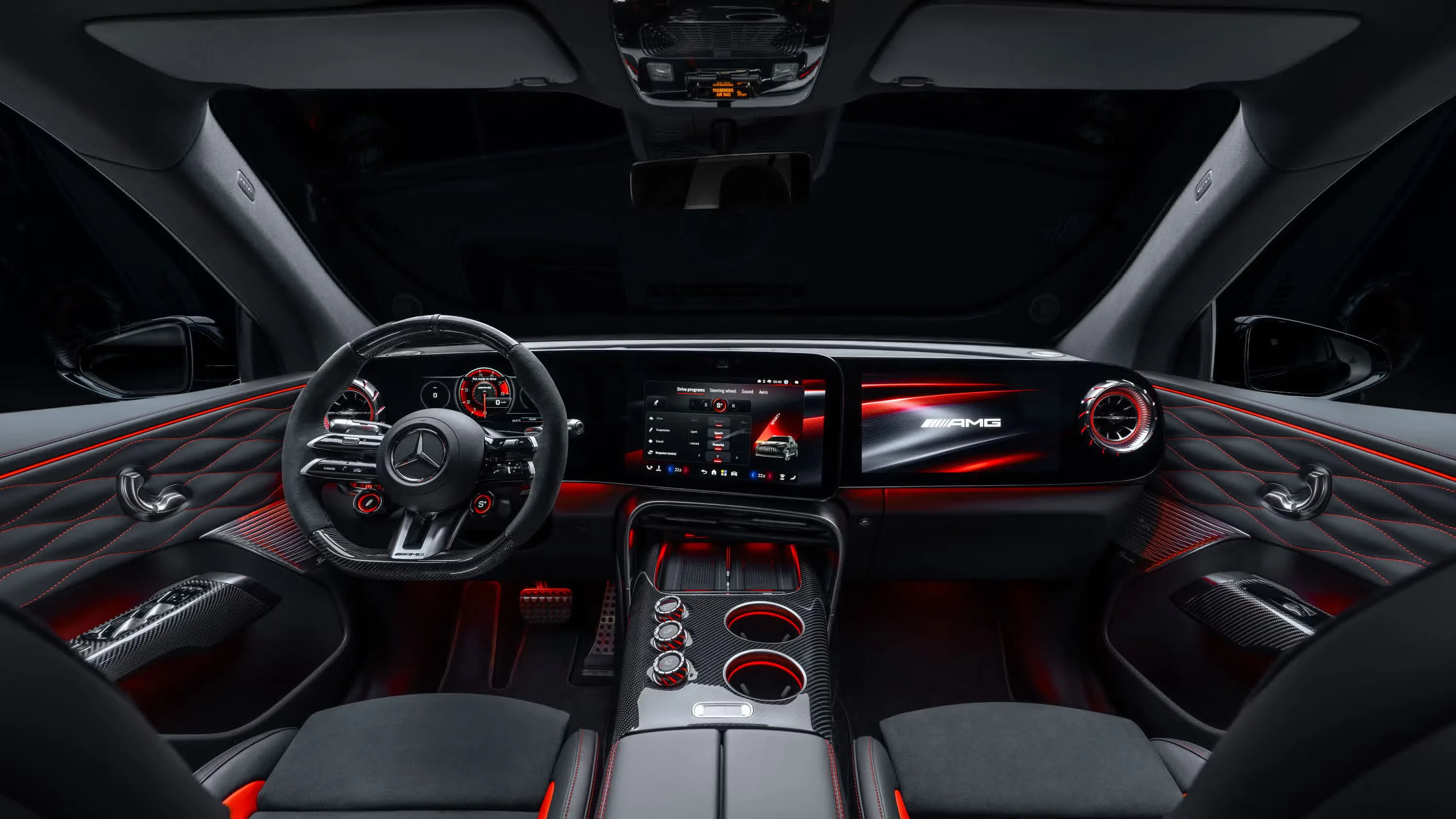
The AMG steering wheel and rotary controls in the official interior photograph.
The rear seat is the practical reason to choose the SUV body. Car and Driver reports considerably more headroom and usable legroom than in the four-door coupé. That does not make the GT SUV a family utility model in the conventional sense: Mercedes-AMG has not yet published boot volume, towing capacity or the final rear-seat equipment list. It does clarify the target. The SUV combines performance hardware with a cabin that can carry adults more easily than the lower GT.
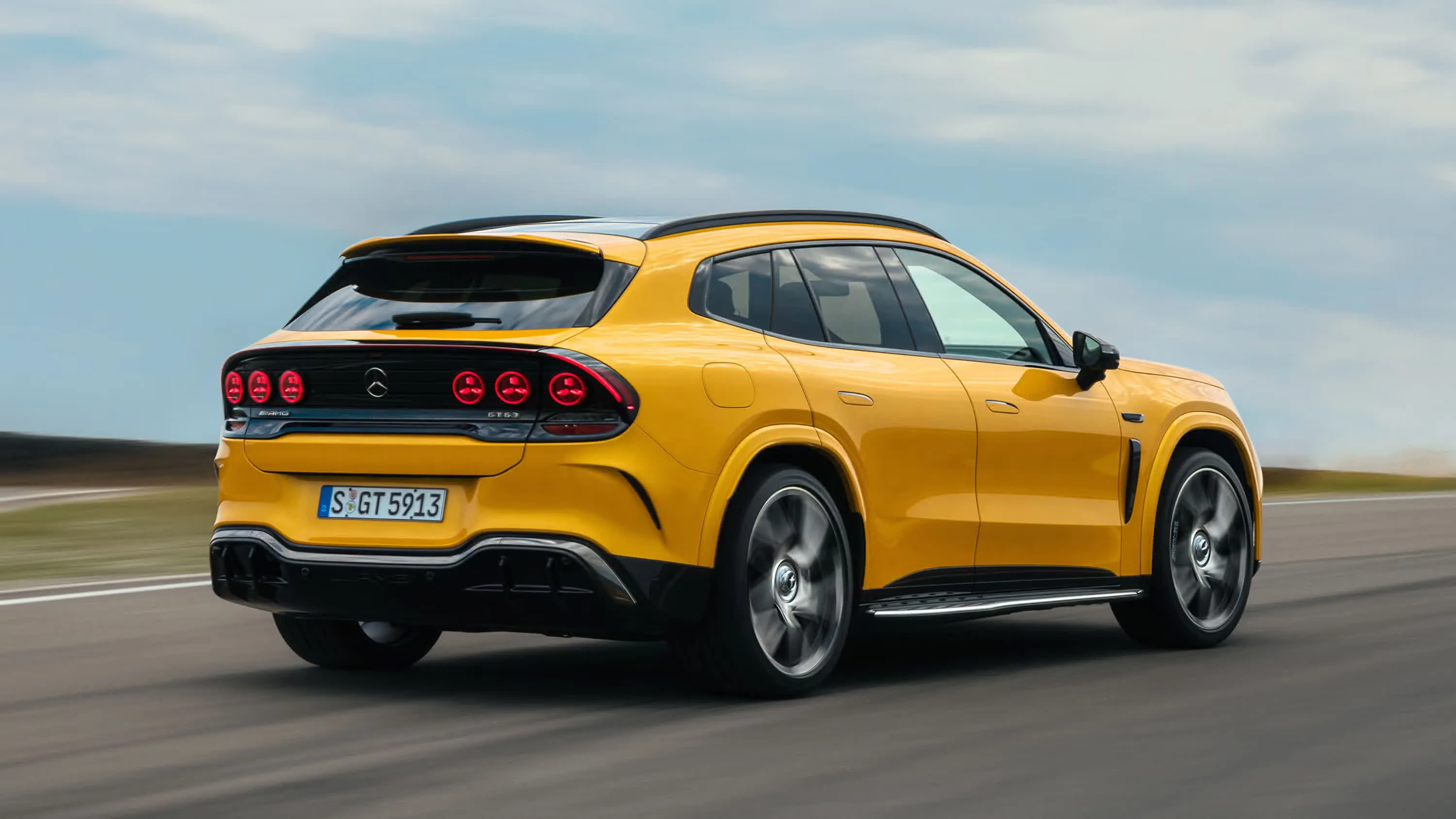
Rear three-quarter view of the GT SUV, credited to Mercedes-AMG.
What remains unconfirmed
Prices, official WLTP range, energy consumption, kerb weights, dimensions and market availability are still incomplete for Europe. A US estimate should not be converted into a Romanian price because taxes, equipment and local positioning have not been announced. The same caution applies to delivery dates: the 2028 label is a model-year reference, while the launch calendar varies by market.
The GT SUV is best understood as a separate AMG product rather than a faster GLE. Its key facts are already clear: it is fully electric, based on AMG.EA, offered in three powertrain grades, and topped by a three-motor GT63 with 1,153 hp. The unresolved details are the ones that determine whether the numbers translate into useful range, predictable charging stops and a realistic European price.