Image source: Renault, via Motor1. Image from the original publication.
Renault says it will keep physical buttons on future models, even if the solution costs more
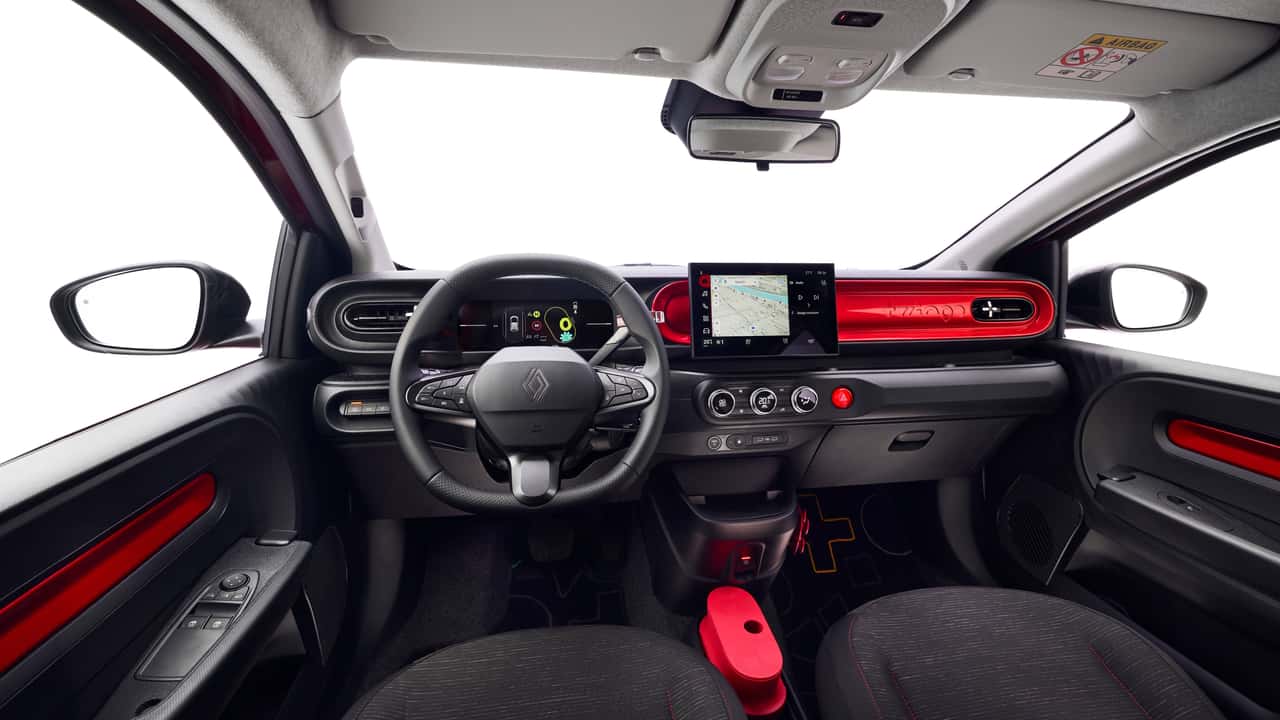
Renault does not intend to move every car control onto the central screen. The French manufacturer says it will keep physical buttons and switches for frequently used functions, even though it acknowledges that this solution is more expensive than an interface based mainly on a touchscreen.
The position was set out by Glen Sealey, managing director of Renault Australia, in an interview with GoAuto reported by Motor1. He described physical controls as a "core principle" of the brand: shortcuts must remain as accessible as possible, and technology should be used so that the interface stays simple and familiar.
Which functions should stay within reach
Renault argues that repeated adjustments should not be buried in menus. Audio volume, changing the radio station and other often-used functions can be operated more directly with a button or a rotary control than by navigating the screen while driving.
The manufacturer has not published a list of future models, nor a standard control layout for each market. The statement therefore does not confirm the exact configuration for a future Renault sold in Romania. It does, however, set the interior development direction: screens remain for navigation, multimedia and complex settings, while direct controls are kept for actions the driver repeats often.
The Euro NCAP context for 2026
The issue also matters for the European market. In its updated 2026 protocols, Euro NCAP requires the availability of physical buttons for frequently used functions, in a context where consumer reactions indicate that these can reduce distraction.
This is not a ban on touchscreens. Euro NCAP does not demand a return to dashboards without displays, but direct access to essential controls. The distinction matters for buyers: a screen can remain useful for maps, cameras, multimedia content and configuration, while basic operations can be easier to carry out without hunting for a touch zone in a submenu.
A trend visible at several manufacturers
Renault thus joins producers that are reassessing interiors based solely on screens. Volkswagen has already announced the return of physical controls on future models, and Mercedes-Benz has confirmed a broader mix of screens, voice controls, rollers and buttons.
In Renault’s case, the distinctive point is the explicit acceptance of the extra cost. For the manufacturer, the choice is not between technology and traditional controls, but between functions for which the screen brings a real advantage and those that must be reached instantly.
For drivers watching future Renault models, the equipment of each version and the configurations for Romania still need to be clarified. The manufacturer has not yet announced a timetable or specific models for this approach, and final specification can differ by car and market.
Source
- Motor1: Renault says it will keep physical buttons on future models
- Euro NCAP: 2026 safety protocols and physical-control requirements
The image is taken from the original Motor1 publication, with photo credit to Renault.