
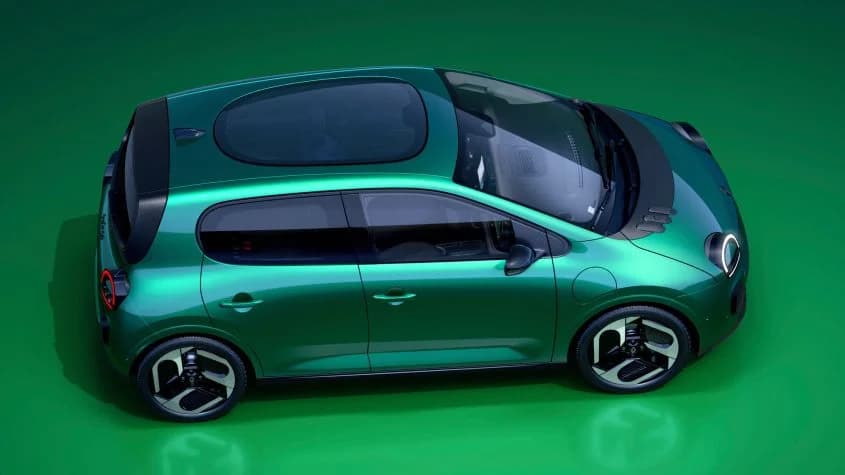
Renault has introduced the Twingobay panoramic glass roof for the Twingo E-Tech electric. The option covers 0.7 square metres and uses rounded contours designed around the small electric city car’s shape. Renault will show the roof publicly at the 2026 Paris Motor Show, but it has not yet published a price for the option in every market.
What Twingobay is
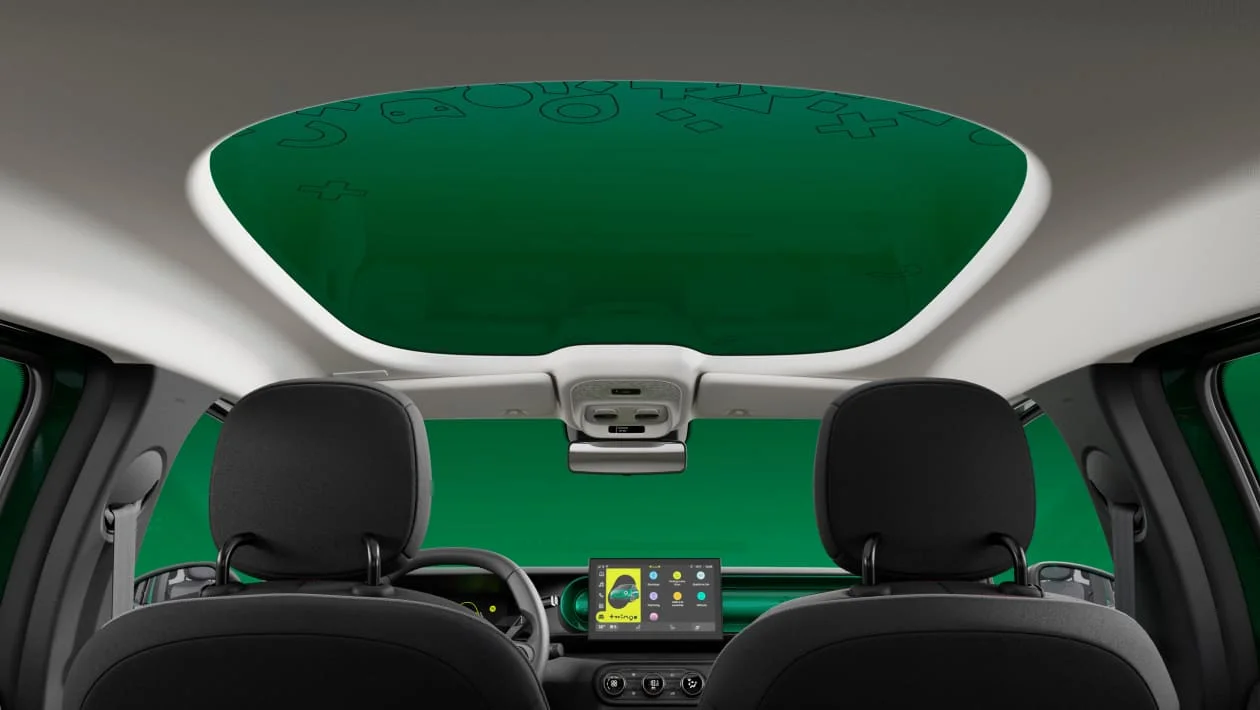
Twingobay is a panoramic glass roof developed for the current Twingo E-Tech electric. Renault says its 0.7-square-metre surface brings more daylight into the cabin and increases the sense of space for passengers. The rounded outline is part of the design rather than a generic roof panel borrowed from a larger Renault.
The edge of the roof carries what Renault calls the “Twingo graphic alphabet”. The company gives two examples: the letter N takes the shape of the Twingo headlight, while G is represented by a location-style symbol. These details can be seen from inside the car, turning the roof surround into part of the cabin design. The treatment is consistent with the Twingo’s original emphasis on simple, playful details, but the roof itself is a new option for the production electric car.
The glass uses a multi-layer construction. Renault says the system is intended to work in all seasons without a space-consuming blind. It blocks 99.9 per cent of ultraviolet rays on sunny days and helps retain heat when the weather is colder. Renault has not published an independent cabin-temperature test or explained the exact change in kerb weight compared with a metal roof.
The electric hardware stays the same
Twingobay-equipped cars will not receive a separate powertrain. Renault Twingo E-Tech electric uses a 60 kW electric motor, equivalent to 82 hp, and a 27.5 kWh LFP battery. Renault quotes a range of up to 263 kilometres in the WLTP cycle and a consumption figure of 12.2 kWh per 100 kilometres for the model.
Those figures describe the production Twingo, not an independently tested Twingobay version. A glass roof can add weight, but Renault has not released a comparison between the metal-roof and panoramic-roof configurations. There is therefore no basis for claiming that the WLTP range is identical in every trim and option combination.
The Twingo E-Tech electric is designed for urban use and is based on the AmpR Small platform. Depending on trim and equipment, Renault offers individually sliding rear seats, a 10-inch central display and Google built-in connectivity on the Techno version. These are range features, not equipment Renault has described as exclusive to Twingobay.
What the roof changes in daily use
In a small city car, extra glass can change the perceived size of the cabin. More daylight can make the rear seats feel less enclosed and can make it easier to see the graphic details around the roof. The absence of a conventional blind means that the multi-layer glass has to manage the light and heat that would normally be controlled by a physical shade.
Renault has not published maintenance instructions, replacement costs or the availability of the roof as a spare part. It has also not said whether the glass changes headroom, wind noise at motorway speeds or the safety certification of the car. Those details matter more to an owner than the novelty of the name, especially because a larger glass panel can make a future repair more expensive.
The confirmed benefit is visual and spatial: daylight enters through a large, rounded panel and the roof includes a design treatment specific to Twingo. Possible disadvantages such as added mass or a higher repair bill cannot be quantified until Renault publishes the full equipment and pricing information.
The context of the new Twingo
The Twingo E-Tech electric is the fourth generation of Renault’s small car, a nameplate introduced in 1992. Renault says the electric model was developed in roughly two years, with the aim of keeping a compact city car affordable and practical. In Renault’s European price announcement, the car starts at €19,490 before applicable government support in France, in Evolution trim.
That base price does not automatically include the Twingobay roof. Renault has announced the option but has not published, in the Paris Motor Show announcement, its price, standard trim or complete market availability. Customers in the UK and other markets will need to wait for local specification and order information. The same applies to Romania, where an option price cannot be inferred from the French list price.
The Paris show will be the first public opportunity to see the roof fitted to the production Twingo. Renault will present other electric vehicles there, but Twingobay is a focused equipment update rather than a new body generation.
What buyers should check
Before ordering, buyers should confirm whether Twingobay is bundled into a trim or ordered separately, whether it carries any specific warranty conditions and which WLTP figure applies to the selected configuration. The list price, lead time and availability in the relevant country also need to be confirmed by Renault or a local dealer.
The Twingobay option adds a clearly identifiable feature to the Twingo E-Tech electric: a 0.7-square-metre panoramic roof with rounded edges and a Twingo graphic alphabet. The base electric specification remains a 60 kW motor, a 27.5 kWh LFP battery and up to 263 km of WLTP range. Renault has not yet stated the option price or its final effect on mass and certified range.


