
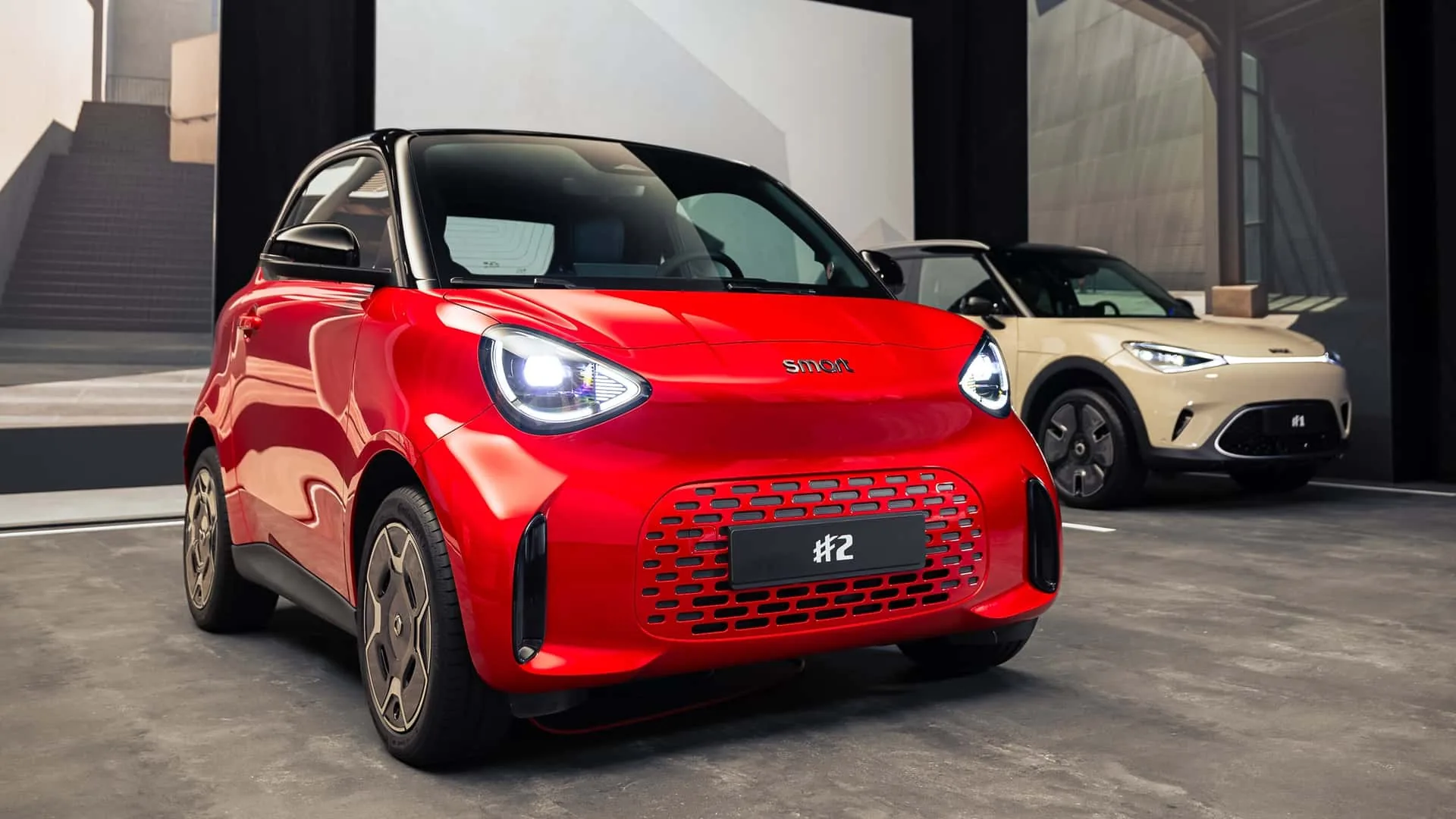
smart has returned to the two-seat city-car formula with the all-electric smart #2, unveiled at the 2026 Paris Motor Show. The new model is 2,746 mm long, uses rear-wheel drive and has a 6.95-metre curb-to-curb turning circle. Its current specification lists a rear-mounted 60 kW motor, a 35.8 kWh lithium-iron-phosphate battery and a preliminary WLTP range of 290 km. smart says the figures remain subject to the European type-approval process.
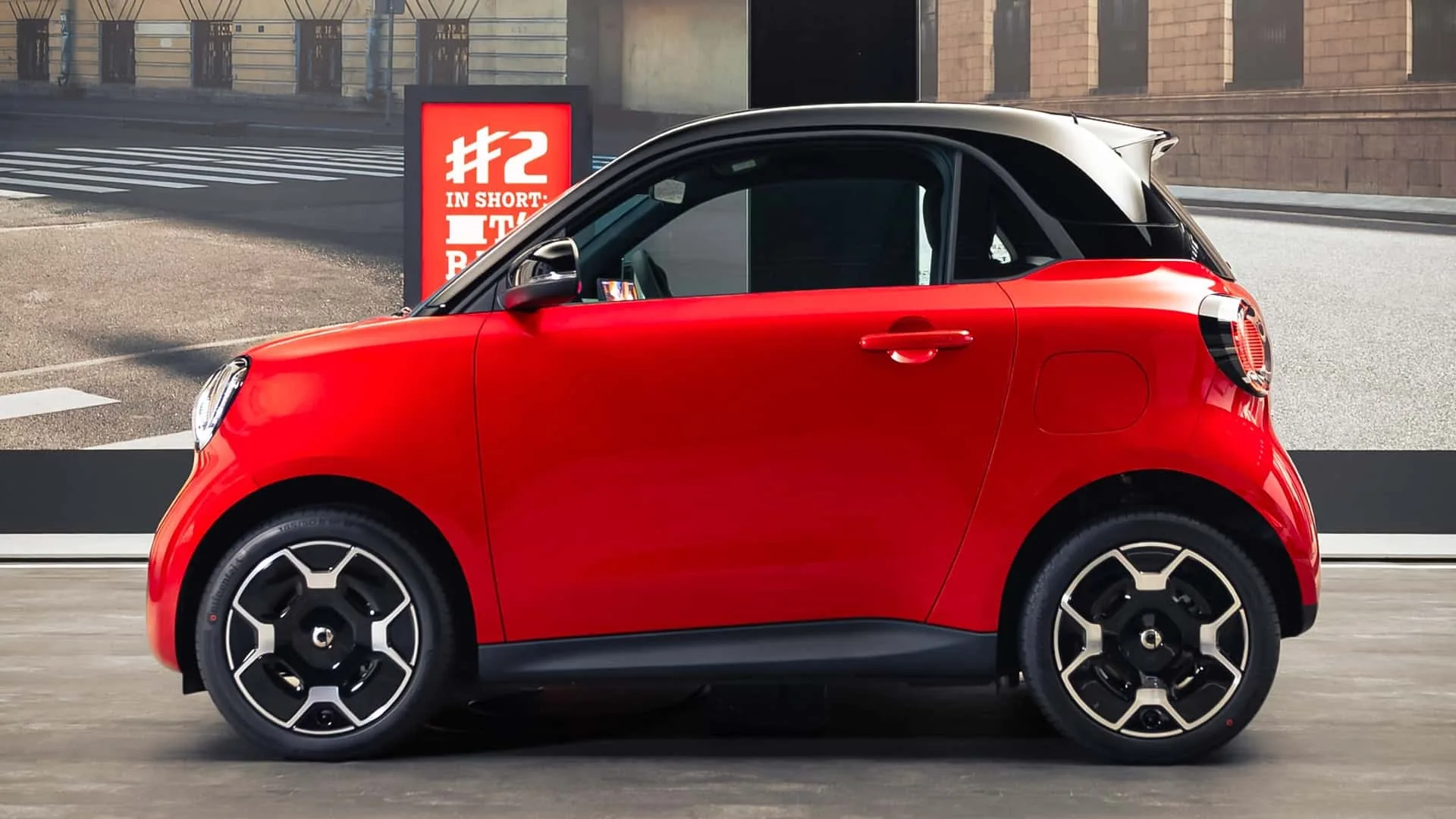
Side view of the smart #2. Photo: smart / Motor1.com.
The launch comes three decades after the original two-seat smart concept was shown in Paris. The #2 is not simply a smaller version of the brand’s current SUVs. smart developed a dedicated Electric Compact Architecture, or ECA, for the new car. Its purpose is to package an electric drivetrain, battery and safety structure inside a very short body while keeping the wheels close to the corners.
A short body with a clear use case
At 2,746 mm, the regular Pure, Pure+ and Premium versions are shorter than most modern hatchbacks. The limited Couture Edition is 2,764 mm long. That distinction is useful because it shows where the car’s design priorities lie: the dimensions are not a side effect of an existing platform, but part of the product’s reason for being. A 6.95-metre turning circle should also help in narrow streets and compact parking spaces, although real manoeuvrability will depend on visibility, steering assistance and the driver’s judgement.
The split tailgate is another link with the original fortwo. The glass section can be opened independently from the lower part, which is practical when a car is parked close to another vehicle or a wall. smart quotes 305 litres of luggage capacity, rising to 527 litres with the available space used more fully. Those numbers make sense in the context of a two-seater: the #2 gives up rear passenger accommodation in exchange for a short exterior and a storage area behind the front occupants.
The rear-mounted motor produces 60 kW and 130 Nm, driving the rear wheels through a single-speed transmission. The official world-premiere release lists a kerb weight of 1,140 kg. That is a relatively low figure for a battery-electric car, but it should still be treated as a published specification rather than an independently measured Carboratory result. smart also highlights wider rear tyres and a five-link rear suspension, which it describes as a first in the class.
Battery and charging figures remain preliminary
The 35.8 kWh battery uses LFP chemistry. smart gives a preliminary combined energy-consumption figure of 13.6 kWh/100 km and a WLTP range of 290 km. WLTP provides a consistent comparison between cars; it does not describe the exact distance a driver will cover in winter, on a motorway or with the heating running. The small battery should reduce charging time and mass, but its usefulness will still depend on how often the car is used beyond urban routes.
DC charging is rated at up to 65 kW. smart says a 10–80 percent charge can take 20 minutes under optimal conditions. AC charging reaches 11 kW on the relevant versions. The Pure uses a 7.4 kW single-phase onboard charger, for which smart quotes about five hours for the same state-of-charge interval. The 11 kW system is quoted at about three hours. Temperature, available power, battery condition and pre-conditioning can all change those figures.
The #2 will also support vehicle-to-load operation through a separate accessory. That allows compatible equipment to draw power from the car, but the feature is not the same as bidirectional home backup and its local usefulness depends on the socket standard and the accessory supplied.
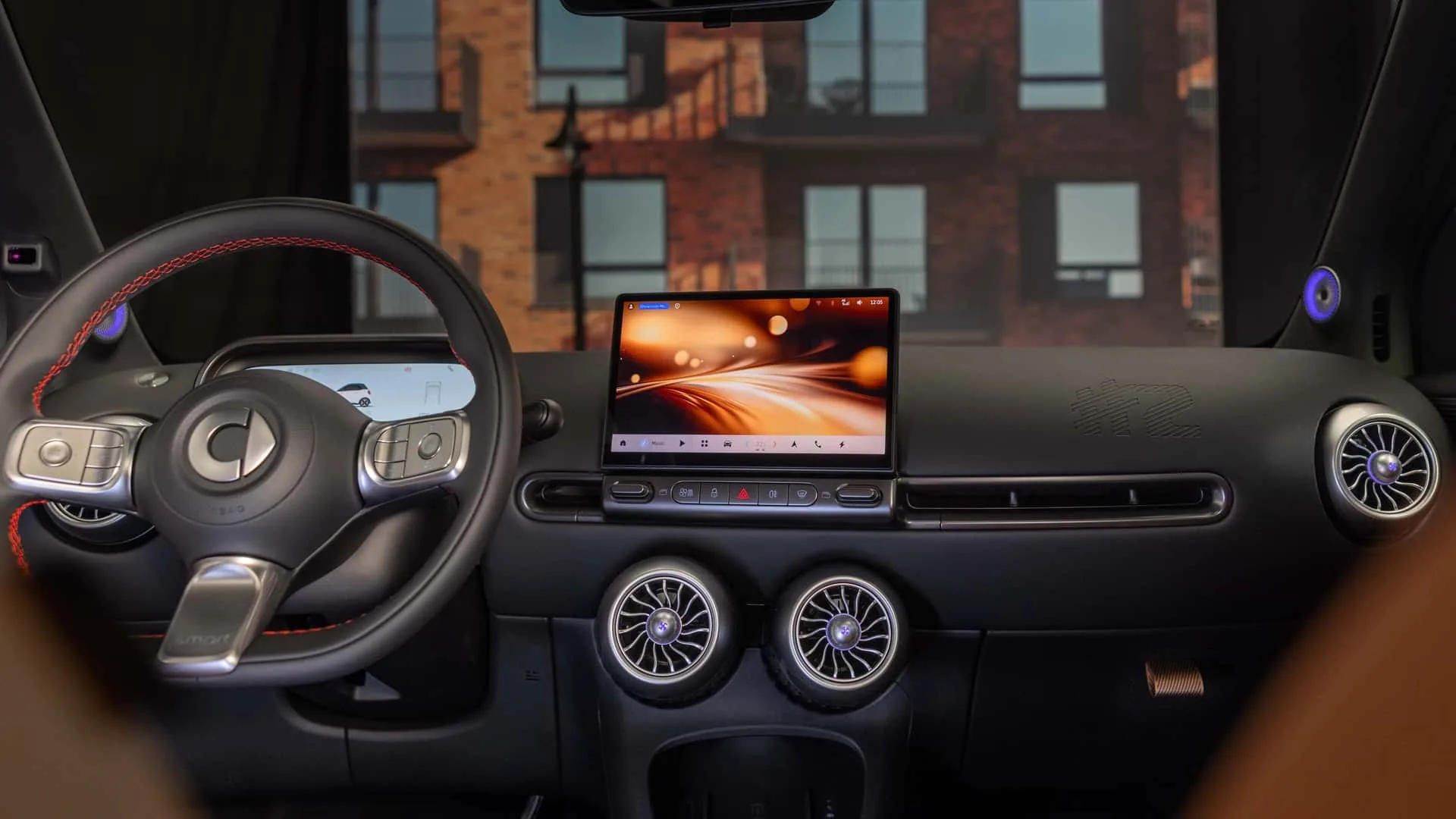
The cabin uses a continuous bench-style seat and an S-shaped cockpit. Photo: smart / Motor1.com.
A bench-style cabin
The interior’s most distinctive feature is a continuous bench-style seating arrangement. smart says the layout reduces the conventional visual divide between driver and passenger and helps preserve an open cabin within the car’s narrow body. The dashboard follows an S-shaped principle, with controls arranged around a compact cockpit rather than a large centre console.
The standard technology package includes a 10.1-inch central display and an 8.8-inch driver display. The dashboard-mounted smart Pillar can hold small accessories. Depending on trim, equipment includes a glass roof, heated seats, synthetic leather upholstery, wireless charging, navigation, ambient lighting and a seven-speaker Sennheiser audio system. These are equipment claims from the manufacturer, not the result of a Carboratory test.
The range announced for Europe includes Pure, Pure+ and Premium versions, alongside a Couture Edition limited to 999 cars. The special model combines matte white paint with a Platinum Gold roof, 16-inch Lyra wheels with gold details, heated seats and steering wheel, ambient lighting, Sennheiser sound and a numbered interior badge.
Safety and European timing
The smart #2 uses the Tridion Cell Evo, the latest version of the brand’s safety-cell structure. The announced driver-assistance list includes adaptive cruise control with Stop & Go, lane-keeping assistance, blind-spot detection, rear cross-traffic alert, traffic-sign recognition, highway assistance and parking sensors with a rear camera. smart describes these systems as aids and retains the driver’s responsibility for controlling the vehicle.
For the UK, smart has announced Pure and Premium trim lines and a limited Couture Edition. Pre-orders are due to start in spring 2027, with pricing expected to begin below £20,000 in that market. That figure should not be treated as a Romanian or euro price. smart has not published a Romanian price or local delivery schedule in the world-premiere material used here. Deliveries will follow completion of homologation, and the company notes that equipment and technical details can still change before approval.
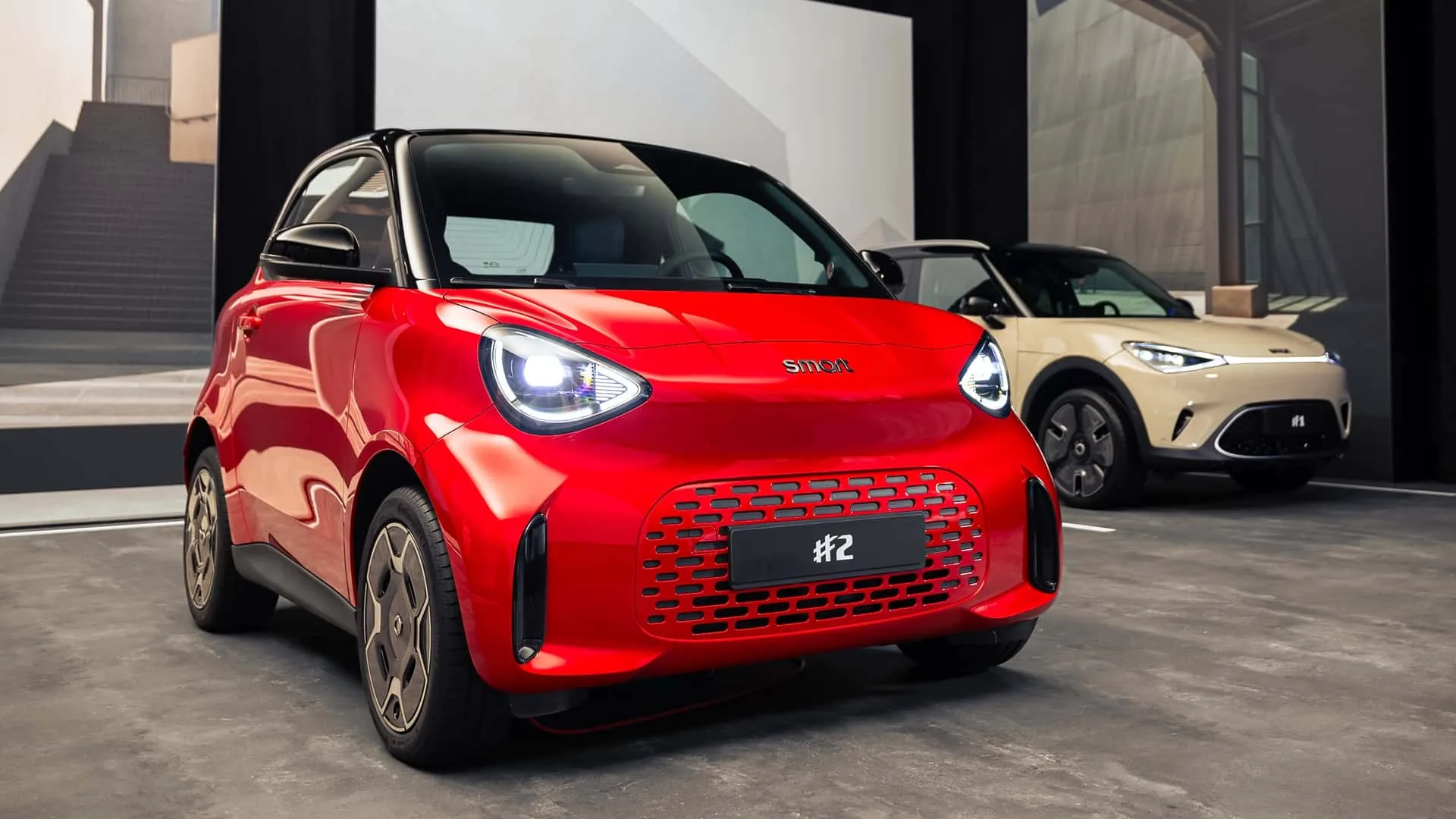
Front view of the new electric two-seater. Photo: smart / Motor1.com.
The smart #2 is therefore a very specific proposition. It cannot replace a family hatchback for buyers who need rear seats, nor does it offer the towing or long-distance flexibility of a larger EV. Its case rests on a short body, rear-wheel drive, a tight turning circle and a cabin designed around two occupants. The final judgement will depend on the homologated specification, price and charging equipment in each European market.


