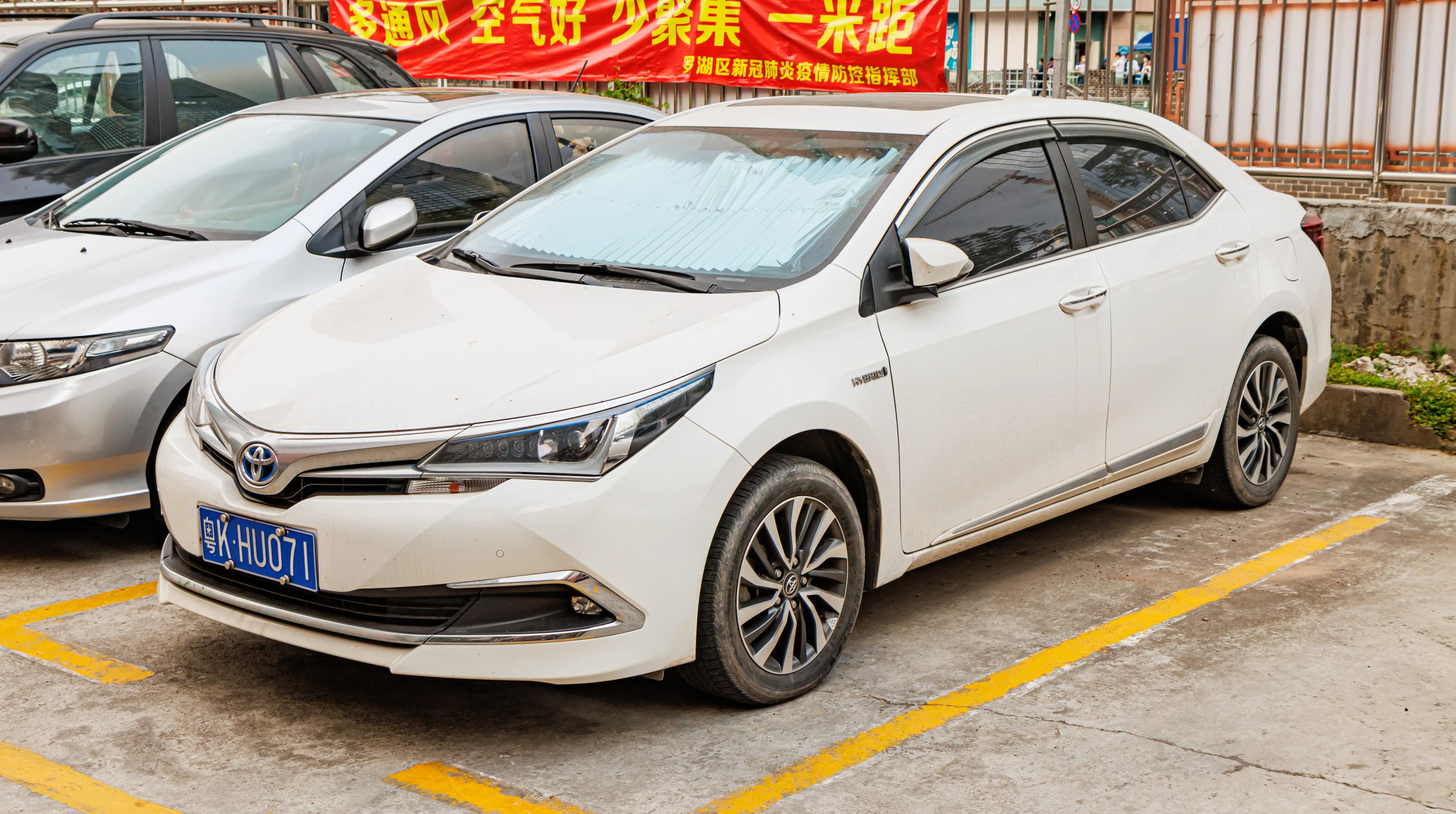
Toyota is asking European policymakers to recognise a new class of combustion-powered vehicles: cars that run exclusively on eligible renewable fuels. The proposed category is called VEEF, short for Vehicles running Exclusively on Eligible Fuels. It would not make an exhaust pipe physically emission-free. Instead, it would change how a qualifying vehicle is counted in a regulatory system that increasingly considers the full carbon pathway of a fuel.
VEEF is about the fuel, not a new engine
The proposal applies only to vehicles designed to use eligible fuels all the time, rather than to ordinary petrol cars that happen to receive a renewable blend at some point. Toyota’s definition refers to renewable and low-carbon fuels that meet European sustainability requirements under the Renewable Energy Directive. That can include sustainably produced biofuels and fuels made from waste, residues or renewable energy.
The distinction matters because a combustion engine still releases gases at the tailpipe. Toyota’s argument is that the carbon balance can be assessed across the fuel’s life cycle, from production to use, rather than by looking only at the exhaust reading. A fuel made from waste or renewable inputs may have a lower greenhouse-gas footprint than fossil petrol. That does not mean local exhaust pollutants disappear, and it does not mean that every fuel sold as renewable would automatically qualify.
For VEEF to work as a compliance category, regulators would need to know what the car actually used. A manufacturer’s declaration that an engine is compatible with renewable petrol would not be enough. The car would need to be connected to a system capable of showing that it was fuelled only with approved products during the relevant period.
The six-month Spanish pilot
Toyota Motor Europe announced the pilot in July 2026 with BMW Group, Bosch and Repsol. The programme uses roughly 20 Toyota and BMW vehicles in Spain. Toyota and Lexus passenger cars supplied by Toyota España, along with BMW fleet vehicles, run on Repsol’s Nexa 95, described by the partners as 100% renewable petrol. The companies say the fuel is compatible with current petrol engines and existing refuelling infrastructure, so the cars do not need a new propulsion system.
Bosch supplies the digital verification layer through its Digital Fuel Twin system. The platform combines information from the vehicle, fuel stations and fuel-card transactions. The purpose is to link an individual car to the fuel it received and to create a traceable record across the fuel chain. This is straightforward to describe but more demanding to scale. A small controlled fleet can be monitored closely; millions of private cars would require common standards, independent audits, data protection rules and a response to accidental or deliberate use of conventional petrol.
Spain was selected because Repsol has renewable petrol available through public stations there. Repsol says Nexa 95 is produced from feedstocks that comply with the EU Renewable Energy Directive and can lower greenhouse-gas emissions compared with fossil fuel. The release does not provide final results from the pilot, and the initiative is not an approval from the European Union. It is an attempt to gather operating and traceability evidence before policymakers decide whether VEEF should appear in future rules.
How the proposal fits the 2035 framework
The current EU framework sets a fleet-wide target of 0 grams of CO2 per kilometre for new cars and vans from 2035, equivalent to a 100% reduction in the average fleet target. The European Commission’s December 2025 Automotive Package proposed a more flexible structure: manufacturers would still need a 90% reduction in tailpipe emissions, while the remaining 10% could be compensated with EU-made low-carbon steel or eligible e-fuels and biofuels.
The Commission says that approach could leave room beyond 2035 for plug-in hybrids, range extenders, some mild hybrids and internal-combustion vehicles alongside battery-electric and hydrogen vehicles. The wording is important. A proposal does not create an automatic right to sell every petrol or hybrid model after 2035, and the final calculation method, caps and eligibility requirements remain matters for the legislative process.
European Parliament research on the proposed revision lists VEEF as one of the options considered for vehicles that run exclusively on sustainable renewable fuels. In some variants, the category would be capped as part of the manufacturer’s compliance system. That is different from calling all combustion vehicles zero-emission cars in everyday language.
Why Toyota is making the case
Toyota presents electrification as a multi-pathway strategy that includes hybrids, plug-in hybrids, battery-electric vehicles, fuel-cell vehicles and renewable fuels. Its global Beyond Zero programme says the company is working towards carbon neutrality by 2050, while Toyota Motor Europe has described a European operational carbon-neutrality ambition for 2040. Renewable fuels would give existing petrol engines and part of the current vehicle fleet another route to lower life-cycle greenhouse-gas emissions without replacing every car or rebuilding every filling station.
There are clear limits. Renewable feedstocks are finite and will be contested by transport, industry and other sectors. A lower life-cycle carbon figure does not remove exhaust emissions of nitrogen oxides, particulates or other pollutants. Availability is also uneven: a fuel used in a Spanish pilot may not be offered across Romania, France or Germany. Price, certification and the volume that can be produced sustainably are still unanswered questions.
For drivers, nothing changes yet. A hybrid or petrol car running on renewable petrol remains a combustion vehicle in its registration documents. Toyota’s request must first be supported by the pilot data and then considered within the EU law-making process. The central question is not whether a renewable fuel can power an existing engine; the Spanish programme is designed to test that. The harder question is whether the fuel can be tracked, supplied and regulated at sufficient scale to support a credible fleet-wide calculation.